Food environment · November 13, 2026
Healthy checkouts drew more support when the message mentioned parents and children—not simply ‘more choice’
In a 3,978-person US experiment, support ranged from 61% to 68% depending on how the same policy was explained.
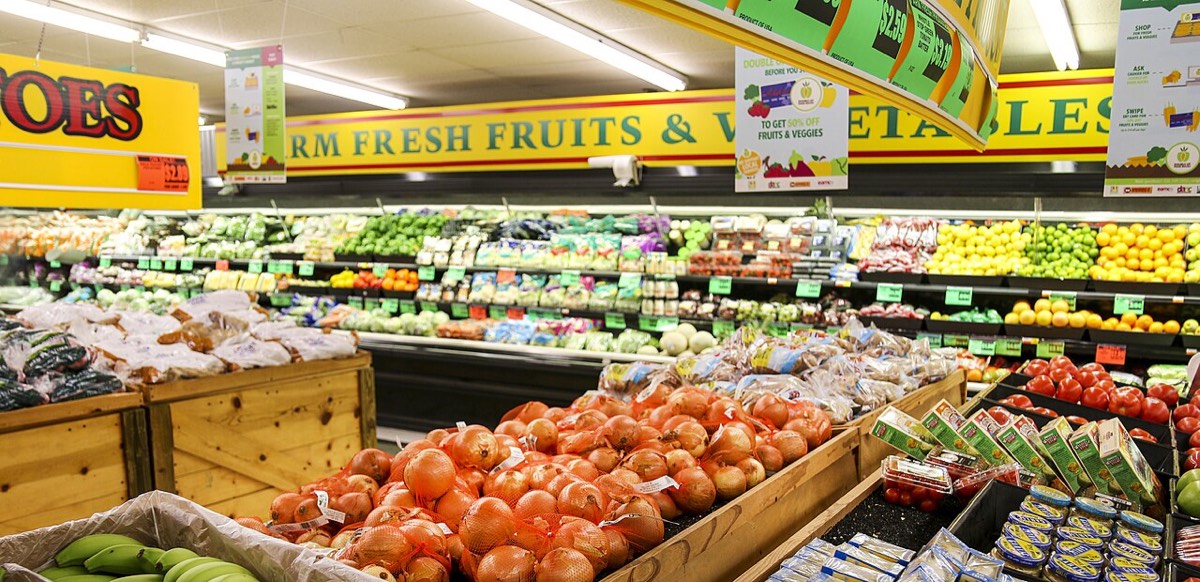
Healthy-checkout policies set nutrition standards for foods and drinks displayed beside the till. An online experiment randomized 3,978 US adults to see one of four explanations for the same kind of policy.
Overall, 65% supported the policy. Support was 68% when the message focused on reducing parents' stress by removing unhealthy products from children's eye level, and 67% when it focused on community and child health.
The ‘expanding healthy choices’ message drew 61% support, while a frame about predatory marketing drew 64%. The six- to seven-point gaps were modest but statistically significant for several comparisons.
This measured reactions to messages, not whether healthier checkouts changed purchases or health. Participants were recruited online with quotas to resemble national demographics, but they were still a convenience sample. The practical lesson is narrow: people may hear a food policy differently when it addresses a daily family pressure rather than an abstract promise of choice.
US message-framing experiment (6 November 2026)
3,978
Adults in the analysis
65%
Overall policy support
68%
Parent-stress frame
67%
Community and child-health frame
61%
Healthy-choice frame
Randomized online messaging experiment using a quota-matched convenience sample. It tested support for a policy, not purchasing behaviour or health outcomes.
- Healthy-checkout standards had already been implemented in three US jurisdictions when the study was conducted.
- Checkout displays are unusually visible because shoppers wait beside them and children often see products at eye level.
- Randomizing the message helps isolate the effect of wording, even when the sample itself is not randomly drawn from the population.
- Support was higher in several groups, including respondents with prediabetes or type 2 diabetes, but those subgroup findings were exploratory.
- National support for a healthy checkout policy: a randomised message-framing experimentPublic Health Nutrition / PubMed · Primary experiment abstract with the four frames and support percentages. Published 6 November 2026.
- Fruit section of a grocery storeWikimedia Commons · Alabama Extension, CC0. General supermarket illustration only.
General information about food-policy research. This experiment measured opinions and cannot show that a checkout policy changes an individual's diet or health.
Analysis by NutroPractic from the sources listed. Written for general readers; it does not replace advice from your own doctor.
From our articles
Read, then eat a little better
Plain-language guides on nutrition and wellness, backed by research.

Women's health
Inositol for PCOS: the 40:1 ratio, trial doses, and food milligrams
Why do randomized trials in polycystic ovary syndrome prioritize the 40:1 myo to D-chiro inositol ratio? Here is the science behind the ovarian epimerase paradox, clinical ovulation and insulin metrics, and why cantaloupe cannot replace 4,000 mg trial powder.
21 Nov 2026

Everyday eating
Extra virgin olive oil polyphenols: the EU health claim, smoke point myths, and cooking stability
Does extra virgin olive oil degrade when cooked? What does the EU 5 mg polyphenol health claim require, how does oleocanthal act like ibuprofen, and why does oxidative stability matter more than smoke point in domestic frying? Here is the clinical and culinary data.
21 Nov 2026

Food and nutrition
L-theanine and caffeine: what cognitive trials measured on sustained attention, and milligrams in matcha vs green tea
Combining L-theanine with caffeine produces clean focus without caffeine jitters. Here is what randomized trials measured on attention-switching, EEG alpha brain waves, and the exact milligrams across ceremonial matcha, culinary powder, gyokuro, and sencha.
20 Nov 2026
Newsfeed for your website
Want this feed on your website?
Add it to any site with one copy-and-paste snippet. No sign-up, and it updates itself every hour.
Start with a virtual consultation
Tell Dr. Triveni what you want to change. You will leave with a clear next step, whether you are in Toronto, London, New York or Chennai.