Bone health · November 8, 2026
Gut bacteria in osteoporosis: no clear drop in diversity across 2,851 adults — but the mix of species looked different
A review of 15 studies found no significant gap in alpha-diversity between people with low bone mass and controls. Community structure and a few genera told a more consistent story.
Researchers searched five databases for studies from 2012 to the end of 2025 that sequenced stool bacteria in adults with osteoporosis, osteopenia or low bone mineral density and compared them with controls. Eighteen studies met the criteria and 15 had numbers that could be pooled: 1,094 cases of abnormal bone mass and 1,757 controls.
Pooled alpha-diversity, a measure of how many kinds of bacteria live in the gut, did not differ significantly: the Shannon index gave a standardized difference of 0.27 (95% CI -0.03 to 0.57) and Chao1 gave -0.13 (-0.82 to 0.55). Heterogeneity was very high for both (I² about 82% and 85%). Beta-diversity, which compares overall community make-up, more often pointed to differences between cases and controls.
At genus level, Bacteroides and Lactobacillus were more often enriched in the bone-loss groups and Roseburia more often in controls, while results for others such as Blautia were inconsistent. All included studies were observational, so the review cannot say whether gut bacteria affect bone, bone loss changes gut bacteria, or diet, age and medicines drive both.
What the pooled analysis covered
15
Studies pooled for alpha-diversity
2,851
Participants (1,094 cases, 1,757 controls)
0.27
Shannon index difference (CI -0.03 to 0.57)
-0.13
Chao1 difference (CI -0.82 to 0.55)
moderate to high
Study quality on a modified Newcastle-Ottawa Scale
Systematic review and meta-analysis of observational studies using faecal sequencing; marked heterogeneity between studies. Taxonomic findings were summarised by direction of effect, not pooled.
- Alpha-diversity describes variety within one person's gut community; beta-diversity compares communities between groups of people.
- Faecal sequencing methods, diets and age groups differed between the included studies, which is one reason the results scatter.
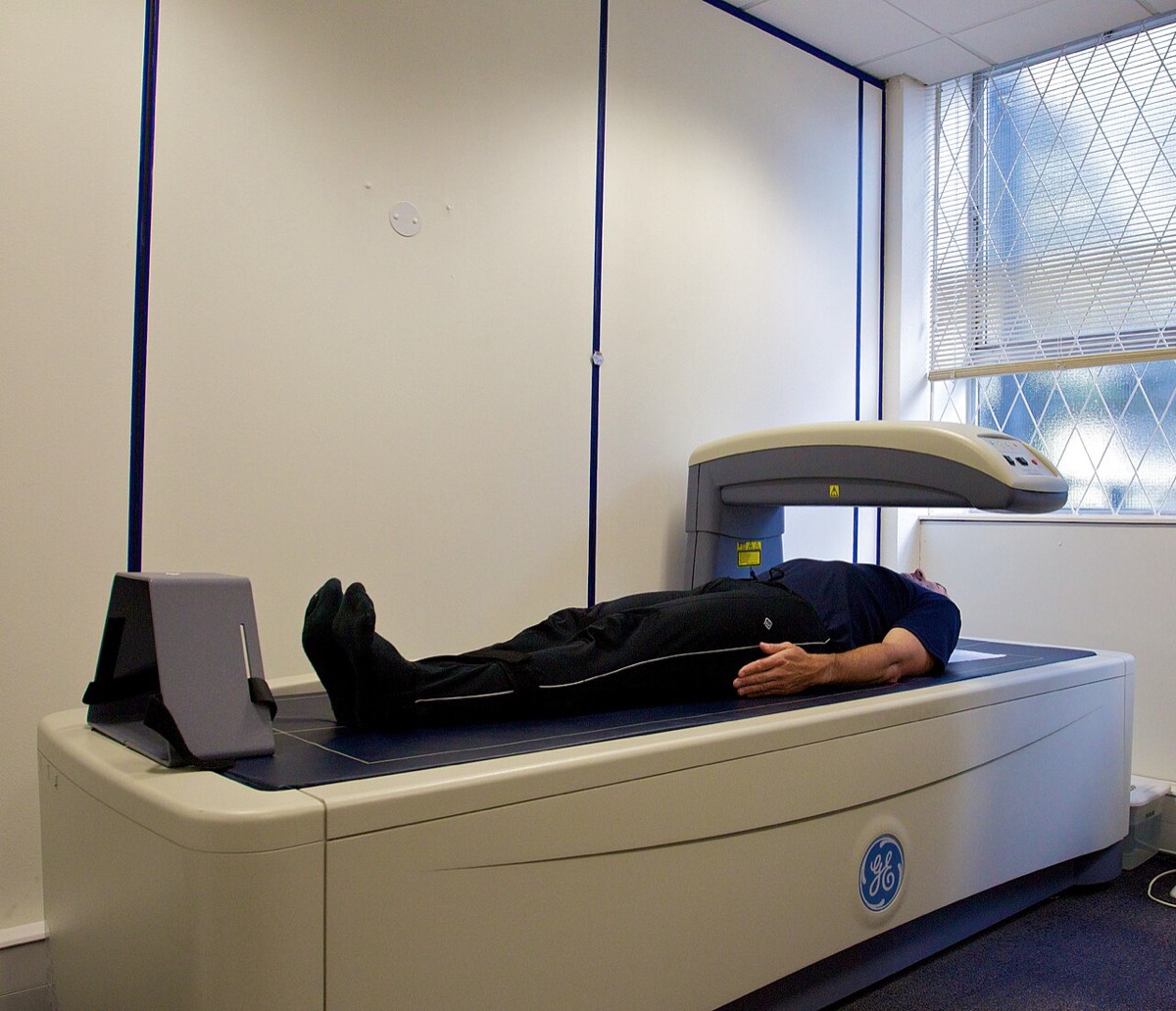
- Bone density is usually measured with a DEXA scan, which is how most of these studies defined osteoporosis or osteopenia.
- A bacterial genus can contain many species with different effects, so 'enriched Bacteroides' is a coarse signal.
- Association between gut microbiota and osteoporosis in adults: a systematic review and meta-analysisFrontiers in Nutrition, 5 November 2026 · Open-access review; study counts, pooled estimates and conclusions checked against the published abstract (PROSPERO CRD420261382643).
- DEXA scanner in use ALSPACWikimedia Commons · CC BY-SA 3.0 photograph; general illustration only.
General information, not medical advice. Bone loss has many causes; talk to a clinician about bone-density testing and treatment rather than changing your gut bacteria or diet on the basis of this review.
Analysis by NutroPractic from the sources listed. Written for general readers; it does not replace advice from your own doctor.
From our articles
Our guides on this subject
Plain-language guides on nutrition and wellness, backed by research.
Supplements and vitamins
Glycine before bed: the 3 g sleep trials, what they measured, and glycine in gelatin, bone broth and collagen
The 3 g dose comes from small Japanese trials: the sleep-restriction study analysed seven men. Here is what each trial measured, the grams of gelatin, collagen, pork rinds and bone broth that hold 3 g, and the clozapine warning.
17 Nov 2026

Women's wellness and nutrition
Creatine for women: cognitive performance, menstrual cycle phases, and bone density beyond muscle building
Creatine is widely stereotyped as a bodybuilding supplement for men, but female physiology tells a very different story. Women exhibit 70% to 80% lower endogenous creatine stores, reduced dietary intake, and cyclical fluctuations in brain creatine kinase across the follicular and luteal phases. Robust clinical trials demonstrate that 3 to 5 grams of daily creatine monohydrate enhances cognitive performance during sleep deprivation, augments clinical response in unipolar depression, preserves femoral neck bone geometry in postmenopausal women, and causes cellular intracellular hydration rather than subcutaneous bloating.
13 Nov 2026
Supplements and vitamins
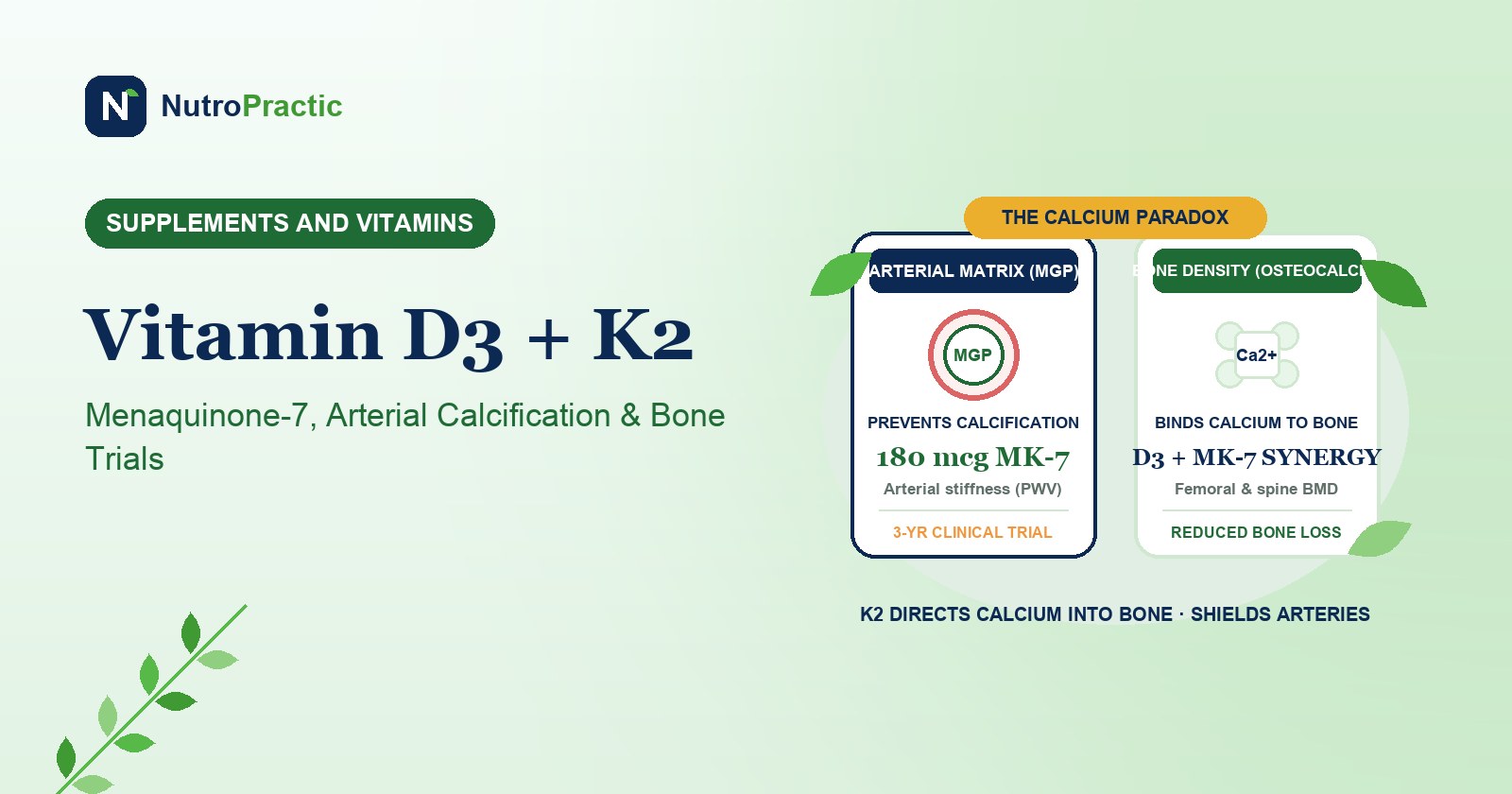
Vitamin D3 with K2: does adding menaquinone-7 actually protect arteries and bones in trials?
Vitamin D3 enhances intestinal calcium absorption, but without adequate vitamin K2, calcium can deposit in vascular walls instead of bone matrix. Clinical trials evaluating menaquinone-7 (MK-7) demonstrate improved carboxylation of Matrix Gla Protein, preserved arterial elasticity, and reduced bone mineral density loss. Discover what human clinical trials actually prove about cardiovascular calcification, bone density, MK-4 vs. MK-7 dosing, and critical drug interactions.
13 Nov 2026
Newsfeed for your website
Want this feed on your website?
Add it to any site with one copy-and-paste snippet. No sign-up, and it updates itself every hour.
Start with a virtual consultation
Tell Dr. Triveni what you want to change. You will leave with a clear next step, whether you are in Toronto, London, New York or Chennai.