Fruit and vegetables · October 31, 2026
Seven months of fruit-and-veg classes lifted intake in a Brazilian trial of 3,414 adults. Four years on, the class group ate no more than anyone else
Health-promotion centres in Belo Horizonte ran monthly group sessions, cooking demonstrations and motivational postcards to get people eating more fruit and vegetables. A follow-up published on 26 October tracked 2,232 people whose intake had gone up after the first year. By 36 months the gains had slipped, and the class group ended up level with usual care.
Most healthy-eating programmes are judged on what happens straight after they end. A team from Brazilian federal universities asked the harder question: does it last? Their report, published online by Public Health Nutrition on 26 October, follows people from a randomised community trial in Belo Horizonte's Health Academy Program, a free public service that runs exercise and health education in lower-income neighbourhoods.
Eighteen local units were drawn from the city's nine districts, two per district, and randomised. In 2013 and 2014, 3,414 adults aged 20 and over agreed to take part. Units in the intervention arm added seven months of one-hour monthly group sessions on fruit and vegetables, pitched at each person's readiness to change: conversation circles, cooking demonstrations, film discussions, three motivational postcards and a leaflet. Control units carried on with usual care, which still included exercise and general health education.
The new analysis looked only at the 2,232 people whose intake had improved, or stayed at the recommended 400 g a day or more, at the 12-month check. In that group, average fruit intake had risen from 158.8 g to 202.2 g a day and vegetables from 187.6 g to 217.3 g. By 36 months, phone interviews found fruit down by an average 54.4 g a day and vegetables down by 38.5 g. By 48 months both had crept back up a little, by 6.9 g and 23.4 g.
The key finding is that the decline and the partial rebound looked much the same in both arms. In adjusted models, taking part in the classes was not linked to keeping intake higher at 36 or 48 months. The authors suggest 'boosters', such as follow-up sessions, printed reminders or digital nudges, may be needed, and point to longer programmes elsewhere that included them. Intake was self-reported in short questionnaires, most participants were women on low incomes, and the 36- and 48-month data came by phone, so the figures are estimates rather than weighed food.
Belo Horizonte fruit and vegetable trial, 48-month follow-up (Public Health Nutrition, 2026)
3,414
Adults who agreed to join the community trial in 2013-2014
18
Health Academy Program units randomised, two from each of the city's nine districts
2,232
Participants whose intake had improved at 12 months, followed to 48 months
158.8 → 202.2 g
Average daily fruit intake, baseline to 12 months, in the analysed group
-54.4 g
Average change in daily fruit intake between 12 and 36 months
-38.5 g
Average change in daily vegetable intake between 12 and 36 months
Randomised controlled community trial in a Brazilian public health-promotion service (registry RBR-9h7ckx). The analysis included only people with positive changes in fruit and vegetable intake at 12 months, partly identified by multiple imputation for those lost to follow-up. Intake was estimated from brief frequency and serving questions (80 g per serving, juices and starchy roots excluded). Adjusted time-by-group interaction terms showed no intervention effect at 36 or 48 months.
- The 400 g a day benchmark used in the study is the World Health Organization's long-standing minimum for fruit and vegetables, roughly five 80 g portions.
- The trial counted a serving as 80 g and left out fruit juices, smoothies, potatoes and other roots and tubers.
- The classes were built on the 'stages of change' model, so people who were not yet thinking about eating more produce got different sessions from those already trying.
- Programmes the authors cite as keeping gains for years added follow-up contact, such as quarterly sessions for five years or cooking classes after a phone-counselling phase.
- Belo Horizonte's Health Academy Program units are placed in more vulnerable neighbourhoods, so the trial reached many people with under eight years of schooling and incomes below the minimum wage.
- Are intervention effects on fruit and vegetable intake maintained after 48 months of follow-up? A randomised controlled community trialPublic Health Nutrition (Cambridge University Press) · Original open-access study, published online 26 October 2026; design, sample, intervention, intake figures and conclusions
- PubMed record PMID 42929269US National Library of Medicine · Abstract used to cross-check the published changes at 36 and 48 months
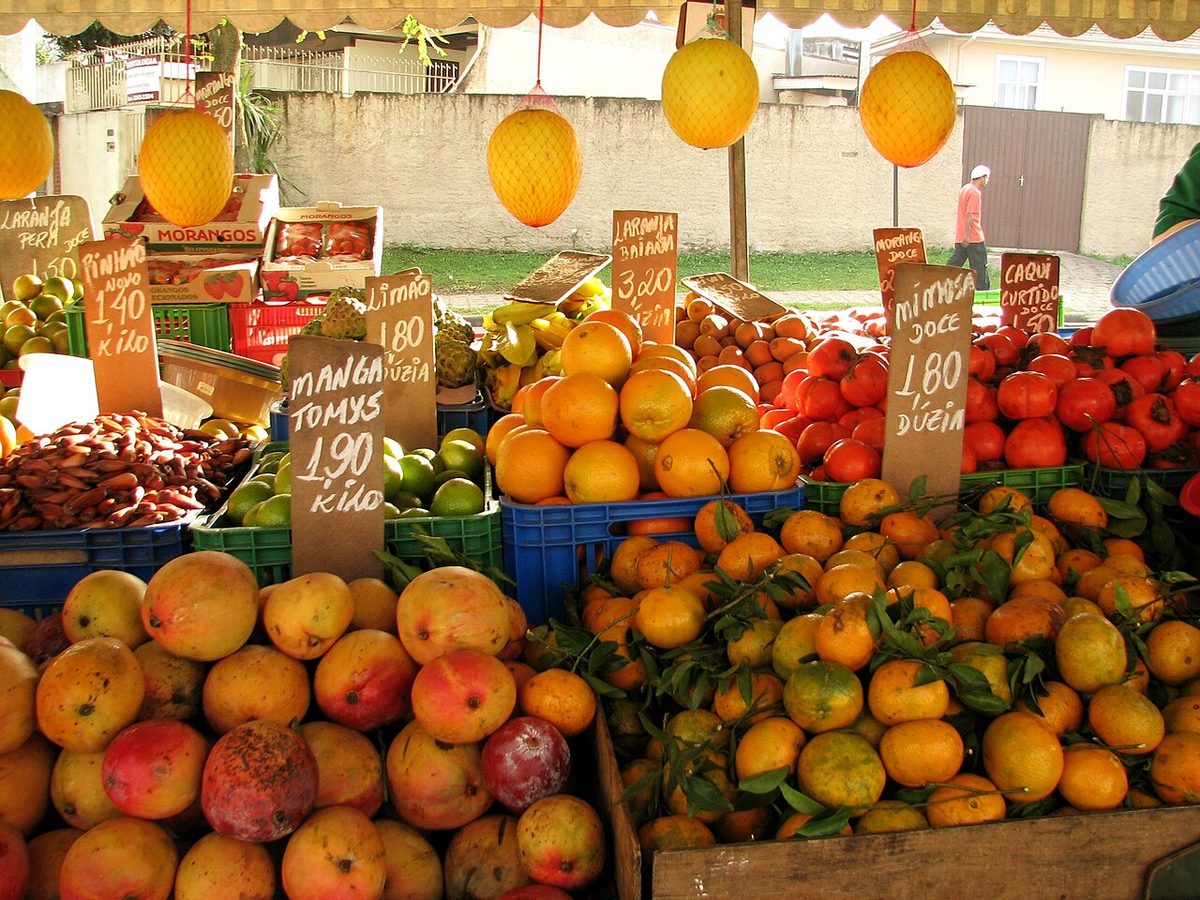
- Frutas na feira de CuritibaWikimedia Commons · CC BY 2.0 photo by Felipe Skroski used as a general illustration
General information, not medical advice. This study measured self-reported fruit and vegetable intake in adults using a Brazilian public health service; it did not test health outcomes. If you have a medical condition or follow a prescribed diet, talk to your doctor or a registered dietitian before changing what you eat.
Analysis by NutroPractic from the sources listed. Written for general readers; it does not replace advice from your own doctor.
From our articles
Read, then eat a little better
Plain-language guides on nutrition and wellness, backed by research.

Diabetes
Potatoes and blood sugar: boiled, cooled, mashed or fried, and what the cohorts and trials found
Fries were linked to 20% higher diabetes risk per three servings a week in 205,000 US adults; boiled, baked and mashed potatoes to almost none. GI by cooking method, resistant starch in grams after chilling, the glycaemic load of a potato against a cup of rice, and how to fit aloo into an Indian plate.
30 Oct 2026
Children's nutrition
Picky eaters aged 2 to 8: what feeding studies show works at the table
Fussy eating peaks between two and six and is usually a normal stage, not a parenting failure. Feeding trials show what moves it: small repeated tastes, eating together, no pressure and the right kind of reward. Here is how to use them, and the signs that mean it's more than picky eating.
30 Oct 2026
Women's health
PCOS and food: what the diet trials show for cycles, insulin and weight
PCOS affects about one woman in ten, and most are told to "lose weight" with little else. Here is what drives it, why insulin matters even in slim women, how much weight loss brings cycles back, what the low-GI and Mediterranean trials found, what inositol and metformin do, and which tests to ask for.
30 Oct 2026
Newsfeed for your website
Want this feed on your website?
Add it to any site with one copy-and-paste snippet. No sign-up, and it updates itself every hour.
Start with a virtual consultation
Tell Dr. Triveni what you want to change. You will leave with a clear next step, whether you are in Toronto, London, New York or Chennai.