Diet and immunity · November 5, 2026
Four days of high-fat feeding at the start of inflammation left a memory in mouse skin. The next flare was roughly twice as severe
The diet did not need time to cause obesity. It had to overlap with the opening days of a psoriasis-like skin reaction — and the effect was still visible when the mice were challenged again months later.

Can a brief change in diet matter long after the plate has changed back? A Nature paper published on 28 October 2026 tested that question in mice. Researchers fed lean mice either a low-fat or fat-enriched diet around the start of an imiquimod-triggered, psoriasis-like skin reaction. Just four days of high-fat feeding during that opening window made the inflammation markedly worse. Giving the same diet outside the window did not.
The timing mattered more than prior weight. Moving mice with obesity to a low-fat diet for the corresponding four days blunted the extra inflammation, while short-term semaglutide improved weight and metabolic measures but did not block it. Three different fat-enriched diets amplified the response; extra glucose in drinking water did not reproduce it. The researchers traced the effect through neutrophils, the NLRP3–IL-1 beta pathway and inflammatory CD4 T cells.
The most striking part came after the skin looked normal again. Following about 25 days of recovery on a low-fat diet, mice whose first flare had begun during high-fat feeding developed roughly twice the ear swelling when the same site was challenged again. The exaggerated response remained detectable after 6.5 months. Previously uninflamed skin did not show it, suggesting that immune cells resident in the affected tissue had kept a local memory.
This does not show that a weekend of rich food causes psoriasis, worsens a person's next flare or creates permanent immune damage. It is a detailed set of mouse experiments using an induced skin-inflammation model, not a human dietary trial. What it adds is a testable idea: diet at the moment inflammation begins may shape the immune response differently from the same diet during a quiet period. Human studies would need to establish whether that timing effect exists outside the laboratory.
The timing experiment in mice
4 days
High-fat feeding at inflammatory onset was enough to amplify the first flare
~2×
Greater ear swelling during recurrence in previously affected skin
~25 days
Recovery before the second inflammatory challenge
6.5 months
The exaggerated recall response was still detectable
3 diets
Compositionally different fat-enriched diets amplified inflammation
Figures and experimental details are from the full Nature paper and its PubMed abstract. Ear swelling is a measure in an imiquimod-induced mouse model, not a clinical result in people. The work also included skin-cell profiling, gene-altered mice, immune-cell depletion, drug inhibition and skin transplantation to test the proposed pathway. The paper lists grants from US federal agencies and several foundations; it also reports author relationships with pharmaceutical and biotechnology companies.
- Tissue-resident memory T cells remain in organs such as skin after an immune response and can react quickly when the same tissue is challenged again.
- NLRP3 is part of an intracellular danger-sensing complex called an inflammasome. In this study, blocking it during the first flare reduced the diet-related amplification, but blocking it only at recurrence did not erase the stored response.
- The high-fat diet alone was not enough to create the lasting effect. It had to coincide with the induced inflammation, and the stronger recurrence stayed confined to skin that had been inflamed before.
- Diet at disease onset determines tissue inflammatory memoryNature, 28 October 2026 · Full paper: timing experiments, immune pathway, recurrence and limitations
- PubMed record 42957863US National Library of Medicine · Abstract, publication date and conflict-of-interest statement
- Pastries on displayWikimedia Commons · Image by Chris Rycroft, CC BY 2.0
General information, not medical advice. This was a study in mice with laboratory-induced inflammation; it cannot tell you whether a short dietary change alters psoriasis or another inflammatory condition in people. Keep following the treatment and dietary advice agreed with your doctor or dietitian.
Analysis by NutroPractic from the sources listed. Written for general readers; it does not replace advice from your own doctor.
From our articles
Read, then eat a little better
Plain-language guides on nutrition and wellness, backed by research.
Diabetes
Pasta and blood sugar: al dente, cooled and reheated, and what the glucose tests measured
Head-to-head tests found little gap between 5 and 15 minutes of boiling. Chilling and reheating ranged from no change to a large drop. Moving from 80 g to 150 g adds 50 g of carbs. The tests, the sums, and legume and whole-wheat pastas per 100 g.
4 Nov 2026
Lifestyle
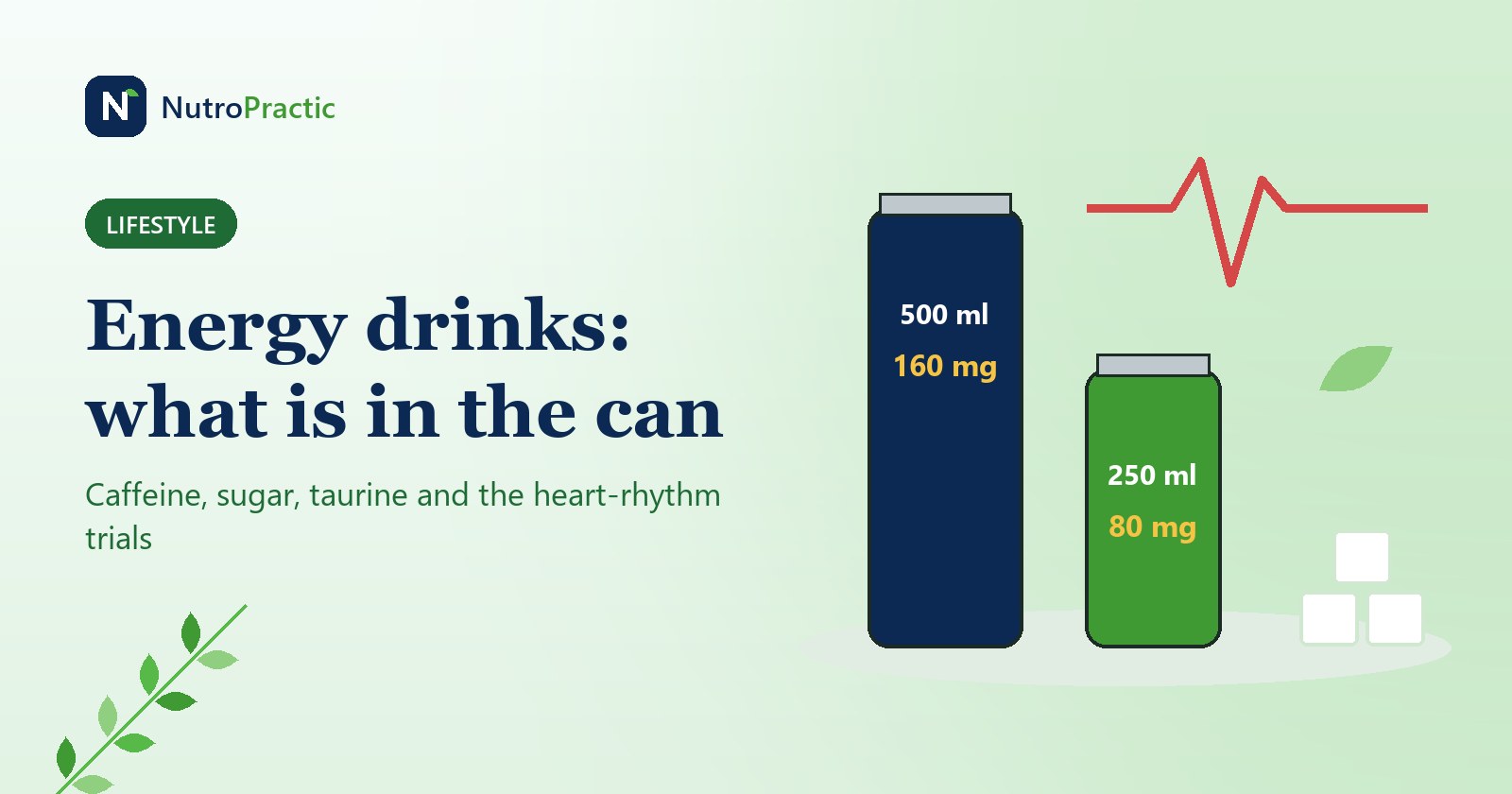
Energy drinks: caffeine, sugar and taurine per can, and what the emergency-visit and heart-rhythm studies found
From 80 mg to 300 mg of caffeine, and up to 55 g of sugar in one can. The numbers by brand, what they mean for a 50 kg teenager, what the QT and blood pressure trials measured, the old emergency-visit data and England's coming under-16 ban.
4 Nov 2026
Everyday eating
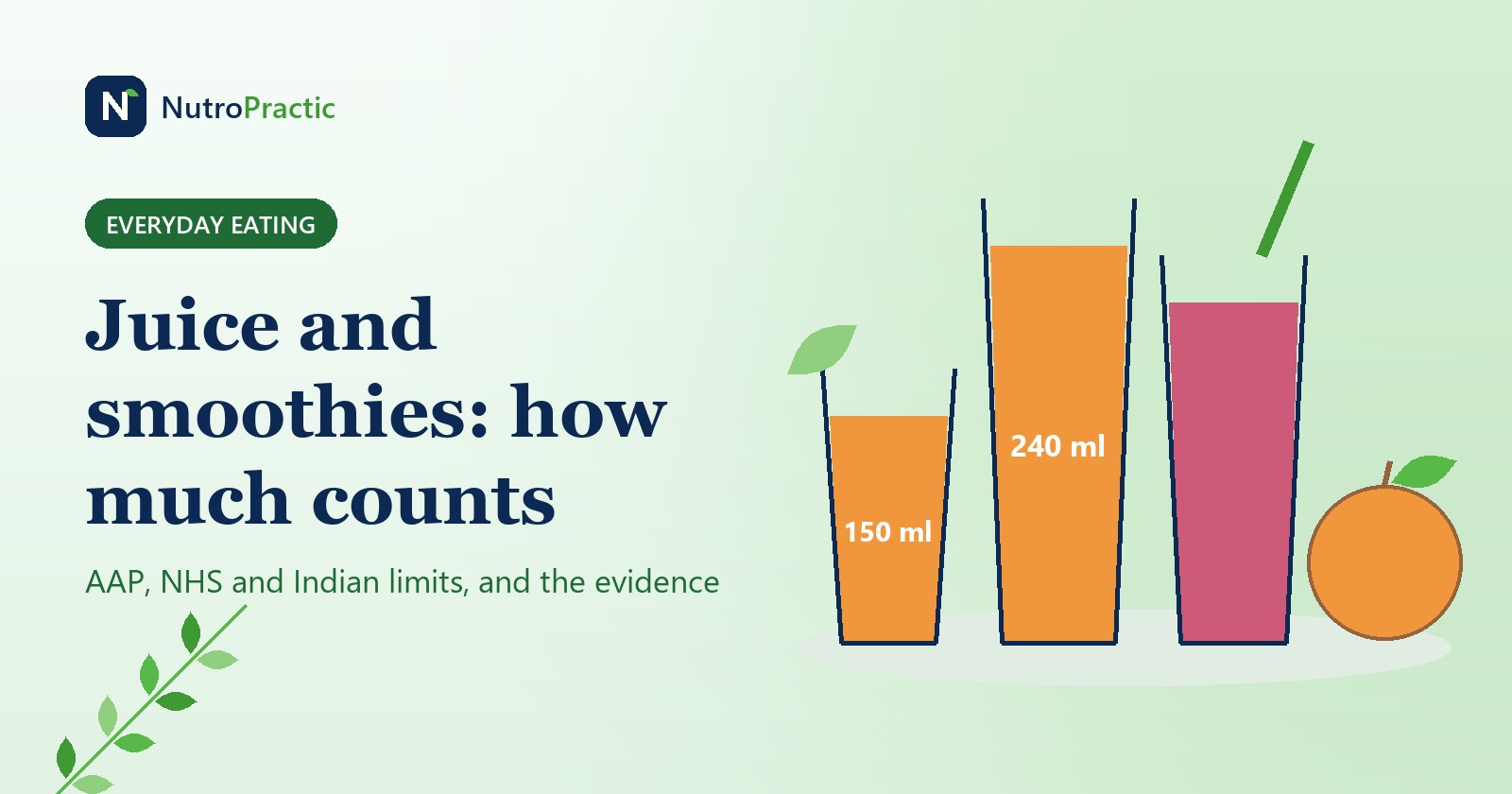
Fruit juice and smoothies for children and adults: how much counts, and what the AAP and NHS limits are based on
None under 1, 120 ml at 1 to 3, 150 ml for British adults, 250 ml for older Indian children. The limits side by side, sugar per glass against whole fruit, what the cohort studies on weight and diabetes found, and why smoothies are a closer call.
3 Nov 2026
Newsfeed for your website
Want this feed on your website?
Add it to any site with one copy-and-paste snippet. No sign-up, and it updates itself every hour.
Start with a virtual consultation
Tell Dr. Triveni what you want to change. You will leave with a clear next step, whether you are in Toronto, London, New York or Chennai.