Food labels · November 1, 2026
Only 49 of 683 adults knew the five-a-day minimum for fruit and vegetables. A Saudi survey asks who actually reads the back of the packet
In an online survey of Saudi adults, people who knew more about nutrition, had a diploma or degree, or were on a diet of some kind used food labels more. Being on a diet mattered most. Age, income and body weight made no clear difference, and the knowledge quiz turned up a few surprises of its own.
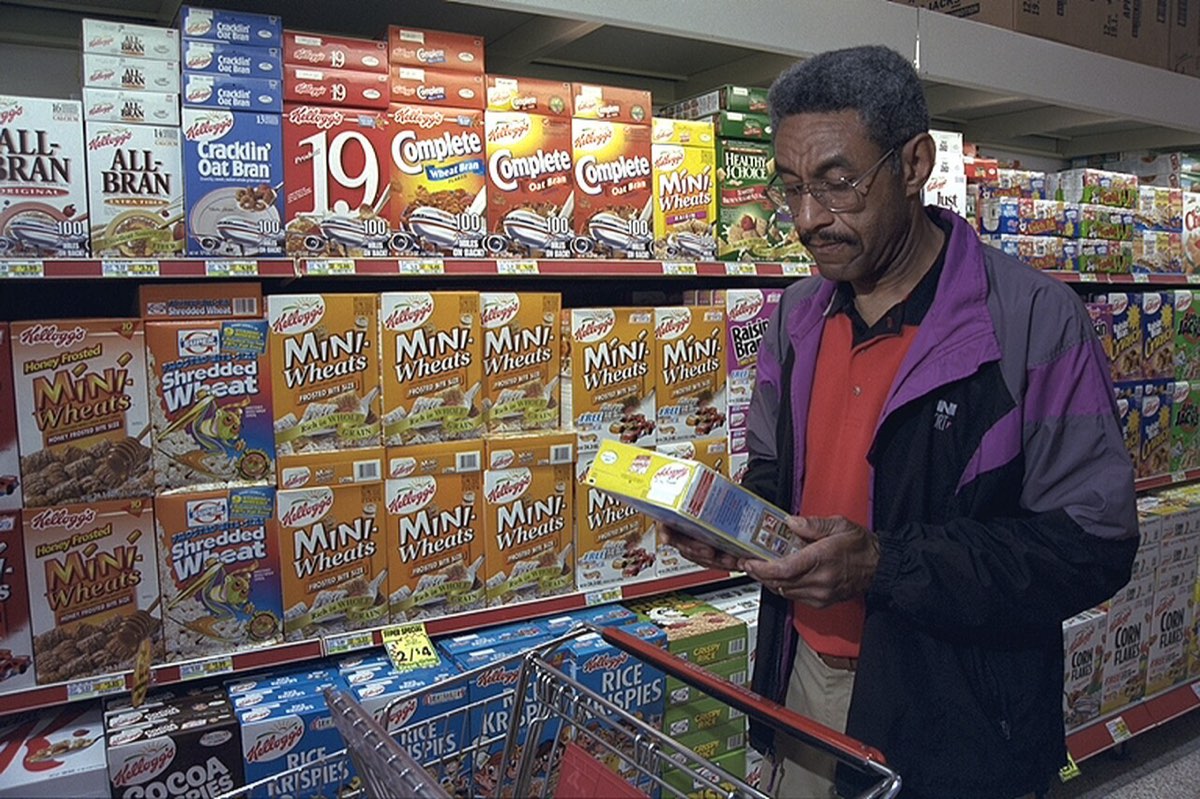
Almost every packet in a supermarket carries a panel of numbers, and policy makers count on shoppers reading it. Whether they do, and who does, is a different question. A team at Princess Nourah bint Abdulrahman University in Riyadh put it to Saudi adults in an online survey, and published the answers in Frontiers in Nutrition on 29 October.
The questionnaire went out through the researchers' contacts and was passed along on WhatsApp and X in January and February 2026. After removing non-Saudi and under-18 replies, 683 people remained: average age 31, about seven in ten women, three quarters with a diploma or bachelor's degree, and people trained in nutrition left out. Each person rated how often they read labels, used them to compare products, check calories or fat, test marketing claims, plan meals or judge serving size. The nine answers gave a score from 9 to 45. The average was 27.5, roughly 'sometimes'. Everyone also took a nine-question nutrition quiz and rated their own knowledge.
Three things went with reading labels more, after the other factors were taken into account. Each extra right answer on the quiz added about 0.7 points to the label score. A diploma or bachelor's degree added about 1.7 points compared with high school or less, though a postgraduate degree added nothing clear on top. The biggest difference was diet: people not following any particular eating plan scored 2.3 points lower than those who were, whether that plan was for weight loss, muscle, a health condition or general fitness. Age, sex, marriage, income, body weight and long-term illness showed no clear link in the main model. Swapping the quiz for people's own rating of their knowledge gave the same three findings.
The quiz is worth a look on its own. Eight in ten knew potatoes are a starchy food and that herbs and spices add flavour without fat or salt. Only 44% knew fat carries the most calories for the same weight, 30% that whole and skimmed milk hold about the same calcium, and just 7.2%, 49 people, that the minimum is five or more servings of fruit and vegetables a day. The limits are plain, and the authors list them: a one-off survey cannot say whether knowledge leads to label reading or the reverse, people shared the link with friends, so the sample leans young, female and educated, and everything was self-reported. The model explained only about 13% of the spread in label use. Still, the pattern is a useful one for anyone who shops: the label tends to get read when you have a reason to read it, and a little knowledge makes it easier to use.
Factors associated with food label use among Saudi adults (Frontiers in Nutrition, 29 October 2026)
683
Saudi adults in the online survey, January to February 2026 (average age 30.8, 69% women)
27.5 of 45
Average food label use score (range 9 to 45, higher means more use)
+0.7
Points on the label score for each extra right answer on the 9-question nutrition quiz (95% CI 0.2 to 1.2)
+1.7
Points for a diploma or bachelor's degree compared with high school or less (95% CI 0.2 to 3.2)
-2.3
Points for people not following any specific diet compared with those who were (95% CI -2.9 to -1.8)
7.2%
Knew the minimum of five or more servings of fruit and vegetables a day (49 of 683)
29.6%
Knew whole and skimmed milk hold about the same calcium
Cross-sectional online survey with convenience and snowball sampling, so it shows associations, not cause and effect, and may overstate label use. Label use, diet and body weight were self-reported. The main model explained about 13% of the variation in label use (R² 0.129).
- Taking fat out of milk does not take the calcium with it: in the study's quiz, 'about the same' was the right answer for whole versus skimmed milk, and fewer than a third chose it.
- Gram for gram, fat carries more than twice the energy of protein or carbohydrate, about 9 calories against 4. Fewer than half the people surveyed picked fat as the most energy-dense.
- The World Health Organization's current advice is at least 400 g of fruit and vegetables a day for everyone over 10, with 250 g for children aged 2 to 5 and 350 g for those aged 6 to 9.
- In the survey, ketchup was the right answer to 'which of these is typically high in added sugar', ahead of plain yoghurt and diet energy drinks; 43% got it.
- The label score in the study also counted how often people used the label to check marketing claims on the front of the pack, one of nine habits it measured.
- Factors associated with food label use among Saudi adults: the roles of nutritional knowledge, educational level, and dietary practicesFrontiers in Nutrition, 29 October 2026 · Open-access paper (CC BY): methods, Tables 2 to 6 with the participants, quiz answers and regression results, and the limitations.
- Healthy diet fact sheetWorld Health Organization · The 400 g a day advice for fruit and vegetables, and the smaller amounts for children.
- Shopper checks ingredients on boxed cerealsWikimedia Commons · Public domain U.S. Department of Agriculture photograph, used as a general illustration.
General information, not medical advice. This survey found associations among Saudi adults who chose to answer an online questionnaire; it did not show that knowledge, schooling or dieting cause people to read labels. If you need help reading labels for a health condition, talk to your doctor or a qualified dietitian.
Analysis by NutroPractic from the sources listed. Written for general readers; it does not replace advice from your own doctor.
From our articles
Read, then eat a little better
Plain-language guides on nutrition and wellness, backed by research.

Diabetes
Potatoes and blood sugar: boiled, cooled, mashed or fried, and what the cohorts and trials found
Fries were linked to 20% higher diabetes risk per three servings a week in 205,000 US adults; boiled, baked and mashed potatoes to almost none. GI by cooking method, resistant starch in grams after chilling, the glycaemic load of a potato against a cup of rice, and how to fit aloo into an Indian plate.
30 Oct 2026
Children's nutrition
Picky eaters aged 2 to 8: what feeding studies show works at the table
Fussy eating peaks between two and six and is usually a normal stage, not a parenting failure. Feeding trials show what moves it: small repeated tastes, eating together, no pressure and the right kind of reward. Here is how to use them, and the signs that mean it's more than picky eating.
30 Oct 2026
Women's health
PCOS and food: what the diet trials show for cycles, insulin and weight
PCOS affects about one woman in ten, and most are told to "lose weight" with little else. Here is what drives it, why insulin matters even in slim women, how much weight loss brings cycles back, what the low-GI and Mediterranean trials found, what inositol and metformin do, and which tests to ask for.
30 Oct 2026
Newsfeed for your website
Want this feed on your website?
Add it to any site with one copy-and-paste snippet. No sign-up, and it updates itself every hour.
Start with a virtual consultation
Tell Dr. Triveni what you want to change. You will leave with a clear next step, whether you are in Toronto, London, New York or Chennai.