Lung health · October 28, 2026
Fish, greens, fruit and beans and asthma in 32,000 Italians: a link so faint the authors list everything it doesn't prove
An Italian team scored how often 32,000 adults in a national survey ate fish, leafy greens, other vegetables, fruit and pulses, and compared it with who said they had asthma. A higher score went with slightly lower odds, about 5% per 10 points, but the effect vanished when people were split into thirds. Meat, cheese, sweets and snacks showed nothing at all.
Ask whether diet affects asthma and you'll hear confident answers in both directions: dairy makes mucus, fish oil calms the airways, fruit and vegetables protect. For adults, the research is far less sure than the advice. Studies have used different diets, different ways of measuring them and different definitions of asthma, and the results don't line up. A paper published on 23 October in Nutrients by public health researchers in Florence and Ancona added one more piece, from a very large sample, and is unusually blunt about how small that piece is.
The team used the 2023 round of Aspects of Daily Life, the yearly household survey run by ISTAT, Italy's national statistics institute. Adults tick which chronic conditions they have, asthma among them, and say how often they eat a list of foods, on a five-step scale from more than once a day to never. From those answers the researchers built two scores from 0 to 100. One, which they call ANTI, counts fish, leafy vegetables, tomatoes and other vegetables, fruit and dried or canned pulses. The other, PRO, counts processed meat, beef, pork, milk, cheese, eggs, salty snacks and sweets. The labels are shorthand for an old hypothesis about inflammation; the authors stress that neither score was checked against any blood marker and neither is a validated diet-quality measure.
Of 33,182 adults who answered the asthma question, 4.6% said they had it once the survey weights were applied. In the 32,000 with full information, after allowing for age, sex, education, body mass index, smoking and household money, each 10 points of ANTI went with about 5% lower odds of reporting asthma (odds ratio 0.947). That held with PRO in the same model, and when only people who had answered all 13 food questions were kept. PRO itself showed no link at all: an odds ratio of 1.004, as flat as these numbers get.
Then the finding starts to wobble. Split by thirds of ANTI, the top third had about 13% lower odds than the bottom third, but the range of plausible values crossed 'no difference' (p = 0.059). The raw average scores of people with and without asthma were less than a point apart and not significantly different. Among men, a higher PRO score went with higher odds and a higher ANTI score with lower odds; in women neither reached significance, and the test for a real difference between the sexes said nothing for ANTI. Leaving out people who also reported chronic bronchitis or emphysema made the ANTI link a bit stronger; looking only at never-smokers or adults under 45 made it uncertain.
The biggest problem is one no survey snapshot can fix: diet and asthma were measured at the same moment, so there is no way to tell which came first. People who have asthma may well change how they eat. Asthma here is what people said, not a diagnosis confirmed by breathing tests, and the food answers are frequencies, not amounts. The authors' own conclusion is that the results 'do not establish an inflammatory mechanism, reduced asthma risk, or respiratory benefit'. What the study does offer is a large, nationally weighted sample in which meat, cheese, eggs and sweets showed no sign of a link with asthma, and plant foods with fish showed a small one worth testing in studies that follow people over time.
Two food-frequency scores and self-reported asthma in Italian adults (ISTAT Aspects of Daily Life survey, 2023)
4.62%
Weighted share of 33,182 adults who reported asthma (1,517 people); 95% CI 4.37 to 4.89%
32,000
Adults with complete data in the regression models, 1,460 of them with asthma
0.947
Odds ratio for asthma per 10 points of the fish, vegetables, fruit and pulses score, adjusted for the other score (95% CI 0.907 to 0.989; p = 0.014)
1.004
Odds ratio per 10 points of the meat, dairy, eggs, snacks and sweets score (95% CI 0.952 to 1.059; no association)
0.871
Odds ratio, top vs bottom third of the fish and plant score (95% CI 0.754 to 1.005; not significant)
54.8 vs 55.5
Average fish and plant score in adults with and without asthma (out of 100; p = 0.157)
Secondary cross-sectional analysis of public-use ISTAT microdata (41,750 records, 35,681 adults). Scores built by the authors from 13 food-frequency questions, equally weighted, not validated against biomarkers. Survey-weighted logistic regression adjusted for age group, sex, education, BMI category, smoking and household economic resources. Asthma self-reported, not clinically confirmed. 3,681 adults (10.3%) excluded for missing data. No correction for multiple comparisons; sex and subgroup results are exploratory. No specific funding; no conflicts declared. Published 23 October 2026, open access (CC BY).
- Each of the five foods in the fish and plant score moves the score by 5 points per step on the frequency scale, so 10 points is the same as eating two of those foods one step more often.
- The score's 'tomatoes' question also covers other vegetables, so the authors note it can't say anything about tomatoes on their own.
- Higher scores for fish and plants were more common in women and older adults and less common in current smokers, which is one reason the models had to adjust for age, sex and smoking.
- A 5% drop in odds is not 5 percentage points: with about 4.6% of adults reporting asthma, it would mean roughly 4.4% instead, if the link were real and causal.
- A 2021 Global Burden of Disease analysis cited in the paper put worldwide asthma prevalence at 3,340 cases per 100,000 people, about 3.3%.
- Exploratory Food-Frequency Scores and Self-Reported Asthma in Italian Adults: A Nationwide Cross-Sectional StudyNutrients · The study, published 23 October 2026; figures from the full text, sections 2 and 3
- Aspects of daily life: microdataISTAT (Italian National Institute of Statistics) · The national survey the data come from
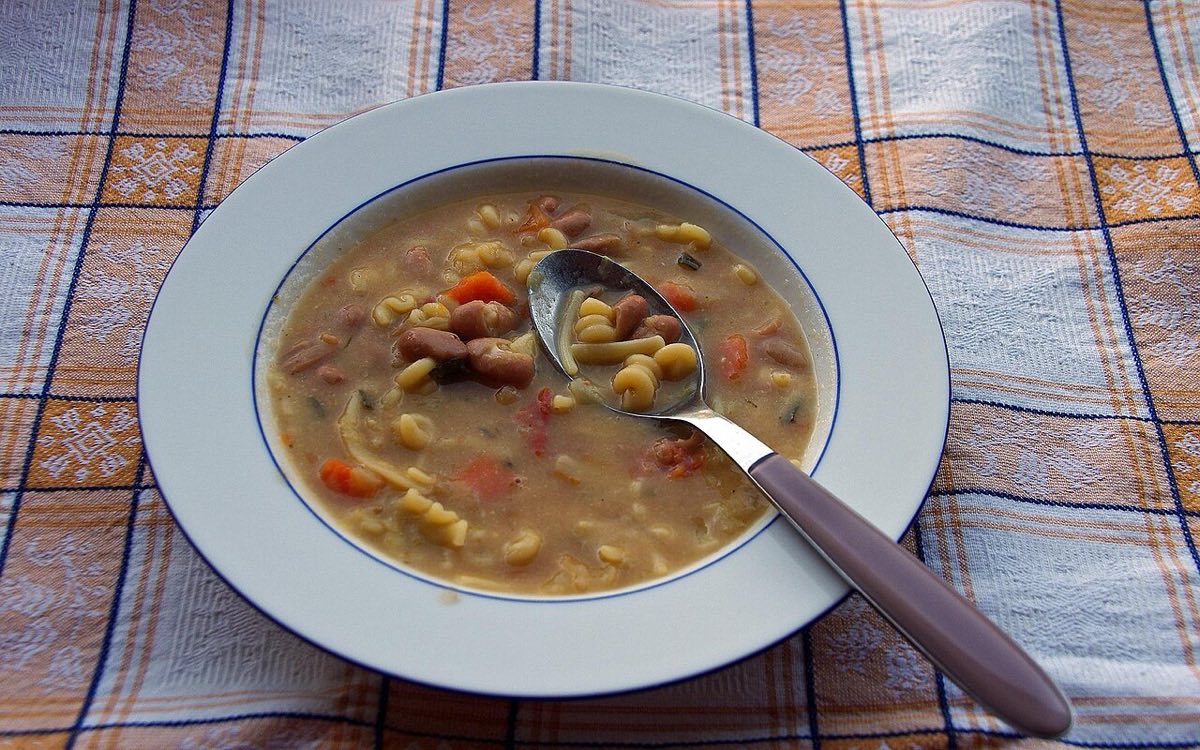
- Pasta e fagioli - minestraWikimedia Commons · The image, CC0
General information, not medical advice. This study can't show that changing your diet changes asthma. Keep taking asthma medicines as prescribed, and talk to your doctor before changing treatment; if you have a food allergy, ask before adding new foods such as fish or pulses.
Analysis by NutroPractic from the sources listed. Written for general readers; it does not replace advice from your own doctor.
From our articles
Read, then eat a little better
Plain-language guides on nutrition and wellness, backed by research.

Women's health
Inositol for PCOS: the 40:1 ratio, trial doses, and food milligrams
Why do randomized trials in polycystic ovary syndrome prioritize the 40:1 myo to D-chiro inositol ratio? Here is the science behind the ovarian epimerase paradox, clinical ovulation and insulin metrics, and why cantaloupe cannot replace 4,000 mg trial powder.
21 Nov 2026

Everyday eating
Extra virgin olive oil polyphenols: the EU health claim, smoke point myths, and cooking stability
Does extra virgin olive oil degrade when cooked? What does the EU 5 mg polyphenol health claim require, how does oleocanthal act like ibuprofen, and why does oxidative stability matter more than smoke point in domestic frying? Here is the clinical and culinary data.
21 Nov 2026

Food and nutrition
L-theanine and caffeine: what cognitive trials measured on sustained attention, and milligrams in matcha vs green tea
Combining L-theanine with caffeine produces clean focus without caffeine jitters. Here is what randomized trials measured on attention-switching, EEG alpha brain waves, and the exact milligrams across ceremonial matcha, culinary powder, gyokuro, and sencha.
20 Nov 2026
Newsfeed for your website
Want this feed on your website?
Add it to any site with one copy-and-paste snippet. No sign-up, and it updates itself every hour.
Start with a virtual consultation
Tell Dr. Triveni what you want to change. You will leave with a clear next step, whether you are in Toronto, London, New York or Chennai.