Fermented foods · October 22, 2026
Nearly everyone in Europe eats fermented food every week: yoghurt, cheese, bread, coffee. The sauerkraut and pickles that fermented-food fans talk about come to under 10 grams a day
A survey of 12,646 adults in 53 European countries measured 15 kinds of fermented food and drink. Fermented dairy turned up in about 95% of diets, at 67 to 80 grams a day. Fermented vegetables were eaten by about nine in ten people, but in tiny amounts, and many plant-based alternatives were tried far more often than they were actually eaten.
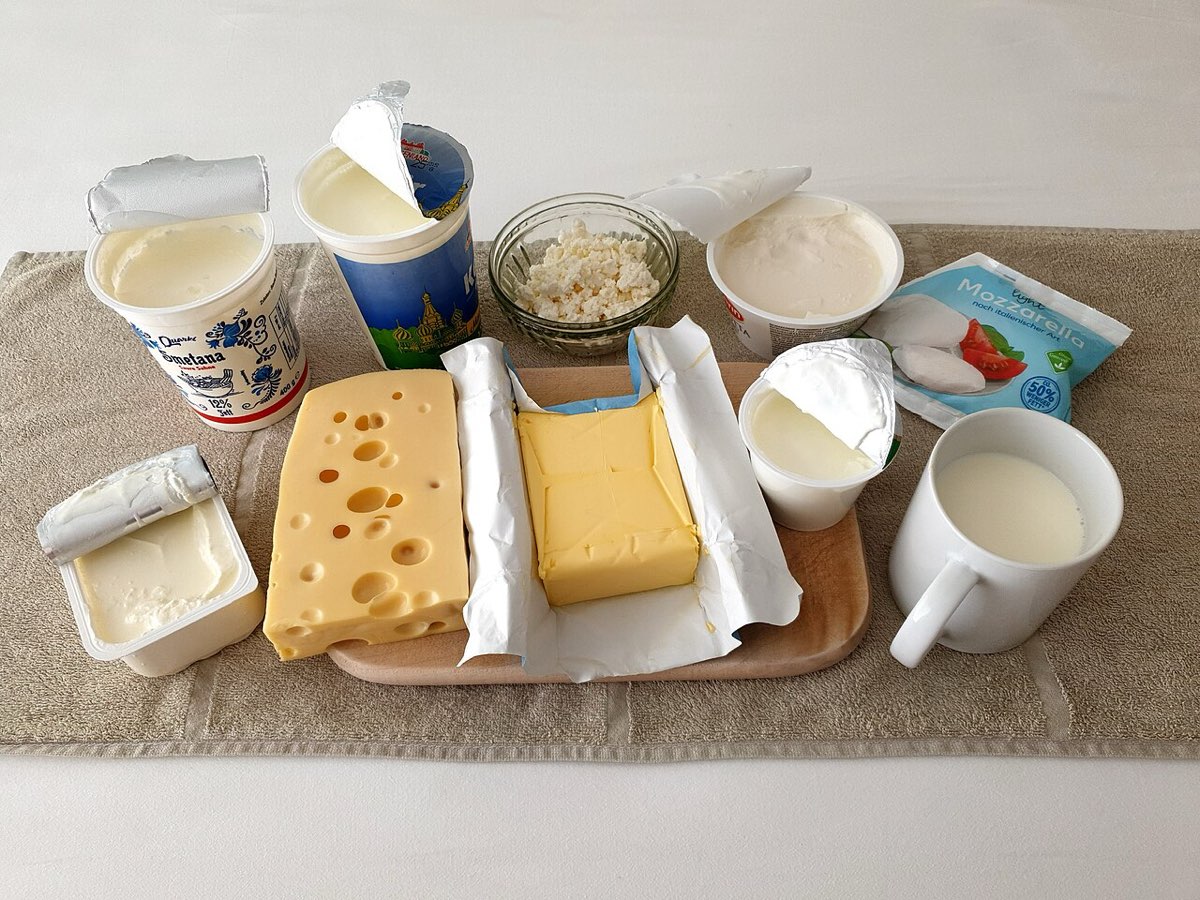
Fermented foods have had a good decade. Kefir, kombucha, kimchi and home-made sauerkraut fill shelves and social media feeds, sold on the idea that the microbes and the compounds they leave behind are good for the gut. Yet nobody had a good picture of how much fermented food Europeans actually eat. Most food surveys lump yoghurt in with milk and bread in with cereals, and almost none ask about kvass or water kefir. A network of researchers from across Europe, working together as PIMENTO, built a questionnaire to fill that gap, and their first Europe-wide results came out in the British Journal of Nutrition on 15 October.
Between October 2023 and May 2024, 12,646 adults in 53 countries answered the Fermented Food Frequency Questionnaire online, in 28 languages. It asks about 15 groups, from fermented dairy, bread and coffee to cured meat and fish, fermented vegetables, vinegar, chocolate, wine and beer, with country-specific examples and photographs to judge portion sizes. The team grouped the answers into four regions (Northern, Southern, Western and Central-Eastern Europe) and weighted them by each region's population, sex and age.
Fermented dairy came out on top everywhere. Between 94% and 96% of people in every region ate it, and those who did had a median of 67 grams a day in Central-Eastern Europe up to 80 grams in Western Europe, most of it yoghurt and fermented milk (44 to 56 grams) with 5 to 20 grams of cheese. Fermented cereals, mostly bread, were eaten by 90% to 96%, at 44 to 77 grams a day, the most in the north. Coffee reached 78% to 84% of people at 60 to 73 ml a day, and chocolate more than 90%, at 76 to 139 grams a week. No fermented food group came to more than about 100 grams a day among the people who ate it.
The surprises were at the other end. About nine in ten people said they ate fermented vegetables, yet their median was only 4 to 8 grams a day, a forkful of sauerkraut or a slice of pickle. Fermented pulses and legumes came to 4.5 to 9 grams a week. In Western Europe 73% said they ate plant-based meat or dairy alternatives, against 44% in Central-Eastern Europe, but the median amount was 25.5 grams a week in the west and close to zero elsewhere: something people try rather than something they eat. Fermented soft drinks were the reverse, eaten by fewer people (18% in the south to 49%) but in larger amounts by those who liked them. Wine and beer followed familiar lines, highest in Western Europe at 25 ml of wine and 50 ml of beer or cider a day.
This is a description of habits, not a health study, and the authors say so. Everything was self-reported, and the sample was recruited online and by word of mouth, topped up by a survey panel, so it leans towards women and towards highly educated people (55% of the Western European group held a master's degree or doctorate). The questionnaire cannot tell a live, naturally fermented sauerkraut from a pasteurised one, or real fermented pickles from cucumbers simply soaked in vinegar, which many shoppers take for fermented. The authors think that may slightly inflate the figures. What the data do suggest is that most of the fermented food Europeans eat arrives through yoghurt, cheese and bread, and that the foods most often praised for their live microbes are a garnish on most plates.
Fermented food and drink in the diets of 12,646 adults across 53 European countries, 2023 to 2024
12,646
Adults in 53 countries who answered the online questionnaire, in four regions (2,315 north, 5,185 central-east, 2,577 west, 2,569 south)
94–96%
Ate fermented dairy, the only food group with no clear difference between regions
67–80 g/day
Median fermented dairy among those who ate it, lowest in Central-Eastern and highest in Western Europe
90–96%
Ate fermented cereals, mostly bread, at a median of 44 to 77 g a day
4–8 g/day
Median fermented vegetables among those who ate them, although about nine in ten did
73% vs 44%
Ate plant-based alternatives in Western vs Central-Eastern Europe; median intake 25.5 g a week in the west, about zero elsewhere
18–49%
Drank fermented soft drinks, lowest in Southern Europe; 19 to 50 ml a week among those who did
Study: Syrpas M, Smiliotopoulos T, Adamberg S, et al., 'Mapping fermented food prevalence and intake across European regions: results from the Promoting Innovation of Fermented Foods (PIMENTO) study', British Journal of Nutrition, first published online 15 October 2026, doi 10.1017/S0007114526108563 (open access, CC BY; read in full). Cross-sectional online survey, October 2023 to May 2024, with the Fermented Food Frequency Questionnaire (3FQ), 15 food groups, portion photographs and 28 language versions; convenience and snowball recruitment plus panel top-ups, weighted to Eurostat populations by region, sex and age. Intakes are medians among consumers, worked out from frequency midpoints times portion size. Median age 39 to 45 by region; women were the majority in every region. Fermented vegetables: 89.5 to 92.0% consumers, 4.4 g/day (west) to 8.4 g/day (south). Chocolate: 76.0 g/week (north) to 138.8 g/week (west and central-east). Coffee: 60.0 to 73.1 ml/day. Wine: 12.5 (central-east) to 25.0 ml/day (west); beer or cider 25.0 to 50.0 ml/day. Fermented tea: 33.8 to 44.3% consumers. Plant-based alternatives are given as a median of 25.5 per week in the results (0 to 3.6 g/day); one sentence of the discussion says 'about 25 g/day', which does not match, and we use the results figure. The abstract gives chocolate in ml/week, the results in g/week. Funding: COST Action CA20128 (PIMENTO), with national grants in Slovenia and Slovakia; no competing interests declared.
- A food scientists' consensus (ISAPP, 2021) defines fermented foods as 'foods made through desired microbial growth and enzymatic conversions of food components'. By that definition, cucumbers pickled in vinegar are not fermented, but naturally soured pickles are.
- Fermented does not always mean alive. Bread is baked, and much shop-bought sauerkraut and most beer are pasteurised or filtered, so the yeasts and bacteria that made them are gone or dead by the time you eat them.
- In a 17-week Stanford trial published in 2021, 18 healthy adults who ate more fermented foods each day saw their gut microbe diversity rise and their inflammatory markers fall; 18 others on a high-fibre diet did not see the same rise in diversity.
- Swiss adults in the national menuCH survey ate a median of just 0.8 grams of fermented vegetables a day, even lower than the 4 to 8 grams in the PIMENTO survey.
- In the Dutch NQplus study, 16 to 18% of all foods people ate were fermented, mostly coffee, yoghurt, beer, wholegrain bread, wine and cheese.
- Mapping fermented food prevalence and intake across European regions: results from the Promoting Innovation of Fermented Foods (PIMENTO) studyBritish Journal of Nutrition, October 2026 · The paper: full text, open access
- The International Scientific Association for Probiotics and Prebiotics (ISAPP) consensus statement on fermented foodsNature Reviews Gastroenterology & Hepatology, 2021 · What counts as a fermented food
- Gut-microbiota-targeted diets modulate human immune statusCell, 2021 · The Stanford trial of fermented foods versus high fibre in 36 adults
- Dairy productsWikimedia Commons · The photo, CC0 (Alexschneider250)
General information, not medical advice. This survey describes what people across Europe say they eat; it does not show that fermented foods improve health or how much anyone should eat. If you have a digestive condition, a weakened immune system, or need to limit salt, ask your doctor or a dietitian before adding fermented foods or drinks to your diet.
Analysis by NutroPractic from the sources listed. Written for general readers; it does not replace advice from your own doctor.
From our articles
Our guides on this subject
Plain-language guides on nutrition and wellness, backed by research.
Gut health
Constipation and food: kiwis, prunes, psyllium and what the head-to-head trials found
Two green kiwis a day added about 1.5 complete bowel movements a week in a 2023 trial across New Zealand, Italy and Japan, and beat psyllium overall; prunes beat psyllium in an earlier one. The doses the trials and the 2025 British dietitians' guideline used, what water, magnesium, coffee and rye bread add, IBS-C, isabgol, a four-week plan and the warning signs.
25 Oct 2026

Gut health
Heartburn and acid reflux: which food triggers the trials confirm, and what late meals, weight and a raised bed do
Up to 28% of North American adults get heartburn every week. Coffee showed no link across 15 studies, but going to bed within three hours of dinner came with 7.5 times the odds, a 1,000 kcal meal brought 65% more acid time than a 500 kcal one, and losing 3.5 BMI units cut the odds by about a third. What the trials say about food, weight, late meals and raising the bed, with a four-week plan.
22 Oct 2026

Food and nutrition
L-theanine and caffeine: what cognitive trials measured on sustained attention, and milligrams in matcha vs green tea
Combining L-theanine with caffeine produces clean focus without caffeine jitters. Here is what randomized trials measured on attention-switching, EEG alpha brain waves, and the exact milligrams across ceremonial matcha, culinary powder, gyokuro, and sencha.
20 Nov 2026
Newsfeed for your website
Want this feed on your website?
Add it to any site with one copy-and-paste snippet. No sign-up, and it updates itself every hour.
Start with a virtual consultation
Tell Dr. Triveni what you want to change. You will leave with a clear next step, whether you are in Toronto, London, New York or Chennai.