Diet and joint health · November 6, 2026
A better polyunsaturated-to-saturated fat ratio barely moved arthritis risk. Across 93,129 adults, the main estimate was a 1.9% difference — and failed a tougher test
Three ageing cohorts produced a statistically significant result by one method and an inconclusive one by another. The paper is a useful lesson in how a very large sample can make a very small association look firmer than it is.
Can the balance between polyunsaturated and saturated fat predict who later develops osteoarthritis? Researchers ran the same prospective analysis in three cohorts: 89,877 people in UK Biobank, 1,118 in the US Health and Retirement Study and 2,134 in the English Longitudinal Study of Ageing. That made 93,129 participants with outcome follow-up.
The prespecified comparison used the ratio of polyunsaturated to saturated fat in participants' reported diets. For each one-standard-deviation increase in the log-transformed ratio, the pooled hazard ratio for a recorded osteoarthritis diagnosis was 0.981. In relative terms, that is about a 1.9% lower hazard, with a 95% confidence interval stretching from a 3.7% reduction to almost no reduction.
The result crossed the usual statistical threshold in the common-effect analysis, at p=0.040. A sensitivity method designed to be more cautious when only a few studies are combined did not: its confidence interval ran from 0.942 to 1.022 and p was 0.177. The direction stayed the same, but the evidence no longer excluded no association.
A secondary measure looked stronger. Each additional percentage point of energy from polyunsaturated fat was associated with a 3.3% lower hazard. Yet UK Biobank supplied 92.9% of the statistical weight, so it was much closer to one very large cohort result than three equally persuasive replications.
This was not a feeding trial, and a diagnosis in health records is not a direct scan of every joint. Diet reports, healthcare use, body weight, exercise, injuries and other factors can all shape the association. The authors explicitly say their observational findings neither establish cause nor justify a fat-ratio target for preventing osteoarthritis. The most defensible message is about uncertainty: a huge study can estimate a tiny link precisely, without proving that changing one person's fat ratio will protect their joints.
A tiny pooled association that was not robust
93,129
Participants with follow-up across UK Biobank, HRS and ELSA
89,877
Participants from UK Biobank; the two smaller cohorts contributed 3,252
0.981
Pooled hazard ratio per 1-SD higher log polyunsaturated-to-saturated fat ratio
0.963–0.999
95% confidence interval from the common-effect model; p=0.040
0.942–1.022
Confidence interval with modified Hartung–Knapp inference; p=0.177
92.9%
Share of inverse-variance weight UK Biobank supplied to the secondary PUFA result
Prospective observational analyses, pooled across three cohorts. Hazard ratios are relative rates of recorded osteoarthritis, not percentage-point changes in the number of people with painful joints. The primary association was very small and did not remain statistically significant under the more cautious sensitivity inference.
- Polyunsaturated fats include omega-3 and omega-6 fats; saturated fat is a different chemical family. A ratio combines both and cannot reveal which side drove a result.
- A hazard ratio of 0.981 means a 1.9% relative difference in the model, not 1.9 fewer diagnoses per 100 people.
- Hartung–Knapp methods allow more uncertainty in a meta-analysis when estimates come from only a few studies.
- UK Biobank volunteers are generally healthier than the UK population, which can limit how directly its associations generalise.
- Osteoarthritis risk also reflects age, genetics, previous joint injury, occupation and body weight; diet is only one possible contributor.
- Dietary Fatty Acid Composition and Incident Osteoarthritis: A Parallel Prospective Cohort Study of the UK Biobank, HRS, and ELSAFrontiers in Nutrition, 5 November 2026 · Primary study record; cohorts, participant counts, pooled hazard ratios, sensitivity inference and limitations checked against the abstract.
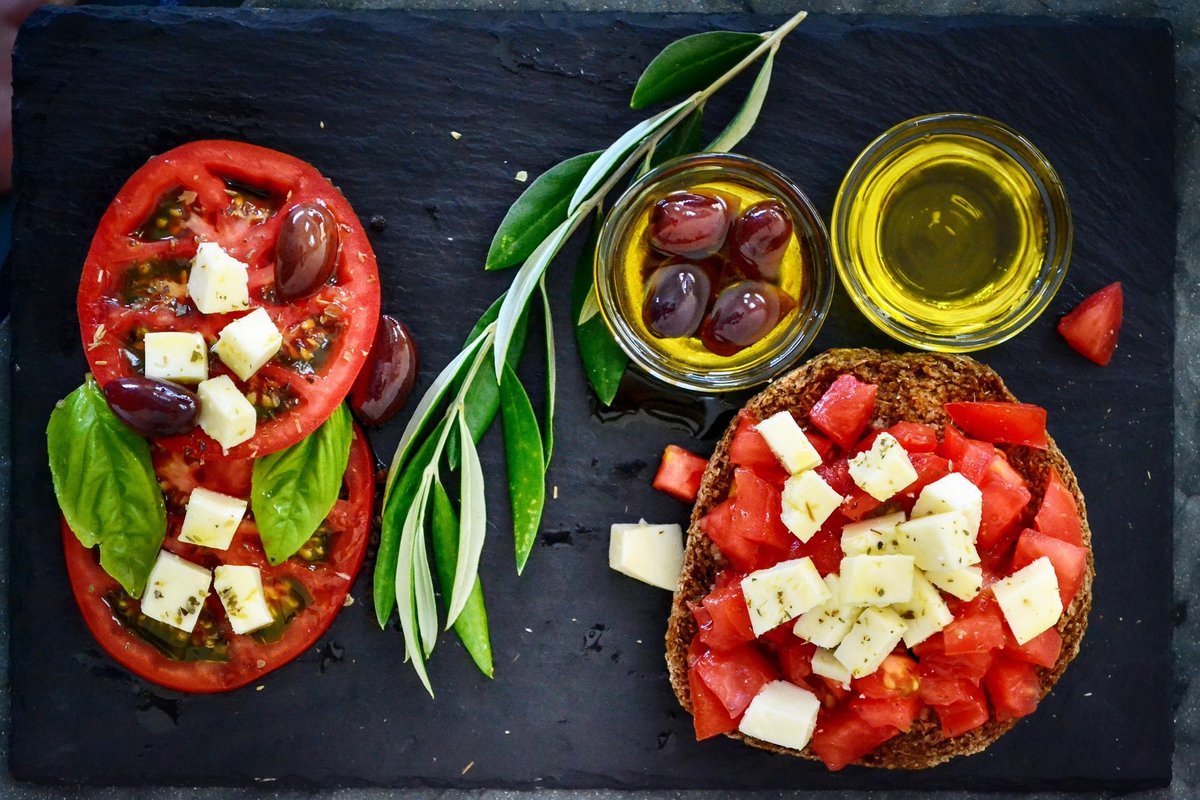
- Greek dakosWikimedia Commons · Photo by DanielaElenaTentis, CC0 1.0; reused as a general food illustration.
General information, not medical advice. This observational analysis does not show that changing dietary fat prevents osteoarthritis. People with joint pain or questions about dietary fat should speak with a qualified clinician or registered dietitian.
Analysis by NutroPractic from the sources listed. Written for general readers; it does not replace advice from your own doctor.
From our articles
Our guides on this subject
Plain-language guides on nutrition and wellness, backed by research.
Heart health
Lowering LDL cholesterol with food: what the portfolio diet trials showed
In a 2003 trial, four foods eaten together (oats and other sticky fibre, plant sterols, soy and nuts) lowered LDL almost as much as a low-dose statin. At home the average was about half that. How much each food does, a realistic day, and when food is not enough.
30 Oct 2026

Heart health
Eggs and cholesterol: what changed in the guidelines, and who should still count them
The US dropped its 300 mg cholesterol limit in 2015, then a 2019 study linked every extra half egg a day with more heart disease. Here is how much an egg really moves LDL, what the large studies found, why people with type 2 diabetes or high LDL may want a ceiling, and why what you eat with the egg matters more than the egg.
18 Oct 2026
Women's health
Eating through menopause: what changes for your bones, muscle and heart, and what to put on the plate
Around the final period, bone density at the spine drops by about 2% a year and LDL cholesterol jumps within a year or two. Hot flushes get the attention, but these quieter changes are where food and strength training do the most. Targets for protein, calcium and vitamin D, an honest look at soy, and a week you can start on Monday.
8 Oct 2026
Newsfeed for your website
Want this feed on your website?
Add it to any site with one copy-and-paste snippet. No sign-up, and it updates itself every hour.
Start with a virtual consultation
Tell Dr. Triveni what you want to change. You will leave with a clear next step, whether you are in Toronto, London, New York or Chennai.