Weight management · October 29, 2026
Adding exercise to a diet: 21 randomised trials pooled, about 4.5 kg more weight lost on average, and no proof it spares muscle
"Diet and exercise" is the oldest advice there is, but how much does the exercise part add once you're already eating less? A new pooled analysis of randomised trials put a number on it, and then showed how little that average tells any one person.
Eating less and moving more is the default advice for anyone carrying extra weight, and most weight programmes bundle the two together. That makes it surprisingly hard to say what each half does. A trial that compares diet plus exercise with doing nothing tells you about the package; only a trial that compares it with the same diet alone tells you what the exercise added. A review published in Frontiers in Nutrition on 28 October, by researchers in China and at the University of Georgia, kept those questions apart.
The team searched four large databases up to 28 September 2026 and sifted 16,531 records down to 23 reports from 21 randomised trials in adults with overweight or obesity. Every trial tested structured exercise combined with a diet: ordinary calorie cutting, intermittent fasting, time-restricted eating, alternate-day fasting, Ramadan fasting or a low-carbohydrate diet. Instead of averaging everything into one number, they grouped the trials by what the combined programme was up against: the diet alone, the exercise alone, a different diet and exercise plan, or minimal guidance. They looked at end-of-trial weight, BMI, fat-free mass and body fat percentage.
Against diet alone, the comparison that isolates what exercise adds, 16 reports showed people on the combined programme finished 4.49 kg lighter on average (95% confidence interval 0.92 to 8.05 kg) and 1.50 BMI units lower. Against exercise alone, the gap was 3.42 kg, but the five reports were too few and too scattered to rule out no difference. Each of the other two comparisons rested on a single trial.
The headline average hides a lot. The trials disagreed with each other strongly, and the prediction interval, which estimates what a new trial in a new setting might find, ran from 16.8 kg more weight lost to 7.9 kg less. In plain terms: on average, adding exercise to a diet helped the scales, but the effect varied so much between programmes that some could add nothing. Rating the evidence with the GRADE system, the authors judged its certainty very low for every outcome.
The body composition results are the part many people will find surprising. Exercise is often sold as the way to lose fat while keeping muscle, yet fat-free mass, which includes muscle, organs, bone and body water, came out 0.53 kg lower in the combined groups than with diet alone, with a range that included no difference. Body fat percentage didn't shift reliably either. The authors say plainly that this does not show exercise protects lean mass, and that the data couldn't tell whether calorie cutting or fasting works better alongside exercise. They also stress that exercise improves fitness, strength and keeping weight off even when it adds little on the scales, benefits this review didn't measure.
Combined exercise and dietary interventions for body composition in adults with overweight or obesity: comparator-stratified systematic review and meta-analysis of randomised trials (Frontiers in Nutrition, 2026)
21 trials
Unique randomised trials (23 reports) chosen from 16,531 records; 1,303 participant observations in the weight analysis
−4.49 kg
Average extra weight difference with diet plus exercise compared with the same kind of diet alone (16 reports; 95% CI −8.05 to −0.92)
−16.8 to +7.9 kg
Prediction interval for that comparison: the range a new trial in a new setting might plausibly find
−1.50
Average BMI difference against diet alone (12 reports; 95% CI −2.67 to −0.34)
−0.53 kg
Fat-free mass against diet alone (12 reports; 95% CI −2.03 to 0.97): no sign that exercise preserved it
Very low
GRADE certainty of the evidence, for every outcome
Searches of PubMed, Embase, Web of Science and the Cochrane Library to 28 September 2026; adults 18 and over with overweight or obesity; structured exercise combined with calorie restriction, intermittent fasting, time-restricted eating, alternate-day fasting, Ramadan fasting or a low-carbohydrate diet. End-of-trial values pooled as mean differences with random-effects models, grouped by comparator. Against exercise alone (5 reports): −3.42 kg (−9.50 to 2.66). Body fat percentage against diet alone (8 reports): −1.40 points (−4.15 to 1.35). Heterogeneity was high (I² 90% for weight against diet alone). Most trials were rated as having some concerns for risk of bias. Protocol registered on PROSPERO (CRD420251174901); several analyses were added after registration. No funding; no conflicts declared.
- Out of 16,531 records the search turned up, 11,652 were duplicates and only 23 reports made it into the analysis, roughly one in every 700.
- The 1,303 people counted in the weight analysis aren't all different people: two trials each produced a pair of companion papers, so the authors call them participant observations and checked that grouping papers by trial gave almost the same answer (−4.39 kg).
- Fat-free mass is not the same as muscle. It also counts organs, bone and body water, so it can move with hydration and with whichever scanner or scale a trial used.
- The trials included Ramadan fasting combined with exercise as one of the diet types, alongside alternate-day fasting and time-restricted eating, but none compared those approaches head to head within the same exercise programme.
- Combined exercise and dietary interventions for body composition in adults with overweight or obesity: a comparator-stratified systematic review and meta-analysis of randomized trialsFrontiers in Nutrition · The review, published 28 October 2026 (CC BY); figures from the abstract, methods, results (sections 3.1 to 3.4), discussion and limitations
- PROSPERO record CRD420251174901University of York, Centre for Reviews and Dissemination · Registry where the review's protocol was registered in advance
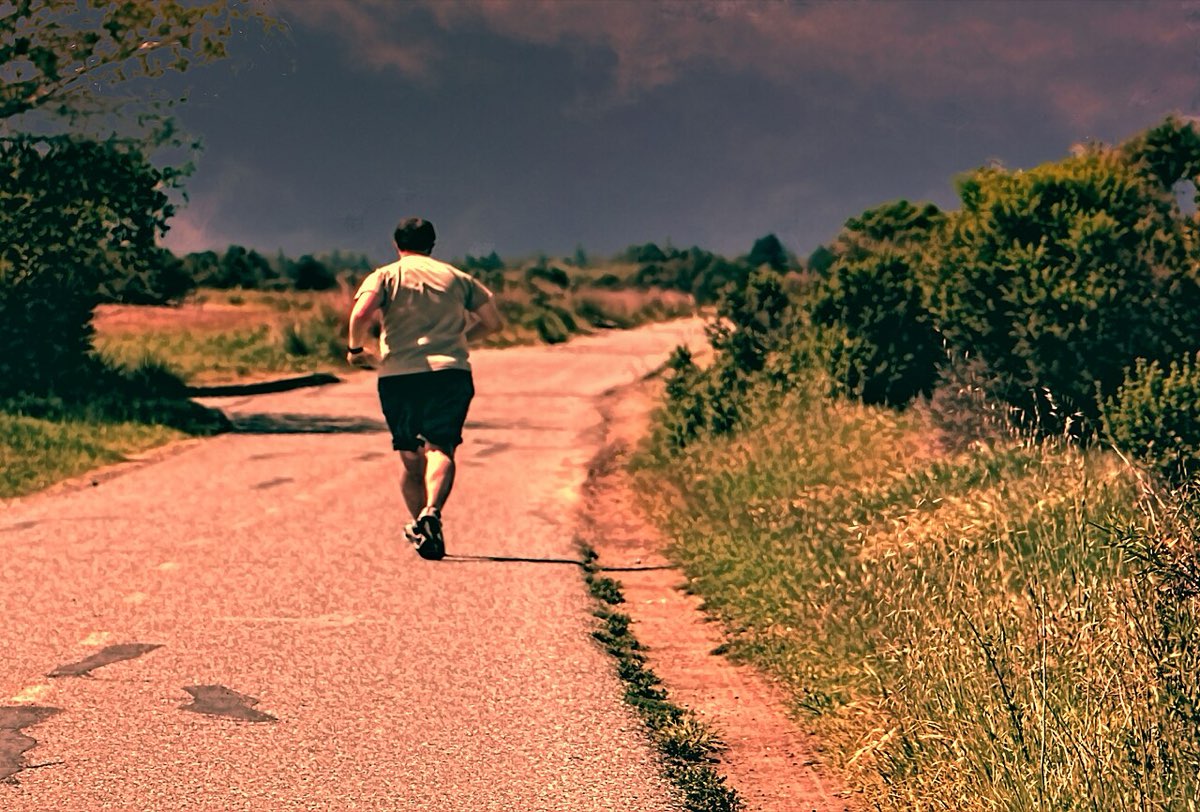
- Walking exerciseWikimedia Commons · The image, CC BY 2.0
General information, not medical advice. This review pooled small, varied trials and rated its own evidence as very low certainty, so it can't say how much exercise will add for any one person. If you're planning to lose weight, especially with a health condition, joint problems or medicines that affect blood sugar or heart rate, talk to your doctor or a registered dietitian first.
Analysis by NutroPractic from the sources listed. Written for general readers; it does not replace advice from your own doctor.
From our articles
Our guides on this subject
Plain-language guides on nutrition and wellness, backed by research.
Healthy ageing
Creatine beyond the gym: what it does for older adults and women, and what it doesn't
Across 22 trials, adults in their late fifties to seventies who took creatine while doing resistance training gained about 1.4 kg more lean mass than those who trained without it. Two two-year trials found it did nothing for bone density after menopause. Where the evidence is solid, where it's early (memory, short nights), how much to take, and who should leave it alone.
10 Oct 2026
Women's health
Eating through menopause: what changes for your bones, muscle and heart, and what to put on the plate
Around the final period, bone density at the spine drops by about 2% a year and LDL cholesterol jumps within a year or two. Hot flushes get the attention, but these quieter changes are where food and strength training do the most. Targets for protein, calcium and vitamin D, an honest look at soy, and a week you can start on Monday.
8 Oct 2026
Weight-loss medicines
Eating on Ozempic, Wegovy or Mounjaro: protein first, so the weight you lose isn't your muscle
GLP-1 medicines shrink your appetite, and with it often your protein. In the big trials a quarter to more than a third of the weight lost was lean mass. What the 2025 joint nutrition advisory recommends, the arithmetic for your own target, and four small plates that get there.
8 Oct 2026
Newsfeed for your website
Want this feed on your website?
Add it to any site with one copy-and-paste snippet. No sign-up, and it updates itself every hour.
Start with a virtual consultation
Tell Dr. Triveni what you want to change. You will leave with a clear next step, whether you are in Toronto, London, New York or Chennai.