Emotional eating · October 28, 2026
Teenagers in a family weight programme who also learned to handle their feelings lost no more weight than the rest. A year after it ended, they had won back less of it, and 22% still held a real loss against 4%
166 parent and teen pairs in San Diego and Minneapolis, six months of group sessions and coaching. Half also learned skills from dialectical behaviour therapy, and their parents learned to accept their teen's emotions. Weight loss during the programme was the same, but emotional eating fell and the regain afterwards was smaller. Wide margins, and most of it ran over video calls during COVID.
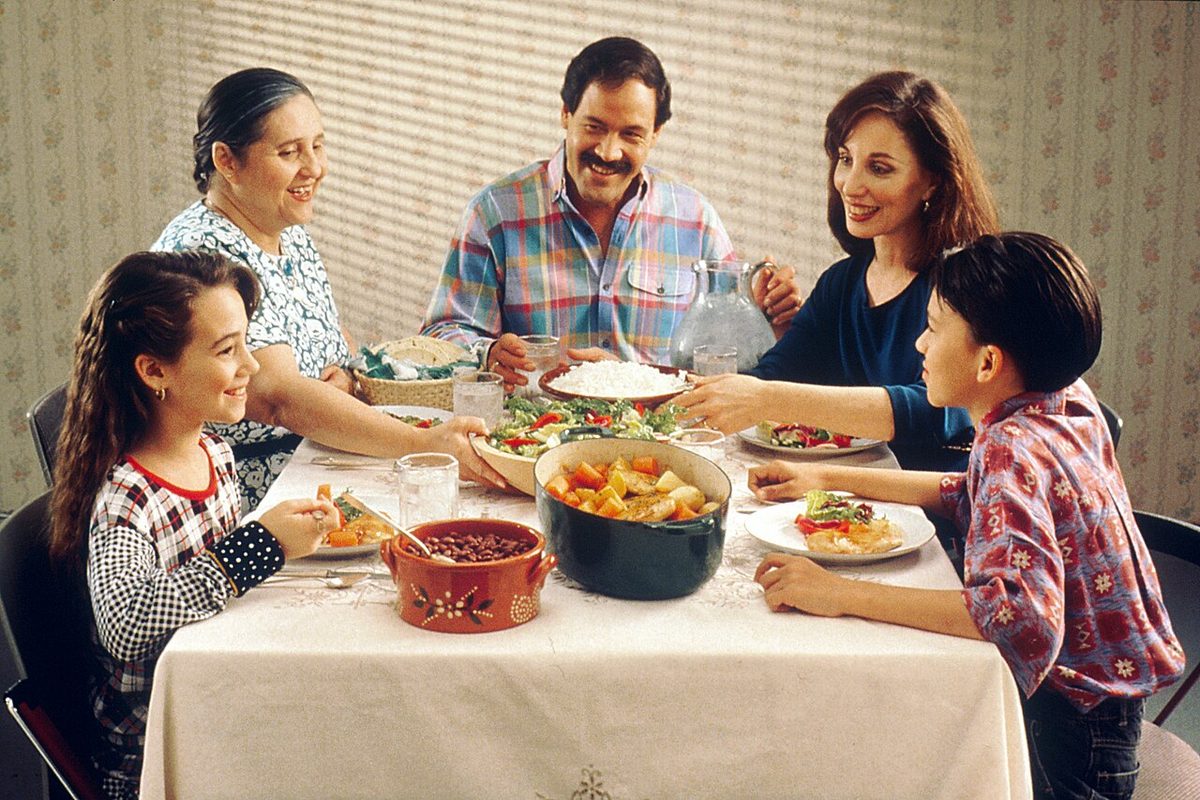
Family-based behavioural treatment, where a child and a parent go through a weight programme together, is the best-tested non-drug approach for young people with excess weight. But it works less well as children get older. A trial published on 22 October in JAMA Network Open, run by teams at the University of California San Diego and the University of Minnesota, asked whether teenagers do better if the programme also teaches them what to do with difficult feelings instead of eating through them.
The FRESH-Teen trial screened 913 families and enrolled 166 parent and teen pairs between 2019 and 2022. The teenagers were 13 to 16 years old (mean 14.3, 57% girls), with a body mass index at or above the 85th percentile for their age and sex but below the 99.9th. The parents, 85% of them mothers, had an average BMI of 32.6. Both groups got the same core programme for six months: 20 hour-long parent and teen group sessions, weekly for four months then every two weeks, plus 18 half-hour coaching sessions. It covered healthy eating on the MyPlate model, a calorie range aimed at losing 0.23 to 0.45 kg a week, 90 minutes of activity on five days a week, food and activity diaries, and parenting skills.
In the second group, some of the group time went instead to mindfulness and emotion regulation skills from dialectical behaviour therapy, and parents were taught emotion-focused parenting: noticing, accepting and validating their teen's feelings. Teens and parents in this group also logged their emotions around eating. Because the trial began just before the pandemic, almost everything after the first three weeks ran on video calls, and some measurements were taken remotely.
During the six months, both groups lost weight and the extra skills made no difference (BMI z score difference 0.03, which counts as none). Afterwards both groups regained, but the emotion skills group regained less. Twelve months after the programme ended, their BMI z score was 0.09 lower than the standard group's and their BMI as a share of the 95th percentile was 4.8 points lower. An estimated 22% of them still held a clinically meaningful loss (a drop of at least 0.20 in BMI z score), against 4% in the standard group, though the ranges around those figures were wide (8% to 48% and 1% to 12%). Scores on an emotional eating scale were lower in the emotion skills group from the end of treatment on, and the gap grew over the follow-up year.
Some things did not move. A general questionnaire on difficulties regulating emotions showed no difference between groups at any point; the authors think it may simply not have been sensitive enough, or that the programme loosened the link between feelings and eating without changing emotion regulation as a whole. Parents' weight did not differ either. The longer-term benefit looked stronger in boys than in girls, which the authors cannot yet explain. Attendance was high in both groups (a median of 18 and 19 sessions) and teens rated both about 5 out of 6 for satisfaction. No serious adverse events were linked to the study.
The limits are worth keeping in mind. The families were seeking treatment, could read English, and did not include teens with the most severe obesity, so the results may not carry over to everyone. The pandemic changed how the programme was delivered and how weight was measured, and the trial cannot say whether the teens' skills or the parents' coaching did more of the work. The study was funded by the US National Institutes of Health, which had no role in the analysis; three authors reported NIH grants.
FRESH-Teen trial: family weight programme with or without emotion regulation skills, 166 parent and teen pairs, 18 months
166
Parent and teen pairs randomised (84 with emotion skills, 82 standard), teens aged 13-16
0.03
Difference in BMI z score between groups at the end of the 6-month programme (range -0.05 to 0.10): no extra loss
-0.09
BMI z score difference 12 months after the programme (range -0.17 to -0.02): less regain with emotion skills
22% vs 4%
Teens still holding a clinically meaningful loss 12 months after treatment, emotion skills vs standard (estimated; ranges 8-48% and 1-12%)
-4.8 points
BMI as a percentage of the 95th percentile, emotion skills vs standard group, 12 months after treatment
-0.39
Difference in emotional eating score at 12 months after treatment (range -0.63 to -0.15); overall emotion regulation scores did not differ
Two-site randomised clinical trial (UC San Diego and University of Minnesota), 2019-2024, outcome assessors blinded; mostly delivered by video call because of COVID-19. Intention-to-treat analysis with mixed-effects models and multiple imputation, adjusted for age, sex, race and ethnicity, physical activity, site and cohort. BMI z score shows how far a teen's BMI sits from the average for age and sex. Open access (CC BY-NC-ND). Registered as NCT03674944.
- The family programme asked teens for 90 minutes of physical activity on five days a week and aimed for a weight loss of 0.23 to 0.45 kg (half a pound to a pound) a week.
- The study's introduction puts the share of US adolescents with overweight or obesity at about 43%.
- None of the teenagers were taking GLP-1 weight loss medicines when they joined the trial.
- The authors had planned for a much bigger effect: they sized the trial expecting a clear difference by the end of treatment, which never appeared. The gain showed up only in the year after the sessions stopped.
- Dialectical behaviour therapy was first built for adults with intense emotional distress and has since been tested in teenagers with depression, eating disorders and substance use, which is why the authors borrowed from it.
- Emotion-Focused Behavioral Weight Loss Treatment for Adolescents: A Randomized Clinical TrialJAMA Network Open · The study, open access, published 22 October 2026; figures, funding and limitations from the full text
- Full text (PMC13691656)PubMed Central · Open-access copy of the paper
- FRESH-Teen trial registration (NCT03674944)ClinicalTrials.gov · The trial's registered design and outcomes
- Family eating mealWikimedia Commons · The image, public domain (National Cancer Institute)
General information, not medical advice. Weight in teenagers is best handled with care and with the whole family, so talk to a paediatrician, dietitian or psychologist before starting a weight programme, and get help early if eating feels tied to stress, low mood or other strong emotions.
Analysis by NutroPractic from the sources listed. Written for general readers; it does not replace advice from your own doctor.
From our articles
Read, then eat a little better
Plain-language guides on nutrition and wellness, backed by research.

Women's health
Inositol for PCOS: the 40:1 ratio, trial doses, and food milligrams
Why do randomized trials in polycystic ovary syndrome prioritize the 40:1 myo to D-chiro inositol ratio? Here is the science behind the ovarian epimerase paradox, clinical ovulation and insulin metrics, and why cantaloupe cannot replace 4,000 mg trial powder.
21 Nov 2026

Everyday eating
Extra virgin olive oil polyphenols: the EU health claim, smoke point myths, and cooking stability
Does extra virgin olive oil degrade when cooked? What does the EU 5 mg polyphenol health claim require, how does oleocanthal act like ibuprofen, and why does oxidative stability matter more than smoke point in domestic frying? Here is the clinical and culinary data.
21 Nov 2026

Food and nutrition
L-theanine and caffeine: what cognitive trials measured on sustained attention, and milligrams in matcha vs green tea
Combining L-theanine with caffeine produces clean focus without caffeine jitters. Here is what randomized trials measured on attention-switching, EEG alpha brain waves, and the exact milligrams across ceremonial matcha, culinary powder, gyokuro, and sencha.
20 Nov 2026
Newsfeed for your website
Want this feed on your website?
Add it to any site with one copy-and-paste snippet. No sign-up, and it updates itself every hour.
Start with a virtual consultation
Tell Dr. Triveni what you want to change. You will leave with a clear next step, whether you are in Toronto, London, New York or Chennai.