Micronutrients & reproductive health · November 23, 2026
Higher intake of antioxidant plant foods linked to 65% lower odds of early miscarriage in case-control study
In a hospital-based case-control study, women with the highest Dietary Phytochemical Index scores—reflecting diets rich in fruits, legumes, nuts, seeds, and olive oil—had significantly lower odds of experiencing early pregnancy loss.
Early miscarriage, defined as spontaneous pregnancy loss before 12 to 14 weeks of gestation, affects approximately 15% to 20% of clinically recognized pregnancies. While chromosomal abnormalities account for roughly half of early losses, oxidative stress, endothelial dysfunction, and impaired decidual vascularization are increasingly recognized as modifiable pathophysiological factors. Dietary phytochemicals—non-nutritive plant bioactive compounds including flavonoids, carotenoids, and polyphenols—possess potent radical-scavenging and anti-inflammatory properties that may support early reproductive tissues.
To examine this relationship, reproductive epidemiologists conducted a hospital-based case-control study enrolling 124 pregnant women who experienced spontaneous miscarriage and 124 age-matched pregnant controls with continuing viable pregnancies. Habitual pre-pregnancy and early pregnancy diets were comprehensively captured using a validated 110-item food frequency questionnaire (FFQ).
The Dietary Phytochemical Index (DPI) was calculated for each participant as the percentage of total daily caloric intake derived from phytochemical-rich foods (fruits, vegetables, legumes, whole grains, nuts, seeds, soy products, and cold-pressed plant oils). Women in the miscarriage group exhibited a significantly lower mean DPI compared to controls (25.8% vs. 29.7%, p < 0.001), consuming fewer daily servings of fruits, legumes, nuts, and culinary olive oil.
In multivariable logistic regression models adjusting for maternal age, body mass index, gravidity, history of prior miscarriages, smoking exposure, and total caloric intake, each 10% increment in DPI was associated with a 41.5% reduction in the odds of miscarriage (adjusted OR = 0.585, 95% CI: 0.43 to 0.79). Comparing the highest DPI quartile to the lowest revealed a 65.4% reduction in odds (adjusted OR = 0.346, 95% CI: 0.16 to 0.74). The authors emphasize that while observational data cannot prove direct causality, adhering to a wholesome, whole-plant-dense diet represents a safe and beneficial nutritional strategy for women planning pregnancy.
Hospital-based case-control study of Dietary Phytochemical Index and miscarriage
248
total pregnant women enrolled (124 miscarriage cases vs 124 controls)
25.8% vs 29.7%
mean DPI in miscarriage cases vs viable pregnancy controls (p < 0.001)
OR 0.585
adjusted odds of miscarriage per 10% increase in dietary phytochemical index
65% lower odds
for women in the highest DPI quartile vs the lowest quartile (aOR 0.346)
Peer-reviewed case-control study published in Frontiers in Nutrition on 21 November 2026.
- The Dietary Phytochemical Index was originally introduced by Dr. Daniel McCarty as an objective metric of diet quality based on the proportion of daily calories coming from phytochemical-rich whole plant foods.
- Phytochemicals such as proanthocyanidins and quercetin help modulate matrix metalloproteinases (MMPs), which regulate trophoblast invasion and placental remodeling.
- Potatoes and refined grain flours are excluded from the DPI numerator because commercial processing largely depletes their natural bioactive phytochemical concentrations.
- Association between the dietary phytochemical index and miscarriage: a hospital-based case-control studyFrontiers in Nutrition · Open-access research article published 21 November 2026.
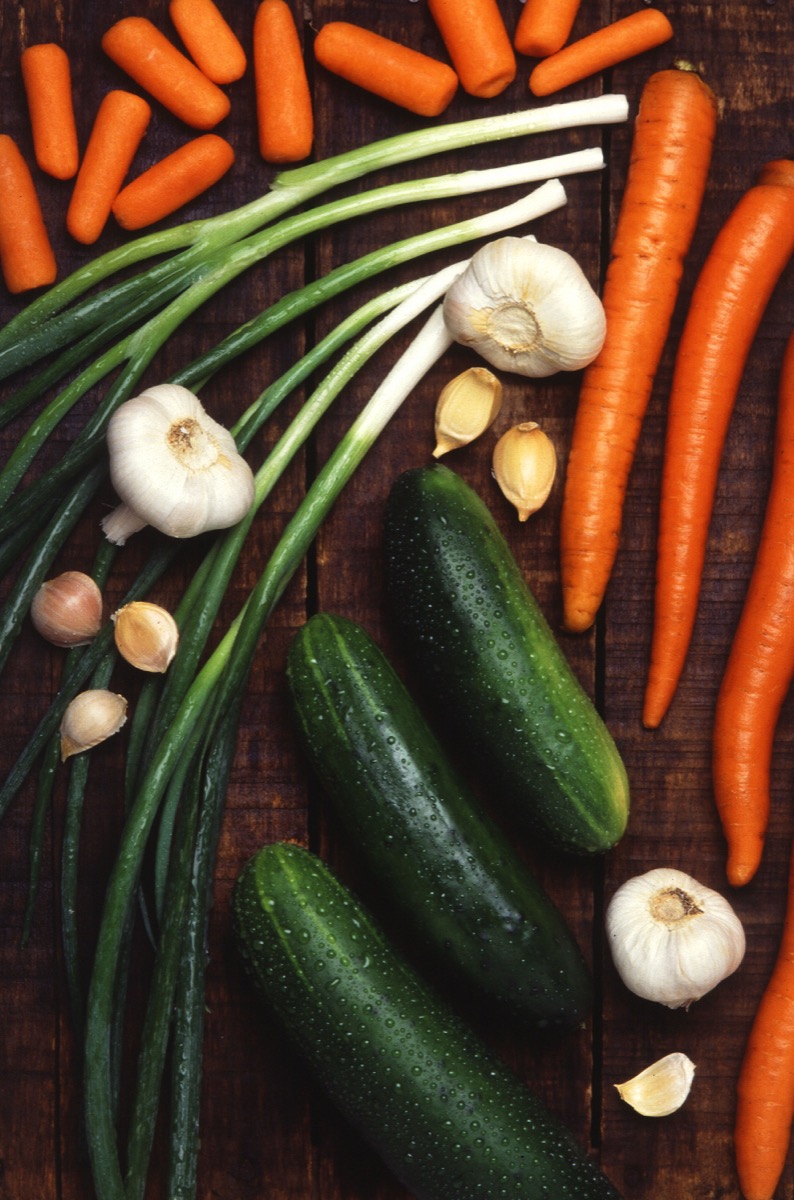
- File:Vegetables.jpgWikimedia Commons · Photo by Scott Bauer, USDA ARS, Public domain.
Educational summary of nutrition research, not personal medical advice. Speak to your doctor or dietitian before changing your diet or supplements, especially if you are pregnant, take medicines or have a medical condition.
Analysis by NutroPractic from the sources listed. Written for general readers; it does not replace advice from your own doctor.
From our articles
Read, then eat a little better
Plain-language guides on nutrition and wellness, backed by research.

Women's health
Inositol for PCOS: the 40:1 ratio, trial doses, and food milligrams
Why do randomized trials in polycystic ovary syndrome prioritize the 40:1 myo to D-chiro inositol ratio? Here is the science behind the ovarian epimerase paradox, clinical ovulation and insulin metrics, and why cantaloupe cannot replace 4,000 mg trial powder.
21 Nov 2026

Everyday eating
Extra virgin olive oil polyphenols: the EU health claim, smoke point myths, and cooking stability
Does extra virgin olive oil degrade when cooked? What does the EU 5 mg polyphenol health claim require, how does oleocanthal act like ibuprofen, and why does oxidative stability matter more than smoke point in domestic frying? Here is the clinical and culinary data.
21 Nov 2026

Food and nutrition
L-theanine and caffeine: what cognitive trials measured on sustained attention, and milligrams in matcha vs green tea
Combining L-theanine with caffeine produces clean focus without caffeine jitters. Here is what randomized trials measured on attention-switching, EEG alpha brain waves, and the exact milligrams across ceremonial matcha, culinary powder, gyokuro, and sencha.
20 Nov 2026
Newsfeed for your website
Want this feed on your website?
Add it to any site with one copy-and-paste snippet. No sign-up, and it updates itself every hour.
Start with a virtual consultation
Tell Dr. Triveni what you want to change. You will leave with a clear next step, whether you are in Toronto, London, New York or Chennai.