Performance supplements · November 1, 2026
Beetroot juice is one of sport's favourite legal boosts. Pooling 45 trials and 659 athletes, a new review could not find a gain on any of the six things it measured
Peak power, oxygen use, heart rate, how hard the effort felt: none of them clearly moved. But the authors warn against calling it proof that nitrate does nothing, and the measure many racers care about most was not one of the six.
The idea behind a shot of beetroot juice before a race is neat. Bacteria in the mouth turn the vegetable's nitrate into nitrite, the body turns some of that into nitric oxide, and muscles may get more blood and use oxygen more economically. In recreational exercisers, earlier reviews have found small gains. Whether the same holds for people who already train seriously has been argued over for years. A systematic review published in the journal Sports on 20 October tried to pull the athlete evidence into one place.
The team, from Loughborough University, Shanghai University of Sport and Edith Cowan University, gathered 45 randomised, placebo-controlled trials with 659 athletes, from cyclists, runners and kayakers to fencers, hockey players and CrossFit competitors. Most trials gave a single dose, typically 2 to 3 hours before testing; 16 loaded for 3 to 8 days. The usual dose, about 6.2 to 8.4 mmol of nitrate, equals 70 to 140 mL of concentrated juice. Placebos included beetroot juice with the nitrate taken out, blackcurrant juice and matched capsules.
Across six measures (peak power, mean power, maximal oxygen uptake, heart rate, blood lactate and perceived effort), the pooled result was small and statistically indistinguishable from placebo every time. Peak power came closest. Trials in men alone did reach significance, but the difference between those trials and mixed-sex ones did not, so the authors call it a lead to test, not a finding. And when a standard statistical correction for missing small studies was applied, the overall peak power estimate fell from slightly positive to about zero. Beetroot juice and nitrate salts could be compared only on oxygen uptake, and neither beat placebo.
That is not the same as 'beetroot juice does not work', and the paper says so. Its confidence intervals still leave room for effects that could matter, and the review's method for handling crossover trials, 41 of the 45, widens those intervals; the authors accept this may partly explain the flat results. Finishing times were not among the six pooled measures, even though time trials were among the tests used. The pooled data also could not separate responders from non-responders, or test baseline fitness directly. The trials themselves were thin in places: only 9 described how they randomised, only 5 were registered in advance, and just one was rated at low risk of bias overall. Women were barely represented, 88 of the 659. The certainty of the evidence ranged from moderate for oxygen uptake and heart rate to very low for lactate and perceived effort. The authors want the next studies to look for who responds and in which situations, such as altitude or repeated sprints.
Dietary nitrate against placebo in trained athletes: pooled effects from 45 randomised trials and 659 athletes (Sports, 20 October 2026). Hedges' g is a standardised effect size; zero means no difference, and 0.2 is conventionally called small
45 trials, 659 athletes
556 men, 88 women and 15 whose sex was not reported; 36 trials were in men only and 3 in women only
g = 0.13
Peak power, 12 trials (95% CI -0.07 to 0.32, p = 0.20). Fell to -0.01 after adjusting for possibly missing small studies
g = 0.04
Mean power, 17 trials (95% CI -0.13 to 0.21, p = 0.65)
g = -0.03
Maximal oxygen uptake, 26 trials (95% CI -0.20 to 0.15, p = 0.77)
g = -0.08 / 0.09
Heart rate, 19 trials (95% CI -0.27 to 0.10) and blood lactate, 10 trials (95% CI -0.30 to 0.48)
g = -0.17
Perceived effort, 9 trials (95% CI -0.49 to 0.16, p = 0.32)
g = 0.29
Peak power in male-only trials (95% CI 0.02 to 0.56), an exploratory subgroup; the test against mixed-sex trials was not significant
Daily doses ranged from 4.0 to 19.35 mmol of nitrate. Certainty of evidence (GRADE): moderate for oxygen uptake and heart rate, low for peak and mean power, very low for lactate and perceived effort. The authors report no external funding and no conflicts of interest. The protocol was registered on 30 June 2026, after the first search of 6 May, so registration was retrospective; two subgroup comparisons were added during revision. The paper is not fully consistent in places: its results section rates 33 trials as 'some concerns' and 11 as high risk, while its limitations section says 44 'some concerns', and the male-versus-mixed test appears as p = 0.11 and p = 0.10. Only one trial was rated low risk in both.
- Most of the trials told athletes to avoid antibacterial mouthwash, because the first step in turning nitrate into nitric oxide depends on bacteria in the mouth.
- One earlier review cited in the paper found an effect size of 0.25 in non-athletes but only 0.04 in athletes. Another put the dividing line for time-trial gains at a VO2max of about 55 mL/kg/min.
- Reviews of this question keep disagreeing. Another recent one, covering 38 trials, found a small rise in oxygen uptake overall (0.24) but not in highly trained athletes (0.07). Who gets counted as an athlete and which test is used can change the answer.
- One proposed explanation is that highly trained people already make plenty of nitric oxide, so extra nitrate has less to add. The review did not test this; the authors suggest future trials measure blood vessel function directly.
- The search turned up 5,012 records, but 3,988 were duplicates of the same papers listed in more than one database.
- Dietary Nitrate Supplementation and Exercise Performance in Athletes: A Systematic Review and Meta-Analysis of Randomised Controlled TrialsSports, 20 October 2026 · Open-access review (CC BY): methods, pooled results, certainty ratings, limitations, funding and conflicts of interest.
- Review protocolOpen Science Framework · The registered protocol named in the paper.
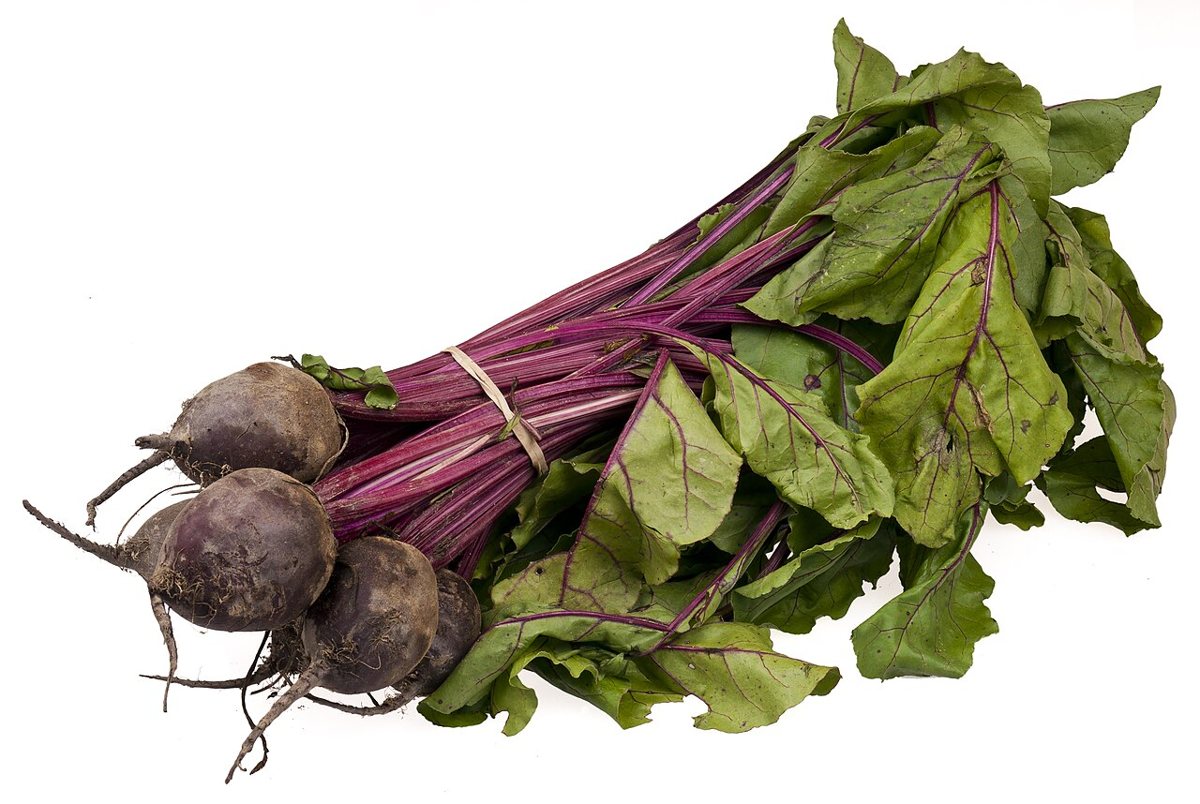
- Beets-BundleWikimedia Commons · Photograph by Evan-Amos, CC0, used as a general illustration.
General information, not medical advice. This review looked at trained, mostly male athletes and sports tests, and it does not show whether nitrate or beetroot products are right for you. Concentrated supplements can differ widely in dose. If you have kidney problems, have low blood pressure or take blood pressure medicines, ask your doctor before using them regularly.
Analysis by NutroPractic from the sources listed. Written for general readers; it does not replace advice from your own doctor.
From our articles
Read, then eat a little better
Plain-language guides on nutrition and wellness, backed by research.

Diabetes
Potatoes and blood sugar: boiled, cooled, mashed or fried, and what the cohorts and trials found
Fries were linked to 20% higher diabetes risk per three servings a week in 205,000 US adults; boiled, baked and mashed potatoes to almost none. GI by cooking method, resistant starch in grams after chilling, the glycaemic load of a potato against a cup of rice, and how to fit aloo into an Indian plate.
30 Oct 2026

Children's nutrition
Picky eaters aged 2 to 8: what feeding studies show works at the table
Fussy eating peaks between two and six and is usually a normal stage, not a parenting failure. Feeding trials show what moves it: small repeated tastes, eating together, no pressure and the right kind of reward. Here is how to use them, and the signs that mean it's more than picky eating.
30 Oct 2026

Women's health
PCOS and food: what the diet trials show for cycles, insulin and weight
PCOS affects about one woman in ten, and most are told to "lose weight" with little else. Here is what drives it, why insulin matters even in slim women, how much weight loss brings cycles back, what the low-GI and Mediterranean trials found, what inositol and metformin do, and which tests to ask for.
30 Oct 2026
Newsfeed for your website
Want this feed on your website?
Add it to any site with one copy-and-paste snippet. No sign-up, and it updates itself every hour.
Start with a virtual consultation
Tell Dr. Triveni what you want to change. You will leave with a clear next step, whether you are in Toronto, London, New York or Chennai.