Digestive health · October 27, 2026
Chinese adults in their 80s who ate the widest range of foods were about a quarter less likely to develop a stomach ulcer. But the gap had all but vanished after the first three years
A study of 13,274 older adults in China, published on 26 October, scored how many of nine food groups each person ate regularly, from fruit and greens to eggs, fish, nuts and tea. The highest scorers developed fewer ulcers over the next decade. The catch: almost all the difference showed up early, which may mean people already unwell were eating less widely to begin with.
A peptic ulcer is a raw sore in the lining of the stomach or the first part of the small intestine. Most are caused by the Helicobacter pylori bacterium or by painkillers such as aspirin and ibuprofen, and in older people they are a leading cause of internal bleeding. Diet has long been suspected of playing a smaller part, but most studies have looked at single nutrients such as fibre. A team from Changzhi Medical College in Shanxi, China, asked a simpler question instead: does eating from a wider range of food groups go with fewer new ulcers in very old age?
They used the Chinese Longitudinal Healthy Longevity Survey, which interviews older people across much of China every few years, and followed 13,274 people aged 65 and over who had no ulcer in 2008, through visits in 2011, 2014 and 2018. Half were 87 or older at the start. Each person got a dietary diversity score from 0 to 9: one point each for eating fresh fruit and vegetables often, and for eating legumes, nuts, meat, fish, eggs, dairy and tea at least once a week. Rice and other staples weren't counted because nearly everyone eats them daily, and the survey recorded how often foods were eaten, not how much. A new ulcer was counted when a person, or a family member after a death, answered yes to 'Do you have a stomach or duodenal ulcer?'. The paper was published on 26 October in Frontiers in Nutrition.
Over about 60,000 person-years of follow-up, 636 people (4.8%) reported a new ulcer and 7,162 (54%) died. Each extra food group went with about 5.6% lower risk of an ulcer after allowing for age, sex, education, town or countryside, marriage, income, smoking, drinking, blood pressure, diabetes, daily-living disability, having no teeth and memory scores. People in the top third of scores (typically six food groups) had 24% lower risk than the bottom third (typically two). The result held when deaths were treated as a competing outcome and when only hospital-diagnosed ulcers reported by participants themselves were counted.
Two findings temper that. First, timing: when the authors stopped counting at three years, or looked only at ulcers appearing after year six, the link disappeared. The authors' own leading explanation is reverse causation: people whose health, or whose stomach, was already starting to fail may have narrowed what they ate before anyone recorded an ulcer. Second, the link showed up only in people who could still manage daily tasks such as bathing and dressing on their own, not in those who needed help, which suggests overall health may be doing much of the work. People with more varied diets were also more often urban, schooled and better off, and the survey had no data on H. pylori infection or painkiller use, the two main causes of ulcers.
So this is a modest link, not proof that a varied plate prevents ulcers. The difference in actual numbers was small too: about 11.8 new ulcers per 1,000 people per year in the least varied third against 9.8 in the most varied. What it adds is that in very old age, the range of foods someone eats may be a useful, easy-to-ask sign of how well they are doing. For preventing ulcers, the proven steps remain testing and treating H. pylori, and using anti-inflammatory painkillers only with a doctor's advice, especially after 65.
Dietary diversity and new peptic ulcers in Chinese adults aged 65+ (CLHLS 2008–2018; Frontiers in Nutrition, 26 October 2026)
13,274
Ulcer-free adults aged 65 and over at the 2008 start (median age 87)
636
New stomach or duodenal ulcers reported over a median 3 years of follow-up (4.8%); 7,162 participants died
−5.6%
Risk of a new ulcer per extra food group on the 0–9 score, fully adjusted (HR 0.944, 95% CI 0.904 to 0.986)
−24%
Risk in the most varied third vs the least varied (HR 0.757, 95% CI 0.618 to 0.927); the middle third's difference was not significant
11.8 vs 9.8
New ulcers per 1,000 person-years, least vs most varied third
No link
After the first three years of follow-up, in a six-year landmark analysis, and in people who needed help with daily tasks
Prospective cohort analysed with Cox models; adjusted for age, sex, education, residence, marital status, self-rated income, smoking, drinking, hypertension, diabetes, daily-living disability, tooth loss and cognitive score. Ulcers were self-reported (or proxy-reported after death); no data on H. pylori or painkiller use. The nut item asked about intake around age 60. Mortality was higher in the least varied third (58.4% vs 48.1%). Sampling weights not applied, so rates describe this cohort, not all of China. Figures from the open-access full text (CC BY 4.0).
- The score counted tea as one of the nine food groups. Cereals were left out because almost everyone in the survey ate them every day.
- Because the survey never asked about current nut eating, the score used a question about how often people ate nuts at around age 60.
- People in the most varied third were more often current smokers (19.7% vs 16.6%) and current drinkers (21.0% vs 15.0%) than the least varied third, yet still had fewer ulcers.
- The same Chinese longevity survey has linked a more varied diet with lower death rates, less frailty and less muscle loss in earlier studies.
- Worldwide, about 5 to 10% of people get a peptic ulcer at some point in their lives, and ulcers are the most common cause of bleeding from the upper gut.
- Dietary diversity score and incident peptic ulcer in Chinese older adults: a prospective cohort studyFrontiers in Nutrition · The study, open access (CC BY 4.0), published 26 October 2026; Tables 1 to 3 give the baseline differences, hazard ratios and sensitivity analyses
- Chinese Longitudinal Healthy Longevity Survey (CLHLS) dataPeking University Open Research Data · The public dataset the study used
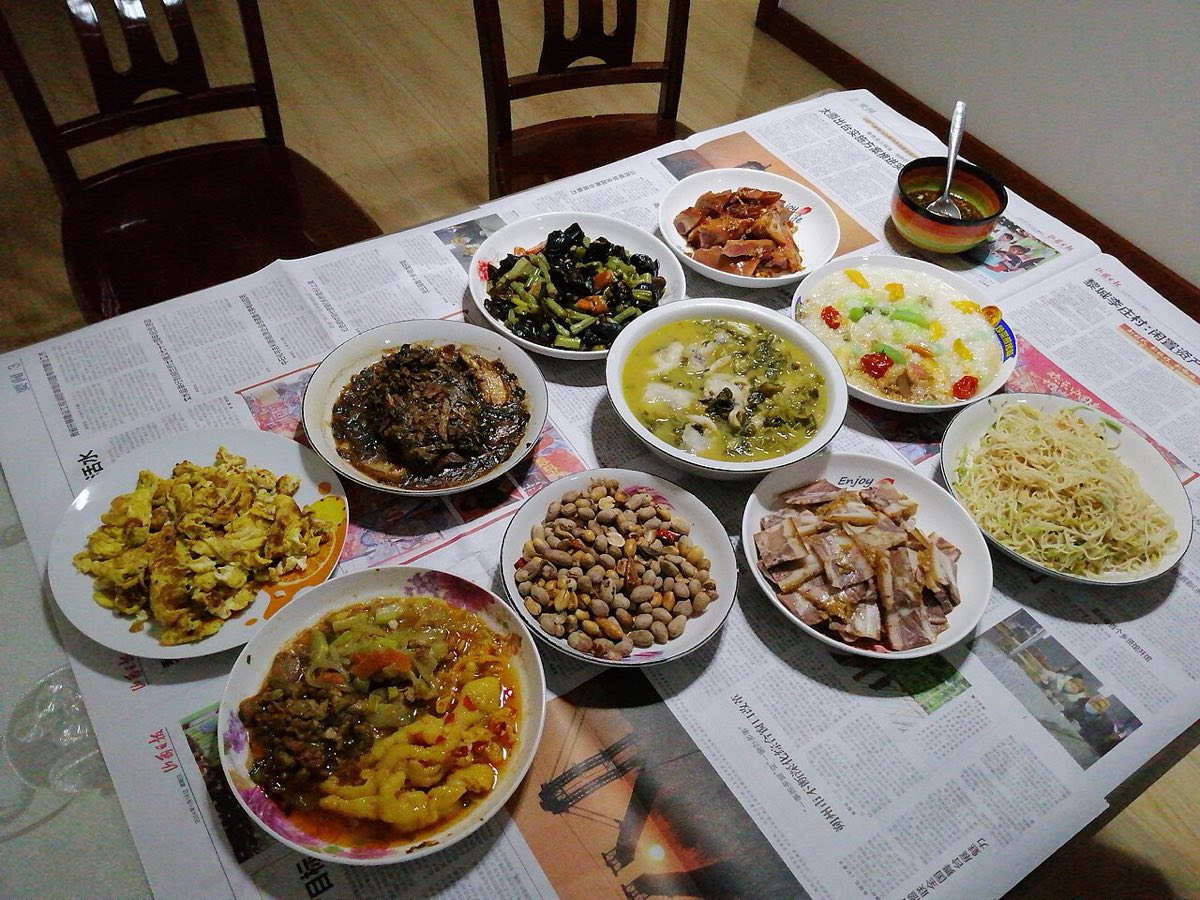
- New Year's Eve dinner of an ordinary family in ShanxiWikimedia Commons · The image, CC0 (HerryCFPL)
General information, not medical advice. This study shows a link, not that a varied diet prevents ulcers. Stomach pain that keeps coming back, black or tarry stools, vomiting blood or unexplained weight loss need a doctor's assessment, and older adults should check with a doctor before taking anti-inflammatory painkillers regularly. For changes to your diet, talk to your doctor or a registered dietitian.
Analysis by NutroPractic from the sources listed. Written for general readers; it does not replace advice from your own doctor.
From our articles
Read, then eat a little better
Plain-language guides on nutrition and wellness, backed by research.

Women's health
Inositol for PCOS: the 40:1 ratio, trial doses, and food milligrams
Why do randomized trials in polycystic ovary syndrome prioritize the 40:1 myo to D-chiro inositol ratio? Here is the science behind the ovarian epimerase paradox, clinical ovulation and insulin metrics, and why cantaloupe cannot replace 4,000 mg trial powder.
21 Nov 2026

Everyday eating
Extra virgin olive oil polyphenols: the EU health claim, smoke point myths, and cooking stability
Does extra virgin olive oil degrade when cooked? What does the EU 5 mg polyphenol health claim require, how does oleocanthal act like ibuprofen, and why does oxidative stability matter more than smoke point in domestic frying? Here is the clinical and culinary data.
21 Nov 2026

Food and nutrition
L-theanine and caffeine: what cognitive trials measured on sustained attention, and milligrams in matcha vs green tea
Combining L-theanine with caffeine produces clean focus without caffeine jitters. Here is what randomized trials measured on attention-switching, EEG alpha brain waves, and the exact milligrams across ceremonial matcha, culinary powder, gyokuro, and sencha.
20 Nov 2026
Newsfeed for your website
Want this feed on your website?
Add it to any site with one copy-and-paste snippet. No sign-up, and it updates itself every hour.
Start with a virtual consultation
Tell Dr. Triveni what you want to change. You will leave with a clear next step, whether you are in Toronto, London, New York or Chennai.