Healthy ageing · October 19, 2026
Two years of eating better and moving more, and the scales didn't budge: 678 older Germans in a dementia-prevention trial
A German trial gave older adults at risk of dementia a two-year plan: diet advice, home exercises, a pedometer, brain training on a tablet and regular phone check-ins. The people on the plan did eat a little better and moved a lot more. Yet after two years they weighed almost exactly the same as patients who got their doctor's usual care. Wanting to lose weight didn't seem to matter either.
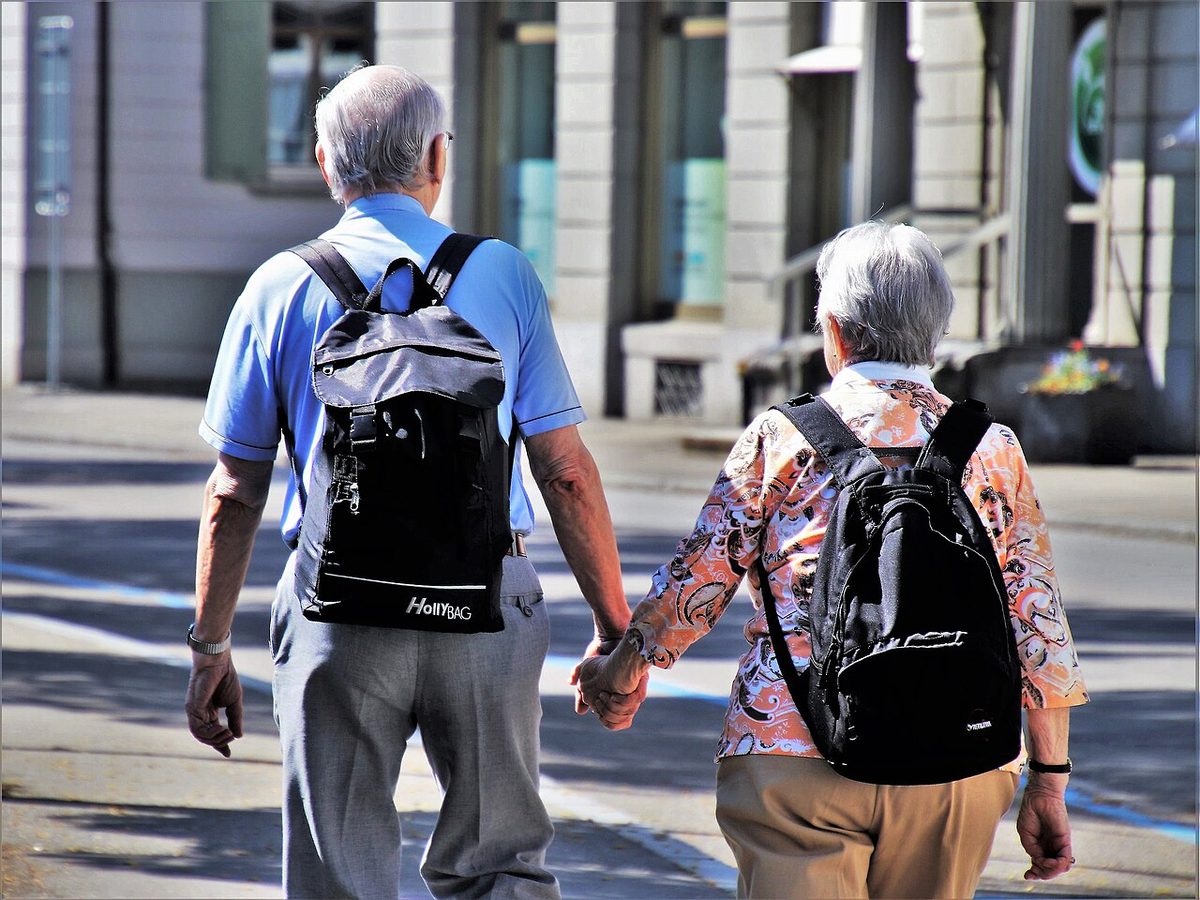
Carrying extra weight in midlife is one of the risk factors for dementia that people can, in principle, change. So when researchers design lifestyle programmes to protect the ageing brain, they often hope weight will come down along the way. A study published on 15 October in BMC Geriatrics checked whether that happened in one of Germany's largest dementia-prevention trials. It didn't.
The trial, AgeWell.de, ran through family doctors' practices in Leipzig, Greifswald, Kiel, Munich and Halle. It recruited people aged 60 to 77 whose blood pressure, cholesterol, weight, age and other factors put them at higher risk of dementia. Whole practices were randomly assigned. In half, patients got a two-year programme modelled on Finland's FINGER trial: strength and balance exercises at home twice a week, their own goals for walking or other aerobic exercise three to five times a week, a pedometer, a weekly social activity, a tablet with brain-training games, diet advice based on German guidelines (five portions of fruit and vegetables a day, wholegrains, less salt and sugar, unsweetened drinks), a review of their medicines and five follow-up phone calls from a study nurse. In the other half, patients got written information and their doctor's usual care.
This new analysis looked only at the 678 people who were overweight or obese at the start. Their average age was 69, just over half were women, and they weighed 92 kg on average with a BMI of 32. Four in ten had diabetes. Weight wasn't the trial's main goal, but these participants were told about the link between excess weight and dementia and encouraged to lose some.
After two years both groups had gained a little: 1.1 kg on average in the programme group and 1.4 kg with usual care. Once starting weight, age, education, health conditions and other factors were taken into account, the difference between the groups was about 0.3 kg, well within what chance alone could produce. The result was the same in the 428 people with obesity.
The programme did change behaviour. On a 0 to 36 physical activity score, the programme group came out about 2.2 points higher than usual care, and their healthy diet score (0 to 11) was about 0.24 points higher. Nearly half the participants said losing weight was 'very much' important to them, but only about one in five felt very confident they could do it, and neither motivation, confidence nor general self-belief predicted how much people weighed at the end. Older participants and those with more education weighed a little less.
The authors point out that weight was not a planned outcome, so this is an after-the-fact look at the data, and that the programme partly ran during COVID-19 lockdowns, which cut people's chances to exercise. Other trials did better on weight, including FINGER itself and programmes built around weight loss. The lesson the authors draw is practical: a broad brain-health programme with general diet advice is not a weight-loss programme, and if weight matters, it needs its own targets, closer follow-up and feedback.
Body weight in the AgeWell.de dementia-prevention trial (678 adults aged 60 to 77 with overweight or obesity, 24 months)
678
Participants with a BMI of 25 or more (307 on the programme, 371 on usual care)
92 kg
Average starting weight (BMI 32, average age 69)
+1.1 vs +1.4 kg
Average weight change over two years, programme vs usual care (unadjusted)
0.3 kg
Adjusted difference between the groups at two years, not significant (P = 0.46)
+2.2 points
Higher physical activity score (0 to 36 scale) in the programme group
47% vs 21%
Said losing weight was 'very much' important vs felt 'very much' confident they could
Study: Zülke AE, Schultz A, Luppa M, et al., Riedel-Heller SG, 'Body weight following a multidomain lifestyle intervention in older adults at risk of dementia – A post-hoc analysis of the AgeWell.de-trial', BMC Geriatrics 2026;26:1298, published 15 October 2026, doi 10.1186/s12877-026-08492-6 (PubMed 42881367, open access, CC BY 4.0). Cluster-randomised trial in GP practices at five German sites; ages 60 to 77, CAIDE dementia risk score of 9 or more; baseline July 2018 to October 2019 (n = 1,030), 24-month follow-up July 2020 to January 2022 (n = 819). Post-hoc sample: 678 with measured weight at both visits and BMI of 25 or more; mean age 68.9 (SD 4.8), 52.1% women, weight 92.3 kg (SD 15.9), BMI 32.1, diabetes 42.2%. Unadjusted change +1.3 kg overall (programme +1.1, SD 5.1; control +1.4, SD 5.0). Adjusted linear regression on multiply imputed data, intervention vs control: b = 0.30 kg (95% CI -0.51 to 1.11), P = 0.458 (the abstract prints the coefficient as -0.30; the results table gives 0.30). Obesity subgroup (n = 428): b = 0.18 (-0.98 to 1.34). Age b = -0.14 kg per year; high vs low education b = -1.28 kg. Programme vs control changes, adjusted: healthy diet score (0 to 11) b = 0.24 (0.01 to 0.46), physical activity score (0 to 36) b = 2.22 (1.56 to 2.87). Baseline motivation 'very much' 47.4%, confidence 'very much' 21.2%; no interaction with group allocation. Body weight was not a prespecified outcome; the primary outcome of AgeWell.de was cognitive performance.
- The 2024 Lancet Commission on dementia estimated that up to 45% of dementia cases might be linked to 14 risk factors that can be changed, including obesity, physical inactivity, high blood pressure, diabetes, hearing loss and social isolation.
- AgeWell.de is part of World-Wide FINGERS, a network that adapts Finland's FINGER programme to local food, culture and health systems around the world.
- Weight 'tracks' strongly in later life: in this study, each extra kilo at the start predicted about 0.95 kg more two years later, whatever else was going on.
- In older adults, unplanned weight loss can be an early sign of dementia, one reason heavier older people sometimes look less at risk in short studies.
- Body weight following a multidomain lifestyle intervention in older adults at risk of dementia – A post-hoc analysis of the AgeWell.de-trialBMC Geriatrics, October 2026 · The study: open access full text
- PubMed record and abstractPubMed (US National Library of Medicine) · Published summary
- Dementia prevention, intervention, and care: 2024 report of the Lancet standing CommissionThe Lancet, 2024 · The 14 modifiable risk factors for dementia
- A 2 year multidomain intervention of diet, exercise, cognitive training, and vascular risk monitoring versus control to prevent cognitive decline in at-risk elderly people (FINGER)The Lancet, 2015 · The Finnish trial AgeWell.de was modelled on
General information, not medical advice. This was an after-the-fact analysis of a trial designed to protect thinking skills, not to cause weight loss, so it can't say what a dedicated weight-loss plan would achieve. Unplanned weight loss in older age can be a sign of illness. Talk to your doctor or a registered dietitian before changing your diet, exercise or medicines.
Analysis by NutroPractic from the sources listed. Written for general readers; it does not replace advice from your own doctor.
From our articles
Our guides on this subject
Plain-language guides on nutrition and wellness, backed by research.

Women's wellness and nutrition
Creatine for women: cognitive performance, menstrual cycle phases, and bone density beyond muscle building
Creatine is widely stereotyped as a bodybuilding supplement for men, but female physiology tells a very different story. Women exhibit 70% to 80% lower endogenous creatine stores, reduced dietary intake, and cyclical fluctuations in brain creatine kinase across the follicular and luteal phases. Robust clinical trials demonstrate that 3 to 5 grams of daily creatine monohydrate enhances cognitive performance during sleep deprivation, augments clinical response in unipolar depression, preserves femoral neck bone geometry in postmenopausal women, and causes cellular intracellular hydration rather than subcutaneous bloating.
13 Nov 2026
Healthy ageing
Creatine beyond the gym: what it does for older adults and women, and what it doesn't
Across 22 trials, adults in their late fifties to seventies who took creatine while doing resistance training gained about 1.4 kg more lean mass than those who trained without it. Two two-year trials found it did nothing for bone density after menopause. Where the evidence is solid, where it's early (memory, short nights), how much to take, and who should leave it alone.
10 Oct 2026
Women's health
Eating through menopause: what changes for your bones, muscle and heart, and what to put on the plate
Around the final period, bone density at the spine drops by about 2% a year and LDL cholesterol jumps within a year or two. Hot flushes get the attention, but these quieter changes are where food and strength training do the most. Targets for protein, calcium and vitamin D, an honest look at soy, and a week you can start on Monday.
8 Oct 2026
Newsfeed for your website
Want this feed on your website?
Add it to any site with one copy-and-paste snippet. No sign-up, and it updates itself every hour.
Start with a virtual consultation
Tell Dr. Triveni what you want to change. You will leave with a clear next step, whether you are in Toronto, London, New York or Chennai.