Mental health · October 19, 2026
135,138 Chinese teenagers, one health survey: the ones who drank milk every day scored lower for low mood and worry. The ones who ate cheese snacks every day scored higher
A survey of middle school students across Shandong Province matched how often they had milk, yogurt, milk powder and cheese against standard depression and anxiety questionnaires. Daily milk and yogurt went with lower scores; daily cheese and milk powder went with higher depression scores. The authors are careful to say this shows a link, not a cause. Here's what they found and what it can and can't tell you.
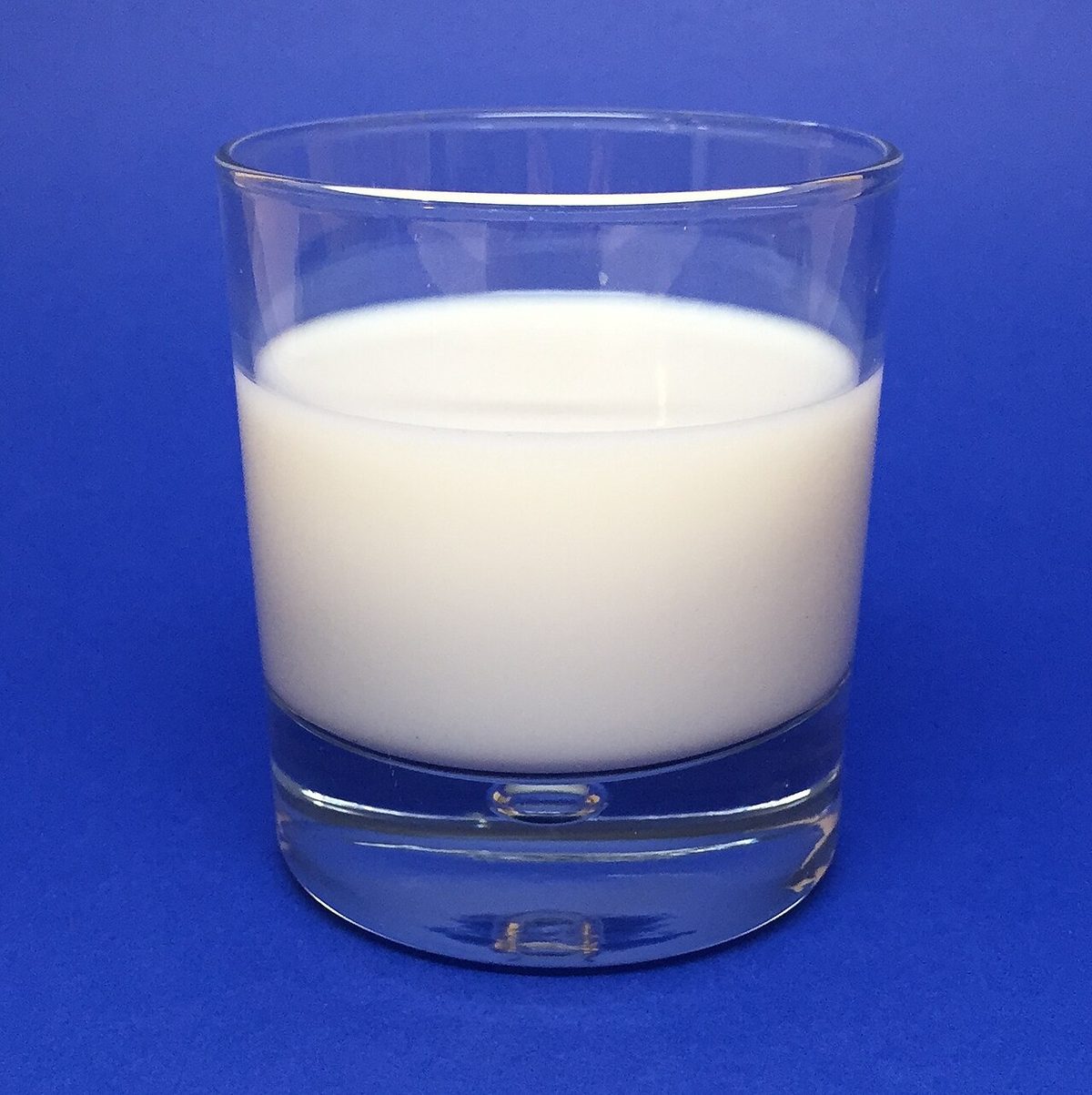
Low mood and anxiety are common in teenagers, and researchers keep asking whether everyday food plays any part. A study published on 13 October in Frontiers in Nutrition looked at one food group, dairy, in a very large group of Chinese middle school students, and split it into four kinds: milk, yogurt, milk powder and cheese.
The team, from Shandong University and the Shandong Center for Disease Control and Prevention, used the province's 2024 school health surveillance survey. Of 156,281 students surveyed, 135,138 from 491 schools had complete answers and were included. Their average age was 14.4, just over half were boys, and about half lived in cities. Students said how often they had each dairy food over the past month, from never to every day, and how much. They also filled in two widely used questionnaires: the 20-item CES-D for depressive symptoms (scored 0 to 60) and the 7-item GAD-7 for anxiety symptoms (scored 0 to 21).
Daily milk was not the norm: 27.5% drank milk every day and 7.3% never did. Daily yogurt was reported by 10.5%, daily milk powder by 5.3% and daily cheese by 3.8%. On the questionnaires, 17.7% scored in the range that suggests raised depressive symptoms and 6.1% in the range for raised anxiety. Girls scored higher than boys on both.
After allowing for age, sex, school level, region, body weight, smoking, drinking, physical activity, other eating habits and parents' education, students who drank milk every day scored on average 2.3 points lower on the depression scale than those who never did, and 0.9 points lower on the anxiety scale. Daily yogurt went with scores about 0.9 points lower for depression and 0.35 lower for anxiety. The more often students had milk or yogurt, the lower their scores tended to be.
Cheese and milk powder went the other way for low mood. Students who ate cheese every day scored about 0.95 points higher on the depression scale than those who never did, and daily milk powder went with scores about 0.7 points higher, although both went with slightly lower anxiety scores. The authors point out that cheese for Chinese teenagers often means sweetened, processed cheese snacks, so it may stand for a liking for sweet snacks or extra calories rather than an effect of dairy itself. The links also differed between girls and boys, with several of the milk and yogurt links weaker in boys.
The authors are clear that the study 'was associative rather than causal or predictive.' It is a single snapshot, so it can't show which came first: teenagers who feel low may simply change what they eat. Both diet and symptoms were self-reported, total calories weren't measured, and factors such as sleep, screen time and bullying weren't accounted for. The differences in scores are also small next to the range of each scale. The study was funded by Chinese government research programmes, and the authors declared no conflicts of interest.
Dairy intake and depression and anxiety scores in 135,138 middle school students (Shandong Province, China, 2024 survey)
135,138
Middle school students from 491 schools included, average age 14.4
27.5%
Drank milk every day; 7.3% never did
−2.3 points
Depression score (0 to 60 scale) for daily milk vs never, after adjustment; the average score was 9.8
−0.9 points
Anxiety score (0 to 21 scale) for daily milk vs never, after adjustment; the average score was 2.9
+0.95 points
Depression score for daily cheese vs never (3.8% ate cheese every day)
17.7% / 6.1%
Students scoring in the raised range for depressive / anxiety symptoms
Study: Wang M, Yu L, Liu Z, Zheng S, Lv C, Zhang J, Qin A, Tang Z, Li S, 'Type-, dose-, and subgroup-specific associations of dairy intake with depressive and anxiety symptoms among middle school students', Frontiers in Nutrition 13 (2026), published 13 October 2026, doi 10.3389/fnut.2026.1954062, read on the publisher's site. Cross-sectional secondary analysis of the 2024 Surveillance of Students' Common Diseases and Health Influencing Factors in Shandong (multistage stratified cluster sampling); 156,281 surveyed, 21,143 excluded for missing dairy or parental education data. Mean age 14.41 (SD 1.87); 52.3% boys. Past-month frequency of milk, yogurt, milk powder and cheese/cheese cubes, plus daily amounts. Depressive symptoms by CES-D (raised at 16 or more; mean 9.83, SD 8.72; girls 10.33, boys 9.39) and anxiety by GAD-7 (raised at 10 or more; mean 2.87, SD 3.96). Linear regression, dairy types mutually adjusted, figures are differences in score (beta) vs never: daily milk −2.30 (95% CI −2.50 to −2.10) depression, −0.90 (−0.99 to −0.81) anxiety; daily yogurt −0.88 (−1.09 to −0.68) and −0.35 (−0.45 to −0.26); daily milk powder 0.69 (0.42 to 0.96) and −0.21 (−0.33 to −0.08); daily cheese 0.95 (0.60 to 1.30) and −0.68 (−0.84 to −0.52). Adjusted R² about 0.11 for both models. Gender interactions for all six dairy measures with depressive symptoms. Funding: National Key R&D Program of China and Shandong Medical and Health Science and Technology Development Project; no conflicts of interest declared; approved by the Shandong CDC ethics committee.
- The CES-D depression questionnaire used here was published in 1977 by Lenore Radloff for the US Center for Epidemiologic Studies. It screens for symptoms; it does not diagnose depression.
- The GAD-7 anxiety questionnaire was published in 2006 and asks about seven symptoms over the past two weeks. A score of 10 or more is the usual point at which doctors look more closely.
- The World Health Organization estimates that one in seven (14.3%) 10 to 19-year-olds worldwide experience a mental health condition.
- According to the WHO, anxiety disorders affect an estimated 4.1% of 10 to 14-year-olds and 5.3% of 15 to 19-year-olds, more than depression in the same age groups.
- Type-, dose-, and subgroup-specific associations of dairy intake with depressive and anxiety symptoms among middle school studentsFrontiers in Nutrition, October 2026 · The study: methods, dairy intake, depression and anxiety results, limitations, funding and conflicts of interest
- Mental health of adolescentsWorld Health Organization fact sheet, September 2025 · How common mental health conditions, depression and anxiety are in 10 to 19-year-olds
- A brief measure for assessing generalized anxiety disorder: the GAD-7Archives of Internal Medicine, 2006 · The anxiety questionnaire used in the study
- The CES-D Scale: a self-report depression scale for research in the general populationApplied Psychological Measurement, 1977 · The depression questionnaire used in the study
General information, not medical advice. This observational survey cannot show that milk or yogurt improves mood or that cheese worsens it, and food is not a treatment for depression or anxiety. If a teenager seems persistently low, anxious or withdrawn, talk to a doctor or school counsellor. If anyone is in danger or thinking of harming themselves, contact local emergency services straight away.
Analysis by NutroPractic from the sources listed. Written for general readers; it does not replace advice from your own doctor.
From our articles
Read, then eat a little better
Plain-language guides on nutrition and wellness, backed by research.

Women's health
Inositol for PCOS: the 40:1 ratio, trial doses, and food milligrams
Why do randomized trials in polycystic ovary syndrome prioritize the 40:1 myo to D-chiro inositol ratio? Here is the science behind the ovarian epimerase paradox, clinical ovulation and insulin metrics, and why cantaloupe cannot replace 4,000 mg trial powder.
21 Nov 2026

Everyday eating
Extra virgin olive oil polyphenols: the EU health claim, smoke point myths, and cooking stability
Does extra virgin olive oil degrade when cooked? What does the EU 5 mg polyphenol health claim require, how does oleocanthal act like ibuprofen, and why does oxidative stability matter more than smoke point in domestic frying? Here is the clinical and culinary data.
21 Nov 2026

Food and nutrition
L-theanine and caffeine: what cognitive trials measured on sustained attention, and milligrams in matcha vs green tea
Combining L-theanine with caffeine produces clean focus without caffeine jitters. Here is what randomized trials measured on attention-switching, EEG alpha brain waves, and the exact milligrams across ceremonial matcha, culinary powder, gyokuro, and sencha.
20 Nov 2026
Newsfeed for your website
Want this feed on your website?
Add it to any site with one copy-and-paste snippet. No sign-up, and it updates itself every hour.
Start with a virtual consultation
Tell Dr. Triveni what you want to change. You will leave with a clear next step, whether you are in Toronto, London, New York or Chennai.