Nutrigenetics · November 3, 2026
Daily coffee drinkers looked fine on fasting glucose and HbA1c. A two-hour sugar test in 905 Polish adults told a different story, and their genes made no difference
Researchers in Białystok asked 905 adults about coffee and snacking, tested two diabetes-linked genes, and gave them a glucose drink. Daily coffee drinkers had higher blood sugar after the drink, frequent snackers carried more body fat, and none of it depended on genotype. Before anyone gives up coffee, though, there is a lot this study could not see.

Gene tests that promise to tell you how your body handles coffee or carbs are easy to buy. A cross-sectional study published in Nutrients on 27 October asked a plainer question first: in ordinary adults, do blood sugar, body fat and cholesterol track everyday habits, a couple of well-known diabetes genes, or both?
The volunteers, aged 18 to 79, were seen at the Medical University of Białystok in north-east Poland as part of a registered project. Of the 905 who filled in the habit questionnaires, 612 said they never drank coffee, 182 drank it weekly and 111 daily. Snacking was counted as eating or drinking something with calories between main meals; two or more such occasions a day made someone a frequent snacker, and about two thirds were. Everyone without diagnosed diabetes drank 75 g of glucose and had blood taken at 0, 30, 60 and 120 minutes. The team also read four gene variants: one in BDNF, a gene involved in appetite, and three in TCF7L2, a gene region with some of the strongest known links to type 2 diabetes risk.
The clearest signal came from coffee, and it showed up only after the glucose drink. Compared with people who never drank coffee, daily drinkers had higher glucose and insulin responses over the two hours, and their two-hour glucose was about 15 mg/dL higher, after allowing for age, sex, calories eaten and inactivity. Their fasting glucose and HbA1c, the two tests most people get at a check-up, did not differ. In unadjusted averages, the gap opened at 30 and 60 minutes. It held when body mass index or snacking was added to the model, and when 14 people whose results met diabetes thresholds on the day were left out.
Frequent snackers carried more body fat: about 1.3 points more BMI, 2.6 kg more fat mass and 1.8 percentage points more body fat after adjustment. They also ate around 170 kcal a day more in their three-day food records. Coffee and snacking were not linked to each other at all; roughly two thirds of never, weekly and daily coffee drinkers alike were frequent snackers. Weekly coffee drinkers, oddly, had higher HDL cholesterol than non-drinkers, while daily drinkers did not.
The genes added little. One BDNF genotype came with lower odds of type 2 diabetes, but the pattern did not rise or fall with the number of copies, and the authors call it a lead for replication. The TCF7L2 variants were not clearly linked to diabetes here. Most telling, the team ran 184 tests of whether a gene changed how coffee or snacking related to an outcome. Eleven came up at the usual p < 0.05 threshold, about the nine you would expect by chance, and none survived correction for multiple testing. Their conclusion: these results do not support gene-based advice on coffee or snacking.
Now the brakes. This is a snapshot, so it cannot say coffee raised anyone's glucose. Daily drinkers had twice the rate of diagnosed diabetes (22.5% against 10.6%), a hint that coffee habits travel with other health and lifestyle differences. The questionnaire did not ask about cup size, brewing method, sugar, milk or creamer, or what the snacks were, and smoking and sleep were not accounted for. None of the main results passed the study's own correction for multiple testing either (the coffee and glucose finding came closest). And large prospective studies, which the authors cite, keep finding that regular coffee drinkers are less likely to develop type 2 diabetes over time. The authors read their result as a reason for researchers to use the two-hour test, not as a reason to drop coffee.
Coffee, snacking, BDNF and TCF7L2 genotypes and cardiometabolic traits in Polish adults (Nutrients, 27 October 2026)
905
Adults aged 18 to 79 with coffee and snacking questionnaires: 612 never, 182 weekly and 111 daily coffee drinkers
+15 mg/dL
Higher two-hour glucose after a 75 g glucose drink in daily coffee drinkers against never drinkers (95% CI 5.0 to 25.1), adjusted
+1.9 mg/dL
Difference in fasting glucose for the same comparison, not statistically clear (95% CI -1.6 to 5.4); HbA1c did not differ
154 vs 147
Average glucose (mg/dL) at 30 minutes in daily against never coffee drinkers, unadjusted; 139 vs 131 at 60 minutes
+2.6 kg
More fat mass in frequent snackers (two or more between-meal eating occasions a day) than rare snackers, adjusted (95% CI 0.01 to 5.23)
+4.75 mg/dL
Higher HDL cholesterol in weekly coffee drinkers against never drinkers (95% CI 1.49 to 8.02); not seen in daily drinkers
11 of 184
Gene by habit interaction tests under p < 0.05, against about 9 expected by chance; none survived multiple-testing correction
22.5% vs 10.6%
Diagnosed type 2 diabetes in daily against never coffee drinkers, unadjusted (8.1% in weekly drinkers)
Figures are from the paper's results, Tables 1 to 3 and discussion. Adjusted models allowed for age, sex, daily energy intake from 3-day food records and physical inactivity. People with diagnosed diabetes had no glucose test, so the glucose results cover people without a diagnosis. The study had no single pre-set main outcome and the authors treat every analysis as exploratory: the coffee and glucose result had p = 0.001 but a false discovery rate q of 0.094, and the snacking results q = 0.26. Coffee and snacking were self-reported in broad frequency groups, without cup size, brew method, additives, snack type or timing. One clinic in one country.
- HbA1c reflects average blood sugar over roughly the last 8 to 12 weeks, which is why it can miss short spikes after a meal or a glucose drink, the authors point out.
- Pooled prospective studies cited in the paper put the risk of developing type 2 diabetes about 30% lower in the heaviest coffee drinkers than the lightest, with similar results for decaf, which points at compounds other than caffeine.
- The three TCF7L2 variants tested travel together so closely in this group (pairwise r² 0.77 to 0.97) that the authors treated them as markers of one gene region rather than three separate signals.
- Gene by diet effects are hard to detect: they need far bigger samples than main effects, and errors in self-reported diet shrink them further. The paper also cites a trial in which genotype did not change weight loss on healthy low-fat or low-carb diets.
- The 75 g glucose drink used here is the standard oral glucose tolerance test. Some researchers now argue the one-hour reading flags risk earlier than fasting glucose or HbA1c, the paper notes.
- Diet, Genes, or Both? Coffee Consumption, Snacking, and BDNF and TCF7L2 Genotypes in Relation to Cardiometabolic Traits: A Cross-Sectional Study in Polish AdultsNutrients, 27 October 2026 · Open access (CC BY). Methods, Tables 1 to 3, Figures 1 and 2, discussion and limitations.
- Registered parent project NCT03792685ClinicalTrials.gov · The Medical University of Białystok project the participants came from.
- Coffee and cookies (Unsplash)Wikimedia Commons · CC0 image by PICSELI.
General information, not medical advice. This cross-sectional study shows links, not that coffee or snacking causes the differences seen. Anyone worried about blood sugar or diabetes risk should ask their doctor about testing before changing diet or treatment.
Analysis by NutroPractic from the sources listed. Written for general readers; it does not replace advice from your own doctor.
From our articles
Our guides on this subject
Plain-language guides on nutrition and wellness, backed by research.
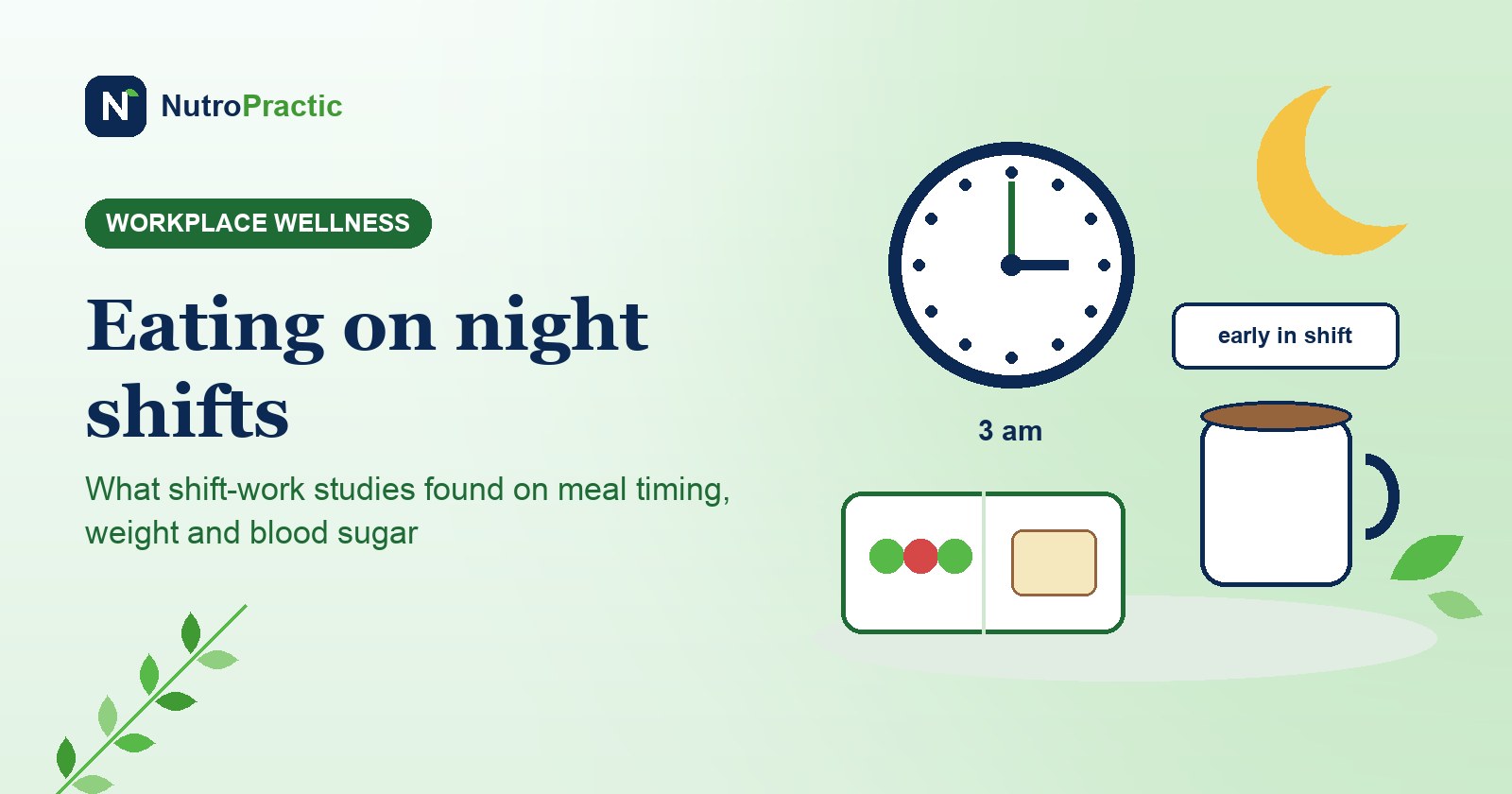
Workplace wellness
Eating on night shifts: what shift-work studies found on meal timing, weight and blood sugar
The same meal raises blood sugar more at 3 am than at 1 pm. What the sleep-lab trials found when night workers ate only by day, how the Nurses' Health Study risk climbed with years of nights, what is left of a 3 am coffee at bedtime, and a meal plan for a 19:00-07:00 shift.
30 Oct 2026
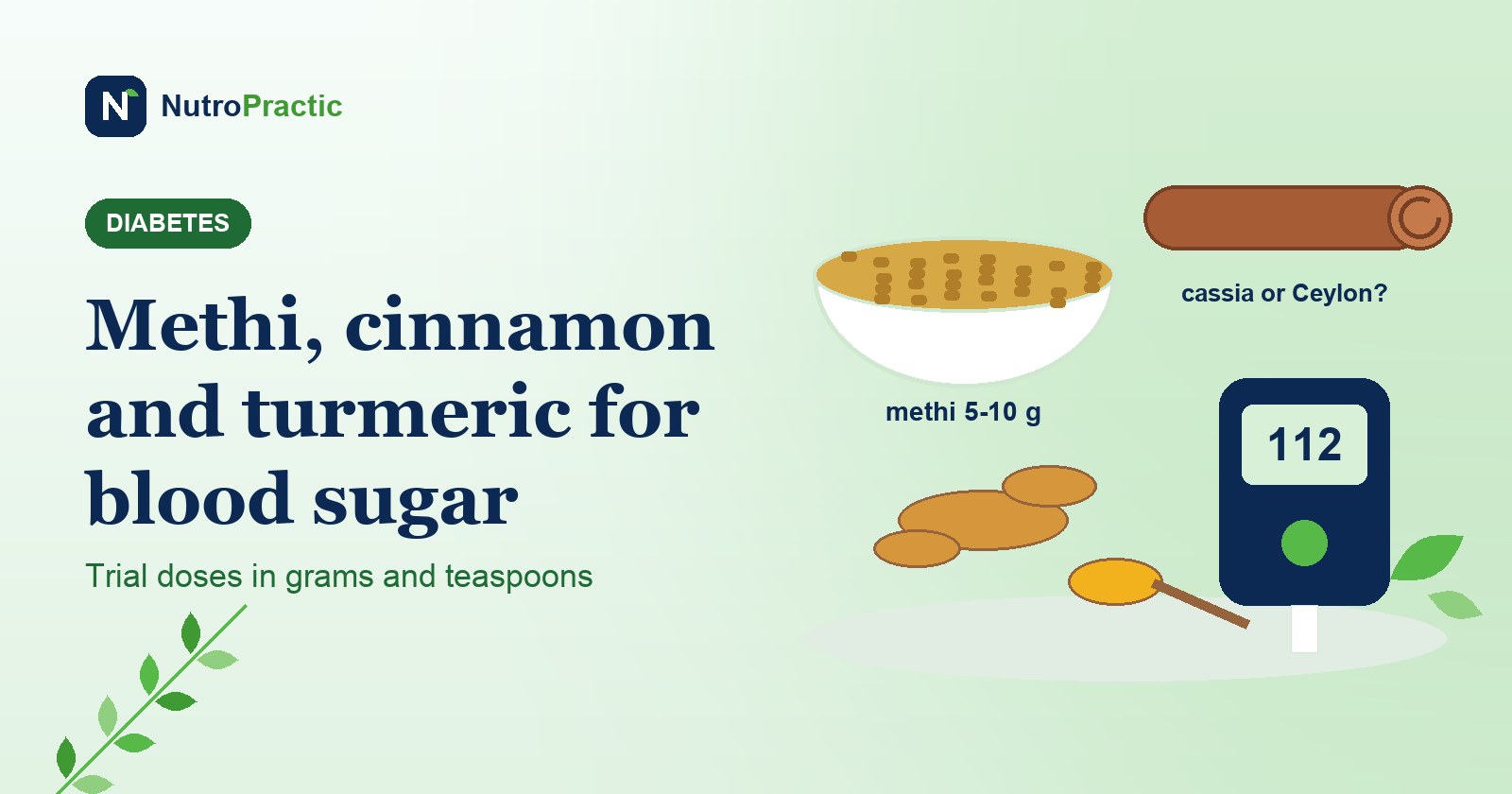
Diabetes
Fenugreek, cinnamon and turmeric for blood sugar: what the trials in an Indian kitchen measured
Fenugreek seed at 5-10 g a day lowered HbA1c by about 0.85 points in pooled trials, and in a 3-year Hyderabad study 23% went on to diabetes against 55%. Cinnamon trims fasting glucose by 15-25 mg/dL, but a teaspoon of cassia tops the coumarin limit. Curcumin: about 0.3-0.4 points, and rare liver injury from capsules. Doses in teaspoons, and a fair way to test it at home.
1 Nov 2026
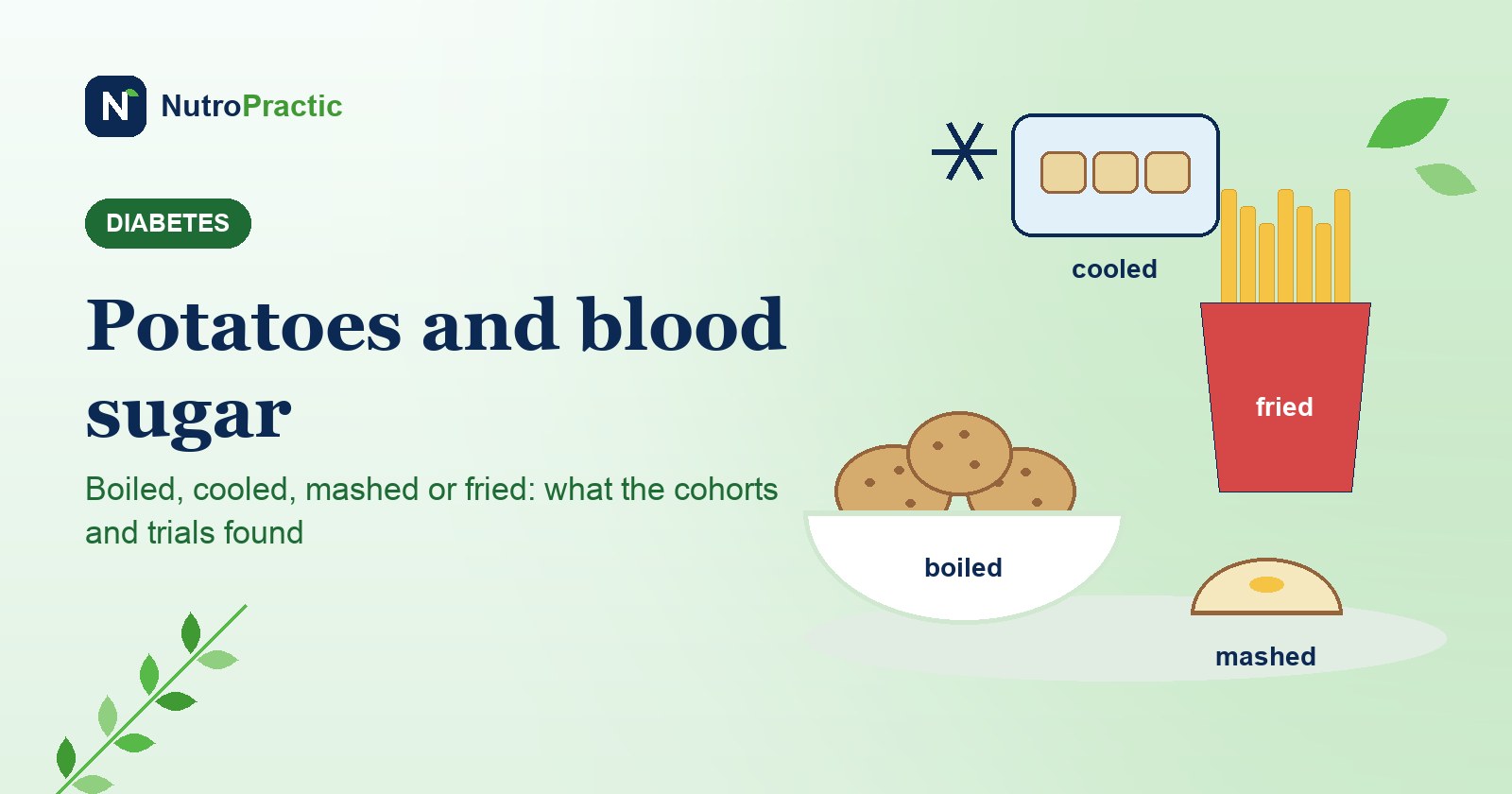
Diabetes
Potatoes and blood sugar: boiled, cooled, mashed or fried, and what the cohorts and trials found
Fries were linked to 20% higher diabetes risk per three servings a week in 205,000 US adults; boiled, baked and mashed potatoes to almost none. GI by cooking method, resistant starch in grams after chilling, the glycaemic load of a potato against a cup of rice, and how to fit aloo into an Indian plate.
30 Oct 2026
Newsfeed for your website
Want this feed on your website?
Add it to any site with one copy-and-paste snippet. No sign-up, and it updates itself every hour.
Start with a virtual consultation
Tell Dr. Triveni what you want to change. You will leave with a clear next step, whether you are in Toronto, London, New York or Chennai.