Diabetes · October 29, 2026
Diabetes classes built around the food people already eat in Cotonou: 36 adults in Benin signed up for 12 weeks, and almost all of them kept coming
Most diet advice for type 2 diabetes was written in rich countries, for rich-country kitchens and budgets. A team in Benin rebuilt it around local dishes, household spoons and a WhatsApp group, then tested whether people would stick with it. They did. Whether it lowers blood sugar is the next question.
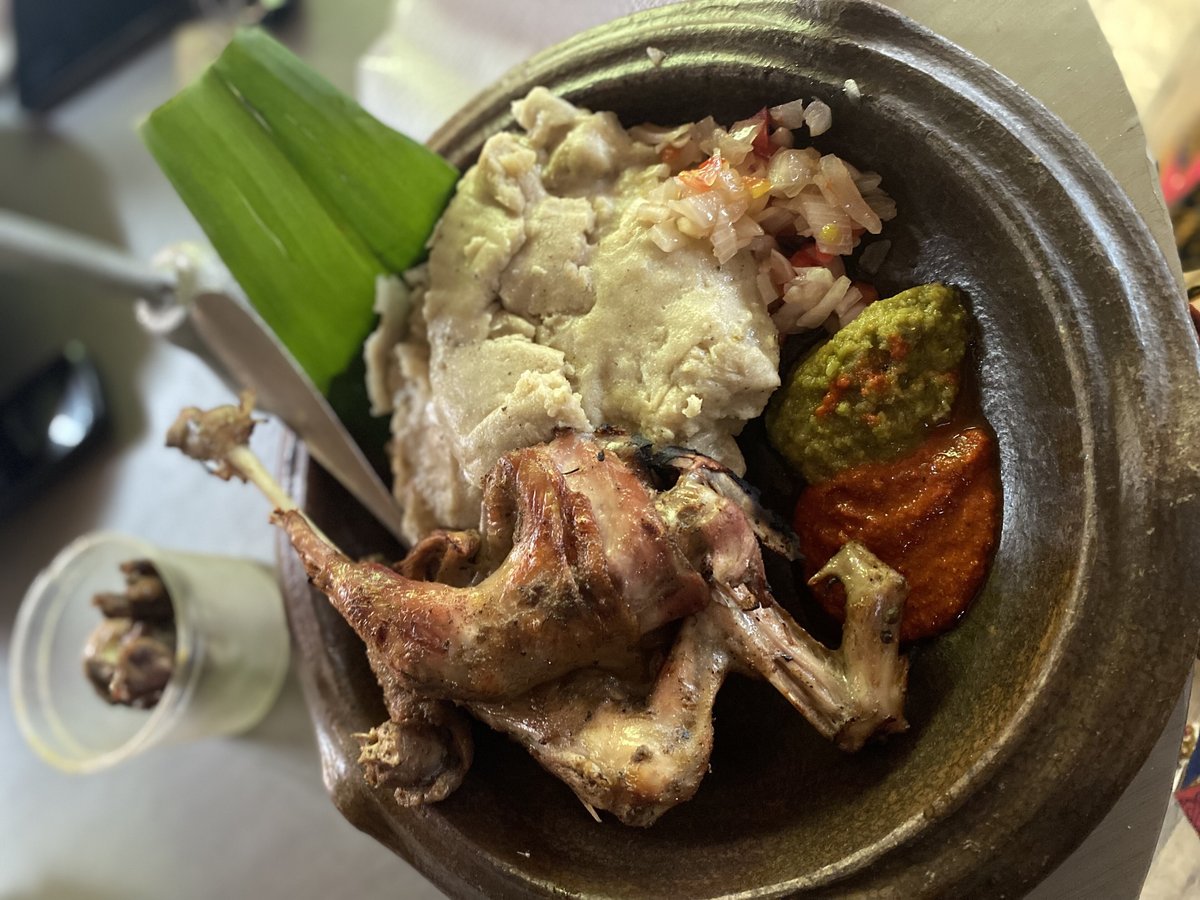
Medical nutrition therapy, meaning diet advice tailored to a person by a trained dietitian, is one of the standard pillars of type 2 diabetes care. Nearly all the evidence for it comes from high-income countries, and the advice often assumes foods, prices and kitchens that don't exist elsewhere. Benin had an estimated 467,000 adults living with diabetes in 2024, and specialist nutrition services there are scarce. Researchers at the University of Arizona and the Université d'Abomey-Calavi first asked Beninese patients, families and clinicians how people actually eat, then built a programme around the answers. Its first real-world test was published in Frontiers in Nutrition on 28 October.
The programme, called OSanDiaBé, ran for 12 weeks in Cotonou. Each person had two one-to-one counselling sessions at home and eight group sessions of 90 to 120 minutes in community venues, led by six trained dietitians and nutritionists. The advice used familiar local meals rather than special diabetes foods, measured portions with household utensils and hands, and came with a recipe booklet designed to balance nutrition against what families could afford. There were cooking demonstrations, exercise sessions, picture-based handouts for people who read less easily, explanations in local languages when French wasn't enough, family members invited along, and a moderated WhatsApp group between meetings.
The 36 participants were aged 40 to 65 (average 50) and had lived with diabetes for about 11 years, with HbA1c of at least 7%. Six in ten said their household income covered only routine expenses or less, and over four in ten were on insulin. Thirty finished the 12 weeks, and the 34 who joined the groups came to an average of 7.2 of the 8 sessions. Asked whether they were satisfied, they scored it 4.87 out of 5. Every target the team had set in advance for recruitment, retention, attendance, sticking to the plan and satisfaction was met.
Among the 30 who finished, average HbA1c fell from 7.53% to 6.95%, a drop of 0.58 percentage points with a wide margin (0.04 to 1.12). Weight fell by 0.8 kg on average. The share who said they exercised regularly went from 27% to 87%, a diet questionnaire score rose by 9 points, and confidence in managing diabetes rose by 15 points. Knowledge of treatment showed the biggest jump: 7 of 30 people answered well at the start, 28 of 30 at the end. Waist size and blood pressure moved down a little but not clearly.
None of this proves the programme works, and the authors say so plainly. There was no comparison group, so the changes could reflect the extra attention, people's own efforts or the tendency of high readings to drift down on a second test. Everyone had already helped refine the programme in an earlier stage, so they were likely keener than the average patient, and many of the behaviour measures were self-reported. People were reimbursed for transport and given small incentives, and the cost of running it wasn't measured. The useful finding is the practical one: adults with diabetes in a low-income city came back week after week to learn to eat well with the food they already buy. The next step is a randomised trial.
OSanDiaBé, a culturally adapted medical nutrition therapy programme for type 2 diabetes in Cotonou, Benin: single-arm 12-week feasibility study (Frontiers in Nutrition, 2026)
36 → 30
Adults enrolled (85.7% of the 42 screened) and adults who finished the 12 weeks (83.3%)
7.2 of 8
Average group sessions attended by the 34 who joined the groups; 24 came to all 8
4.87 / 5
Average overall satisfaction (target set in advance: 4.0)
7.53% → 6.95%
Average HbA1c, a drop of 0.58 points (95% CI 0.04 to 1.12), with no comparison group
27% → 87%
Share reporting regular physical activity
7 → 28 of 30
People with good knowledge of their diabetes treatment, before and after
ORBIT Phase IIa single-arm pre-post mixed-methods study. Adults 40 to 65 with type 2 diabetes for at least a year and HbA1c of 7% or more, recruited September to October 2024 from outpatient diabetes clinics in Cotonou, all from the earlier intervention-refinement phase. Two home counselling sessions (45 to 60 min) and eight community group sessions (90 to 120 min) over 12 weeks, plus a WhatsApp group; family members invited. Changes are for the 30 with complete data, tested with Wilcoxon signed-rank and exact McNemar tests, exploratory and unadjusted for multiple comparisons. Weight -0.80 kg, BMI -0.29, diet quality (adapted UKDDQ) +9.29 points, diabetes self-efficacy +15.45 points; waist, blood pressure and family functioning changes not significant. No intervention-related adverse events. Transport reimbursed, small incentives paid. Funded by the NIH Fogarty International Center (K01TW012422); authors declared no conflicts.
- The programme's recipe booklet, Mes repas santé OSanDiaBé, was put together with linear goal programming, a mathematical method that searches for food combinations meeting nutrition targets while keeping cost and local availability in check.
- The lowest-rated statement in the participants' feedback was "I am more active and engaged with my family", with a middle score of 3 out of 5; almost everything else scored 5.
- Transport and work were the main reasons people dropped out or missed sessions: of the six who didn't finish, two never reached the groups because of travel logistics or work, and four were lost to work, family duties or travel.
- To join, each person needed at least one family member or someone in their household who could back up the changes at home, because earlier interviews showed how strongly the household shapes what a person with diabetes eats.
- Feasibility and acceptability of a culturally adapted medical nutrition therapy intervention for adults with type 2 diabetes in Benin: a single-arm mixed-method studyFrontiers in Nutrition · The study, published 28 October 2026 (CC BY); figures from the full text, Tables 1 to 3, the limitations and the funding and conflict of interest statements
- IDF Diabetes AtlasInternational Diabetes Federation · Source the study cites for diabetes numbers in Benin (about 467,000 adults in 2024)
- Plat BOMIWOWikimedia Commons · The image, CC0
General information, not medical advice. This was a 12-week study of 36 adults in Benin with no comparison group, so it shows the programme was workable and liked, not that it lowers blood sugar. If you have diabetes, talk to your doctor or a registered dietitian before changing your diet, activity or medicines, especially if you take insulin or tablets that can cause low blood sugar.
Analysis by NutroPractic from the sources listed. Written for general readers; it does not replace advice from your own doctor.
From our articles
Our guides on this subject
Plain-language guides on nutrition and wellness, backed by research.

Diabetes
Potatoes and blood sugar: boiled, cooled, mashed or fried, and what the cohorts and trials found
Fries were linked to 20% higher diabetes risk per three servings a week in 205,000 US adults; boiled, baked and mashed potatoes to almost none. GI by cooking method, resistant starch in grams after chilling, the glycaemic load of a potato against a cup of rice, and how to fit aloo into an Indian plate.
30 Oct 2026
Women's health
PCOS and food: what the diet trials show for cycles, insulin and weight
PCOS affects about one woman in ten, and most are told to "lose weight" with little else. Here is what drives it, why insulin matters even in slim women, how much weight loss brings cycles back, what the low-GI and Mediterranean trials found, what inositol and metformin do, and which tests to ask for.
30 Oct 2026
Indian kitchen
Millets in an Indian kitchen: what they do for blood sugar, and how to cook them
Ragi, jowar, bajra and the small millets are sold as the answer to diabetes. A meta-analysis of 65 studies says they help on average, but two Chennai studies found ragi meals no better than white rice and cooked foxtail millet with a GI of 89. What actually makes the difference, and how to cook each one so it does.
30 Oct 2026
Newsfeed for your website
Want this feed on your website?
Add it to any site with one copy-and-paste snippet. No sign-up, and it updates itself every hour.
Start with a virtual consultation
Tell Dr. Triveni what you want to change. You will leave with a clear next step, whether you are in Toronto, London, New York or Chennai.