Bone health · November 13, 2026
Old CT scans flagged many future fracture cases that had never received standard bone-density screening
In 4,418 adults, CT-derived osteoporosis thresholds tracked with up to 2.86 times the fracture risk—but remain a prompt for evaluation, not a stand-alone diagnosis.
Researchers analysed 4,418 clinical CT scans from 2,368 men and 2,050 women in Alberta, Canada. They used measurements from the first lumbar vertebra and femoral neck to build age- and sex-specific bone-density reference curves.
A subset of 1,088 people also had a standard DXA scan within a year, allowing the team to choose CT thresholds aligned with DXA-defined osteoporosis. Linked health records then identified major osteoporotic fractures after the CT scan.
At the vertebral body, the CT threshold captured 66.3% of female fracture cases and 41.9% of male cases. Among those flagged cases, 30 women and 20 men—44.8% and 76.9%, respectively—had not undergone DXA screening.
CT-defined osteoporosis was associated with up to 2.86 times the subsequent fracture risk, depending on the vertebral site. This is opportunistic screening: information extracted from imaging ordered for another reason. The thresholds need implementation testing and should trigger a proper clinical assessment rather than label someone from an old scan alone.
Alberta CT bone-density cohort (8 November 2026)
4,418
Clinical CT scans analysed
1,088
Also had DXA within one year
66.3%
Female fracture cases below vertebral CT threshold
41.9%
Male fracture cases below vertebral CT threshold
Up to 2.86×
Subsequent major-fracture risk
Retrospective cohort using internally calibrated CT measurements and linked records. Threshold performance varied by sex and skeletal site and is intended as a flag for further evaluation.
- DXA uses a low-dose X-ray technique and remains the standard test used to diagnose osteoporosis in many settings.
- Opportunistic screening reuses information already present in an examination performed for another clinical reason.
- The study used deep-learning segmentation to locate bone regions, then calculated bone density with internal CT calibration.
- Fracture risk also depends on age, falls, medicines, prior fractures and other factors beyond bone density.
- Opportunistic Osteoporosis Screening Using CT-Derived Volumetric Bone Mineral Density Reference CurvesJournal of Bone and Mineral Research / PubMed · Primary cohort abstract with sample, DXA subset, case capture and fracture-risk results. Published 8 November 2026.
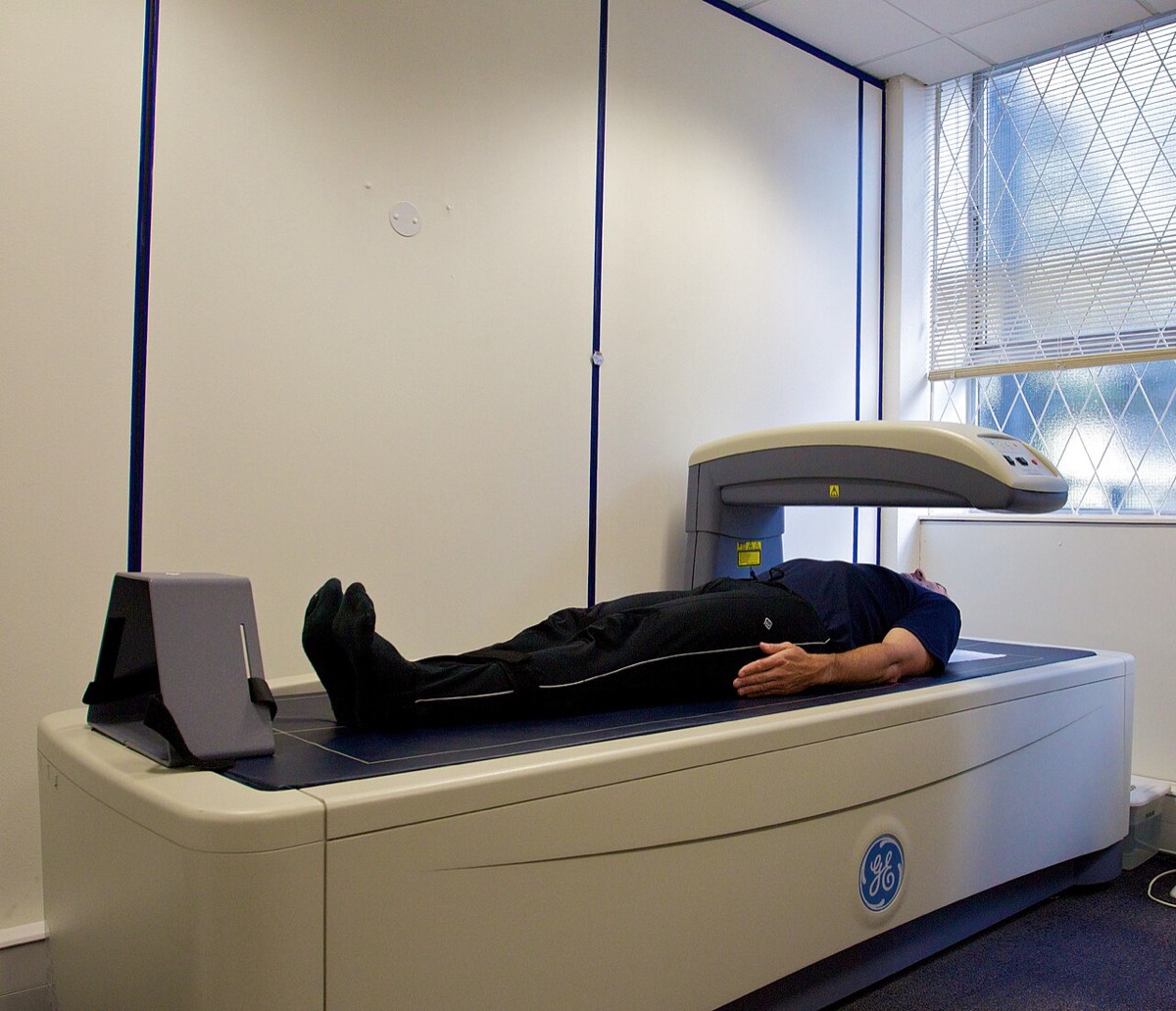
- DEXA scanner in useWikimedia Commons · Nick Smith photography, CC BY-SA 3.0. General bone-density assessment illustration only.
General information, not an osteoporosis diagnosis. Bone-density results and fracture risk should be interpreted by a qualified clinician using the full medical history.
Analysis by NutroPractic from the sources listed. Written for general readers; it does not replace advice from your own doctor.
From our articles
Our guides on this subject
Plain-language guides on nutrition and wellness, backed by research.
Supplements and vitamins
Glycine before bed: the 3 g sleep trials, what they measured, and glycine in gelatin, bone broth and collagen
The 3 g dose comes from small Japanese trials: the sleep-restriction study analysed seven men. Here is what each trial measured, the grams of gelatin, collagen, pork rinds and bone broth that hold 3 g, and the clozapine warning.
17 Nov 2026

Women's wellness and nutrition
Creatine for women: cognitive performance, menstrual cycle phases, and bone density beyond muscle building
Creatine is widely stereotyped as a bodybuilding supplement for men, but female physiology tells a very different story. Women exhibit 70% to 80% lower endogenous creatine stores, reduced dietary intake, and cyclical fluctuations in brain creatine kinase across the follicular and luteal phases. Robust clinical trials demonstrate that 3 to 5 grams of daily creatine monohydrate enhances cognitive performance during sleep deprivation, augments clinical response in unipolar depression, preserves femoral neck bone geometry in postmenopausal women, and causes cellular intracellular hydration rather than subcutaneous bloating.
13 Nov 2026
Supplements and vitamins
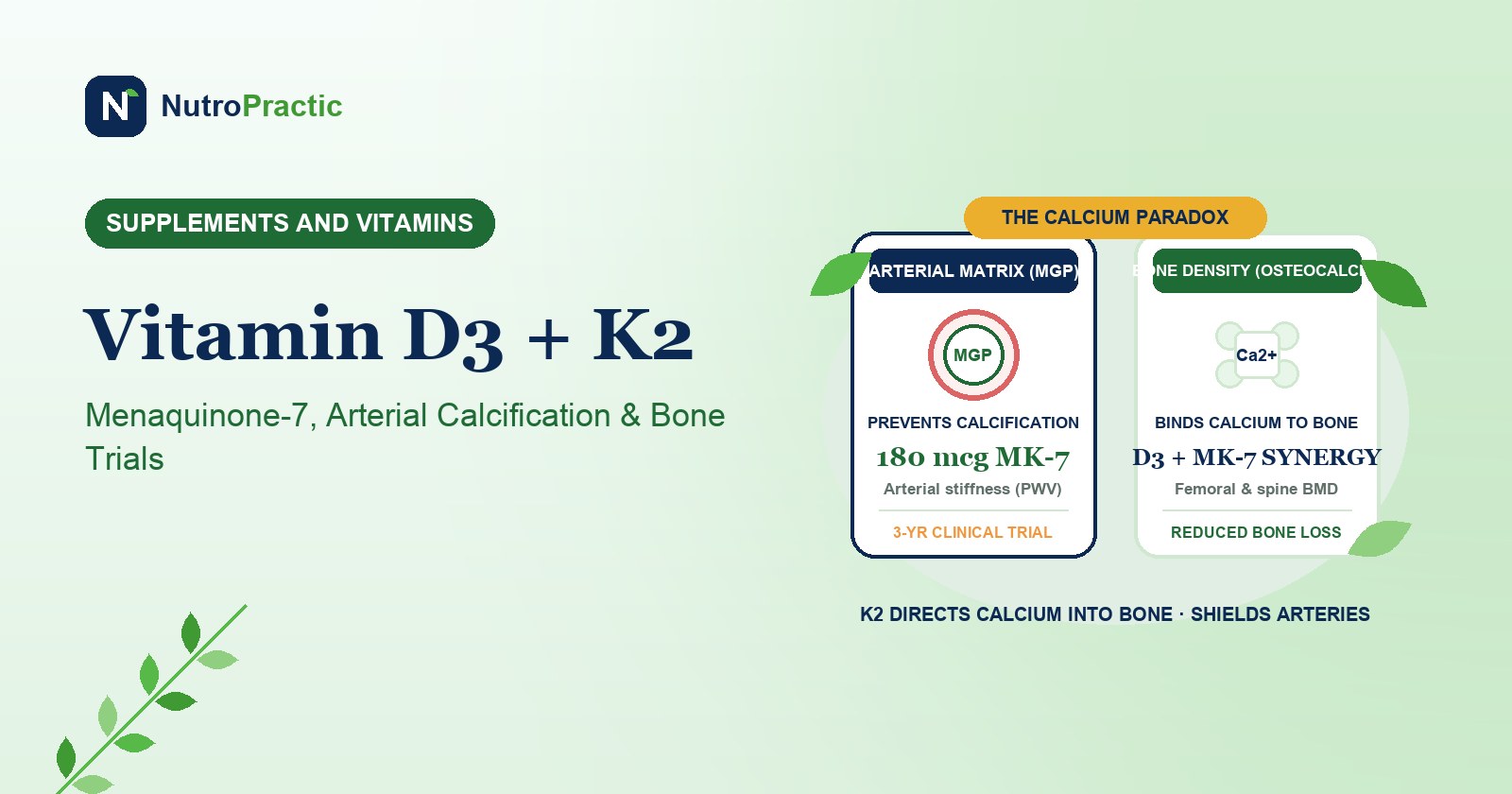
Vitamin D3 with K2: does adding menaquinone-7 actually protect arteries and bones in trials?
Vitamin D3 enhances intestinal calcium absorption, but without adequate vitamin K2, calcium can deposit in vascular walls instead of bone matrix. Clinical trials evaluating menaquinone-7 (MK-7) demonstrate improved carboxylation of Matrix Gla Protein, preserved arterial elasticity, and reduced bone mineral density loss. Discover what human clinical trials actually prove about cardiovascular calcification, bone density, MK-4 vs. MK-7 dosing, and critical drug interactions.
13 Nov 2026
Newsfeed for your website
Want this feed on your website?
Add it to any site with one copy-and-paste snippet. No sign-up, and it updates itself every hour.
Start with a virtual consultation
Tell Dr. Triveni what you want to change. You will leave with a clear next step, whether you are in Toronto, London, New York or Chennai.