Injury recovery · November 1, 2026
Creatine did not stop muscle shrinking inside a cast in the two trials that scanned it. Six small studies suggest the question may be what happens after the cast comes off
Some of the trials looked encouraging, until the reviewers checked how they had measured muscle. The studies that imaged the thigh directly found the same loss with creatine or a placebo. The more hopeful numbers come later, during rehab, and they rest on very few people.
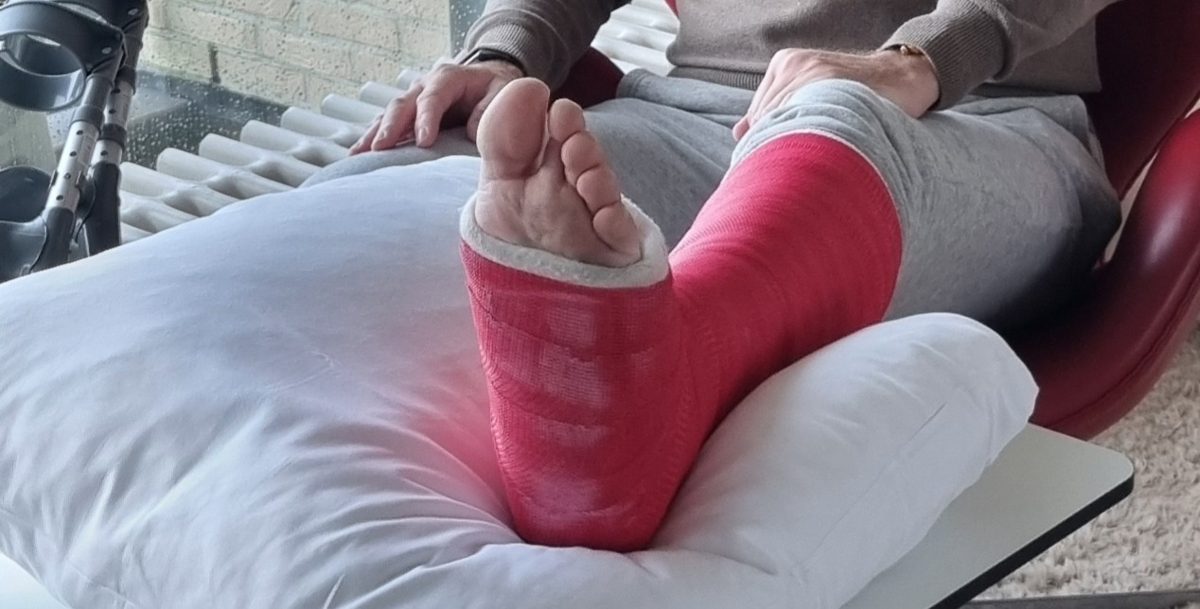
Anyone who has had a limb in a cast knows how thin it looks when the cast comes off. Creatine monohydrate has a solid record for adding to the gains from resistance training, so it is a natural thing to wonder about during an injury. Researchers from universities in the UK and Canada, with one in the US, went looking for every placebo-controlled trial that tested it during enforced rest. Their systematic review appeared in Experimental Physiology on 29 October. From 100 publications they ended up with six trials, 118 people in all, published between 2001 and 2018.
The most consistent result concerns the loss itself. Two trials measured the thigh muscle directly with imaging, and creatine made no difference in either: quadriceps area fell 5.6% with creatine and 5.5% with placebo after one week in a cast, and 11.0% against 9.4% after two weeks. Two other trials did favour creatine, with leg lean mass down 5.6% against 8.9%, and arm lean mass up 0.9% against down 3.7%. But those relied on bioelectrical impedance and DXA, which the reviewers point out can be swayed by shifts in body water and cannot separate small changes in muscle from other lean tissue. Their reading is that the favourable numbers should not be taken as muscle saved.
Strength and endurance gave a split answer. The three leg trials that tested performance generally found no protection. Two arm trials looked better, and one was striking: elbow strength fell by about 4% with creatine against about 20% with placebo. That trial had seven participants, all men, and was one of the two the reviewers flagged for some concerns about bias. The other arm trial's endurance result narrowly missed significance (p = 0.073). The reviewers say the evidence is too thin to tell whether arms and legs truly respond differently.
Rehab is where creatine looks more interesting, and where the reviewers are most careful. In three trials, 59 people in total, people returned to structured resistance training after the cast. Each trial reported at least some better results with creatine: in one, thigh muscle area regrew by up to 21.3% against 14.3%. Yet not every measure moved, since maximal knee strength recovered about equally in two of them. A fourth trial, with a week of ordinary recovery and no training, found no difference. The authors do not claim a benefit here, only that creatine may influence some measures and that larger trials are needed. Nearly everyone studied was a healthy young adult or teenager, with average ages from 15 to 24, so the trials say little about the older or chronically ill patients who lose the most muscle and recover the slowest.
Creatine monohydrate against placebo during 1 to 2 weeks of limb immobilisation and in later recovery: six randomised trials (Experimental Physiology, 29 October 2026)
6 trials, 118 people
All the eligible trials found, with 7 to 27 participants each and average ages of 15 to 24; published 2001 to 2018 in Europe and North America
-5.6% vs -5.5%
Quadriceps area after 1 week in a cast, creatine against placebo, measured by CT (p = 0.76)
-11.0% vs -9.4%
Quadriceps area after 2 weeks in a cast, creatine against placebo, measured by NMR imaging (p = 0.30)
-5.6% vs -8.9%
Leg lean mass after 2 weeks immobilised, creatine against placebo, by bioelectrical impedance (p < 0.01); this method can be affected by body water
+21.3% vs +14.3%
Largest reported regrowth of quadriceps area during up to 10 weeks of resistance rehab, creatine against placebo, in one trial of 19 people (p < 0.05)
+1.1% vs +2.0%
Quadriceps area after 7 days of passive recovery with no structured training, creatine against placebo (p = 0.52)
This is a narrative review: the trials differed too much to pool, so there is no combined effect size, and the figures above are the individual trials' own results as reported in the review. Dosing was typically 20 g a day for 5 to 7 days, then 3 to 5 g a day in trials with a rehab phase. Four of the six trials were rated low risk of bias and two raised some concerns. Disclosure from the paper: no funding; three of the five authors declare creatine-related industry ties, including sponsored research, donated supplements, advisory roles with creatine manufacturers and expert witness or consultant work in legal cases involving creatine. The protocol was registered with PROSPERO (CRD420261340025).
- Only one trial started creatine before the cast went on, at 20 g a day for 5 days. It still found no protection for thigh size or strength, even when the analysis was limited to people whose muscle creatine had actually risen.
- The review's search ran to March 2026, but the newest eligible trial dates from 2018.
- Lean mass is not the same thing as muscle. The review cites an estimate that only about 50% of lean mass is skeletal muscle.
- Immobilisation lasted one or two weeks in every trial, so none of them can speak to the longer spells of bed rest or inactivity seen in hospital patients.
- All six trials were in healthy volunteers because the review excluded people with chronic illness on purpose, to keep the effects of disease from muddying the comparison. The authors name older adults and clinical patients as the groups that most need testing next.
- Effects of creatine supplementation on lean mass, muscle size and muscle performance during immobilisation and rehabilitation: A systematic reviewExperimental Physiology, 29 October 2026 · Open-access review (CC BY): search, Tables 1 and 2, risk of bias, limitations, funding and conflict-of-interest statements.
- Full text of the reviewPubMed Central · The same paper, free to read.
- Short leg cast redWikimedia Commons · CC0 photograph by Jonascumgi, used as a general illustration.
General information, not medical advice. These small trials studied healthy young people over short periods, so they do not tell you what creatine would do for you after an injury or operation. Follow the rehab plan from your doctor or physiotherapist, and check with your doctor before taking creatine if you have kidney disease, are pregnant, or take regular medicines.
Analysis by NutroPractic from the sources listed. Written for general readers; it does not replace advice from your own doctor.
From our articles
Our guides on this subject
Plain-language guides on nutrition and wellness, backed by research.
Healthy ageing
Creatine beyond the gym: what it does for older adults and women, and what it doesn't
Across 22 trials, adults in their late fifties to seventies who took creatine while doing resistance training gained about 1.4 kg more lean mass than those who trained without it. Two two-year trials found it did nothing for bone density after menopause. Where the evidence is solid, where it's early (memory, short nights), how much to take, and who should leave it alone.
10 Oct 2026

Women's health
Eating through menopause: what changes for your bones, muscle and heart, and what to put on the plate
Around the final period, bone density at the spine drops by about 2% a year and LDL cholesterol jumps within a year or two. Hot flushes get the attention, but these quieter changes are where food and strength training do the most. Targets for protein, calcium and vitamin D, an honest look at soy, and a week you can start on Monday.
8 Oct 2026

Weight-loss medicines
Eating on Ozempic, Wegovy or Mounjaro: protein first, so the weight you lose isn't your muscle
GLP-1 medicines shrink your appetite, and with it often your protein. In the big trials a quarter to more than a third of the weight lost was lean mass. What the 2025 joint nutrition advisory recommends, the arithmetic for your own target, and four small plates that get there.
8 Oct 2026
Newsfeed for your website
Want this feed on your website?
Add it to any site with one copy-and-paste snippet. No sign-up, and it updates itself every hour.
Start with a virtual consultation
Tell Dr. Triveni what you want to change. You will leave with a clear next step, whether you are in Toronto, London, New York or Chennai.