Tube feeding · October 26, 2026
Nine of 31 children fed through a tube into the small intestine ran low on copper, even though their formula gave them more than the recommended amount. None of 15 fed into the stomach did
Some children can only be fed through a tube, and when the stomach can't take it, the tube goes past it into the jejunum. A study from a Barcelona children's hospital found that skipping the stomach may also skip much of the copper, with anaemia that was first worked up as a bone marrow problem in one toddler.
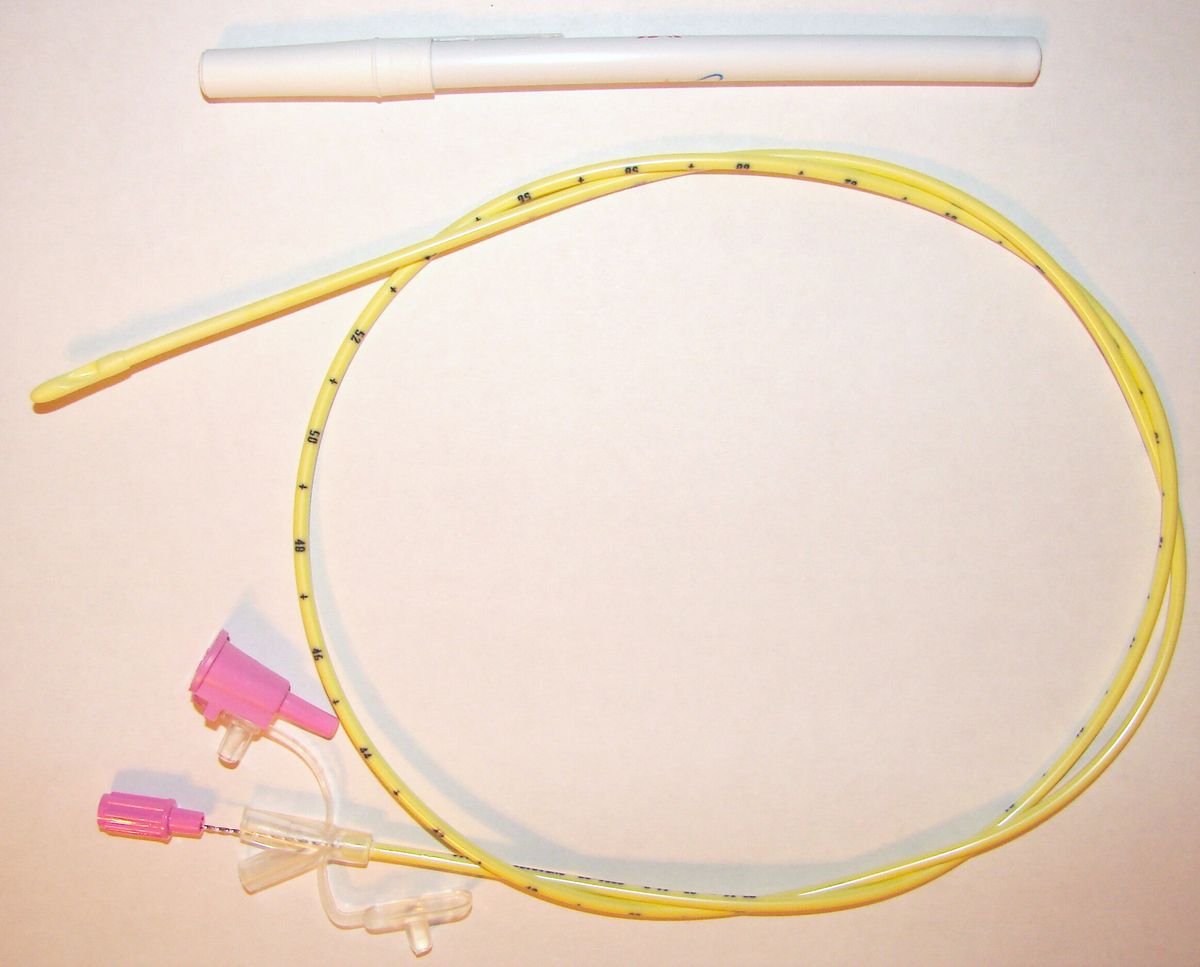
Children with severe neurological conditions, swallowing problems or complex gut malformations often live on liquid formula given through a tube. Usually the tube ends in the stomach, through the nose or a gastrostomy in the belly wall. When stomach feeding isn't safe, most often because of severe reflux with food going into the lungs, doctors use a longer tube that ends past the stomach in the jejunum, the second part of the small intestine. A team at Hospital Universitari Vall d'Hebron in Barcelona wanted to know whether that route changes how well children absorb trace minerals, copper in particular. Their study was published in Nutrients on 22 October.
They followed 46 children and young people who got at least 80% of their nutrition through a tube for more than three months between 2023 and 2025: 31 fed into the jejunum and 15 into the stomach. Children with known malabsorption, such as coeliac disease, cystic fibrosis or intestinal failure, were left out. Everyone was on a standard complete paediatric formula, and the copper on the label was not the problem: median intake was 864 micrograms a day in the jejunal group and 888 in the gastric group, about 171% and 200% of the US recommended amount for their age. Blood copper, iron, zinc and selenium were checked repeatedly, and a result only counted if a test for inflammation in the same sample was normal, because infection pushes copper up.
Copper fell below the lower limit of 70 micrograms per decilitre in 9 of the 31 jejunal children (29%) and in none of the 15 fed into the stomach. Median blood copper was 89.2 against 98.9, and ceruloplasmin, the protein that carries copper in the blood, was lower too. The children who went low were getting just as much copper as the jejunal children who didn't, 107% to 249% of the recommended amount. Where the timing could be traced, the first low result came a median of 170 days after jejunal feeding started, and the estimated chance of a low level was 14.3% by six months and 22.7% by a year. Low iron was the most common finding in both groups (71% and 60%), but that difference wasn't significant.
The low copper wasn't only a lab result. Six of the nine children developed anaemia or a low count of neutrophils, a type of white blood cell. In the first case, a two-year-old girl with Down syndrome and earlier gut surgery became severely anaemic and didn't respond to intravenous iron; a bone marrow test showed abnormal cells before anyone found that her blood copper was 6.9 micrograms per decilitre. All six were given copper sulfate through the stomach, not through the jejunal tube, and their copper and blood counts were back to normal within two months. Of the three without symptoms, two recovered without treatment and one went back to stomach feeding. The authors point to the stomach and the top of the small intestine as the main places copper is absorbed, with stomach acid helping it dissolve, so a tube that delivers food further down may bypass both.
It is a small, single-hospital study, and nine cases is not many. The route wasn't chosen at random: children fed into the jejunum are often sicker and may differ in diagnosis, past surgery and medicines, and the numbers were too small to adjust for that. Jejunal children also had blood tests a little more often, which can find more problems. For 29 of the 46, the early test results came from medical records, and the timing figures are upper limits. The 95% confidence interval for the extra risk ran from 4.9 to 46.6 percentage points. The authors suggest checking blood copper from about three months after feeding past the stomach begins. The study had no outside funding and the authors report no conflicts. We read the full open-access paper.
Copper and other trace minerals in 46 children on long-term tube feeding, jejunal against gastric route, Vall d'Hebron, Barcelona, 2023 to 2025 (Nutrients, 22 October 2026)
9 of 31 vs 0 of 15
Children with low blood copper, fed into the jejunum against into the stomach (29.0% vs 0%; p = 0.021)
864 vs 888 µg
Median daily copper intake from formula, jejunal against gastric (about 171% and 200% of the US recommended amount)
170 days
Median time from the start of jejunal feeding to the first low copper result (range 75 to 450, 7 of 9 children)
6 of 9
Copper-deficient children who developed anaemia or low neutrophils
89.2 vs 98.9
Median blood copper in µg/dL, jejunal against gastric (reference range 70 to 150)
2 months
Time for copper and blood counts to return to normal on copper sulfate given through the stomach
Source: Raya-Muñoz J, del Castillo Martinez BM, Freixas Bermejo M, Álvarez-Beltrán M, Cabello-Ruiz V, Redecillas-Ferreiro S, Segarra-Cantón O, 'Copper Deficiency and Other Micronutrient Deficiencies During Prolonged Jejunal Versus Gastric Enteral Nutrition in Children', Nutrients 2026;18(21):3460, published 22 October 2026, doi 10.3390/nu18213460, open access (CC BY 4.0). Ambispective observational cohort at a tertiary paediatric centre (Hospital Universitari Vall d'Hebron), 2023 to 2025; ethics approval PR(AMI)013/2025, 10 March 2025. Inclusion: ≥80% of requirements by enteral device for >3 months, serial micronutrient tests; pre-existing malabsorptive disorders excluded. Jejunal group: transpyloric tube or gastrojejunostomy (n = 31); gastric group: nasogastric tube or gastrostomy (n = 15). 17 children enrolled at device placement, 29 already on tube feeding (earlier results from records). Results counted only with concurrent CRP < 2 mg/dL. Reference ranges: copper 70–150 µg/dL, iron 65–175 µg/dL, zinc 45–110 µg/dL, selenium 60–120 µg/L. Copper deficiency 9/31 vs 0/15, risk difference 29.0% (95% CI 4.9–46.6%), Fisher p = 0.021; similar after excluding a 21-year-old and a child with short bowel anatomy. Kaplan–Meier probability of copper deficiency in the jejunal group 14.3% at 6 months, 22.7% at 12 months (log-rank p = 0.035). Iron deficiency (serum iron) 71.0% vs 60.0% (p = 0.51); selenium 12.9% vs 0% (p = 0.29, borderline, self-resolving); zinc 1 jejunal child (borderline). Median serum copper 89.2 vs 98.9 µg/dL (p = 0.03); ceruloplasmin 22.5 vs 25.8 mg/dL (p = 0.02). Formula copper 75–120 µg/100 mL (72–100 µg/100 kcal). Treatment: oral copper sulfate 40–50 µg/kg/day via the gastric route in the six symptomatic children. Feeding route was clinically chosen; no multivariable adjustment was possible. No external funding; no conflicts declared.
- The US recommended amount of copper is 340 micrograms a day for children aged one to three, 440 for ages four to eight and 900 for adults. Three ounces of pan-fried beef liver holds about 12,400 micrograms, and an ounce of 70 to 85% dark chocolate about 500.
- Ceruloplasmin carries more than 95% of the copper in healthy blood, and it helps the body move iron, which is one reason low copper can look like iron-deficiency anaemia that won't respond to iron.
- Too much zinc can cause copper deficiency by blocking its absorption, one reason the US upper limit for zinc in adults is set at 40 mg a day.
- A 2011 Japanese study in adults fed by tube found lower copper levels in those fed through a jejunostomy than through a gastrostomy, with severe deficiency, neutropenia and anaemia in six of 23 jejunostomy patients.
- Copper Deficiency and Other Micronutrient Deficiencies During Prolonged Jejunal Versus Gastric Enteral Nutrition in ChildrenNutrients · The study, open access, published 22 October 2026, with the full tables
- Copper: Fact Sheet for Health ProfessionalsNIH Office of Dietary Supplements · Recommended amounts, food sources, ceruloplasmin and the zinc interaction
- Predominant copper deficiency during prolonged enteral nutrition through a jejunostomy tube compared to that through a gastrostomy tubeClinical Nutrition · The earlier adult study (2011)
- Refractory cytopenias secondary to copper deficiency in children receiving exclusive jejunal nutritionPediatric Blood & Cancer · Earlier paediatric case series (2017)
- Viasys corflo ng tube Fr8Wikimedia Commons · The photo, public domain
General information, not medical advice. This was a small observational study in one hospital and doesn't prove that jejunal feeding causes copper deficiency. If your child is fed by tube, don't change the feeding route, formula or supplements without talking to their gastroenterology or nutrition team, and ask them whether copper and other minerals should be checked.
Analysis by NutroPractic from the sources listed. Written for general readers; it does not replace advice from your own doctor.
From our articles
Our guides on this subject
Plain-language guides on nutrition and wellness, backed by research.

Children's nutrition
Feeding a teenage athlete: energy, iron, calcium and the sports drink question
Teenage athletes are growing and training at the same time, and under-eating (REDs) is found in up to 80% of female and 70% of male athletes in studies. A worked energy example for a 15-year-old footballer, protein and carbohydrate targets, iron and calcium in the growth spurt, when sports drinks help and when they are dessert, and the supplements to skip.
20 Oct 2026

Women's health
Inositol for PCOS: the 40:1 ratio, trial doses, and food milligrams
Why do randomized trials in polycystic ovary syndrome prioritize the 40:1 myo to D-chiro inositol ratio? Here is the science behind the ovarian epimerase paradox, clinical ovulation and insulin metrics, and why cantaloupe cannot replace 4,000 mg trial powder.
21 Nov 2026

Everyday eating
Extra virgin olive oil polyphenols: the EU health claim, smoke point myths, and cooking stability
Does extra virgin olive oil degrade when cooked? What does the EU 5 mg polyphenol health claim require, how does oleocanthal act like ibuprofen, and why does oxidative stability matter more than smoke point in domestic frying? Here is the clinical and culinary data.
21 Nov 2026
Newsfeed for your website
Want this feed on your website?
Add it to any site with one copy-and-paste snippet. No sign-up, and it updates itself every hour.
Start with a virtual consultation
Tell Dr. Triveni what you want to change. You will leave with a clear next step, whether you are in Toronto, London, New York or Chennai.