Critical care · November 9, 2026
After sepsis, older ICU survivors with the highest nutrition-risk scores had 58% mortality over follow-up versus 24% for the lowest
In 461 elderly survivors of pneumonia-induced sepsis, the CONUT score at ICU discharge climbed with long-term death risk. The adjusted effect was smaller than the raw gap.
The Controlling Nutritional Status (CONUT) score is built from routine blood measures, including albumin, cholesterol and lymphocyte count. It has been linked to short-term deaths in ICU patients with sepsis, but long-term outcomes after leaving the ICU were less clear. This multicentre ambispective cohort followed 461 older survivors of pneumonia-induced sepsis for a median of 36 months from ICU discharge.
Patients were grouped into CONUT tertiles: 0-3 (162 patients), 4-6 (172) and 7-12 (127). All-cause mortality rose from 24.07% to 37.21% to 58.27% across the tertiles. After multivariable adjustment, one tertile higher went with a 23.3% higher mortality hazard (HR 1.233, 95% CI 1.004 to 1.515), and the top tertile with 51.6% higher (HR 1.516, 1.001 to 2.296). The effect differed by sex (interaction p = 0.034).
The lower bound of the confidence intervals sits right at 1, so the adjusted evidence is borderline. CONUT may reflect how sick and inflamed a patient already is, not just their diet, and this study does not show that improving nutrition would change survival.
Mortality by CONUT tertile
461
Elderly sepsis survivors followed
36 months
Median follow-up
24.07%
Mortality, lowest CONUT tertile (0-3)
58.27%
Mortality, highest tertile (7-12)
HR 1.516
Adjusted hazard, top vs bottom tertile (CI 1.001 to 2.296)
Multicentre ambispective cohort; complete-case analysis with ICU discharge as time zero and sensitivity analyses for selection, immortal-time and landmark bias.
- CONUT combines serum albumin, total cholesterol and lymphocyte count into a 0-12 score; higher means a worse nutritional-immune state.
- A hazard ratio close to 1 with a confidence interval touching 1 means the adjusted result is only just distinguishable from no effect.
- Albumin falls during inflammation, so scores like this blend nutrition with illness severity.
- The study had a restricted-cubic-spline analysis showing a steady rise in risk with score, without a clear threshold.
- CONUT score at ICU discharge predicts long-term all-cause mortality risk in elderly survivors of pneumonia-induced sepsisFrontiers in Nutrition, 3 November 2026 · Open-access study; cohort size, tertile mortality and adjusted hazard ratios checked against the published abstract.
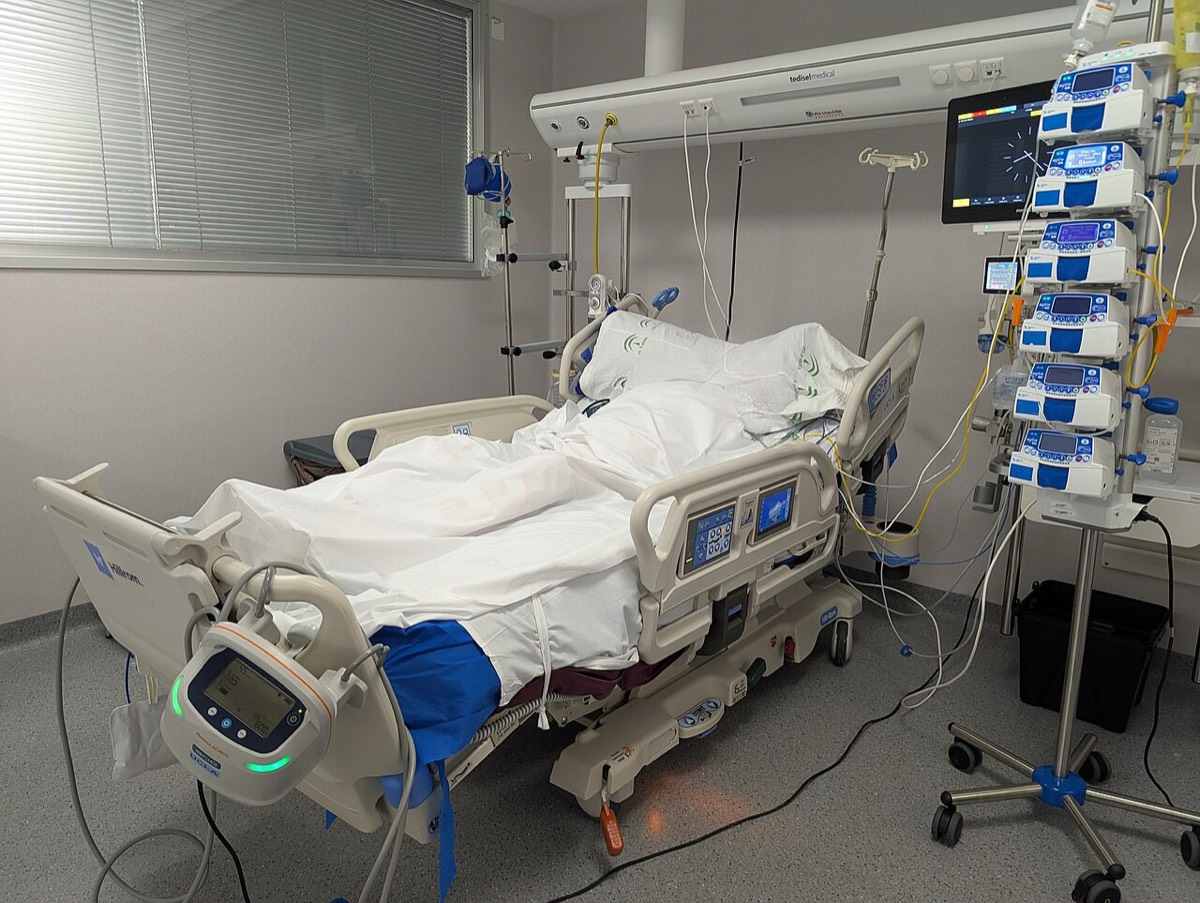
- Intensive care unit bedWikimedia Commons · CC BY 4.0 photograph; general illustration only.
General information, not medical advice. Recovery after sepsis depends on many factors; nutrition and follow-up care after intensive care should be planned with the treating team.
Analysis by NutroPractic from the sources listed. Written for general readers; it does not replace advice from your own doctor.
From our articles
Read, then eat a little better
Plain-language guides on nutrition and wellness, backed by research.

Women's health
Inositol for PCOS: the 40:1 ratio, trial doses, and food milligrams
Why do randomized trials in polycystic ovary syndrome prioritize the 40:1 myo to D-chiro inositol ratio? Here is the science behind the ovarian epimerase paradox, clinical ovulation and insulin metrics, and why cantaloupe cannot replace 4,000 mg trial powder.
21 Nov 2026

Everyday eating
Extra virgin olive oil polyphenols: the EU health claim, smoke point myths, and cooking stability
Does extra virgin olive oil degrade when cooked? What does the EU 5 mg polyphenol health claim require, how does oleocanthal act like ibuprofen, and why does oxidative stability matter more than smoke point in domestic frying? Here is the clinical and culinary data.
21 Nov 2026

Food and nutrition
L-theanine and caffeine: what cognitive trials measured on sustained attention, and milligrams in matcha vs green tea
Combining L-theanine with caffeine produces clean focus without caffeine jitters. Here is what randomized trials measured on attention-switching, EEG alpha brain waves, and the exact milligrams across ceremonial matcha, culinary powder, gyokuro, and sencha.
20 Nov 2026
Newsfeed for your website
Want this feed on your website?
Add it to any site with one copy-and-paste snippet. No sign-up, and it updates itself every hour.
Start with a virtual consultation
Tell Dr. Triveni what you want to change. You will leave with a clear next step, whether you are in Toronto, London, New York or Chennai.