Brain health · October 19, 2026
48 students drank a cocoa packed with 710 mg of flavanols, a cocoa with none, or sugar water, a week apart. On two attention tests, the flavanols made no measurable difference
Cocoa flavanols are often sold as a quick brain boost, and a few small studies have found sharper attention within hours of a dose. Researchers in Türkiye ran a carefully blinded, pre-registered test with a well-matched dummy drink. The result was flat. Here's how they tested it, and what it does and doesn't rule out.
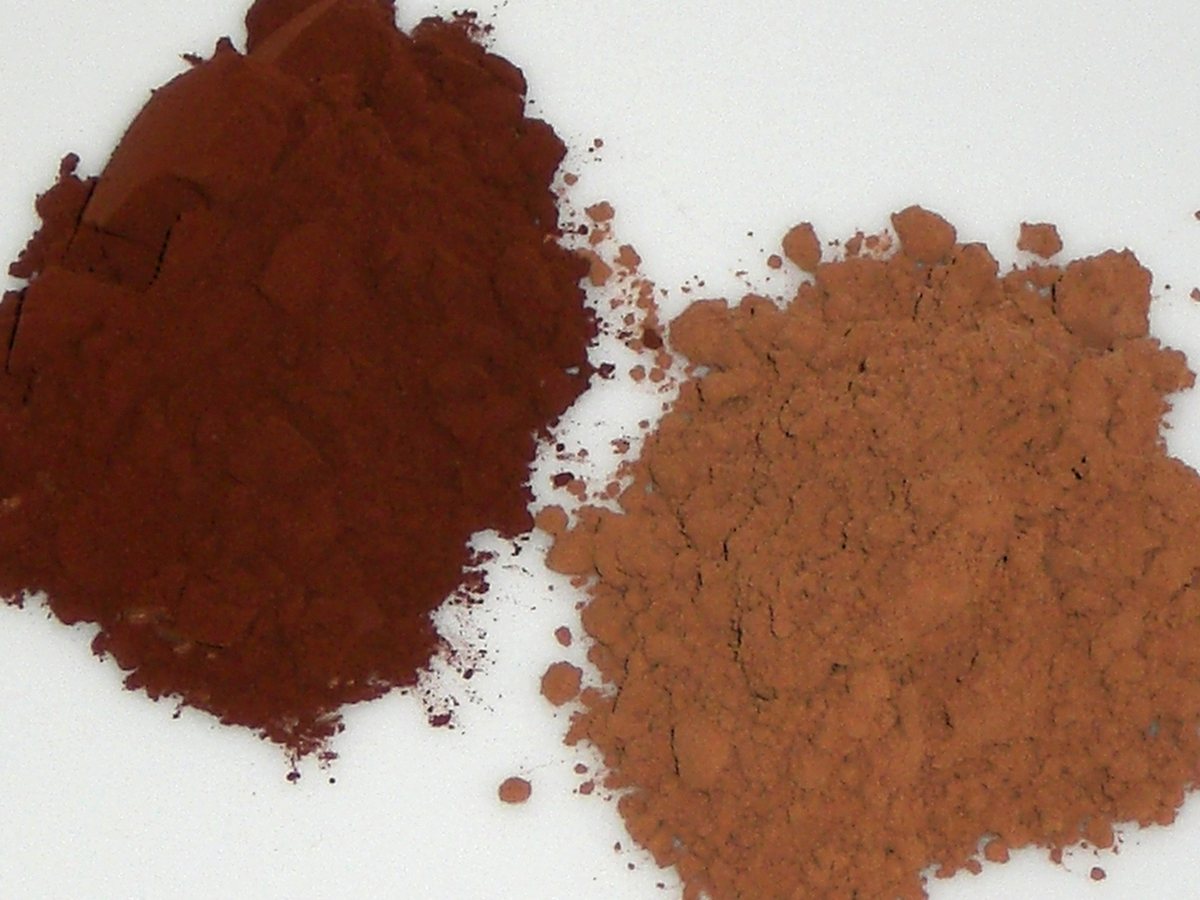
Flavanols are plant compounds found in tea, apples and red wine, but cocoa beans are among the richest sources. They have built a reputation for helping blood vessels relax, and a handful of studies have reported that a single flavanol-rich cocoa drink can speed up some kinds of attention within a couple of hours. A trial published on 15 October in the British Journal of Nutrition put that idea to a careful test and came up empty.
The researchers, psychologists at Necmettin Erbakan University in Konya and Bursa Uludağ University, recruited 48 healthy undergraduates aged 18 to 27, half of them men. Each student came to the lab three times, a week apart, on the same weekday and at the same hour, and drank one of three drinks in a randomly assigned order: a cocoa with 710 mg of flavanols, a cocoa with none, or plain sugar water. Neither the students nor the researcher running the tests knew which cocoa was which.
The dummy cocoa is what makes the trial interesting. It was made from alkalised, or 'Dutch-process', cocoa, a treatment that darkens the powder and strips out its flavanols. Both cocoa drinks had the same 22 mg of caffeine and 231 mg of theobromine, and all three drinks had the same 6 g of sugar, so any difference between the two cocoas should come down to the flavanols. The 710 mg dose was picked because an earlier analysis found it gave the best effect on blood vessel widening. The plan, hypotheses and analysis were registered before any data were collected.
One hour and 40 minutes after drinking, the students did two computer tasks. In a visual search task they hunted for a coloured letter T among 12, 18 or 24 distracting letters and reported which way it was rotated, a test of 'overt' attention, which moves the eyes. In a spatial cueing task they kept their eyes on the centre of the screen and pressed a key when a white dot flashed in a box on the left or right, after an arrow or a highlighted box that pointed the right or the wrong way. That is a test of 'covert' attention, which shifts focus without moving the eyes.
Both tasks worked as they should: students were slower and made more mistakes with bigger crowds of letters and after misleading cues. But the drinks made no difference. The flavanol cocoa did not change accuracy or speed on either task compared with the dummy cocoa or sugar water. In the hardest search trials the students were about 25 milliseconds faster after the flavanol drink, a gap small enough to be chance.
The authors are clear about what this does not show. These were healthy young people at the top of their game, and studies that found benefits have mostly given flavanols for eight weeks or more, often to older adults. The study was sized to spot a medium effect, so a small one could have been missed, and attention was not measured before each drink. One earlier trial with the same number of students did find that a single dose sped up a different visual search task. The fair reading is narrow: one big cup of high-flavanol cocoa is unlikely to sharpen a young, healthy person's attention that afternoon. Enjoy cocoa for the taste, but don't count on it before an exam.
A single 710 mg dose of cocoa flavanols and attention in 48 young adults (randomised, double-blind crossover trial)
48
Healthy university students aged 18 to 27 who completed all three sessions, a week apart
710 mg
Cocoa flavanols in the active drink; the dummy cocoa had 0 mg
22 mg / 231 mg
Caffeine and theobromine, identical in both cocoa drinks
1 h 40 min
Wait between drinking and starting the attention tasks
384
Visual search trials per session, on top of the spatial cueing task
25 ms
How much faster the hardest searches were after flavanols; not statistically significant
Study: Karataş O, Alıcı T, 'No evidence of acute effects of cocoa flavanols on overt and covert attention: a randomised, double-blind crossover trial', British Journal of Nutrition, published online 15 October 2026, doi 10.1017/S0007114526108678 (open access, CC BY 4.0). Necmettin Erbakan University, Konya, and Bursa Uludağ University, Türkiye. Pre-registered on the Open Science Framework (osf.io/wyf6m) and ClinicalTrials.gov NCT06812689; sessions November 2022 to January 2023. Drinks in 250 ml water with 6 g sugar: control (sugar only), placebo (11 g alkalised cocoa, 0 mg flavanols), flavanol (8.55 g natural plus 2.45 g alkalised cocoa, 710 mg flavanols); caffeine 22 mg and theobromine 231 mg in both cocoa drinks (manufacturer's values). Order counterbalanced across six sequences; one-week washout. Three-way repeated-measures ANOVA, main effect of drink: visual search accuracy p = .72, reaction time p = .51; spatial cueing accuracy p = .37, reaction time p = .57; no interaction with drink was significant. Designed with 95% power for a medium effect (Cohen's f about 0.26); smaller effects cannot be excluded. No pre-dose baseline within sessions. Funded by TÜBİTAK (grant 122K636); cocoa powders supplied free by Barry Callebaut, which had no role in the study; the authors declare no conflicts of interest.
- Alkalising cocoa, the 'Dutch process' developed in the Netherlands in the 1800s, makes it darker and milder but destroys most of its flavanols, which is why the dummy drink in this trial could taste like cocoa and contain none.
- In 2012 the European Food Safety Authority accepted a health claim that 200 mg of cocoa flavanols a day helps keep blood vessels elastic and supports normal blood flow.
- COSMOS, a trial of 21,442 older Americans, gave a cocoa extract with 500 mg of flavanols a day for a median of 3.6 years. Total heart and stroke events were not significantly lower, though deaths from cardiovascular disease were 27% lower, a secondary finding.
- A cognition branch of COSMOS, with 2,262 people averaging 73 years old, found that three years of the cocoa extract did not improve scores on memory and thinking tests.
- No evidence of acute effects of cocoa flavanols on overt and covert attention: a randomised, double-blind crossover trialBritish Journal of Nutrition, October 2026 · The study: full text, open access
- Trial registration NCT06812689ClinicalTrials.gov · The registered design and outcomes
- Effect of cocoa flavanol supplementation for the prevention of cardiovascular disease events: the COSMOS randomized clinical trialThe American Journal of Clinical Nutrition, June 2022 · The largest long-term cocoa flavanol trial
- Effects of cocoa extract and a multivitamin on cognitive function: a randomized clinical trialAlzheimer's & Dementia, September 2022 · COSMOS-Mind: three years of cocoa extract and thinking scores in older adults
General information, not medical advice. This small trial tested one dose of cocoa flavanols in healthy young adults; it says nothing about long-term use, older adults or people with memory problems. Cocoa drinks and supplements contain caffeine and theobromine, and many cocoa products are high in sugar. If you are worried about your concentration or memory, or take medicines and want to try a supplement, talk to your doctor or pharmacist.
Analysis by NutroPractic from the sources listed. Written for general readers; it does not replace advice from your own doctor.
From our articles
Our guides on this subject
Plain-language guides on nutrition and wellness, backed by research.

Food and nutrition
L-theanine and caffeine: what cognitive trials measured on sustained attention, and milligrams in matcha vs green tea
Combining L-theanine with caffeine produces clean focus without caffeine jitters. Here is what randomized trials measured on attention-switching, EEG alpha brain waves, and the exact milligrams across ceremonial matcha, culinary powder, gyokuro, and sencha.
20 Nov 2026

Women's wellness and nutrition
Creatine for women: cognitive performance, menstrual cycle phases, and bone density beyond muscle building
Creatine is widely stereotyped as a bodybuilding supplement for men, but female physiology tells a very different story. Women exhibit 70% to 80% lower endogenous creatine stores, reduced dietary intake, and cyclical fluctuations in brain creatine kinase across the follicular and luteal phases. Robust clinical trials demonstrate that 3 to 5 grams of daily creatine monohydrate enhances cognitive performance during sleep deprivation, augments clinical response in unipolar depression, preserves femoral neck bone geometry in postmenopausal women, and causes cellular intracellular hydration rather than subcutaneous bloating.
13 Nov 2026

Women's health
Inositol for PCOS: the 40:1 ratio, trial doses, and food milligrams
Why do randomized trials in polycystic ovary syndrome prioritize the 40:1 myo to D-chiro inositol ratio? Here is the science behind the ovarian epimerase paradox, clinical ovulation and insulin metrics, and why cantaloupe cannot replace 4,000 mg trial powder.
21 Nov 2026
Newsfeed for your website
Want this feed on your website?
Add it to any site with one copy-and-paste snippet. No sign-up, and it updates itself every hour.
Start with a virtual consultation
Tell Dr. Triveni what you want to change. You will leave with a clear next step, whether you are in Toronto, London, New York or Chennai.