Dietary patterns & bone health · November 27, 2026
Christian Orthodox fasting and long-term bone health: 10-year follow-up finds favorable hip bone density but notes lifestyle confounding
A 10-year longitudinal cohort of 104 older adults evaluated how periodic abstinence from animal products and dairy during Christian Orthodox fasting relates to skeletal integrity. Fasters maintained higher hip and lumbar bone mineral density with lower body fat and smoking rates, but researchers caution that healthy lifestyle factors and study attrition prevent causal interpretations.
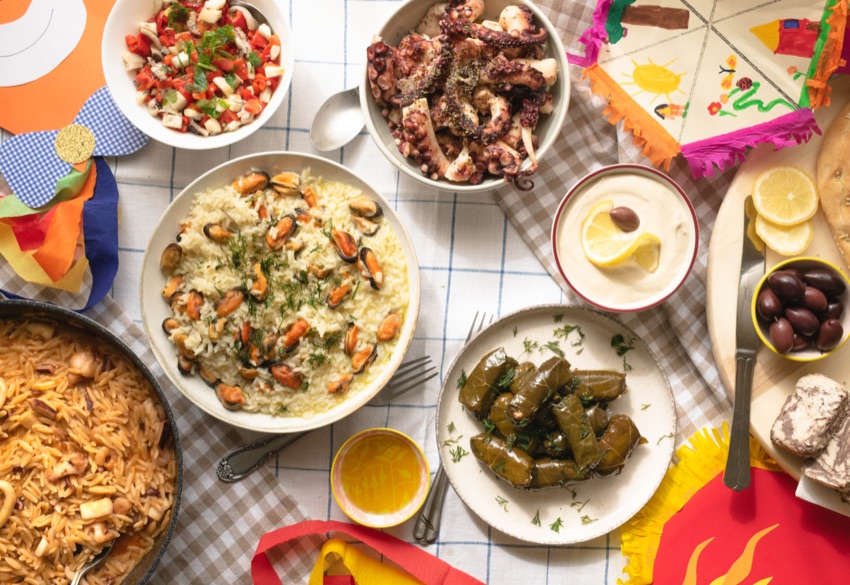
Christian Orthodox fasting (COF) entails periodic abstention from meat, dairy products, eggs, and poultry across approximately 180 to 200 days per year, alternating with unrestricted omnivorous diets. Because dairy represents the primary calcium source in typical Mediterranean diets, questions have persisted regarding whether sustained dairy restriction over decades accelerates age-related bone mineral density loss in older adults.
In a 10-year longitudinal cohort study published in Nutrients, Nikolaos E. Rodopaios, Aikaterini Apostolopoulou, Georgia Tsaousi, and Cleanthe Spanaki evaluated 104 Greek adults aged 50 years and older who returned for follow-up. Bone mineral density (BMD) and bone mineral content (BMC) were assessed at the lumbar spine, femoral necks, and both hips using repeated dual-energy X-ray absorptiometry (DXA), alongside comprehensive dietary, biochemical, and lifestyle tracking.
At the 10-year evaluation, fasters exhibited significantly higher BMD at the lumbar spine (0.99 vs. 0.90 g/cm², p = 0.013), left hip (0.91 vs. 0.83 g/cm², p = 0.003), and right hip (median 0.89 vs. 0.83 g/cm², p < 0.001) compared with non-fasters. In multivariable linear models adjusted for confounders, non-fasting status was independently linked to less favorable longitudinal changes in left-hip BMC (B = −4.584, 95% CI −6.906 to −2.263) and right-hip BMD (B = −0.057, 95% CI −0.091 to −0.024). Fasting status showed no significant link to categorical progression of osteoporosis (OR = 1.22, 95% CI 0.44–3.44).
Crucially, fasters demonstrated substantially healthier baseline habits, including markedly lower smoking rates (3.6% vs. 41.7%, p < 0.001), lower body fat percentage (35.0% vs. 39.5%, p = 0.004), and higher physical activity. The authors underscored that cohort attrition and a mid-study DXA scanner upgrade mean these site-specific associations cannot be interpreted as causal proof that periodic dairy avoidance protects bones, warranting confirmation in larger prospective cohorts.
Ten-year longitudinal bone density and lifestyle metrics by fasting status
104 Adults
participants aged ≥50 followed across 10 years with repeated dual-energy X-ray absorptiometry
0.91 vs 0.83
g/cm² left-hip bone mineral density favoring fasters over non-fasters at follow-up (p = 0.003)
3.6% vs 41.7%
smoking prevalence among fasters versus non-fasters, highlighting substantial lifestyle confounding
OR 1.22
odds ratio for osteoporosis progression (95% CI 0.44–3.44), showing no significant difference
Longitudinal cohort study published in Nutrients, 25 November 2026 (doi: 10.3390/nu18233946).
- Christian Orthodox fasting involves roughly 180 to 200 days of plant-predominant eating annually, permitting seafood such as mollusks and crustaceans while excluding dairy and red meat.
- Non-dairy calcium sources frequently consumed during traditional fasting periods include sesame seeds, tahini, almonds, white beans, and wild edible greens.
- Dual-energy X-ray absorptiometry (DXA) measures both areal bone mineral density (g/cm²) and absolute bone mineral content (grams) across targeted anatomical regions.
- Long-Term Christian Orthodox Fasting and Bone Health: A 10-Year Longitudinal Follow-Up StudyNutrients · Longitudinal cohort study by Nikolaos E. Rodopaios et al. Published 25 November 2026.
- File:Clean Monday Festive Table.jpgWikimedia Commons · Photo via Wikimedia Commons, CC BY-SA 4.0.
Educational summary of nutrition research, not personal medical advice. Speak to your doctor or dietitian before changing your diet or supplements, especially if you are pregnant, take medicines or have a medical condition.
Analysis by NutroPractic from the sources listed. Written for general readers; it does not replace advice from your own doctor.
From our articles
Our guides on this subject
Plain-language guides on nutrition and wellness, backed by research.

Women's wellness and nutrition
Creatine for women: cognitive performance, menstrual cycle phases, and bone density beyond muscle building
Creatine is widely stereotyped as a bodybuilding supplement for men, but female physiology tells a very different story. Women exhibit 70% to 80% lower endogenous creatine stores, reduced dietary intake, and cyclical fluctuations in brain creatine kinase across the follicular and luteal phases. Robust clinical trials demonstrate that 3 to 5 grams of daily creatine monohydrate enhances cognitive performance during sleep deprivation, augments clinical response in unipolar depression, preserves femoral neck bone geometry in postmenopausal women, and causes cellular intracellular hydration rather than subcutaneous bloating.
13 Nov 2026
Women's health
Eating through menopause: what changes for your bones, muscle and heart, and what to put on the plate
Around the final period, bone density at the spine drops by about 2% a year and LDL cholesterol jumps within a year or two. Hot flushes get the attention, but these quieter changes are where food and strength training do the most. Targets for protein, calcium and vitamin D, an honest look at soy, and a week you can start on Monday.
8 Oct 2026
Supplements and vitamins
Glycine before bed: the 3 g sleep trials, what they measured, and glycine in gelatin, bone broth and collagen
The 3 g dose comes from small Japanese trials: the sleep-restriction study analysed seven men. Here is what each trial measured, the grams of gelatin, collagen, pork rinds and bone broth that hold 3 g, and the clozapine warning.
17 Nov 2026
Newsfeed for your website
Want this feed on your website?
Add it to any site with one copy-and-paste snippet. No sign-up, and it updates itself every hour.
Start with a virtual consultation
Tell Dr. Triveni what you want to change. You will leave with a clear next step, whether you are in Toronto, London, New York or Chennai.