Sports nutrition · October 8, 2026
A chickpea protein drink after every ride: two weeks later, cyclists' blood showed fewer signs of muscle stress, but nobody checked whether they actually recovered faster
Twenty-four amateur road racers in Seville drank either 12 g of a chickpea protein hydrolysate or a sugar-based dummy after training for 14 days. The chickpea group's markers of tissue stress and inflammation drifted down while the placebo group's crept up. Body composition didn't change, the riders already ate twice the protein they needed, and the study never measured soreness or speed.
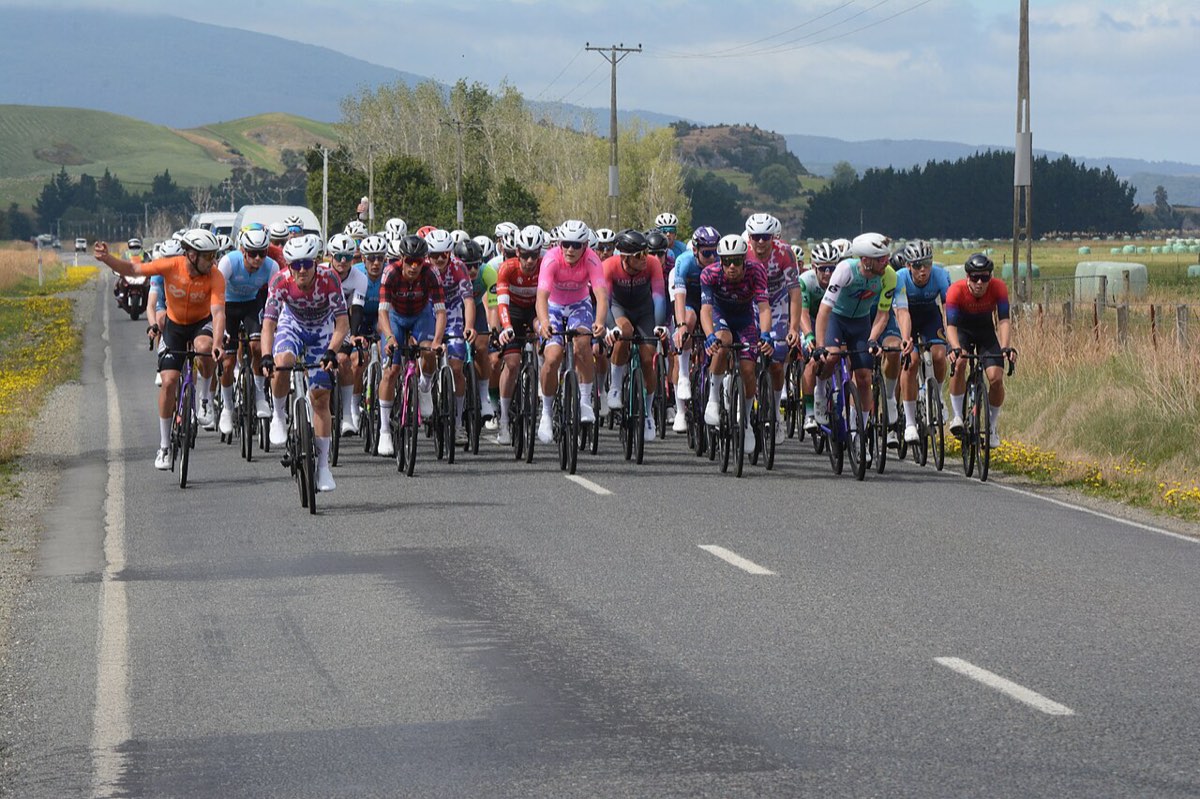
Plant proteins are the fastest-growing corner of the sports supplement shelf, and most of the talk is about whether pea or soy can build muscle as well as whey. A small trial published in the Journal of the International Society of Sports Nutrition on 3 October 2026 asked a different question: can a protein made from chickpeas, broken down into short peptides, take some of the sting out of hard training? The hydrolysate was developed by a plant-protein group at the Instituto de la Grasa, part of Spain's national research council in Seville, and tested by sports scientists at Pablo de Olavide University.
The volunteers were 24 licensed amateur road cyclists from the province of Seville, all men, with an average age of 43. For 14 days each drank a sachet dissolved in 550 ml of water straight after training, or at the same time on rest days. Half got 12 g a day of the chickpea hydrolysate; the other half got a lookalike drink made mostly of maltodextrin, a quickly digested starch. Neither the riders nor the researchers knew who had which. The cyclists kept training as usual, about 490 km and 17 hours on the bike over the fortnight plus two gym sessions a week, and blood was taken after an overnight fast, 12 hours after a two-hour interval session.
By the end, the two groups had moved in opposite directions on three markers. Lactate dehydrogenase, an enzyme that leaks into the blood when cells are stressed, fell by about 16% in the chickpea group and rose about 2% on placebo. Creatine kinase, the classic sign of muscle damage, dropped about 15% with chickpea and climbed about 40% on placebo. C-reactive protein, a general inflammation marker, went from 0.10 to 0.09 mg/dl with chickpea and from 0.12 to 0.15 on placebo. The differences between groups were statistically significant for lactate dehydrogenase and C-reactive protein, and just short of it for creatine kinase. Weight, fat and lean mass didn't change in anyone.
The authors are careful not to oversell it, and a reader should be too. Within each group, none of the before-and-after changes was significant on its own. C-reactive protein stayed in the normal range throughout, and the shifts were tiny. Nobody measured soreness, perceived recovery or performance, so the trial can't say anyone rode better. The placebo wasn't protein, so it can't separate any special effect of chickpea peptides from simply getting a little more protein, even though the riders already ate about 150 g a day, over 2 g per kilo of body weight. The drinks didn't taste quite the same, and the trial was registered only after the fact. The work was funded by Spanish public research bodies, the EU regional fund and Aurora Intelligent Nutrition, the company that formulated the supplement and holds the patent on it; several authors helped develop the hydrolysate but declare no patents or financial stake, and the paper says the funders had no role in the analysis.
14 days, 12 g a day after training: change from start to finish
24
Male amateur road cyclists, 12 per group, average age 43
−16% vs +2%
Lactate dehydrogenase, chickpea vs placebo (between-group p = 0.04)
−15% vs +40%
Creatine kinase, chickpea vs placebo (p = 0.062, not significant)
0.10 → 0.09 vs 0.12 → 0.15
C-reactive protein in mg/dl, chickpea vs placebo (p = 0.02), all in the normal range
≈151 g
Protein the riders already ate each day, over 2 g per kg of body weight
0
Measures of soreness, recovery or performance in the trial
From the open-access paper (CC BY 4.0) in the Journal of the International Society of Sports Nutrition, published online 3 October 2026. Blood was taken fasting, 12 hours after a 120-minute interval ride. The 12 g dose was chosen from earlier lab work on the same hydrolysate, not to raise total protein. Body mass, fat mass and lean mass didn't change in either group. Percentages are the group averages reported by the authors.
- The chickpea hydrolysate came from Seville's Instituto de la Grasa, which translates as the 'Institute of Fat': it is a Spanish national research centre.
- Creatine kinase usually peaks 24 to 48 hours after muscle damage, while myoglobin peaks much sooner, so the timing of a blood test can change what it shows.
- Lactate dehydrogenase isn't specific to muscle: it is also found in the heart, the liver and red blood cells, which is why the authors treat it as a general sign of tissue stress.
- The paper notes that about 1.6 g of protein per kilo of body weight a day is generally enough to get the most out of muscle repair; these cyclists were already well above that.
- Plant blends such as pea with rice can match whey for muscle building in other studies, but only at doses of about 30 g or more, enough to supply some 2.5 g of the amino acid leucine.
- Effects of a chickpea protein hydrolysate on exercise-induced biomarkers of muscle damage and inflammation in federated road cyclistsJournal of the International Society of Sports Nutrition, 3 October 2026 · Open access; all figures in this item
- Full text on PubMed CentralPMC, US National Library of Medicine · Methods, results tables, funding and disclosure statement
- PubMed record 42828502PubMed, US National Library of Medicine · Abstract and indexing
- P is for Peloton (photo)Clint Budd, via Wikimedia Commons · CC BY 4.0 image
General information, not medical advice. Protein powders and sports supplements aren't regulated like medicines and can contain allergens; anyone with a legume allergy, kidney disease or a medical condition, or who is pregnant, should talk to a doctor or dietitian before using them. Unusual muscle pain or dark urine after exercise needs prompt medical attention.
Analysis by NutroPractic from the sources listed. Written for general readers; it does not replace advice from your own doctor.
Newsfeed for your website
Want this feed on your website?
Add it to any site with one copy-and-paste snippet. No sign-up, and it updates itself every hour.
Start with a virtual consultation
Tell Dr. Triveni what you want to change. You will leave with a clear next step, whether you are in Toronto, London, New York or Chennai.