Mental health · October 30, 2026
Does coffee lift your mood or rattle your nerves? Fifteen caffeine trials say it depends, and the anxiety signal showed up mainly above 200 mg
Surveys keep linking coffee drinkers with lower rates of depression. A new pooling of only randomized trials, 668 people in all, found no consistent mood boost. Anxiety scores did tend to rise, but the jump appeared in trials giving more than 200 mg at a time, and the evidence is rated very low certainty.
Caffeine is one of the most widely used mood-altering substances on the planet, and most of us have a theory about what it does to our heads. Large observational studies have found that people who drink coffee report less depression, while others have tied heavy caffeine intake to anxiety. The trouble with those studies is that coffee drinkers differ from non-drinkers in many other ways. A systematic review published in Frontiers in Nutrition on 29 October tries to cut through that by pooling only randomized controlled trials, where people were given a measured dose of caffeine or a caffeine-free comparison and then had their mood scored.
The team, from Nanjing Medical University and Zhejiang University in China, searched eight English and Chinese databases up to 16 May 2026 and screened 788 records. Only 15 trials qualified, published between 1994 and 2025 and run in the United States, China, Tunisia, Colombia, Brazil, the United Kingdom, Iran and Sweden. Together they contributed 668 people. The mix was wide: healthy students, elite wrestlers and judokas, schoolchildren given caffeinated cola, postmenopausal women with an overactive bladder, and patients with depression, panic disorder or social anxiety. Caffeine came as capsules, tablets, coffee, tea, energy drinks or spiked orange juice, from 60 mg a day up to a single 480 mg dose, and most trials looked at the hour or two after one dose rather than weeks of drinking.
For depression, seven comparisons were pooled and the answer was no clear difference between caffeine and control. The two trials that hinted at a benefit were both in hospital patients with depression in China: one gave 60 mg caffeine tablets for four weeks, the other a daily coffee with about 95 mg of caffeine for 12 weeks alongside antidepressant treatment, compared with decaf. The authors say trials run next to antidepressant therapy can't be read as caffeine working on its own. In healthy people, single doses made no reliable difference to low mood, and in two longer trials in people without a psychiatric diagnosis the estimates were small and uncertain.
Anxiety was more consistent in direction. Across 16 comparisons from 12 trials, anxiety scores were higher after caffeine than after the control, a standardized difference of 0.51, roughly a moderate shift. But the spread between trials was large, and the range of effects a new study might find ran from a fall in anxiety to a large rise. When the authors split trials by dose, the picture sharpened: at 200 mg or less, about two cups of brewed coffee, there was essentially no change; above 200 mg the pooled rise was 0.97, and that held when they dropped trials whose doses were set by body weight. One parallel trial in graduate students, who drank 710 mL of regular coffee a day for five days (450 mg of caffeine), showed a very large anxiety jump (a standardized difference of 2.30).
The authors are blunt about the limits. Certainty was rated very low for both outcomes, because of small and older trials, unclear reporting of how people were randomised, very different groups and questionnaires, and signs that small studies with striking results were over-represented for anxiety. Most trials measured how people felt within an hour or two of a dose, often a big one taken in a lab, which is not the same as a morning cup taken every day for years. Scores on an anxiety questionnaire going up is also not the same as developing an anxiety disorder.
So the paper does not set a safe or harmful dose and does not change existing intake advice. What it does suggest is that the comforting idea of coffee as a mood booster rests mostly on observational data, and that if you notice jitters or a racing mind after a large dose, that is consistent with what the trials saw. The authors call for longer trials with clearer doses, better records of people's usual caffeine habits, and a look at genes that change how fast caffeine is cleared and how strongly the brain responds to it.
Effects of caffeine intake on depressive and anxiety symptoms: a systematic review and meta-analysis of randomized controlled trials (Frontiers in Nutrition, 2026)
15 trials, 668 people
Randomized controlled trials pooled, published 1994 to 2025 in eight countries
SMD −0.49
Depressive symptoms, caffeine vs control (95% CI −1.33 to 0.34): no clear difference
SMD 0.51
Anxiety scores, caffeine vs control (95% CI 0.12 to 0.89), with very wide spread between trials
−0.05 vs 0.97
Anxiety shift at 200 mg or less vs above 200 mg (exploratory dose split, p < 0.001 for the difference)
60 to 480 mg
Range of caffeine doses tested, from 60 mg a day to a single 480 mg dose
Very low
GRADE certainty of the evidence for both depression and anxiety
Systematic review and meta-analysis registered with PROSPERO (CRD42024564399), following PRISMA 2020. Eight databases (PubMed/MEDLINE, Embase, Cochrane Library, Web of Science, CBM, VIP, CNKI, Wanfang) searched to 16 May 2026; 788 records screened, 53 full texts assessed, 15 trials included. Random-effects models (REML, Hartung–Knapp). Depression: 7 comparisons, I² = 92.9%, 95% prediction interval −2.87 to 1.88. Anxiety: 16 comparisons from 12 trials, I² = 90.3%, prediction interval −0.95 to 1.96; acute non-psychiatric subset SMD 0.38 (−0.02 to 0.79). Dose split: ≤ 200 mg SMD −0.05 (−0.41 to 0.30), > 200 mg SMD 0.97 (0.55 to 1.39); after excluding weight-based doses −0.10 and 0.97. The authors say 200 mg is a grouping line, not a clinical threshold. Egger's test showed small-study effects for anxiety (p = 0.006). SMD is a standardized mean difference: roughly 0.2 small, 0.5 moderate, 0.8 large. Figures from the open-access article (CC BY): abstract, Table 1, results and discussion.
- Caffeine works mainly by blocking adenosine, a chemical that builds up in the brain while we're awake and makes us feel sleepy; peak blood levels arrive about 30 to 60 minutes after a drink.
- The review's anxiety signal came from trials that mostly scored how people felt within an hour or two of a dose, so it says more about a single strong coffee than about a lifelong habit.
- In one of the included trials, healthy schoolchildren aged around 10 drank cola with caffeine or caffeine-free cola, one of the few pieces of randomized evidence in children.
- The authors point to genes such as CYP1A2, which affects how fast the liver clears caffeine, and ADORA2A, an adenosine receptor gene linked in lab studies to caffeine-induced anxiety, as reasons people react so differently.
- Of 53 full-text reports the team assessed, 23 were dropped simply because they didn't report enough numbers to calculate an effect.
- Effects of caffeine intake on depressive and anxiety symptoms: a systematic review and meta-analysis of randomized controlled trialsFrontiers in Nutrition · The study, published 29 October 2026 (open access, CC BY); figures from the abstract, Table 1, results and discussion
- PROSPERO record CRD42024564399University of York, Centre for Reviews and Dissemination · The review's registered protocol
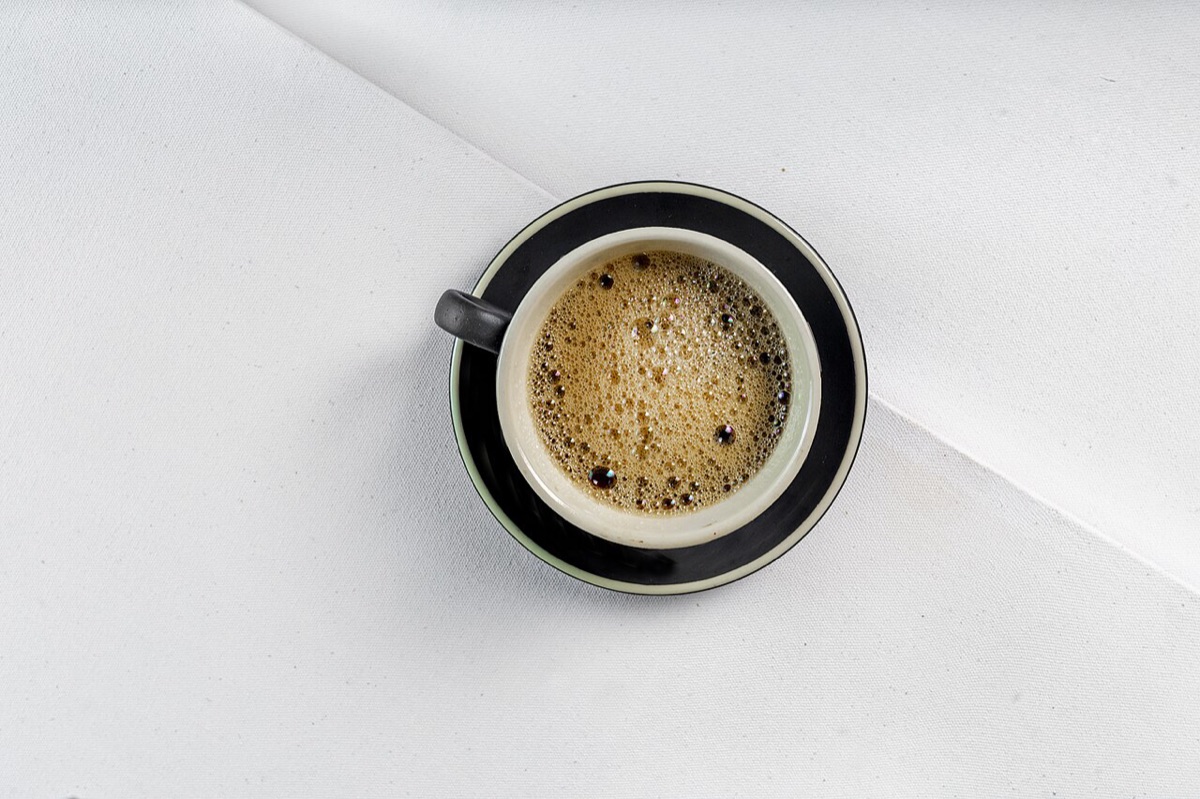
- Espresso CoffeeWikimedia Commons · The image, CC0; an illustration, not a drink from the study
General information, not medical advice. This review pooled small, mostly short trials and rated its own evidence very low certainty, so it can't tell you how much caffeine is right for you. If you live with anxiety, panic attacks or depression, or take medication for them, talk to your doctor before changing how much coffee, tea or energy drinks you have, and never use caffeine in place of treatment.
Analysis by NutroPractic from the sources listed. Written for general readers; it does not replace advice from your own doctor.
From our articles
Our guides on this subject
Plain-language guides on nutrition and wellness, backed by research.
Liver health
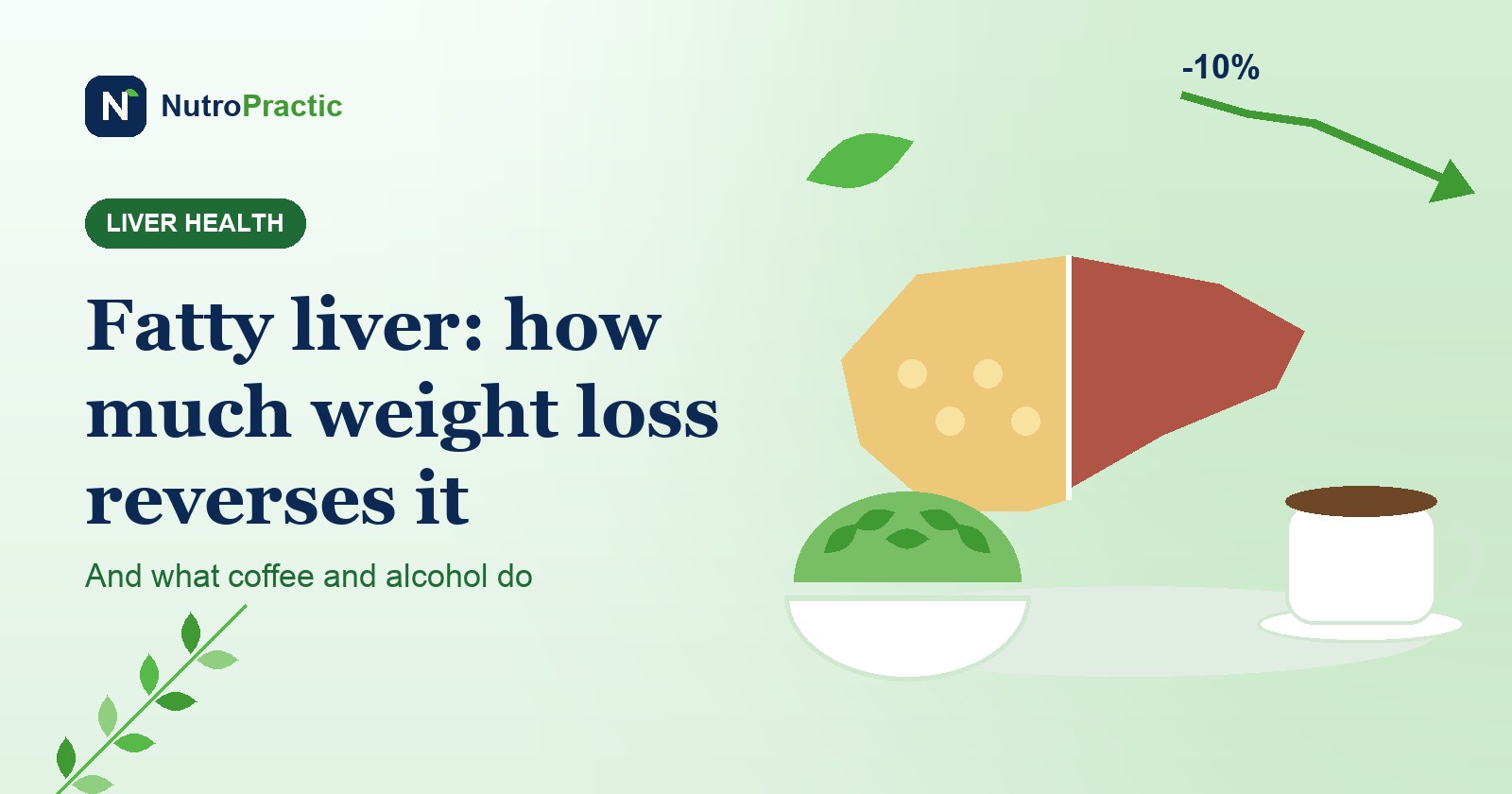
Fatty liver (MASLD): how much weight loss reverses it, and what coffee and alcohol do
About one adult in three has a fatty liver, and most find out by accident on a scan. Biopsy studies show how much weight loss clears the fat, calms the inflammation and even shrinks scarring. Here are the numbers, what diet and drinks do, the new medicines and the one blood test worth asking for.
30 Oct 2026
Heart health
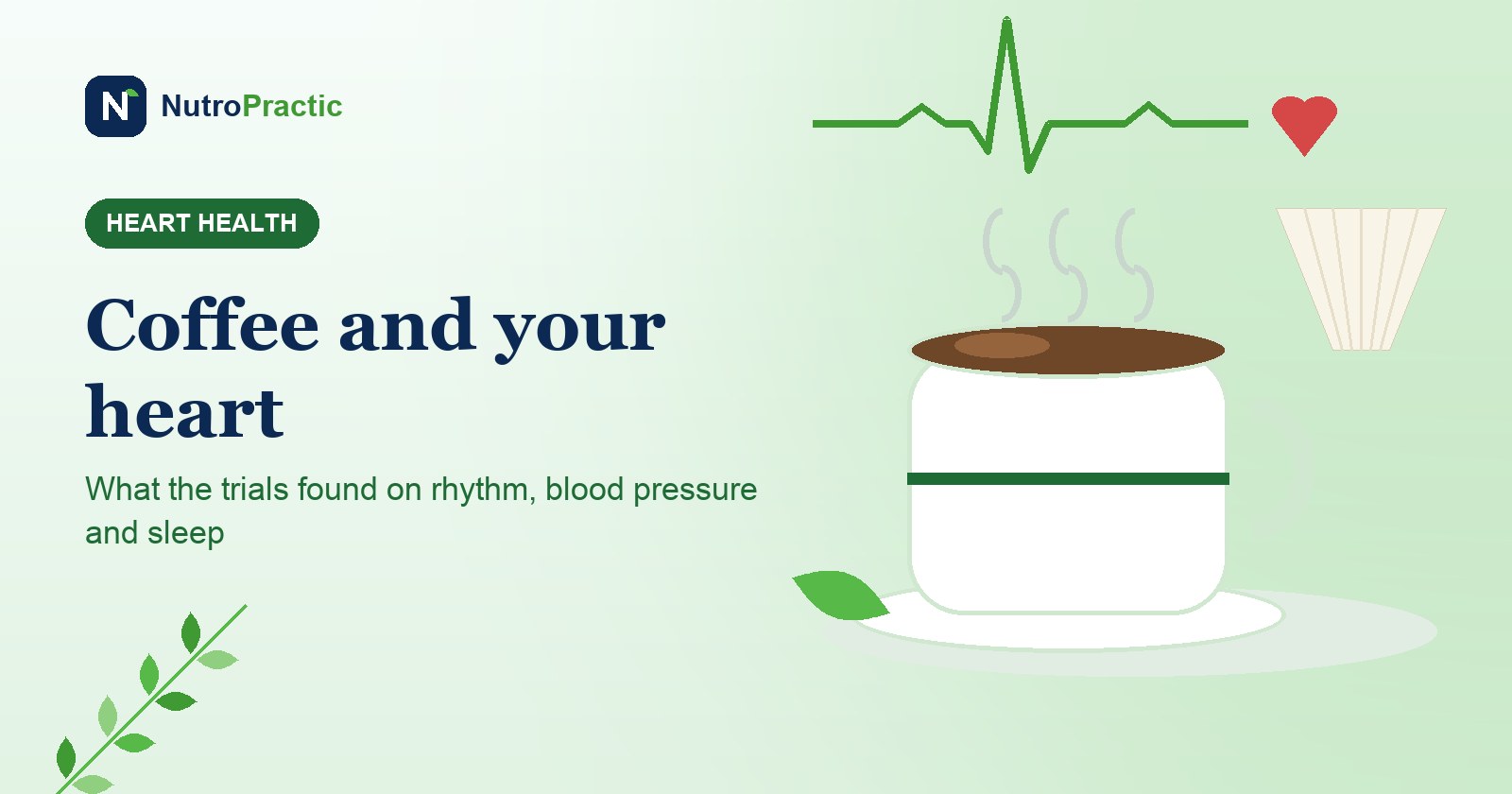
Coffee and your heart: what the trials found on rhythm, blood pressure and sleep
For years people with palpitations or atrial fibrillation were told to give up coffee. Two randomised trials and cohorts of half a million people now point the other way, with three real exceptions: sleep, very high blood pressure and how the coffee is brewed.
30 Oct 2026
Women's health
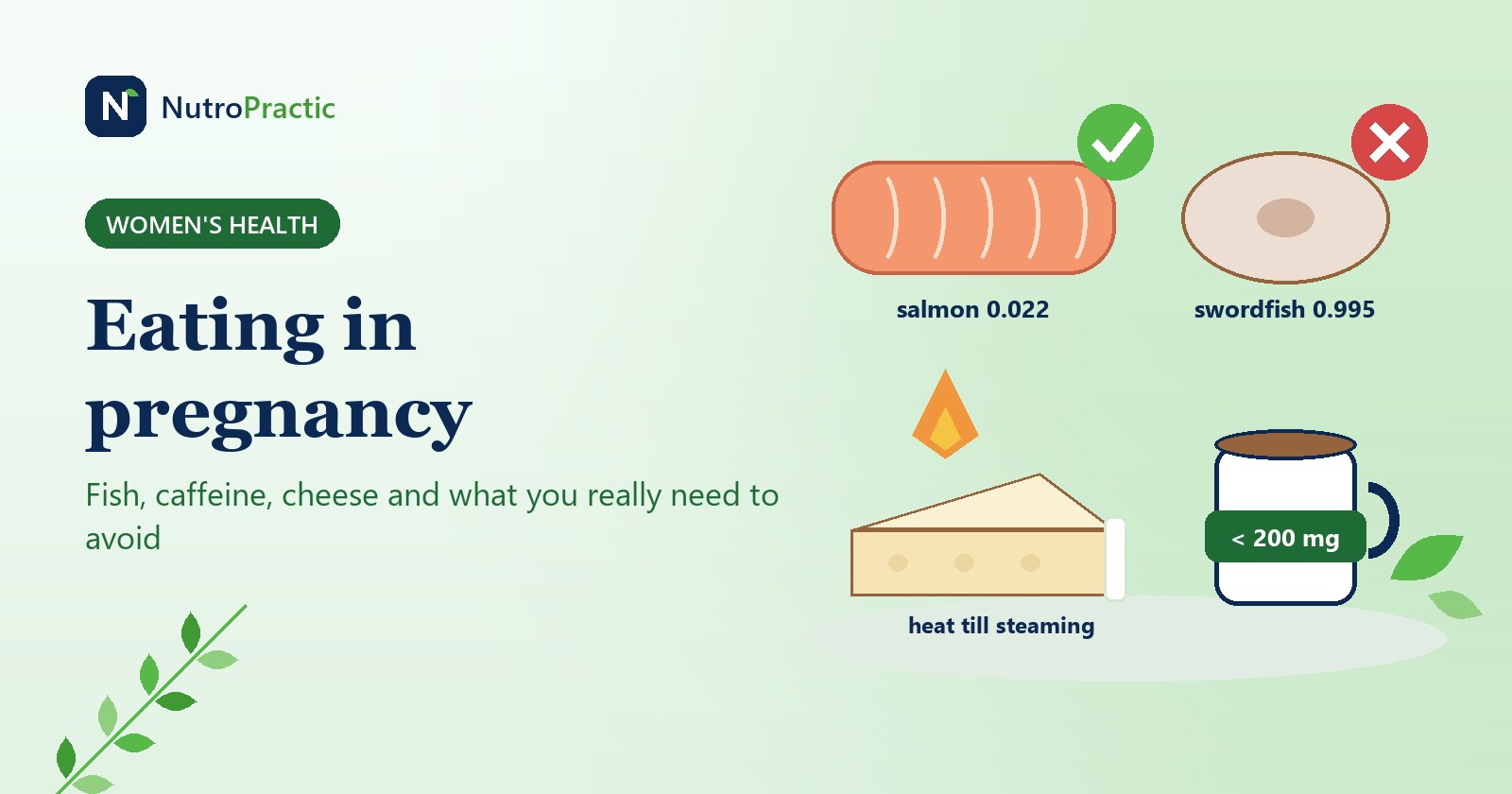
Eating in pregnancy: fish, caffeine, cheese and what you really need to avoid
Most fish is encouraged in pregnancy, not banned: 8-12 oz a week from the low-mercury list. The mercury numbers per fish, what 200 mg of caffeine looks like in real cups, which cheeses carry the listeria risk and how many cases there actually are, why liver is on the list, and how much weight to gain for your BMI.
29 Oct 2026
Newsfeed for your website
Want this feed on your website?
Add it to any site with one copy-and-paste snippet. No sign-up, and it updates itself every hour.
Start with a virtual consultation
Tell Dr. Triveni what you want to change. You will leave with a clear next step, whether you are in Toronto, London, New York or Chennai.