Sugary drinks · November 1, 2026
Nearly three cans a day, about an hour of coaching. Two in three California hospital workers stayed to the last call, but whether they drank less is still unpublished
A new paper from a 15-hospital US trial shows that busy staff will stick with a short course of calls about sugary drinks. It measures who turned up and how motivated they said they felt. The number everyone wants, how much they actually cut back, is held for a later report.
Cutting back on sugary drinks is hard to do alone, as one of the same group's earlier papers put it. A team working with Sutter Health in Northern California borrowed a method built for a different habit: the short counselling used for risky drinking of alcohol. Their description of how it went was published in JMIR Formative Research on 27 October.
The paper covers 314 full-time employees from 15 hospital campuses, the two arms that received coaching in a larger randomised trial of 604 people that is also testing a ban on selling sugary drinks at work. They averaged about 968 mL of sugary drinks a day, nearly three 355 mL cans, and about four in five were women. Over six weeks they were offered a 10 to 15 minute introductory call, a counselling session of 25 to 30 minutes, and two booster calls of 10 to 15 minutes each, around an hour in all, plus short mindfulness audio tracks for stress and cravings.
Attendance is the paper's firmest result. Of the 314, 87.9% took the first call, 78.7% the counselling session, 71.0% the first booster and 65.9% the last, which beat the team's 60% target. Motivation to cut back, rated from 1 to 10, went from 7.52 to 8.72 between the counselling session and the last call, and confidence went from 7.99 to 8.40 across the two boosters. The coaches, graduate psychology trainees and medical graduates, reached the training benchmark on two of the four skill measures and fell short on the other two. They gave information about seven times a session on average, and sessions with more of it scored lower on partnership and empathy.
The caveats are large. This paper does not report how much anyone's sugary drink intake changed; the authors say that needs the full trial. The motivation scores come from people still taking part, there is no comparison group in these analyses, and the ratings were given aloud to the coach, which the authors admit may have encouraged agreeable answers. The audio tracks were opened 121 times in 12 months, anonymously, so nobody can say how many people used them. Some lowered stress straight after listening, but the introductory craving track did not lower cravings (5.25 before, 5.72 after, p = .83). Two authors report consulting ties to Oura Ring, and one of them a financial interest in EVOLVE Global. Neither company is named as a funder; the money came from the US National Institute of Diabetes and Digestive and Kidney Diseases.
314 hospital employees offered brief coaching on sugary drinks, 15 Sutter Health campuses, Northern California (JMIR Formative Research, 27 October 2026)
314
Employees in the two coached arms of a 604-person trial
967.6 mL
Average sugary drinks per day at the start (SD 855.6)
87.9%
Completed the first call (276 of 314)
78.7%
Completed the counselling session (247 of 314)
65.9%
Completed the last booster call (207 of 314)
7.52 to 8.72
Self-rated motivation to cut back, 1 to 10, counselling session to last call (no comparison group)
7.99 to 8.40
Self-rated confidence, 1 to 10, first booster to last call (P = .006; no comparison group)
2 of 4
Coach skill benchmarks reached in 41 independently scored sessions
121
Times the audio tracks were opened in 12 months, anonymously
Feasibility report: it does not give any change in sugary drink intake, and the authors say its exploratory findings do not establish that the coaching works. Figures were read in the open-access full text. Where the paper disagrees with itself we used its tables: the text gives 976 mL a day, the table 967.6 mL, and the discussion links 87.9% to the counselling session, while the table gives that figure to the first call. Sample sizes vary slightly by measure because of missing answers.
- The paper puts daily added sugar limits at 25 to 36 g and a 355 mL soda at 39 g or more. If all 967.6 mL were soda like that, it would come to about 2.7 cans and 106 g of added sugar a day. That sum is ours, and not every drink counted here is a soda.
- The way in was fairly low: three sugary drinks a week was enough to qualify. The average was far above that, and the spread was wide, with a standard deviation almost as large as the mean.
- An earlier study by some of the same researchers followed 214 employees for 10 months after their workplace stopped selling sugary drinks. Those on the ban alone cut about 246 mL a day, and those also randomised to brief coaching cut about 762 mL. The new paper quotes those figures as 243 and 741 mL; these are from the earlier study's own abstract.
- A follow-up analysis of that study looked at cravings. Among people with stronger cravings, the ban alone went with a cut of 2.5 oz a day, about 74 mL, while adding the coaching went with 19.2 oz, about 568 mL.
- Bans alone look smaller in a bigger test. In a controlled trial at Sutter Health with 315 people in the ban group and 342 controls, six months of a workplace sales ban meant 4.3 fewer ounces a day overall, about 127 mL (95% CI 0.2 to 8.4 oz).
- Brief Motivational Workplace Intervention to Reduce Sugar-Sweetened Beverage Consumption Among Health Care Workers: Intervention Description, Feasibility, Fidelity, and Exploratory Outcomes From a Cluster Randomized Controlled TrialJMIR Formative Research, 27 October 2026 · The paper's DOI. Open access under CC BY.
- Full text of the paper (PMC13717331)PubMed Central, US National Library of Medicine · Tables with attendance, coach scores, audio ratings, funding and competing interests.
- Association of a Workplace Sales Ban on Sugar-Sweetened Beverages With Employee Consumption of Sugar-Sweetened Beverages and HealthJAMA Internal Medicine, 2020 · The earlier study of 214 employees.
- A Brief Motivational Intervention Differentially Reduces Sugar-sweetened Beverage (SSB) ConsumptionAnnals of Behavioral Medicine, 2021 · The analysis by craving strength, at 6-month follow-up.
- Controlled trial of a workplace sales ban on sugar-sweetened beveragesPublic Health Nutrition, 2023 · The ban without coaching, 315 employees against 342 controls.
- Conduct a brief intervention: build motivation and a plan for changeUS National Institute on Alcohol Abuse and Alcoholism · The alcohol method the coaching was adapted from.
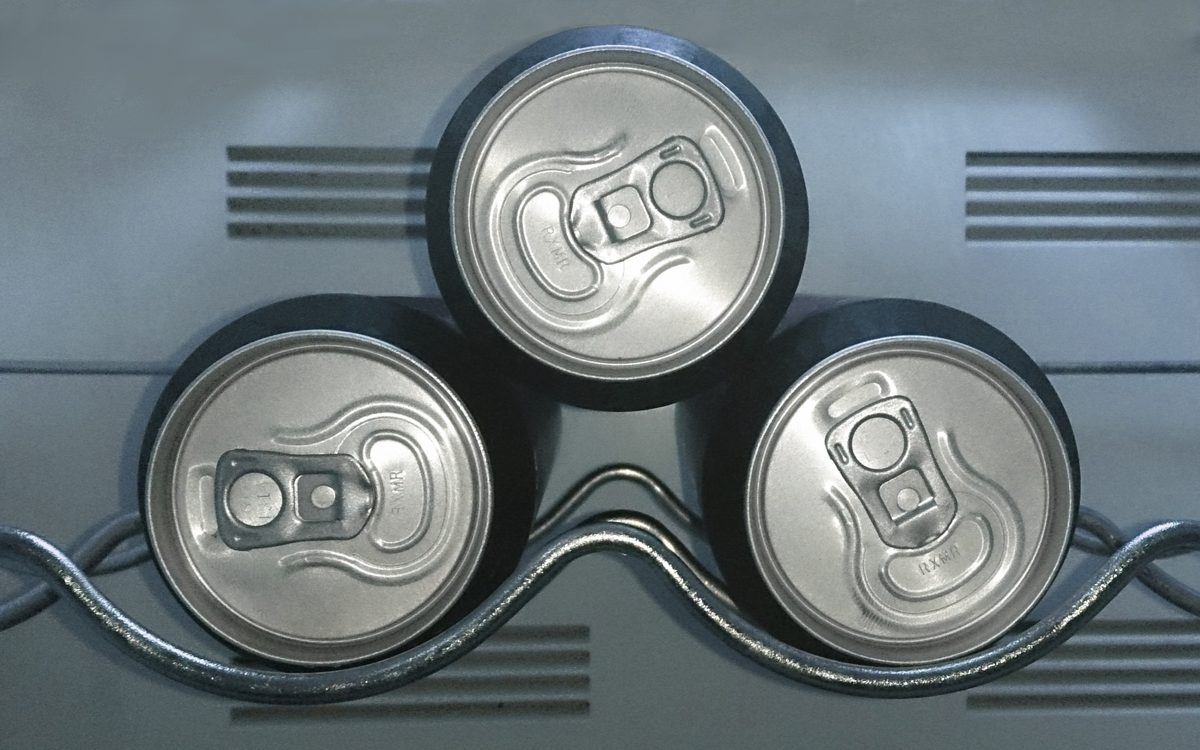
- Cans of soda in a refrigeratorWikimedia Commons · CC BY 2.0 photograph by FutUndBeidl, used as a general illustration.
General information, not medical advice. This paper shows that people stayed with a coaching programme, not that the programme reduced sugary drink intake or improved health. If you have diabetes, or are worried about your weight or your blood sugar, talk to your doctor or a registered dietitian.
Analysis by NutroPractic from the sources listed. Written for general readers; it does not replace advice from your own doctor.
From our articles
Our guides on this subject
Plain-language guides on nutrition and wellness, backed by research.
Nutrition science
Sweeteners after the WHO advice: aspartame, stevia, erythritol and what the 2023 decisions meant
In 2023 the WHO advised against using sweeteners to control weight, and its cancer agency called aspartame 'possibly carcinogenic' a few weeks later. Neither means your diet drink is dangerous, and neither means it helps. What the reviews found, how much is allowed, why erythritol is the one to watch, and what to do if you have diabetes or simply want less sugar.
18 Oct 2026
Gut health
Gluten-free without coeliac disease: who actually benefits, and what the blinded gluten challenges found
In blinded trials only 16% of people who said gluten made them ill reacted to gluten rather than placebo, and in Oslo fructans caused more bloating than gluten. Who really needs to avoid it, how to get tested before you stop, how much gluten is in a slice of bread or a roti, and what gluten-free food costs (159% more in the UK) and lacks.
1 Nov 2026
Diabetes
Fenugreek, cinnamon and turmeric for blood sugar: what the trials in an Indian kitchen measured
Fenugreek seed at 5-10 g a day lowered HbA1c by about 0.85 points in pooled trials, and in a 3-year Hyderabad study 23% went on to diabetes against 55%. Cinnamon trims fasting glucose by 15-25 mg/dL, but a teaspoon of cassia tops the coumarin limit. Curcumin: about 0.3-0.4 points, and rare liver injury from capsules. Doses in teaspoons, and a fair way to test it at home.
1 Nov 2026
Newsfeed for your website
Want this feed on your website?
Add it to any site with one copy-and-paste snippet. No sign-up, and it updates itself every hour.
Start with a virtual consultation
Tell Dr. Triveni what you want to change. You will leave with a clear next step, whether you are in Toronto, London, New York or Chennai.