Brain health · October 31, 2026
A cup of blueberries a day for three months: in 60 older adults, blood flow rose in a brain area tied to focus, but the expected antioxidant boost never showed up
Researchers in Kansas gave people aged 65 to 89 freeze-dried blueberry powder or a look-alike placebo every day, then scanned their brains. The antioxidant they set out to raise did not budge. Blood flow in a region involved in attention and self-control did. The result shifts the question from whether berries act as antioxidants in the brain to whether they work through the blood vessels.
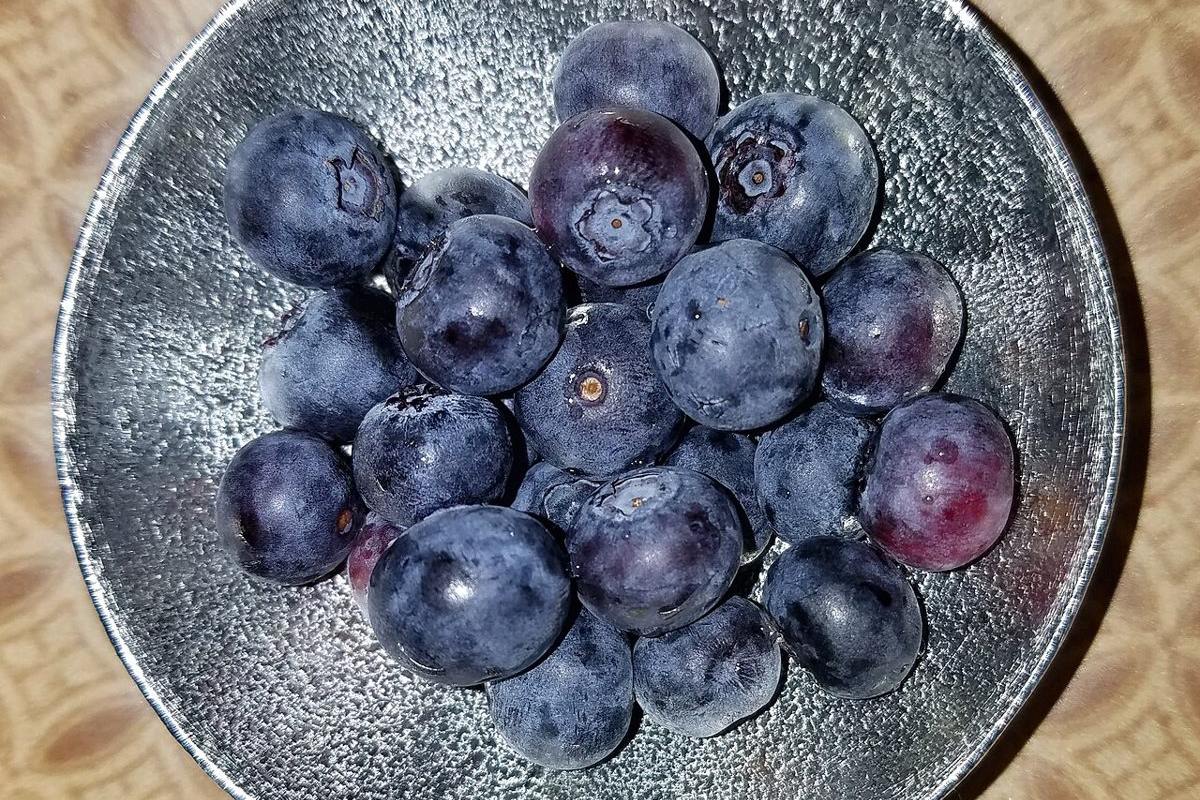
Blueberries have a reputation as brain food, mostly because they are rich in polyphenols, plant compounds with antioxidant properties. As people age, the brain's own antioxidant defences and its blood supply both tend to decline, and both have been linked to cognitive decline and dementia risk. A team at the University of Kansas Medical Center set out to test, with brain scans rather than questionnaires, which of those two things blueberries might actually change.
They recruited adults aged 65 to 89 who ate berries rarely, at most one serving a week. Each participant was randomly assigned to a daily 26-gram packet of freeze-dried whole blueberry powder, equivalent to about one cup of fresh blueberries, or a placebo powder matched for calories and carbohydrate. Neither participants nor investigators knew who had which. After three months, MRI measured brain glutathione, one of the brain's main built-in antioxidants, and blood flow in regions that are vulnerable to ageing and neurodegeneration.
Sixty people completed the study, and both groups took more than 92% of their packets. Glutathione levels did not change with blueberries compared with placebo. Blood flow did: compared with the placebo group, the blueberry group had a significant increase in the anterior cingulate cortex (P = 0.03), a region involved in executive function and cognitive control. Looking within the blueberry group alone, blood flow rose about 7% in the anterior cingulate cortex, 7% in the caudate and 6% in the putamen, while the placebo group showed no significant changes.
The authors read this as a sign that blueberry polyphenols act more through the blood vessels than by raising antioxidant levels in the brain itself. The study was small and short, it measured brain blood flow rather than memory or thinking, and the regional results within each group carry wide confidence intervals; for the anterior cingulate, the 7% rise could plausibly be anywhere from 1% to about 15%. The trial registry lists the U.S. Highbush Blueberry Council as a collaborator. It does not show that blueberries prevent dementia, but it gives a concrete, measurable change for larger trials to test against cognitive outcomes.
Freeze-dried blueberry powder vs placebo for 3 months, adults aged 65 to 89, University of Kansas Medical Center (American Journal of Clinical Nutrition, 2026)
60
Older adults who completed the trial (63 enrolled)
26 g
Daily freeze-dried blueberry packet, about one cup of fresh berries
>92%
Adherence in both groups
No change
Brain glutathione with blueberries vs placebo
7%
Blood-flow rise in the anterior cingulate cortex, blueberry group (95% CI 1.0% to 14.7%)
6-7%
Blood-flow rises in the caudate (7%) and putamen (6%), blueberry group
Blood flow was measured with arterial spin labelling MRI and glutathione with chemical shift imaging. Only the anterior cingulate cortex result is a comparison against placebo (P = 0.03); the percentage rises are changes within the blueberry group, with no significant changes in the placebo group. Participants ate one berry serving a week or less before the study.
- Glutathione is made by the body itself; it is one of the brain's main antioxidants and is not something blueberries contain in meaningful amounts.
- Arterial spin labelling MRI measures blood flow by magnetically tagging the water in a person's own blood, so no contrast injection is needed.
- The anterior cingulate cortex sits deep in the front of the brain and is involved in attention, error-checking and self-control.
- The placebo powder was matched to the blueberry powder for calories and carbohydrate, so any difference is less likely to come from extra sugar or energy.
- The trial was registered in advance as NCT05024916, with brain glutathione and blood flow both listed as primary outcomes.
- The Effects of Blueberry Consumption on Cerebral Blood Flow and Brain Glutathione Levels in Older Adults: A Double-Blind Randomized, Placebo-Controlled TrialAmerican Journal of Clinical Nutrition · Original randomised trial, published online 28 October 2026
- PubMed record PMID 42951114US National Library of Medicine · Structured abstract: design, adherence, results and confidence intervals
- Trial registration NCT05024916ClinicalTrials.gov · Packet size, placebo, enrolment, primary outcomes and collaborators
- Blueberries in a little bowlWikimedia Commons · CC0 photograph by Daderot used as a general illustration
General information, not medical advice. This small three-month trial measured brain blood flow, not memory or dementia risk, and used a specific freeze-dried blueberry powder. If you have concerns about memory or brain health, or you take medicines that may interact with diet changes, speak with your doctor or a registered dietitian.
Analysis by NutroPractic from the sources listed. Written for general readers; it does not replace advice from your own doctor.
From our articles
Our guides on this subject
Plain-language guides on nutrition and wellness, backed by research.
Healthy ageing
Creatine beyond the gym: what it does for older adults and women, and what it doesn't
Across 22 trials, adults in their late fifties to seventies who took creatine while doing resistance training gained about 1.4 kg more lean mass than those who trained without it. Two two-year trials found it did nothing for bone density after menopause. Where the evidence is solid, where it's early (memory, short nights), how much to take, and who should leave it alone.
10 Oct 2026
Women's health
Eating through menopause: what changes for your bones, muscle and heart, and what to put on the plate
Around the final period, bone density at the spine drops by about 2% a year and LDL cholesterol jumps within a year or two. Hot flushes get the attention, but these quieter changes are where food and strength training do the most. Targets for protein, calcium and vitamin D, an honest look at soy, and a week you can start on Monday.
8 Oct 2026
Weight-loss medicines
Eating on Ozempic, Wegovy or Mounjaro: protein first, so the weight you lose isn't your muscle
GLP-1 medicines shrink your appetite, and with it often your protein. In the big trials a quarter to more than a third of the weight lost was lean mass. What the 2025 joint nutrition advisory recommends, the arithmetic for your own target, and four small plates that get there.
8 Oct 2026
Newsfeed for your website
Want this feed on your website?
Add it to any site with one copy-and-paste snippet. No sign-up, and it updates itself every hour.
Start with a virtual consultation
Tell Dr. Triveni what you want to change. You will leave with a clear next step, whether you are in Toronto, London, New York or Chennai.