Brain health · October 19, 2026
A blackcurrant drink for four weeks: 26 New Zealanders over 55 made fewer slips on a hard attention test, and the other brain tests showed no clear benefit
Every morning for a month, older adults in Auckland stirred a purple powder into water: blackcurrant, L-theanine and pine bark extract, or a lookalike dummy. On the toughest attention task they made fewer false alarms and felt a little less drained. The memory results faded once the statistics were corrected, and the drink's maker helped pay. So how much should a berry powder be trusted with your brain?
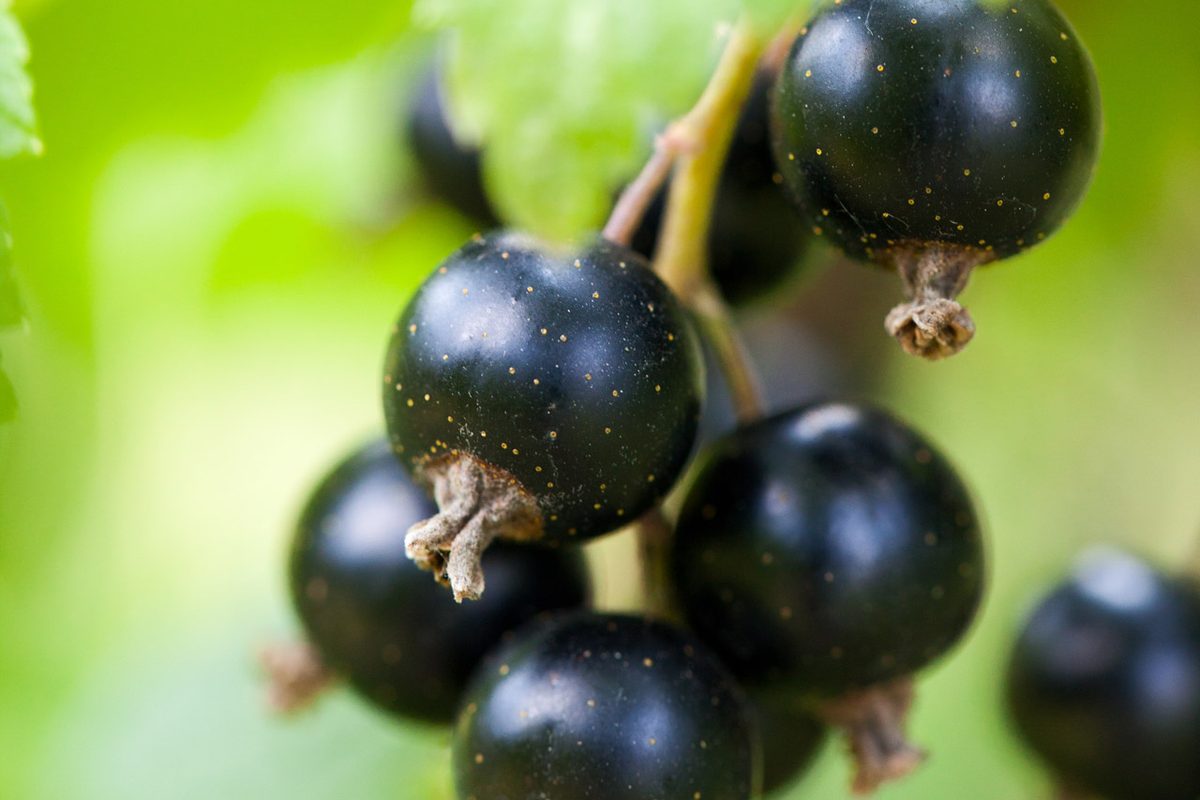
Blackcurrants are among the darkest fruits there are, and the colour comes from anthocyanins, the same family of plant pigments found in blueberries and red cabbage. A run of small studies in young adults has suggested that a blackcurrant drink can sharpen attention for a few hours. A trial published on 15 October in Frontiers in Pharmacology asked whether the same holds for older people, and over weeks rather than hours.
Researchers at the New Zealand Institute for Bioeconomy Science, with a psychologist from Northumbria University in England, recruited healthy adults aged 55 and over in Auckland who ate few polyphenol-rich foods. Each person spent four weeks on a daily drink of freeze-dried blackcurrant powder mixed with 200 mg of L-theanine (an amino acid from tea) and 100 mg of pine bark extract, and four weeks on a placebo made to look and taste the same, with at least two weeks' break in between. Neither the volunteers nor the researchers knew which was which. Of 36 who started, 30 finished, and four more were set aside because blood tests showed they hadn't kept to the diet rules, leaving 26 people (mostly women, average age about 62) for the brain tests.
The headline result came from one task, the Rapid Visual Information Processing test, in which people watch a fast stream of digits and press a key when they spot a set sequence. On the blackcurrant drink, false alarms (pressing when they shouldn't) fell from about 7.3 on the first day to 5.5 after four weeks; on the placebo they didn't. Reaction times didn't change, so people weren't simply slowing down to be careful. Mental fatigue built up less during the test session after four weeks on the drink, a result that sat right on the edge of significance once corrected for the number of comparisons.
The rest is thinner. The study was designed around two attention tests, and the second one, Digit Vigilance, showed nothing. Better scores on a counting task and a word-recall task looked promising at first but lost significance after correction, as did a drop in self-rated stress. In the blood, a single dose lowered the activity of MAO-B, an enzyme that breaks down mood and attention chemicals such as dopamine, and shifted several of their breakdown products. That is a plausible mechanism, but it was measured in blood, not the brain, and on fewer than 22 people.
Two more things to weigh. The drink is a commercial product, and its maker co-funded the work with New Zealand's government and supplied the powders; one author is a former chief scientific officer of that company and is named on a pending patent. The paper says the funders had no role in the analysis or writing. And because the drink mixes three ingredients, the trial can't say whether the blackcurrant, the L-theanine or the pine bark did the work.
What it adds up to is a small, carefully blinded study with one clear positive on one test, in people who otherwise ate few berries, tea or dark chocolate. It fits a wider pattern of modest attention benefits from anthocyanin-rich foods, and it's a reason for a bigger, independent trial rather than a reason to buy a tub. If you want the pigments, a handful of blackcurrants, blueberries or blackberries brings them along with fibre and vitamin C.
Blackcurrant formula vs placebo, four weeks each, healthy adults aged 55+ (crossover)
26
Adults analysed for brain tests (36 enrolled, 30 finished, 4 excluded for breaking diet rules)
4 weeks
On each drink, with at least two weeks' washout between
7.3 → 5.5
False alarms on the RVIP attention test, first day vs week 4, blackcurrant drink (p = 0.022)
1 of 2
Planned attention tests that improved; Digit Vigilance showed no effect
q = 0.067
Less mental fatigue during testing, just short of significance after correction
200 + 100 mg
L-theanine and pine bark extract added to the blackcurrant powder in each dose
Study: Lomiwes D, Günther CS, Kanon AP, Lo K, Scholey A, Ngametua N, Trower TM, Walker EG, Jensen DA, Cooney JM, 'Four-week supplementation with a blackcurrant formulation enhances cognitive performance, reduces mental fatigue and modulates peripheral monoamine metabolism in older adults: a randomized, double-blind, placebo-controlled, crossover study', Frontiers in Pharmacology 17:1896655, published 15 October 2026, doi 10.3389/fphar.2026.1896655, open access (CC BY). Registered ACTRN12621001590853; run September 2022 to May 2023 in Auckland. Each dose: freeze-dried blackcurrant powder giving 7.8 mg anthocyanins per kg body weight, 200 mg L-theanine and 100 mg pine bark extract in 250 mL water. RVIP false alarms 7.3 ± 1.3 vs 5.5 ± 0.9 (acute vs 4 weeks, mean ± SEM, p = 0.022; treatment × time interaction p = 0.009); change from acute day +0.7 ± 0.7 placebo vs −2.3 ± 0.7 blackcurrant (p = 0.007). Mental fatigue interaction p = 0.011, q = 0.067; Serial Sevens, Delayed Word Recall and stress not significant after false-discovery-rate correction. MAO-B analyses in 21 people, plasma neurotransmitters in 19 to 20. 22 of 30 completers were women. Co-funded by New Zealand's Ministry of Business, Innovation and Employment and the product's maker through the High-value Nutrition National Science Challenge; powders supplied in kind by the maker; one author declared a past role with the maker and a pending patent.
- Blackcurrants were banned from being grown in much of the United States for decades of the 20th century because the bushes host white pine blister rust, a disease that kills valuable pine trees. Several states still restrict them.
- During the Second World War, Britain promoted blackcurrant syrup for children because oranges couldn't be shipped in, and blackcurrants are rich in vitamin C. That is why blackcurrant drinks are still so common in the UK.
- L-theanine, one of the drink's other ingredients, is an amino acid found almost only in tea leaves. It's often suggested as one reason a cup of tea can feel calmer than a cup of coffee with the same caffeine.
- In a crossover trial each person tries both the real thing and the placebo, so they act as their own comparison. That lets a small study detect smaller effects, as long as the first treatment has fully worn off before the second starts.
- Four-week supplementation with a blackcurrant formulation enhances cognitive performance, reduces mental fatigue and modulates peripheral monoamine metabolism in older adultsFrontiers in Pharmacology, October 2026 · The study, open access
- A blackcurrant powder supplement enriched with L-theanine and pine bark extract improves sleep quality in healthy older adultsJournal of Functional Foods, 2025 · Earlier report from the same trial on sleep and wellbeing
- Full text with figures and supplementary tablesPubMed Central (PMC13661542) · Open-access copy of the study, including the funding and conflict-of-interest statements
General information, not medical advice. This was a small four-week trial of one commercial drink in healthy adults over 55 and may not apply to you. Supplements can interact with medicines, including antidepressants that act on MAO. Talk to your doctor or a registered dietitian before starting a supplement, especially if you take regular medication.
Analysis by NutroPractic from the sources listed. Written for general readers; it does not replace advice from your own doctor.
From our articles
Our guides on this subject
Plain-language guides on nutrition and wellness, backed by research.

Women's wellness and nutrition
Creatine for women: cognitive performance, menstrual cycle phases, and bone density beyond muscle building
Creatine is widely stereotyped as a bodybuilding supplement for men, but female physiology tells a very different story. Women exhibit 70% to 80% lower endogenous creatine stores, reduced dietary intake, and cyclical fluctuations in brain creatine kinase across the follicular and luteal phases. Robust clinical trials demonstrate that 3 to 5 grams of daily creatine monohydrate enhances cognitive performance during sleep deprivation, augments clinical response in unipolar depression, preserves femoral neck bone geometry in postmenopausal women, and causes cellular intracellular hydration rather than subcutaneous bloating.
13 Nov 2026

Food and nutrition
L-theanine and caffeine: what cognitive trials measured on sustained attention, and milligrams in matcha vs green tea
Combining L-theanine with caffeine produces clean focus without caffeine jitters. Here is what randomized trials measured on attention-switching, EEG alpha brain waves, and the exact milligrams across ceremonial matcha, culinary powder, gyokuro, and sencha.
20 Nov 2026
Healthy ageing
Creatine beyond the gym: what it does for older adults and women, and what it doesn't
Across 22 trials, adults in their late fifties to seventies who took creatine while doing resistance training gained about 1.4 kg more lean mass than those who trained without it. Two two-year trials found it did nothing for bone density after menopause. Where the evidence is solid, where it's early (memory, short nights), how much to take, and who should leave it alone.
10 Oct 2026
Newsfeed for your website
Want this feed on your website?
Add it to any site with one copy-and-paste snippet. No sign-up, and it updates itself every hour.
Start with a virtual consultation
Tell Dr. Triveni what you want to change. You will leave with a clear next step, whether you are in Toronto, London, New York or Chennai.