Cancer care · November 2, 2026
Berry tablets, and a bowel cancer inflammation marker that fell by three-quarters before treatment even began. The catch: no cancer patient in the study went without the tablets
Fifty people with bowel cancer took 15 tablets of freeze-dried fruit a day for three weeks. Their typical reading dropped from 20 to 5, and it's easy to see why that's tempting. Then you look at the average, and at what the study couldn't compare it with.
C-reactive protein, or CRP, is a blood marker that rises with inflammation. In bowel cancer, higher levels go along with bigger tumours, poorer nutrition and worse outcomes, according to the studies these authors cite. It's also cheap and routine. So when a small Polish study reports the typical CRP reading falling by about three-quarters after three weeks of berry tablets, before any cancer treatment had started, you want to read on. You should also read the authors' own conclusion, which is more careful than that sentence: their results can't show the tablets caused anything.
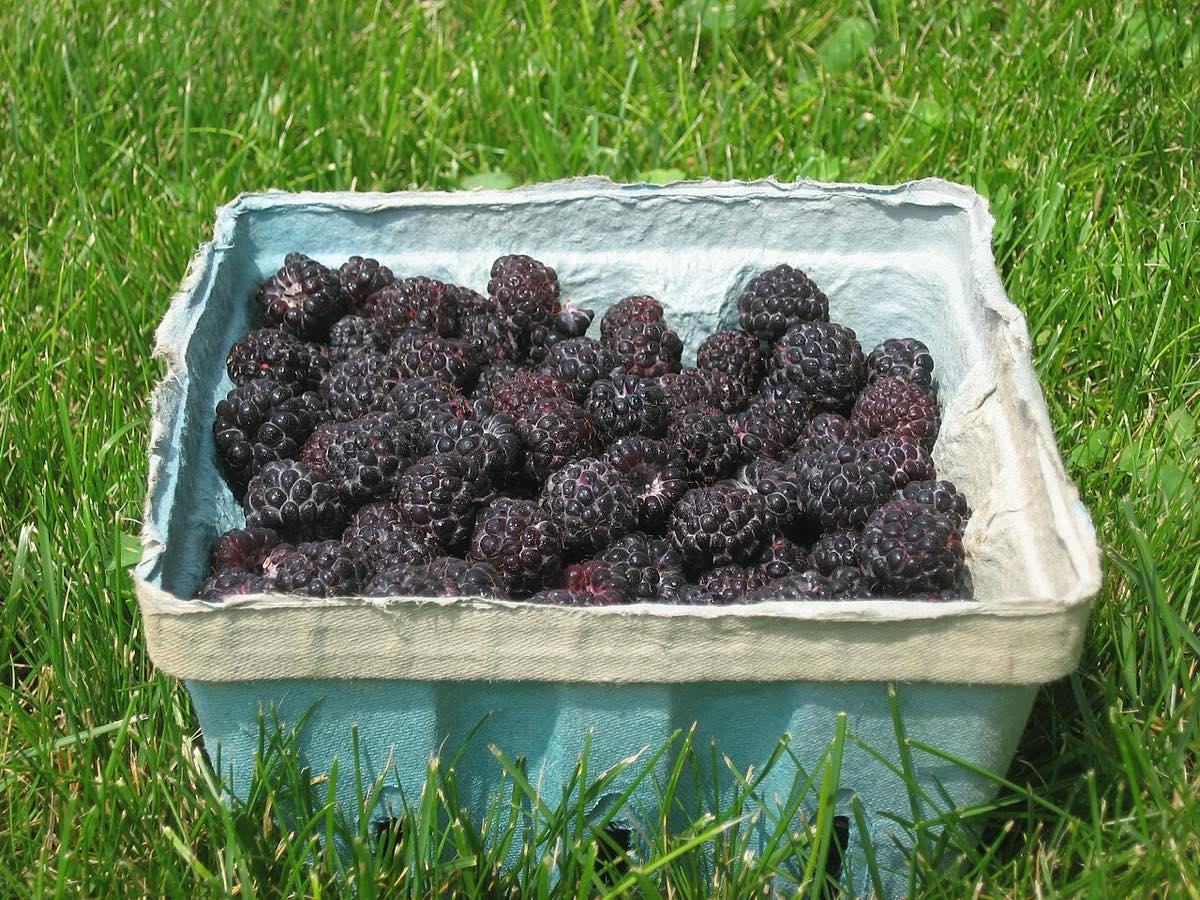
The study, published in Nutrients on 29 October, ran at the Tarnów Oncology Centre between May 2023 and December 2025. It enrolled 50 people with colorectal cancer, stages II to IV, average age about 70, at their first outpatient visit. Each was to take five tablets three times a day for 21 days, which is 315 tablets by our count. The tablets were compressed freeze-dried whole black raspberry and strawberry, made for the study at Jagiellonian University. The authors estimate they gave 600 to 700 mg of anthocyanins a day, the purple-red plant pigments, though that figure wasn't measured in these batches. People in a large European study averaged about 20 to 65 mg of anthocyanidins a day from food, not an exact like-for-like measure, but it gives a sense of how far above ordinary eating this was.
Blood was taken at the start, at week 4 and at week 12. Among the 43 people with all three CRP results, the median went from 20.44 to 5.22 mg/L at week 4, then 3.00 at week 12 (p below 0.001). The week 4 sample is the interesting one, because it came about a week after the tablets ended and before surgery, chemotherapy or radiotherapy began. Whatever moved CRP by then, it wasn't cancer treatment.
That doesn't make it the berries. Everyone with cancer took the tablets and everyone knew it, so nobody can say what CRP would have done anyway in those weeks between diagnosis and treatment. The 20 people without cancer were only measured once, at the start. Infections, antibiotics, steroids and anti-inflammatory painkillers weren't systematically recorded, and neither was diet. CRP is also jumpy. Among those 20 people, readings ran from 0.6 to 99.58 mg/L.
Look past the median and the picture gets less tidy. The mean fell from 28.19 to 19.87 mg/L at week 4, which is about 30% rather than 74%, and a quarter of patients were still above 36 mg/L. By week 12, CRP had fallen in 72.1% of patients, so it hadn't in the other 27.9%. One person's reading rose by 114 mg/L, and the highest value at week 12, 188.11, was about double the highest baseline among these 43. Seven of the 50 are missing from the analysis, including the person with the highest starting value in the whole group, 122.52. People who miss visits during cancer care may not be doing as well as those who come back, though the paper mentions only missed visits and unavailable samples.
The size should give pause too. A 2020 meta-analysis of 32 randomised trials, one the authors cite, found anthocyanins lowered CRP by an average of 0.33 mg/L. That's a pooled figure from mixed groups of people, and the two numbers aren't calculated the same way, but a median fall of about 15 points is a different order of thing. The authors say themselves that the supplement can't take credit for the whole of it. When a change is far bigger than controlled trials would predict, it's fair to suspect something else is at work.
The rest of the blood panel offers little support. Twelve markers were tracked, with no correction for testing that many. Eight didn't change significantly, including IL-1β, IL-8, IL-10 and VEGF. Of the other three that moved, IL-1α, TNF-α and IL-6, none differed between the start and week 4. Their differences appear only at week 12, some nine weeks after the last tablet and in the middle of treatment. And IL-1α and TNF-α signals sat below the assay's lowest standard, so those are relative signals, not measured concentrations. People with the highest starting CRP fell the most (correlation 0.80), but the authors warn that's what you'd expect from arithmetic and regression to the mean.
What the study can fairly claim is more modest. Older patients could mostly manage the tablets: 37 of 47 rated tolerability as good, and 38 of 50 had no complaint. It also suggests a neat next step, by our reading. Those few weeks before treatment are a natural window, so a trial could give half the patients a placebo and simply compare week 4. A small double-blind trial of anthocyanins with curcumin, in 35 people with bowel polyps, found no significant difference in inflammatory markers between its treatment arms. Note too that despite "undergoing treatment" in the paper's title, the tablets stopped before treatment began, so this says nothing about taking them during chemotherapy. And the authors warn against stretching it to berries in your ordinary diet. Enjoy them for other reasons.
Anthocyanin-rich freeze-dried berry supplementation in patients undergoing colorectal cancer treatment (Nutrients, 2026)
50 and 20
Bowel cancer patients who all took the tablets, and people without cancer measured once at the start for comparison
20.44 → 5.22 → 3.00
Median CRP in mg/L at the start, week 4 and week 12, in the 43 people with all three results (p below 0.001)
28.19 → 19.87 → 14.97
Mean CRP in mg/L for the same 43 people and the same three visits
72.1%
Patients whose CRP was lower at week 12. It fell by at least half in 53.5%
-114 to +86
The range of CRP falls in mg/L at week 12. A minus means a rise: one person's CRP went up by 114
-0.33 mg/L
Average CRP change with anthocyanins across 32 randomised trials, in a 2020 meta-analysis
0 of 3
Other markers that changed overall (IL-1α, TNF-α, IL-6) and also differed between the start and week 4, before treatment
37 of 47
Patients who rated tolerability as good. Six rated it medium or low, and they were older (average 76.3 years against 68.5)
Figures come from the open-access paper's text and Tables 1 to 5, 10 and 11. The tablet count, the 74% and 30% falls and the 15-point median fall are our arithmetic, and that last figure is a difference between two medians, not a median of individual changes (the paper gives that as 11.9 mg/L at week 12). The meta-analysis figure is a pooled mean difference from controlled trials, so it isn't directly comparable. Week 4 was before treatment, week 12 during it, and treatment varied: 17 patients had surgery as the main strategy, 14 had surgery and then systemic therapy, 3 had chemoradiotherapy before surgery and 16 had systemic treatment for advanced disease. Adherence was self-reported, and tolerability was asked in an interview, without a validated questionnaire. Six participants aged 61 to 64 were enrolled despite a protocol age limit of 65. Sample sizes vary by marker because the analysis used complete cases, 43 for CRP and CEA, and 37 to 39 for the rest. The paper gives the registration date as 14 September 2026; ClinicalTrials.gov shows it first submitted on 9 September.
- The trial was registered in September 2026, about nine months after recruitment had ended. The authors call for prospectively registered studies next.
- Fruit seeds were the most common complaint. Eight of the 50 patients mentioned them, two of those also reported loss of appetite, and two patients said there were simply too many tablets.
- Patients reported that the supplement was easy to take with yogurt, milk or tea.
- Recruiting patients before their treatment began was the bottleneck: 50 people took about two and a half years at one centre.
- The comparison group were people having a colonoscopy who turned out not to have cancer. They were 80% women, against 38% of the patients.
- The bowel cancer marker CEA drifted down as well, from a median of 5.72 to 2.83 ng/mL by week 12, though not significantly (p = 0.073).
- Weight went from an average of 73.43 kg to 72.88 kg at week 4 and 74.48 kg at week 12. The authors plan to report weight and nutrition findings separately.
- The paper puts bowel cancer's global toll at more than 1.9 million new cases and about 904,000 deaths in 2022.
- The study had no external funding and no industry support, and the authors declared no conflicts of interest.
- Anthocyanin-Rich Freeze-Dried Berry Supplementation in Patients Undergoing Colorectal Cancer Treatment: A Prospective Single-Arm Pilot Study of Tolerability and Longitudinal Inflammatory Biomarker ChangesNutrients 18(21), 3571, published 29 October 2026 · The paper's DOI. Open access, CC BY. Design, biomarker tables, tolerability, limitations.
- NCT07819539 trial registrationClinicalTrials.gov · The study's registration, made after recruitment had ended.
- Impact of dietary anthocyanins on systemic and vascular inflammation: systematic review and meta-analysis on randomised clinical trialsFood and Chemical Toxicology, 2020 · The 32-trial pooled CRP figure.
- Inflammatory and metabolic biomarker assessment in a randomized presurgical trial of curcumin and anthocyanin supplements in patients with colorectal adenomasNutrients, 2023 · The double-blind trial in 35 people with polyps.
- Estimation of the intake of anthocyanidins and their food sources in the European Prospective Investigation into Cancer and Nutrition (EPIC) studyBritish Journal of Nutrition, 2011 · The everyday intake range, as cited in the paper.
- Black raspberries in a basket, side viewWikimedia Commons · Public domain photo by Nyttend.
General information, not medical advice. This was a small study with no control group, and it doesn't show that berry supplements lower inflammation or help treat cancer. If you have cancer, talk to your oncology team before starting any supplement, and don't delay or replace treatment because of it.
Analysis by NutroPractic from the sources listed. Written for general readers; it does not replace advice from your own doctor.
From our articles
Our guides on this subject
Plain-language guides on nutrition and wellness, backed by research.
Gut health
Gluten-free without coeliac disease: who actually benefits, and what the blinded gluten challenges found
In blinded trials only 16% of people who said gluten made them ill reacted to gluten rather than placebo, and in Oslo fructans caused more bloating than gluten. Who really needs to avoid it, how to get tested before you stop, how much gluten is in a slice of bread or a roti, and what gluten-free food costs (159% more in the UK) and lacks.
1 Nov 2026
Gut health
Lactose intolerance: how much milk most people can actually tolerate, and which dairy is easiest
Most adults who don't digest lactose well still handle about 12 g at once, roughly a 250 ml glass of milk, in blinded trials. What the 12 g studies found, a lactose table for milk, yoghurt, cheese, chai and dahi, how lactase tablets and A2 milk compare, why the famous 68% figure was retracted, and how to keep calcium up if you cut back.
25 Oct 2026
Gut health
Constipation and food: kiwis, prunes, psyllium and what the head-to-head trials found
Two green kiwis a day added about 1.5 complete bowel movements a week in a 2023 trial across New Zealand, Italy and Japan, and beat psyllium overall; prunes beat psyllium in an earlier one. The doses the trials and the 2025 British dietitians' guideline used, what water, magnesium, coffee and rye bread add, IBS-C, isabgol, a four-week plan and the warning signs.
25 Oct 2026
Newsfeed for your website
Want this feed on your website?
Add it to any site with one copy-and-paste snippet. No sign-up, and it updates itself every hour.
Start with a virtual consultation
Tell Dr. Triveni what you want to change. You will leave with a clear next step, whether you are in Toronto, London, New York or Chennai.