Sports nutrition · October 27, 2026
Three shots of beetroot juice after 200 weighted jumps: female volleyball players jumped 1.5 cm higher three days later than on a dummy drink. Their soreness, speed on court and thigh strength didn't budge
A small double-blind crossover trial in Chinese university volleyball players, published on 20 October, found that 50 mL of concentrated beetroot juice a day kept jump height closer to normal and made calves less tender to pressure at 72 hours. Almost everything else it measured came out the same, and the 'placebo' was a fruit concentrate of its own.
Volleyball is a sport of jumping and landing, hundreds of times a session. That kind of load causes exercise-induced muscle damage: legs that feel heavy and sore and jump a little lower for two or three days. Beetroot juice is a popular fix because it is rich in nitrate, which the body turns into nitrite and then nitric oxide, a molecule involved in blood flow and muscle function. Beetroot also carries pigments called betalains with possible anti-inflammatory effects. Most of the research, though, has been done in men, and the few studies in female team-sport athletes found small or no effects.
Researchers at Northeast Normal University in Changchun, China, recruited 17 trained female university volleyball players, average age 21, during the off-season. After baseline tests, each woman did 200 maximal jumps in a vest weighing 10% of her body mass (10 sets of 20). She then drank 50 mL of concentrated beetroot juice, about 5 mmol (roughly 310 mg) of nitrate by the maker's figures, at 24, 48 and 72 hours. In the other period she drank 50 mL of sea buckthorn concentrate from an identical opaque bottle. Neither the players nor the testers knew which was which. Four players dropped out before the second period because the test dates would have fallen during their period, so the main analysis covers the 13 who did both. The study was published on 20 October in the Journal of the International Society of Sports Nutrition.
Jump height told the clearest story. On the dummy drink, countermovement jump height fell from 36.1 cm to 33.6 cm three days after the jumping session, a loss of about 7%. On beetroot juice it went from 36.3 cm to 35.4 cm, a drop too small to count as real. At 72 hours the beetroot condition was 1.5 cm higher (95% CI 0.05 to 2.97 cm). Pressure on the calf also had to go higher before it hurt: 241 mmHg on beetroot against 193 mmHg on the dummy drink at 72 hours, a gap of 47.5 mmHg.
Then come the outcomes that didn't move. A volleyball agility drill got slightly slower on both drinks (17.7 to 18.1 seconds on the dummy drink, 17.8 to 18.0 on beetroot) with no difference between them. Soreness ratings eased over the three days on both drinks with no clear difference, ending at 26 mm and 24 mm on a 100 mm scale. Thigh tenderness, thigh swelling and knee strength on a dynamometer showed no consistent advantage. Even for jump height, the test of whether the two recovery curves differed overall just missed the usual cut-off (P = 0.062), so the authors call it a difference on day three rather than proof of faster recovery.
The authors are frank about the limits. Thirteen women is a small group. Nitrate in the juice was taken from the label and never measured in the bottle or in the players' blood, and no blood markers of muscle damage such as creatine kinase were taken. Sea buckthorn is itself full of plant compounds and was not matched to beetroot, so it may not have been a true placebo. A practical reading: a daily shot of beetroot juice in the days after a hard jumping session may help explosive power come back a little sooner, but it won't take the soreness away. Sleep, enough food and protein, and easy days in the training plan still do most of the recovery work.
Beetroot juice vs sea buckthorn drink after 200 weighted jumps, female volleyball players (J Int Soc Sports Nutr, 20 October 2026)
13 of 17
Trained female university volleyball players who completed both crossover periods (mean age 21)
50 mL
Concentrated beetroot juice at 24, 48 and 72 h after the jumps, about 5 mmol (310 mg) nitrate per serving by the maker's figures
-2.5 vs -0.9 cm
Change in countermovement jump height from baseline to 72 h, dummy drink vs beetroot (36.1 to 33.6 cm vs 36.3 to 35.4 cm)
+1.5 cm
Jump height on beetroot vs dummy drink at 72 h (95% CI 0.05 to 2.97; overall time-by-drink test P = 0.062)
241 vs 193 mmHg
Calf pressure needed before it hurt at 72 h, beetroot vs dummy drink (difference 47.5 mmHg, 95% CI 11.8 to 83.3)
P = 0.80
Volleyball agility drill: no difference between the drinks
24 vs 26 mm
Soreness on a 100 mm scale at 72 h, beetroot vs dummy drink, no difference
Randomised, double-blind, placebo-controlled crossover trial; 9 started on the dummy drink and 8 on beetroot, and the four dropouts left the second period unbalanced (5 vs 8), which the mixed models allowed for. Effect sizes for the two clearest findings were large (d = 1.01 for jump height, 1.26 for calf pressure), but with 13 women the ranges are wide. Thigh pressure, thigh circumference and knee isokinetic strength at 60°/s showed no consistent benefit. Nitrate content was not tested, and blood nitrate, nitrite and muscle-damage markers were not measured. Figures from the open-access paper (CC BY 4.0); the 7% is the authors' figure.
- The players were asked to skip antibacterial mouthwash, smoking, alcohol and caffeine during the study, because these may change how the body handles dietary nitrate.
- The 'placebo' was sea buckthorn concentrate with under 0.5 mmol of nitrate. The authors point out it wasn't chemically matched and may not have been inert, and suggest future trials use nitrate-stripped beetroot juice instead.
- The drinks were given only from 24 hours after the jumping session, not straight after it, to test the recovery days that matter between training sessions and matches.
- Earlier trials of beetroot juice in elite female hockey, rugby and water polo players found trivial or no effects on performance, one reason the authors wanted a study in women.
- The four women who dropped out did so because the second round of tests would have fallen during menstruation, which the protocol excluded to limit hormonal effects.
- Selective recovery effects of short-term beetroot juice supplementation after exercise-induced muscle damage in trained female volleyball playersJournal of the International Society of Sports Nutrition (Taylor & Francis) · The study, open access (CC BY 4.0), published 20 October 2026; figures from the full text
- Full text on PubMed Central (PMC13686210)National Library of Medicine · Tables 1 to 3 with the drink contents and the jump, agility, soreness and pain-threshold figures
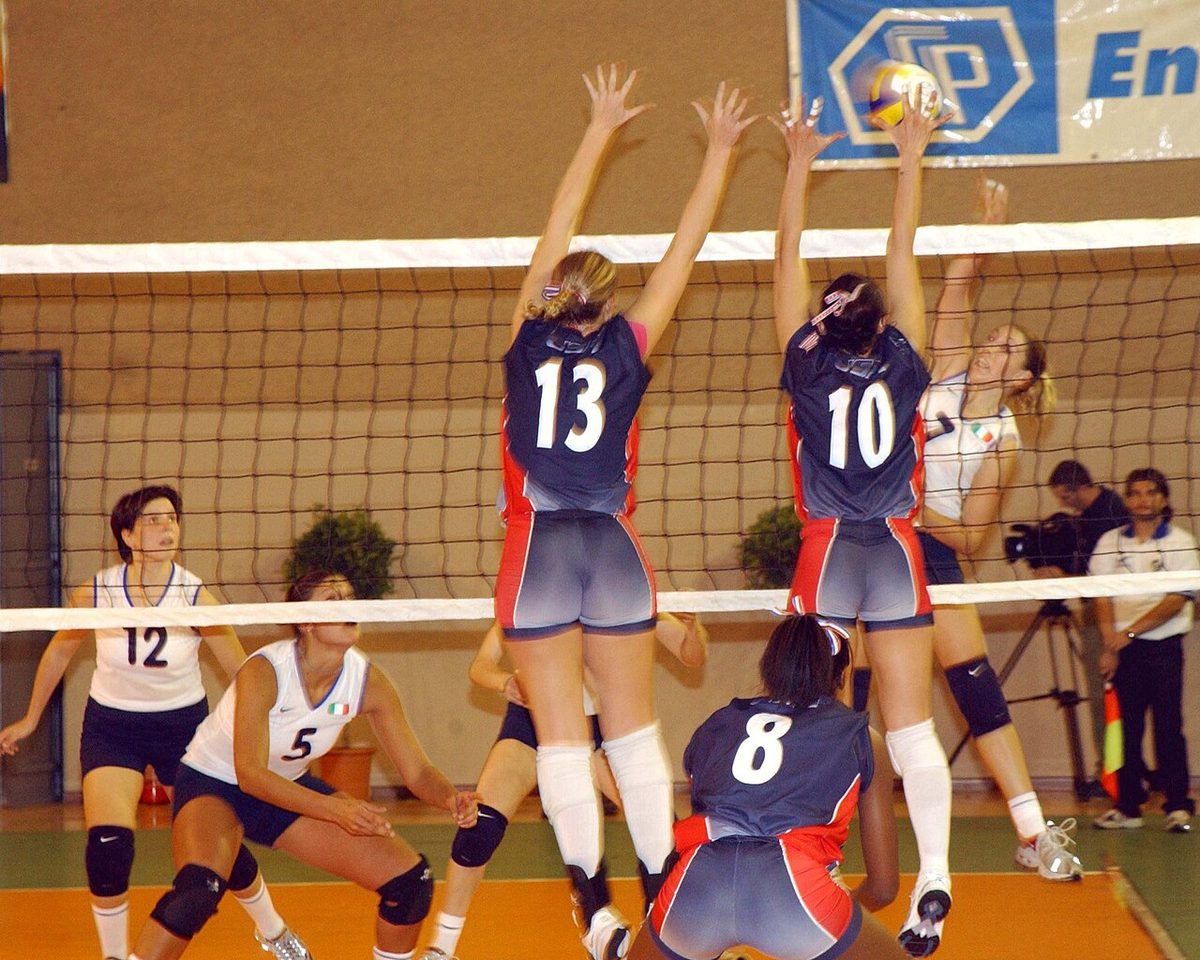
- Volleyball gameWikimedia Commons · The image, public domain (U.S. Navy)
General information, not medical advice. This small trial cannot show that beetroot juice speeds recovery for everyone. If you have a health condition or take regular medicines, talk to your doctor, a sports dietitian or a registered dietitian before adding concentrated juices or supplements to your training.
Analysis by NutroPractic from the sources listed. Written for general readers; it does not replace advice from your own doctor.
From our articles
Read, then eat a little better
Plain-language guides on nutrition and wellness, backed by research.

Women's health
Inositol for PCOS: the 40:1 ratio, trial doses, and food milligrams
Why do randomized trials in polycystic ovary syndrome prioritize the 40:1 myo to D-chiro inositol ratio? Here is the science behind the ovarian epimerase paradox, clinical ovulation and insulin metrics, and why cantaloupe cannot replace 4,000 mg trial powder.
21 Nov 2026

Everyday eating
Extra virgin olive oil polyphenols: the EU health claim, smoke point myths, and cooking stability
Does extra virgin olive oil degrade when cooked? What does the EU 5 mg polyphenol health claim require, how does oleocanthal act like ibuprofen, and why does oxidative stability matter more than smoke point in domestic frying? Here is the clinical and culinary data.
21 Nov 2026

Food and nutrition
L-theanine and caffeine: what cognitive trials measured on sustained attention, and milligrams in matcha vs green tea
Combining L-theanine with caffeine produces clean focus without caffeine jitters. Here is what randomized trials measured on attention-switching, EEG alpha brain waves, and the exact milligrams across ceremonial matcha, culinary powder, gyokuro, and sencha.
20 Nov 2026
Newsfeed for your website
Want this feed on your website?
Add it to any site with one copy-and-paste snippet. No sign-up, and it updates itself every hour.
Start with a virtual consultation
Tell Dr. Triveni what you want to change. You will leave with a clear next step, whether you are in Toronto, London, New York or Chennai.