Food safety and cooking · October 23, 2026
Beetroot peel powder in fried meatballs: at half a percent, acrylamide went up 13%. At one percent it didn't, but fat oxidation did. Sunflower, corn or hazelnut oil made no difference to either
Food scientists keep looking for ways to turn kitchen waste into 'clean-label' ingredients, and beetroot peel, rich in red pigments sold as natural antioxidants, is a favourite. A lab in Turkey mixed it into beef meatballs and fried them at 200°C in three common oils. The peel did not hold down the cooking toxin it was hoped to, and the choice of oil changed texture and how much the meatballs shrank, not their acrylamide.
Acrylamide is a chemical that forms when foods are cooked hot and dry, mostly from a reaction between sugars and an amino acid called asparagine. The International Agency for Research on Cancer lists it as a probable human carcinogen, and it is best known from chips, crisps, toast and coffee. Fried meat makes less of it, but some, and food researchers have been testing plant powders as a way to hold it down while adding fibre and colour.
Beetroot peel is a popular candidate. It is usually thrown away, and it is full of betalains, the red-violet pigments that act as antioxidants in the lab. In a paper published in Frontiers in Nutrition on 13 October, open access, Adem Savaş of Giresun University in Turkey tested what happens when the dried, ground peel goes into beef meatballs that are then fried.
The set-up was simple. Beef with added fat (20% in the mix) was blended with 0%, 0.5% or 1% beetroot peel powder and shaped into meatballs of about 60 grams. Each batch was cooked in 400 millilitres of sunflower, corn or hazelnut oil heated to 200°C, for 4 minutes with one turn. That gave nine combinations, each made twice. The meatballs were then tested for acrylamide, fat oxidation, moisture, weight lost in cooking, colour and texture.
On acrylamide the peel did not help. Plain meatballs had 63.78 micrograms per kilo. With 0.5% peel the figure rose to 72.35, about 13% higher, a difference the statistics counted as real. With 1% peel it was 64.53, no different from plain. The author points out that beetroot carries asparagine of its own, one of the raw materials of acrylamide, which could explain a rise, but not why it vanished again at the higher dose.
Fat oxidation, the process behind rancid and stale flavours, also went the wrong way. The usual lab measure, TBARS, was 1.49 and 1.45 milligrams per kilo in the plain and 0.5% meatballs and 1.88 with 1% peel, the highest of the three. So the antioxidant pigments that make beetroot peel attractive did not show up as protection in a hot, fast fry.
The oil mattered for other things. Meatballs fried in sunflower oil lost 31.27% of their weight in cooking, against 25.88% in hazelnut oil and 20.27% in corn oil, and came out the hardest: 50.45 newtons in the texture test, against 34.40 in hazelnut oil. But the three oils gave nearly the same acrylamide, 66.61, 68.37 and 65.69 micrograms per kilo, and the same fat oxidation. The peel made the meatballs firmer, 46.60 newtons at 1% against 38.86 plain, and did not change their measured colour.
This is a small kitchen-lab study, not a health trial. Each combination was made only twice, nobody tasted the meatballs, and the acrylamide was measured by liquid chromatography with a UV detector, at levels not far above the method's own limit of quantification of 39.37 micrograms per kilo. The levels found were within the range other studies report for cooked meat, and far below the 250 to 285 reported for beef, pork and chicken meatballs in one earlier study. The single author reports no funding and no conflicts of interest.
For home cooks the practical message is modest. Swapping one common frying oil for another did not change acrylamide in these meatballs, and adding beetroot peel was no shield against it. Shorter, cooler cooking and not over-browning remain the general advice for keeping acrylamide down.
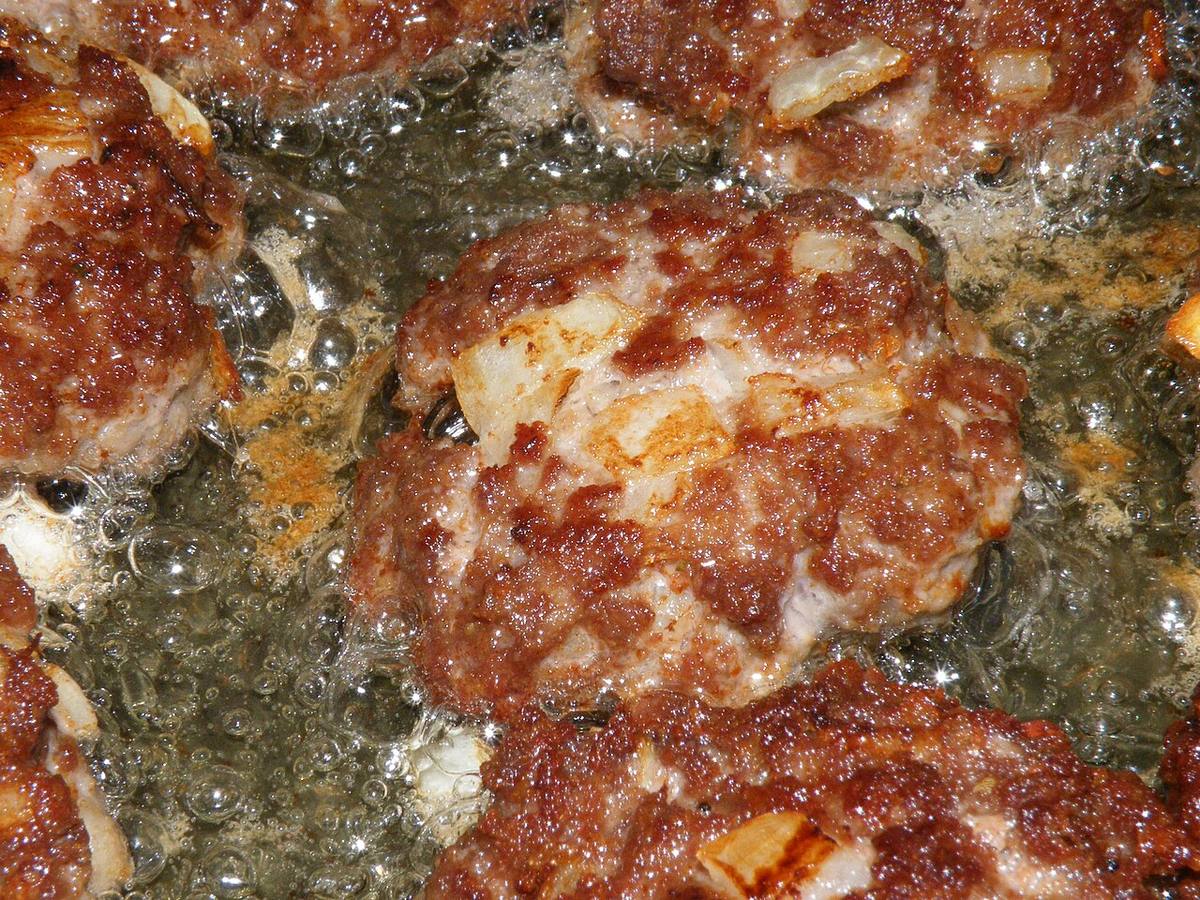
Beef meatballs with 0%, 0.5% or 1% beetroot peel powder, fried 4 minutes at 200°C in three oils
63.78 µg/kg
Acrylamide in plain meatballs, averaged across the three oils
72.35 µg/kg
Acrylamide with 0.5% beetroot peel powder, about 13% higher than plain
64.53 µg/kg
Acrylamide with 1% beetroot peel powder, no different from plain
1.88 mg/kg
Fat oxidation (TBARS) with 1% peel, against 1.49 plain and 1.45 at 0.5%
65.69 to 68.37 µg/kg
Acrylamide across hazelnut, sunflower and corn oil, not a real difference
31.27% vs 20.27%
Weight lost in cooking when fried in sunflower oil against corn oil
Source: Savaş A, 'Assessment of the effects of different frying oils and red beet peel powder on acrylamide formation, lipid oxidation, and quality characteristics of meatballs', Frontiers in Nutrition 13:1930556, published 13 October 2026, doi:10.3389/fnut.2026.1930556 (open access, CC BY 4.0). Laboratory study, 3 peel levels x 3 oils, two independent replicates each, two-way ANOVA; acrylamide by HPLC with UV detection (limit of quantification 39.37 µg/kg). No funding and no conflicts of interest declared.
- Acrylamide in everyday food was first reported in 2002 by Sweden's National Food Administration and researchers at Stockholm University. Before that it was known mainly as an industrial chemical.
- The European Union sets benchmark levels for acrylamide in foods such as French fries (500 micrograms per kilo) and potato crisps (750). Meat is not on the list, and the meatballs in this study had well under a fifth of the fries figure.
- Beetroot's colour comes from betalains, not the anthocyanins that colour berries and red cabbage. Betalains turn up in only a few plant groups, including beet, amaranth and the cactus that gives prickly pears.
- Corn-oil meatballs kept the most water: 55.45% moisture after frying, against 50.45% for sunflower oil.
- The study comes from a hazelnut research office at Giresun University on Turkey's Black Sea coast, a hazelnut-growing region, which helps explain why hazelnut oil was one of the three tested.
- Assessment of the effects of different frying oils and red beet peel powder on acrylamide formation, lipid oxidation, and quality characteristics of meatballsFrontiers in Nutrition · The study, open access, with the acrylamide, oxidation and texture tables
- PubMed Central full text (PMC13654843)US National Library of Medicine · Free full text, including methods and the statistical design
- Commission Regulation (EU) 2017/2158 on acrylamide in foodEUR-Lex · EU benchmark levels for acrylamide in fries, crisps and other foods
- Frying meatballsWikimedia Commons · The photo, CC BY 3.0
General information, not medical advice. This was a small laboratory study of how meatballs cook, not a study of people's health. If you have questions about your diet or cancer risk, talk to your doctor or a registered dietitian.
Analysis by NutroPractic from the sources listed. Written for general readers; it does not replace advice from your own doctor.
From our articles
Read, then eat a little better
Plain-language guides on nutrition and wellness, backed by research.

Women's health
Inositol for PCOS: the 40:1 ratio, trial doses, and food milligrams
Why do randomized trials in polycystic ovary syndrome prioritize the 40:1 myo to D-chiro inositol ratio? Here is the science behind the ovarian epimerase paradox, clinical ovulation and insulin metrics, and why cantaloupe cannot replace 4,000 mg trial powder.
21 Nov 2026

Everyday eating
Extra virgin olive oil polyphenols: the EU health claim, smoke point myths, and cooking stability
Does extra virgin olive oil degrade when cooked? What does the EU 5 mg polyphenol health claim require, how does oleocanthal act like ibuprofen, and why does oxidative stability matter more than smoke point in domestic frying? Here is the clinical and culinary data.
21 Nov 2026

Food and nutrition
L-theanine and caffeine: what cognitive trials measured on sustained attention, and milligrams in matcha vs green tea
Combining L-theanine with caffeine produces clean focus without caffeine jitters. Here is what randomized trials measured on attention-switching, EEG alpha brain waves, and the exact milligrams across ceremonial matcha, culinary powder, gyokuro, and sencha.
20 Nov 2026
Newsfeed for your website
Want this feed on your website?
Add it to any site with one copy-and-paste snippet. No sign-up, and it updates itself every hour.
Start with a virtual consultation
Tell Dr. Triveni what you want to change. You will leave with a clear next step, whether you are in Toronto, London, New York or Chennai.