Vitamins · November 2, 2026
So many people with long COVID were already taking B vitamins that it was the top reason for turning them away from this trial. Then, over 28 days, the vitamins did no better than going without
People on dummy capsules improved by 2.9 points and people on the vitamins alone by 3.2. A low-dose steroid tested alongside them did help a little, but less than the bar the researchers set beforehand, and the gap was no longer significant by day 60.

Screening for this trial turned up a telling detail. Of 2,498 people with long COVID assessed at three German university sites, only 323 were randomised, and the main reason people were ruled out was recent use of one of the trial's treatments. B vitamins were the most common cause. Those who did join had been ill for a median of 79 weeks and had already tried an average of 2.8 treatments for it.
The PreVitaCOV trial, published in eClinicalMedicine on 24 October, is the first randomised, double-blind, placebo-controlled test of these treatments in long COVID, according to its authors. Everyone took two things each morning for 28 days. One was prednisolone, a steroid (20 mg for five days, then 5 mg for 23 days), or a dummy. The other was a B vitamin tablet (100 mg of B1, 50 mg of B6 and 500 micrograms of B12), or a dummy. That made four groups, and it let the team judge each treatment across the two groups that got it and the two that didn't.
The B vitamins didn't move the main measure, a combined score for fatigue, breathlessness, thinking problems, anxiety and depression, where lower is better. After adjusting for starting scores, people on the vitamins differed from those not on them by -0.1 points (95% CI -1.2 to +1.0). On a separate fatigue questionnaire, the estimate leaned slightly the wrong way, at +0.8 points, and that wasn't significant either. Quality of life, pain, mood and a one-minute sit-to-stand test showed no significant effect of the vitamins.
Yet people on the vitamins did feel better. Their score fell by 3.2 points over the month, against 2.9 on placebo. This is the part worth remembering if you've ever taken something and improved: both changes were statistically significant within their own groups, and only the comparison shows the vitamins weren't the reason. The authors say the placebo effect, the natural ups and downs of the illness, and the attention that comes with being in a trial could all have contributed. Some participants, they add, seemed to see taking part as a way to win recognition for the condition, though nobody measured what that did for them.
Prednisolone did better, but only modestly. Its groups improved by 4.3 and 4.5 points, an adjusted difference of -1.4 (95% CI -2.5 to -0.4). The team had set 3 points as the change that would count as clinically meaningful, so this result is statistically significant and still falls short. They worked out that about 7.5 people would need treating for one extra person to get a meaningful result, but that was a post-hoc figure and its interval runs from 4 to 55. The differences between groups were no longer significant on days 60 and 180, after the capsules had stopped.
Safety looked unremarkable over this short stretch. Adverse events were reported by 78% to 86% of each group, placebo included, and no serious event was judged related to the treatment. But a month tells you little about the steroid risks the authors themselves list, including high blood sugar, high blood pressure and mood changes. People with diabetes or severe comorbid conditions weren't allowed in, so the trial says nothing about them. This isn't a case for trying prednisolone at home: the authors say any benefit must be weighed against harms, and that the result needs confirming.
There are limits on the vitamin finding too. The main paper reports no blood levels of B1, B6 or B12, so we can't tell whether anyone was short of them to begin with. A real deficiency is a separate question, and one a blood test and a doctor can answer. The trial ran for 28 days in one country and left out people who were bedridden or needed nursing care. Results from its computer-based attention tests will be reported separately, so that part of the thinking story isn't in yet.
What it does offer is a clear answer for this one combination: at these doses, for a month, a high-strength B vitamin added nothing measurable to what a dummy capsule did. And the B6 dose raises a question of its own for anyone taking it for much longer. At 50 mg a day, it's more than four times the 12 mg a day the European Food Safety Authority set in 2023 as the adult upper level, because too much B6 can damage nerves.
Prednisolone and B vitamins for post-COVID syndrome: a 28-day double-blind factorial trial at three German sites (eClinicalMedicine, 2026)
2,498
People assessed for eligibility. 323 were randomised, 315 took at least one dose and 310 had evaluable data
79 weeks
Median time with symptoms at enrolment. Mean age 44, and 63% were women
-3.2
Change in symptom score on day 28 with B vitamins alone (SD 5.0). Lower is better
-2.9
Change on placebo (SD 4.6)
-0.1
Adjusted effect of B vitamins (95% CI -1.2 to +1.0, p = 0.85)
-4.3 / -4.5
Change with prednisolone alone (SD 5.1) and with prednisolone plus B vitamins (SD 4.5)
-1.4
Adjusted effect of prednisolone (95% CI -2.5 to -0.4, p = 0.008), below the 3 points set as clinically meaningful
7.5
Number needed to treat with prednisolone for one extra meaningful result, post-hoc (95% CI 4.0 to 55.1)
Figures come from the open-access paper's abstract, text and tables; we didn't review its supplementary appendix. The symptom score is a custom PROMIS T-score covering fatigue, breathlessness, cognition, anxiety and depression. The paper also gives -6.4 points (p < 0.001) for the PROMIS fatigue subscore under prednisolone, but the main text doesn't spell out which comparison that is. On the Chalder Fatigue Scale, the table's adjusted effect was -2.0 (95% CI -3.2 to -0.8) for prednisolone and +0.8 (95% CI -0.5 to +2.0) for B vitamins. The adverse-event range of 78% to 86% is from the safety table and runs to day 60. Blinding was checked at day 180: 26% of participants guessed their group correctly and 24% said they had no idea. The target sample was cut from 340 to at least 300 during the trial, without reference to outcome data, because fewer people than expected dropped out. The trial was funded by the German Federal Ministry of Research, Technology and Space and the Vogel Stiftung Dr. Eckernkamp. Hevert-Arzneimittel supplied the B vitamins free and, the paper says, had no role in the design, analysis or reporting. Three authors declared outside payments or support, none of it listed from that company.
- Participants weren't told that B vitamins can visibly discolour urine, because that could have given away which group they were in.
- Asked at the end, the study team said they had no idea of a participant's group in 42% of cases, and guessed right in 20%.
- Participants picked their two most important symptoms, and fatigue was the most frequent choice at 58%, ahead of concentration difficulties at 27%.
- Of the 248 employed participants, 104 were on sick leave when they joined. The median time off because of post-COVID was 24 weeks.
- A citizens' forum at University Hospital Würzburg reviewed the trial's plans, and its feedback changed the information leaflet and the patient diary.
- Europe's upper level for vitamin B6 was roughly halved in 2023, from the 25 mg a day set by the Scientific Committee on Food in 2000 to 12 mg a day.
- Low-dose prednisolone and B vitamins for post-COVID-19 syndrome in Germany: the PreVitaCOV randomised clinical trialeClinicalMedicine, published online 24 October 2026 · The paper's DOI. Open access under CC BY.
- Full text of the paperPubMed Central · Methods, participant table, primary and secondary outcomes, safety table, blinding, limitations, funding.
- Scientific opinion on the tolerable upper intake level for vitamin B6EFSA Journal, May 2023 · The adult upper level of 12 mg a day, based on peripheral neuropathy.
- PillsWikimedia Commons · CC0 image from Pixabay, used as an illustration.
General information, not medical advice. This trial tested specific doses for 28 days in adults with long COVID, and it doesn't show what happens with long-term use or in people with a measured vitamin deficiency. Prednisolone is a prescription steroid with real side effects. Don't start or stop it, or any treatment, without talking to your doctor.
Analysis by NutroPractic from the sources listed. Written for general readers; it does not replace advice from your own doctor.
From our articles
Our guides on this subject
Plain-language guides on nutrition and wellness, backed by research.
Women's health
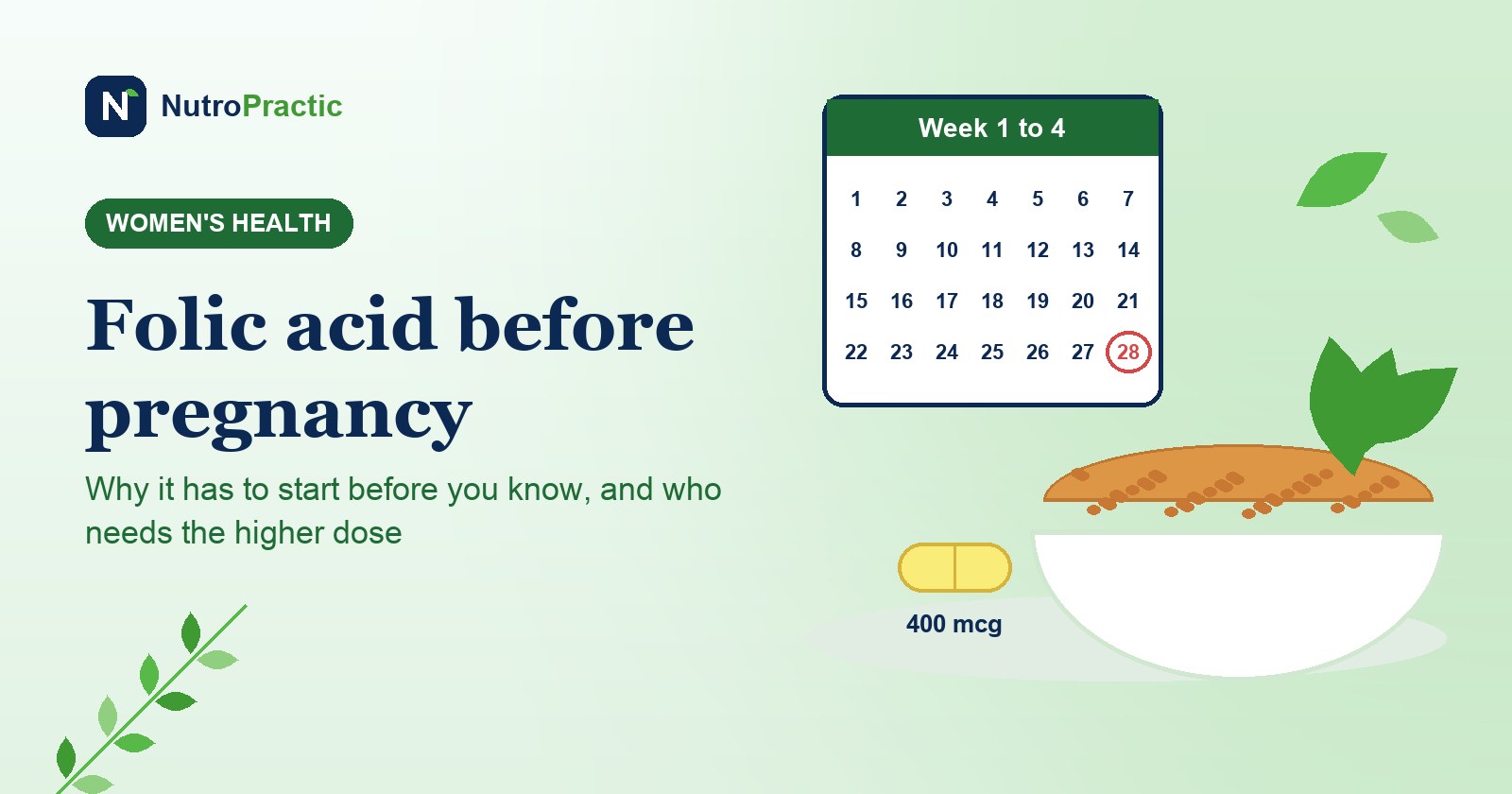
Folic acid before pregnancy: why it has to start before you know, and who needs the higher dose
The neural tube closes 26 to 28 days after conception, about six weeks after the last period and before many people know they are pregnant. Folic acid cut neural tube defects by about 72% in the 1991 MRC trial, yet only about a third of women take it beforehand. The dose, who needs 4 or 5 mg, what changed for higher BMI, fortified flour from the US to the UK's 2026 law, folate foods and the B12 link.
25 Oct 2026
Micronutrients
Vitamin D and B12: two common gaps, from northern winters to vegetarian kitchens
Vitamin D runs low in Canadian and European winters, and surprisingly often in sunny India too. Vitamin B12 is a risk for vegetarians, people over 50 and people on certain medicines. Who is at risk, what the official advice is in North America, Europe and India, and where to get both.
3 Oct 2026
Gut health
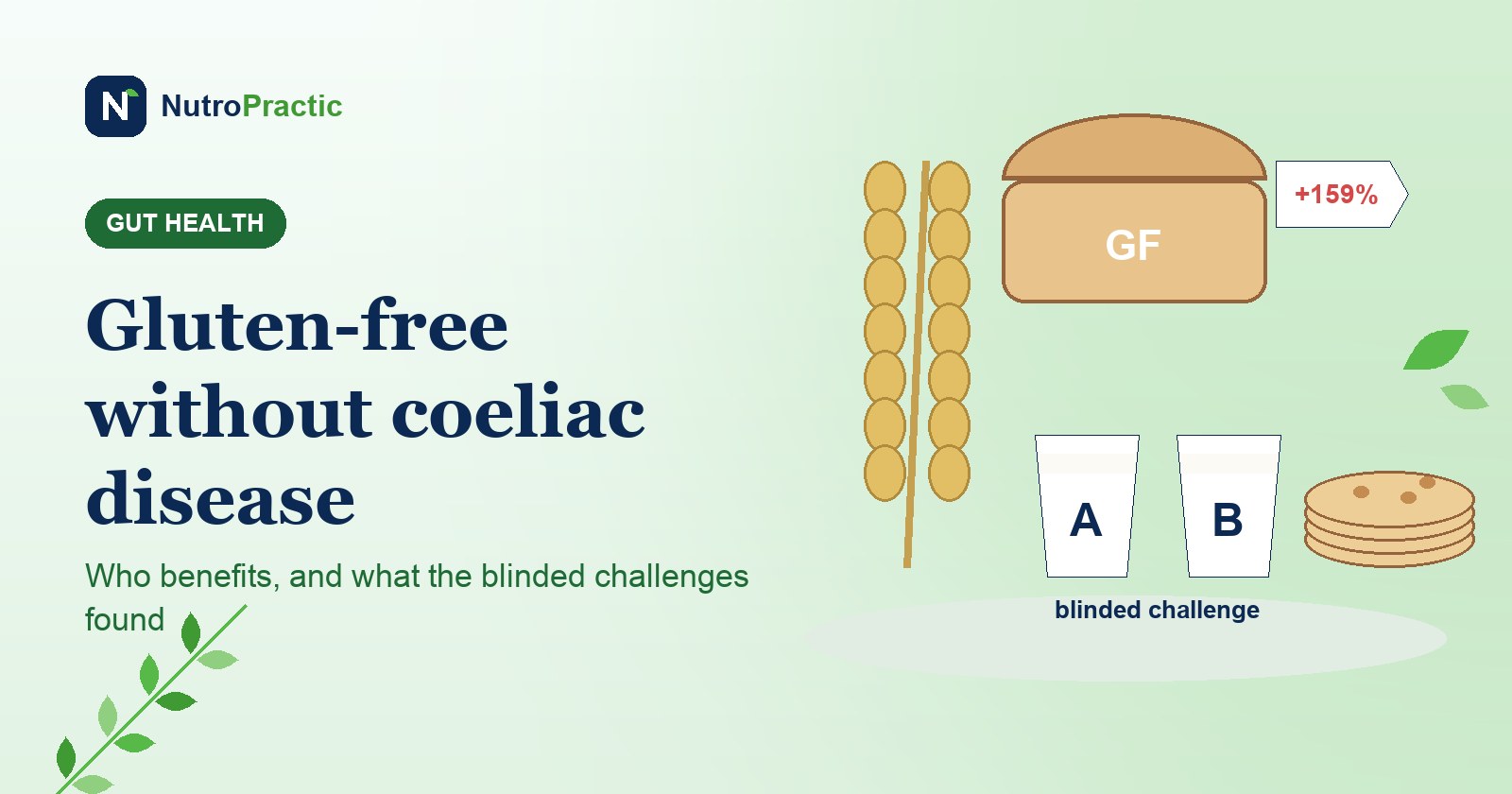
Gluten-free without coeliac disease: who actually benefits, and what the blinded gluten challenges found
In blinded trials only 16% of people who said gluten made them ill reacted to gluten rather than placebo, and in Oslo fructans caused more bloating than gluten. Who really needs to avoid it, how to get tested before you stop, how much gluten is in a slice of bread or a roti, and what gluten-free food costs (159% more in the UK) and lacks.
1 Nov 2026
Newsfeed for your website
Want this feed on your website?
Add it to any site with one copy-and-paste snippet. No sign-up, and it updates itself every hour.
Start with a virtual consultation
Tell Dr. Triveni what you want to change. You will leave with a clear next step, whether you are in Toronto, London, New York or Chennai.