Sports nutrition · November 2, 2026
Chokeberry capsules for national-team rowers: the gut and stress markers came out ahead, mostly because the placebo group's went the wrong way
Fifteen Polish rowers took black chokeberry extract or a look-alike placebo for eight weeks, then raced a flat-out 2,000 m on the rowing machine. The berry group ended with lower blood markers linked to gut leakiness and lower cortisol an hour later. The authors are unusually blunt about what that does not prove, and a look at the numbers shows why.
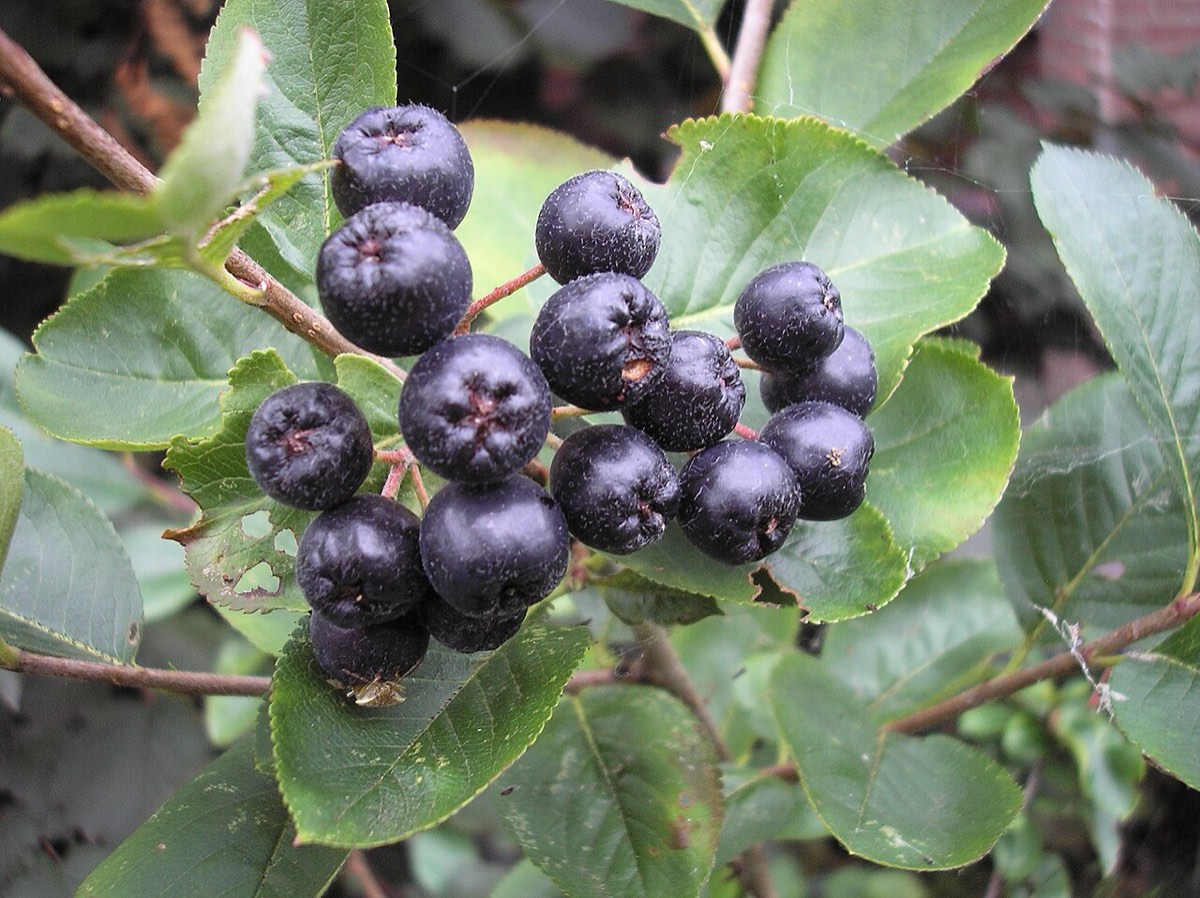
Hard endurance exercise is rough on the gut. Blood is pulled away from the intestine to the working muscles, and the gut lining can come under strain. Sports scientists call it exercise-induced gastrointestinal syndrome, and they have been looking for foods that might soften it. Berries rich in anthocyanins, the pigments that make them purple-black, are one candidate. Black chokeberry, Aronia melanocarpa, is a rich source. A team from the Poznan University of Physical Education tested it on members of Poland's national rowing squad, and the results appeared in Nutrients on 29 October.
The design was a proper one in miniature. Eighteen young men, about 20 years old and 190 cm tall on average, were randomly given either chokeberry extract or a placebo in identical opaque capsules: three a day with meals, 600 mg of extract standardised to 18% anthocyanins, for eight weeks of a training camp in spring 2023. Neither the rowers nor the researchers knew who had what. Three dropped out because they were away at championships, which left 7 on chokeberry and 8 on placebo. Before and after the eight weeks each man rowed 2,000 m flat out on an ergometer, a test that also counted towards selection for the championship crew, and gave blood before, straight after and an hour later.
The blood was tested for three markers tied to the gut lining: claudin-3, a protein from the seals between gut cells; I-FABP, released when those cells are damaged; and LBP, which rises with exposure to bacterial toxins. Cortisol was measured as the stress hormone. After eight weeks the chokeberry group had lower resting claudin-3 (p = 0.037) and resting LBP (p = 0.013) than the placebo group, and lower cortisol an hour after the test (p = 0.008). I-FABP showed no effect of the supplement. Rowing performance did not change: both groups covered 2,000 m in about 6 minutes 13 seconds before and after.
Read the details and the picture shifts. The changes the paper reports within a group are almost all in the placebo group, whose resting LBP and resting I-FABP rose over the eight weeks, as did its cortisol an hour after the test. The chokeberry group did not show a significant improvement of its own. So the gap looks more like the berry group being spared a rise than getting better, and the authors admit they cannot rule out that it was something else. The placebo group already had higher LBP straight after the first test, before any capsules. The two groups also ate differently: the chokeberry group ate more protein in the day before testing (199 g vs 167 g after the eight weeks), and more fat but much less fibre (29 g vs 48 g). In an exploratory analysis, more protein went with lower claudin-3. And the week of training before the second test differed from the week before the first, which can move these markers by itself.
The authors spell out the rest. With 15 men the study could only detect large effects, so big effect sizes from a handful of people are fragile. Many markers at many time points mean some significant results will turn up by chance. None of the three gut markers measures leakiness directly, and no one recorded gut symptoms. The trial was registered after it ran, and it says nothing about women, other sports or recreational exercisers. Their own conclusion is that the findings "should not be interpreted as evidence of improved intestinal barrier function". In our reading this is a reason to run a bigger trial, not to buy chokeberry capsules for a stomach that misbehaves in races. Chokeberries themselves, fresh, frozen or as juice, are a perfectly good purple fruit to eat.
Aronia melanocarpa extract vs placebo for eight weeks in elite male rowers, Poland, 2023 (Nutrients, 29 October 2026)
7 vs 8
Rowers analysed, chokeberry vs placebo (18 randomised, 3 missed the second test)
600 mg
Daily extract, three 200 mg capsules with meals, standardised to 18% anthocyanins
8 weeks
Supplement period, between tests in April and June 2023
p = 0.037
Resting claudin-3 lower with chokeberry than placebo after eight weeks
p = 0.013
Resting LBP lower with chokeberry than placebo after eight weeks
p = 0.008
Cortisol one hour after the test lower with chokeberry than placebo
No effect
I-FABP, the marker of gut-cell damage: changed over time but not by group
373 s vs 374 s
2,000 m time after eight weeks, chokeberry vs placebo (373 s and 377 s before)
199 g vs 167 g
Protein eaten the day before the second test, chokeberry vs placebo
29 g vs 48 g
Fibre eaten the day before the second test, chokeberry vs placebo (p = 0.048)
Figures come from the open-access paper's text and Tables 1 to 4; we did not read values off its charts. The 6 minutes 13 seconds and about 108 mg of anthocyanins a day (600 mg x 18%) are our conversions. The p values compare the two groups at a single time point after eight weeks; claudin-3, LBP and cortisol also showed group-by-time interactions in the ANOVA (p = 0.046, 0.013 and 0.007), with partial eta squared of 0.10 to 0.20. Two things we noticed. The participants section calls the rowers both members of the Polish National Rowing Team and of the youth national team, so we have described them as national-squad rowers of about 20. And the flow text says 20 rowers were assessed and two missed the second test before the 18 were randomised, an order that reads oddly; the 7 + 8 analysed is consistent throughout. The trial was registered retrospectively (NCT06133751, November 2023). It had no external funding, and the authors declare no conflicts of interest; the capsules were made and blinded by a Polish supplement company.
- The senior author's group tested chokeberry on elite rowers once before: in a 2014 study, eight weeks of chokeberry juice lowered the inflammatory signal TNF-alpha.
- An earlier trial with anthocyanin-rich blackcurrant extract blunted the post-exercise rise in I-FABP but did not change a direct test of gut permeability, the measurement this new study did not have.
- Of 57 studies of Aronia in the authors' own earlier systematic review, 45 were in animals and 12 in humans, and only three of the human ones looked at the gut at all.
- The rowers ate between about 4,100 and 4,500 kcal in the day before each test, and one group averaged almost 790 g of carbohydrate that day, from a central camp canteen where a dietitian checked the recipes.
- Blood for cortisol was drawn at fixed clock times, 07:00 and about 11:00 to 12:00, because the hormone naturally runs high in the morning and falls through the day.
- The fibre in the placebo capsules was not counted in the diet records, because its exact amount was not known.
- Anthocyanin-Rich Aronia melanocarpa Supplementation Modulates Intestinal Barrier Biomarkers and Stress-Axis Response in a Randomized Controlled TrialNutrients, 29 October 2026 · The paper's DOI. Open access under CC BY.
- Full text of the paperMDPI · Methods, Tables 1 to 4, dietary intake, limitations and the earlier studies cited.
- Trial registration NCT06133751ClinicalTrials.gov · Registered on 14 November 2023, after the trial ran.
- Study dataRepOD, Repository for Open Data · The dataset the authors deposited.
- Aronia berriesWikimedia Commons · Public domain photograph by MiraculixHB, used as a general illustration.
General information, not medical advice. This was a small trial in 15 young male elite rowers that measured blood markers, not gut symptoms or health outcomes. If you get stomach trouble during exercise, or you take medicines or have a health condition, talk to your doctor or a sports dietitian before adding a supplement.
Analysis by NutroPractic from the sources listed. Written for general readers; it does not replace advice from your own doctor.
From our articles
Our guides on this subject
Plain-language guides on nutrition and wellness, backed by research.
Gut health
Gluten-free without coeliac disease: who actually benefits, and what the blinded gluten challenges found
In blinded trials only 16% of people who said gluten made them ill reacted to gluten rather than placebo, and in Oslo fructans caused more bloating than gluten. Who really needs to avoid it, how to get tested before you stop, how much gluten is in a slice of bread or a roti, and what gluten-free food costs (159% more in the UK) and lacks.
1 Nov 2026
Gut health
Lactose intolerance: how much milk most people can actually tolerate, and which dairy is easiest
Most adults who don't digest lactose well still handle about 12 g at once, roughly a 250 ml glass of milk, in blinded trials. What the 12 g studies found, a lactose table for milk, yoghurt, cheese, chai and dahi, how lactase tablets and A2 milk compare, why the famous 68% figure was retracted, and how to keep calcium up if you cut back.
25 Oct 2026
Gut health
Constipation and food: kiwis, prunes, psyllium and what the head-to-head trials found
Two green kiwis a day added about 1.5 complete bowel movements a week in a 2023 trial across New Zealand, Italy and Japan, and beat psyllium overall; prunes beat psyllium in an earlier one. The doses the trials and the 2025 British dietitians' guideline used, what water, magnesium, coffee and rye bread add, IBS-C, isabgol, a four-week plan and the warning signs.
25 Oct 2026
Newsfeed for your website
Want this feed on your website?
Add it to any site with one copy-and-paste snippet. No sign-up, and it updates itself every hour.
Start with a virtual consultation
Tell Dr. Triveni what you want to change. You will leave with a clear next step, whether you are in Toronto, London, New York or Chennai.