Blood pressure · October 25, 2026
10,087 Chinese adults, up to 18 years of follow-up: those eating the most phenylalanine and tryptophan, two amino acids in everyday protein, had a 26-29% higher risk of developing high blood pressure. Oddly, the link ran through plant foods such as rice and wheat, not meat
Cardiologists in Dalian went back through one of China's longest-running diet surveys to see whether three 'aromatic' amino acids found in all protein foods track with who later got high blood pressure. Two of them did, modestly, and the link came from plant foods, which in this cereal-heavy diet supplied three quarters of the intake. An observational study, so a signal to test, not a reason to change what you eat.
Phenylalanine, tyrosine and tryptophan are called aromatic amino acids because of the ring in their chemical structure. All three come from ordinary protein in cereals, beans, meat, fish, eggs and milk, and the body turns them into messengers that help set blood vessel tone, among them adrenaline, noradrenaline and serotonin. Cardiologists at the Second Hospital of Dalian Medical University, with colleagues in Shenyang, asked whether people who eat more of them are more likely to develop high blood pressure. Their study was published in Frontiers in Nutrition on 22 October.
They used the China Health and Nutrition Survey, a household study running since 1989. Diet was recorded in the 1997, 2000, 2004, 2006, 2009 and 2011 rounds, each time by three consecutive 24-hour recalls plus weighing the household's food over the same three days, and blood pressure was followed up to 2015. The analysis included 10,087 adults without high blood pressure at the start, with an average age of 42.6 and 54.3% women. Intakes were worked out from Chinese food composition tables and expressed per 1,000 kcal, so that people who simply eat more food did not look like high consumers. High blood pressure meant a reading of 140/90 mmHg or more (the average of three measurements), a doctor's diagnosis or taking blood pressure medicine.
Over 95,153 person-years, 3,531 people developed high blood pressure, 37.1 per 1,000 person-years. After adjusting for age, sex, town or village, income, schooling, smoking, alcohol, activity, weight, waist size, starting blood pressure, diabetes, heart attack and stroke history, and energy, sodium and potassium intake, the quarter of people eating the most phenylalanine had a 26% higher risk than the quarter eating the least (hazard ratio 1.26), and the top quarter for tryptophan a 29% higher risk (1.29). Both rose roughly in a straight line with intake. Tyrosine showed no clear link (1.09, not significant), and the total of all three was linked more weakly (1.16).
The surprise was where the amino acids came from. Cereals supplied 46.1% of the total and plant foods about three quarters. When plant and animal sources were put in the same model, phenylalanine and tryptophan from plant foods went with higher risk (6% and 8% per standard deviation of intake), while those from animal foods went with slightly lower risk (about 7%). The authors warn that this should not be read as animal protein being protective. The links were generally stronger in rural people and those with less schooling.
The authors list the limits. Diet records ended in 2011 while blood pressure was followed to 2015; food tables carry measurement error and supplements were not recorded; nobody's blood amino acid levels were measured, so the suggested mechanisms, such as gut bacteria turning phenylalanine into a compound called phenylacetylglutamine, are untested here. Adding the province people lived in made the link for the total of all three no longer significant, although the phenylalanine and tryptophan links held. Family history of high blood pressure was not included, results may not apply outside a cereal-based diet, and an observational study cannot show cause. The authors make no diet recommendation and call for studies measuring blood amino acids and gut-bacteria products. The work was funded by the National Natural Science Foundation of China and no conflicts were declared. We read the full open-access paper.
China Health and Nutrition Survey: 10,087 adults, diet recorded 1997-2011, high blood pressure followed to 2015 (published 22 October 2026)
10,087
Adults free of high blood pressure at the start, average age 42.6
3,531
Developed high blood pressure over 95,153 person-years (37.1 per 1,000 person-years)
1.26
Hazard ratio for the highest vs lowest quarter of phenylalanine intake
1.29
Hazard ratio for the highest vs lowest quarter of tryptophan intake
1.09
Tyrosine, highest vs lowest quarter: no clear link
46.1%
Share of the three amino acids that came from cereals (about three quarters from all plant foods)
Source: Gong M, Gao H, Yu H, Wu W, Gao X, Bu Y, Kong X, Zhao X, 'Dietary aromatic amino acids, their food sources, and incident hypertension in Chinese adults: a prospective cohort study', Frontiers in Nutrition 2026;13, published 22 October 2026, doi 10.3389/fnut.2026.1956118, open access (CC BY). Second Hospital of Dalian Medical University, General Hospital of Northern Theater Command (Shenyang) and Liaoning University of Traditional Chinese Medicine. China Health and Nutrition Survey (CHNS): diet from the 1997-2011 waves (three consecutive 24-hour recalls plus household food weighing), outcome follow-up to 2015; 10,087 of 28,978 adults eligible; 62.0% had two or more diet assessments (mean 2.81). Intakes energy-adjusted (g/1,000 kcal). Hypertension: SBP 140 mmHg or more, DBP 90 mmHg or more, physician diagnosis or antihypertensive use. Mixed-effects Cox models with household random intercepts; primary model adjusted for age, sex, urban residence, income, education, diabetes, myocardial infarction, stroke, smoking, alcohol, baseline SBP, BMI, abdominal obesity, physical activity, total energy, sodium and potassium; multiple imputation. Quartile 4 vs 1: total aromatic amino acids HR 1.16 (95% CI 1.03-1.31, P-trend 0.006); phenylalanine 1.26 (1.11-1.44, P-trend <0.001); tryptophan 1.29 (1.14-1.46, P-trend <0.001); tyrosine 1.09 (0.98-1.21, P-trend 0.168). Per 1 SD: total 1.05 (1.00-1.09), Phe 1.08 (1.04-1.14), Trp 1.08 (1.03-1.13), Tyr 1.00 (0.97-1.04). Dose-response roughly linear (P-nonlinearity 0.36-0.84). Mutually adjusted by source, per 1 SD: plant Phe 1.06 (1.01-1.10), animal Phe 0.93 (0.88-0.98); plant Trp 1.08 (1.03-1.12), animal Trp 0.93 (0.89-0.98); plant total 1.03 (0.99-1.07), animal total 0.92 (0.88-0.97). Cereals supplied 46.1% of total intake; plant foods 70.0-74.3%, animal foods 22.8-27.7%. Adding baseline province: total Q4 vs Q1 1.10 (0.97-1.24), Phe and Trp links persisted. Limitations stated by the authors include measurement error, no supplement data, diet data ending in 2011, no circulating amino acids or microbial metabolites, no family history, possible residual confounding and uncertain generalisability. Funding: National Natural Science Foundation of China (82370438); no conflicts of interest declared.
- The World Health Organization estimates that 1.4 billion adults aged 30 to 79 had high blood pressure in 2024, and that about 600 million of them (44%) did not know it. Only about 23% had it under control.
- The WHO recommends less than 2,000 mg of sodium a day, about 5 g of salt, for adults. The average adult took in about 4,278 mg of sodium, roughly 11 g of salt, in 2021, more than double the limit.
- For people who use table salt, the WHO suggests lower-sodium salt substitutes that contain potassium. High blood pressure is diagnosed at 140/90 mmHg or more, measured on two different days.
- Dietary aromatic amino acids, their food sources, and incident hypertension in Chinese adults: a prospective cohort studyFrontiers in Nutrition · The study, open access, published 22 October 2026
- Hypertension (fact sheet)World Health Organization · Global numbers, awareness and control, definition and risk factors
- Salt reduction (fact sheet)World Health Organization · The sodium limit, global average intake and potassium salt substitutes
- China Health and Nutrition SurveyCarolina Population Center, University of North Carolina · The long-running survey whose data the study used
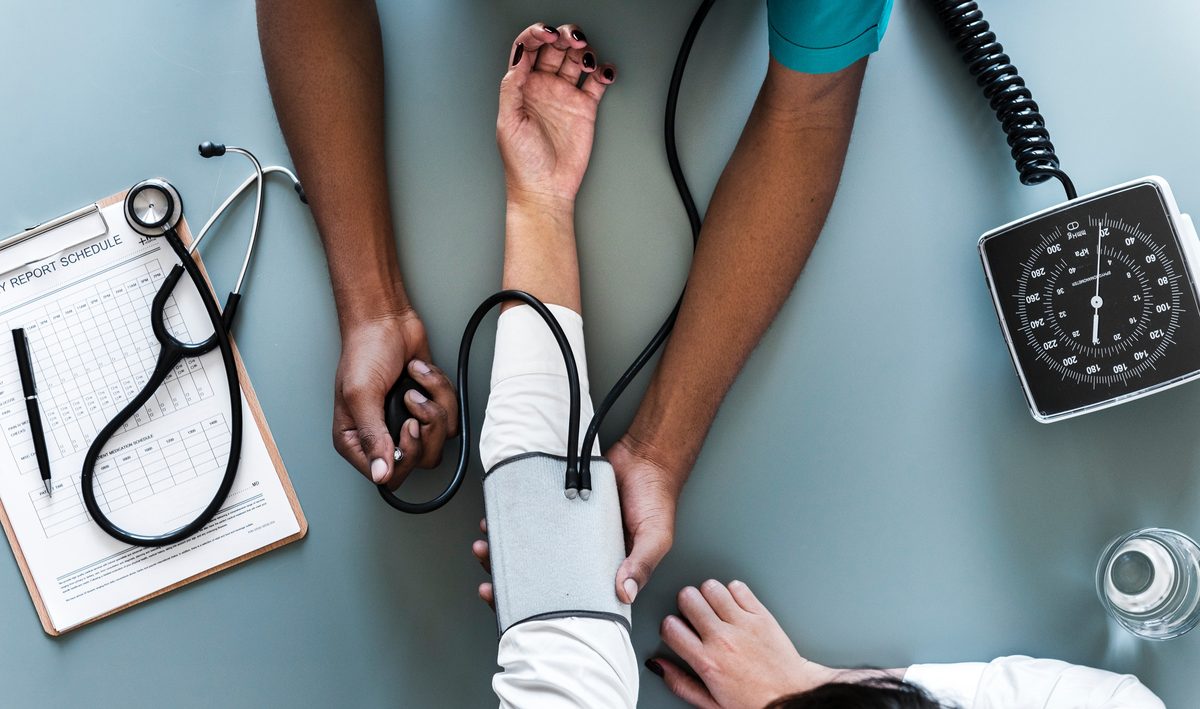
- Blood pressure monitoringWikimedia Commons · The photo, CC0 (rawpixel.com)
General information, not medical advice. This study shows an association, not that these amino acids raise blood pressure, and it does not mean you should cut down on cereals, beans or other protein foods. If you are worried about your blood pressure, have it checked and talk to your doctor or a registered dietitian before changing your diet or taking supplements.
Analysis by NutroPractic from the sources listed. Written for general readers; it does not replace advice from your own doctor.
From our articles
Our guides on this subject
Plain-language guides on nutrition and wellness, backed by research.
Indian kitchen
Dal and pulses in an Indian kitchen: protein, soaking, gas and blood sugar
A katori of dal gives about 6 to 10 g of protein, depending on how much raw dal goes in. What India's food tables and the ICMR-NIN 2024 guidelines say about rice with dal, how much soaking, sprouting and pressure cooking cut phytate and the sugars behind the gas, the GI of chana dal and rajma, raw rajma safety, and a worked plate for diabetes.
25 Oct 2026
Heart and blood pressure
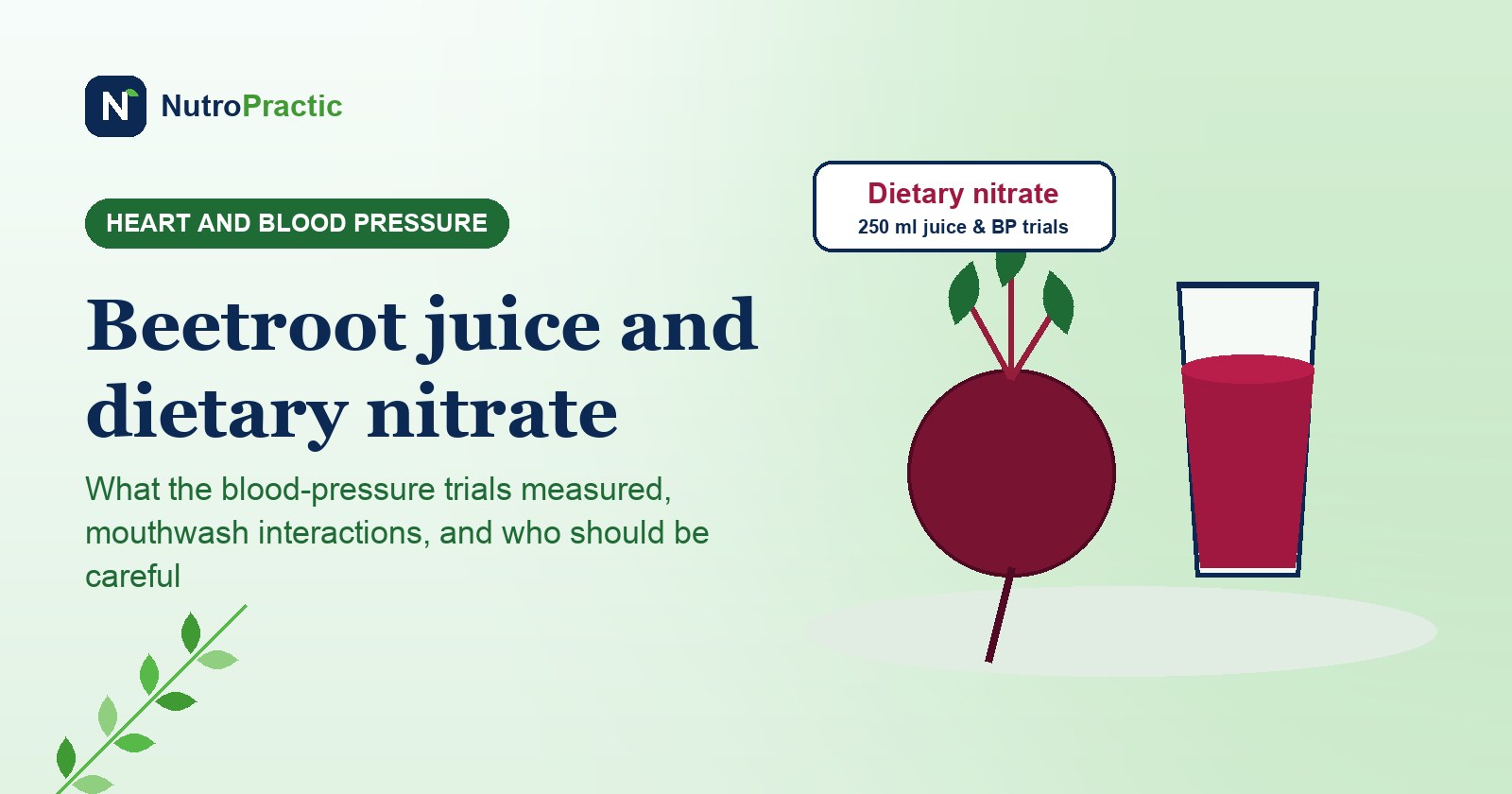
Beetroot juice and dietary nitrate: what the blood-pressure trials measured, and who should be careful
Drinking 250 ml of beetroot juice dropped clinic systolic blood pressure by 7.7 mmHg in 4-week clinical trials. Here is how tongue bacteria convert dietary nitrate to nitric oxide, why antiseptic mouthwash blocks it completely, and the oxalate kidney stone warning.
18 Nov 2026
Everyday eating
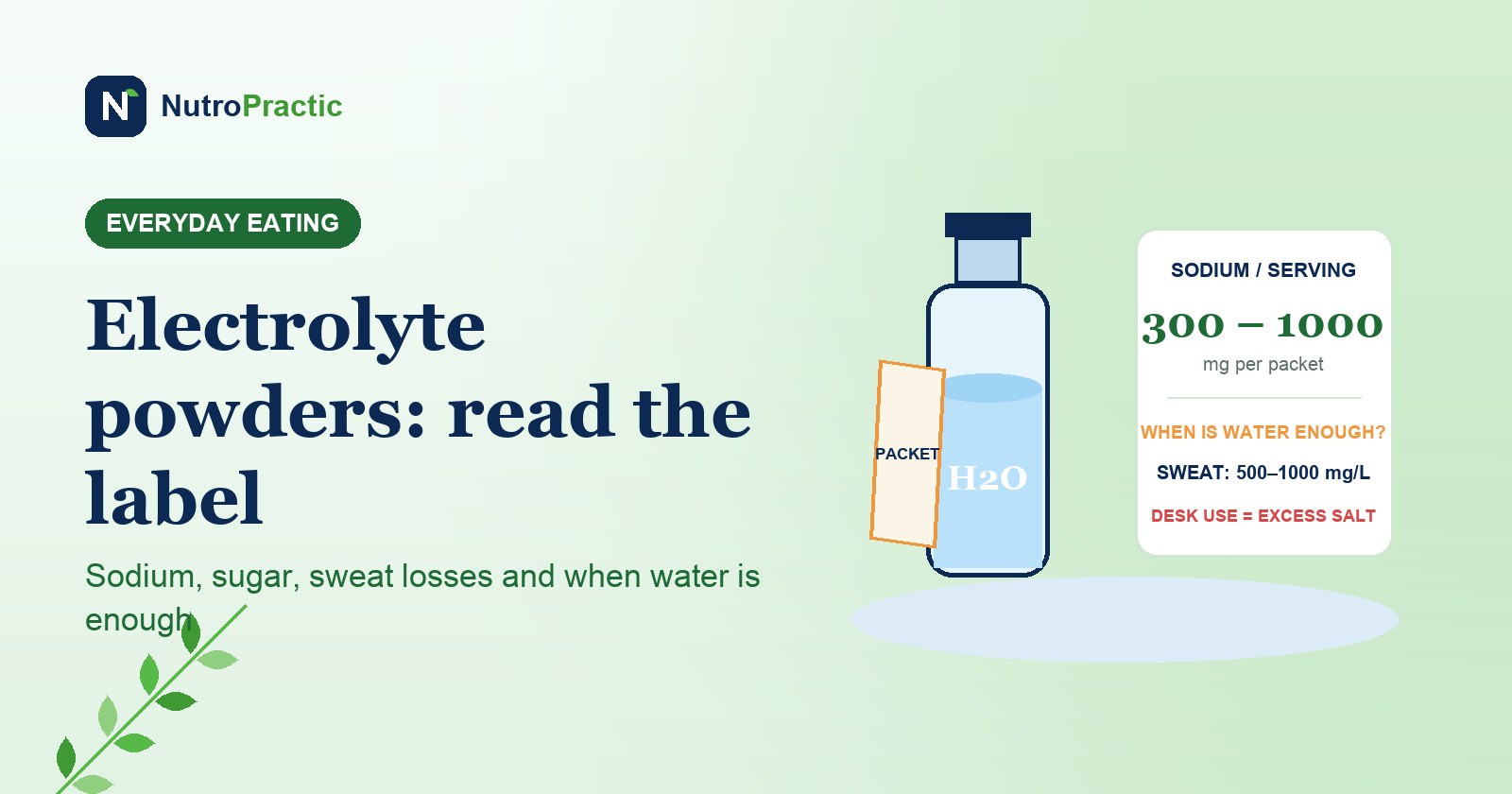
Electrolyte powders: sodium and sugar per bottle, and when water is enough
Packets deliver 300 to 1,000 mg sodium and up to 11 g sugar. Here is how popular drink mixes compare with actual sweat losses—and who actually needs them.
10 Nov 2026
Newsfeed for your website
Want this feed on your website?
Add it to any site with one copy-and-paste snippet. No sign-up, and it updates itself every hour.
Start with a virtual consultation
Tell Dr. Triveni what you want to change. You will leave with a clear next step, whether you are in Toronto, London, New York or Chennai.