Alcohol and health · November 5, 2026
Drinkers with obesity-related organ problems reported almost six times the alcohol: 11.1 g a day against 1.9 g. Then researchers looked at who was in each group
At a Portuguese obesity clinic the gap looked like a clean story about drink. The share of people drinking was the same on both sides, though, and once age, sex and BMI came in, the link was gone. It still doesn't let alcohol off the hook.
In 2025 a Lancet commission drew a new line through obesity. On one side is preclinical obesity: excess body fat with organs and daily function still intact. On the other is clinical obesity, where the fat is already linked to organ dysfunction or limits on everyday activities. The obvious next question is whether people on either side eat and drink differently. A study published on 3 November 2026 put that to 135 adults arriving for their first visit at an obesity clinic in Tomar, Portugal.
The number that jumps out concerns the people who drank. Among them, those with clinical obesity reported a median of 11.1 grams of alcohol a day, against 1.9 grams with preclinical obesity (p = 0.004). For scale, a US standard drink holds about 14 grams, so that is most of one drink a day against a few sips. Alcohol also made up 3% of their energy intake rather than 0.6%. Read alone, it invites a tidy story in which drink helps push obesity over the line.
Now look at who was in each group. The share who drank at all barely differed: 23 of 48 people with preclinical obesity and 42 of 87 with clinical obesity, about 48% each by our arithmetic from the paper's counts. Across everyone, including non-drinkers, the median was zero grams in both groups. But the clinical group was 12 years older on average (56 against 44), somewhat heavier (mean BMI 39.0 against 36.8) and held twice the proportion of men, 38% against 19%. That last detail matters, because men who drank reported a median of 21.5 grams a day and women who drank 2.4.
Splitting by sex shows why the pooled figure misleads. Women who drank averaged 2.2 grams a day with preclinical obesity and 8.3 with clinical obesity. Among men the means ran the other way, 36.6 and 30.8. When the authors adjusted for age, sex and BMI, alcohol intake was no longer linked to clinical obesity (adjusted odds ratio 0.990, 95% CI 0.969 to 1.011). The same thing happened with body shape: alcohol correlated with waist-to-hip ratio and body fat percentage until the same adjustment, and then neither link held.
Diet told a duller and perhaps more important story. Healthy Eating Index scores were almost identical, 49.3 and 49.5, and the authors' grading gave both totals an F. Energy intake (2,205 and 2,174 kcal) and fibre (16.7 and 17.0 g) were close too. Median scores for whole grains and sodium were zero in both groups. The one difference was a small one in protein, 18.5% of energy against 17.2%, which also showed per kilogram of current body weight but not per kilogram of ideal body weight. Whatever separates the two kinds of obesity, this snapshot didn't find it on the plate.
None of this clears alcohol. The comparison rests on 65 drinkers at one clinic, with intake recalled on a questionnaire, and people tend to under-report drinking. A single snapshot can't show which came first, and physical activity, medication and income weren't accounted for. Organ problems came from medical records rather than study blood tests, and liver disease wasn't assessed at all, so the study cannot speak to the place where alcohol and obesity may matter most. Nearly one man in four (23.8%) drank above the study's limit of 30 grams a day, and the authors still argue for alcohol screening across obesity care. What the paper does show is how easily a crude gap can come from who happens to be in each group.
The gap, and what happened to it
135
Adults at their first visit to one obesity clinic in Tomar, Portugal
11.1 vs 1.9 g/day
Median alcohol among drinkers, clinical versus preclinical obesity (p = 0.004)
48% vs 48%
Share who drank at all, clinical versus preclinical (42 of 87, 23 of 48; our calculation)
OR 0.990
Alcohol and clinical obesity after adjusting for age, sex and BMI; 95% CI 0.969–1.011, p = 0.345
38% vs 19%
Men as a share of the clinical and preclinical groups (33 of 87, 9 of 48; our calculation)
21.5 vs 2.4 g/day
Median alcohol among drinkers, men versus women
49.5 vs 49.3
Mean Healthy Eating Index score, clinical versus preclinical (p = 0.949)
23.8% vs 2.2%
Men and women above the study's limits of 30 g and 20 g of alcohol a day
A single-centre, cross-sectional study using an interviewer-administered food frequency questionnaire and the AUDIT alcohol screening test. Intake was self-reported. The 11.1 g and 1.9 g medians cover drinkers only (42 and 23 people); the median for all participants was 0 g in both groups. The paper reports sex-specific means against Portuguese national averages but does not test men or women directly across the two obesity groups.
- Beer made up the largest share of the alcohol reported, 45.1%, ahead of wine at 38.9% and spirits at 15.9%.
- Averages hid a long tail: the highest intake reported was 152.2 grams of alcohol a day, while the lowest among drinkers was 0.4 grams.
- On the AUDIT screening test, 124 of the 135 people (91.9%) scored as low-risk drinkers or abstainers. One scored as harmful drinking and one as probable dependence.
- Women who drank reported less than the national average for Portuguese women, 13.7 grams a day; men's figures were not statistically different from the national average of 26.1 grams.
- Nearly two-thirds of this clinic group, 64.4%, met the new criteria for clinical obesity. That reflects people referred to a specialist clinic, not obesity in general.
- The Healthy Eating Index measures how closely a diet follows the Dietary Guidelines for Americans, so here a US yardstick was applied to food recalled by Portuguese patients.
- Alcohol consumption and dietary quality among adults with clinical and preclinical obesity attending a specialized obesity clinic in Portugal: a cross-sectional studyFrontiers in Nutrition, 3 November 2026 · Primary study, open access under CC BY; design, tables, adjusted results and limitations checked against the full text. The drinking and male shares are our arithmetic from its counts.
- Definition and diagnostic criteria of clinical obesityThe Lancet Diabetes & Endocrinology · The commission report behind the clinical and preclinical categories, as cited by the study.
- What Is a Standard Drink?US National Institute on Alcohol Abuse and Alcoholism · Source for the 14 gram comparison. Standard drink sizes differ between countries.
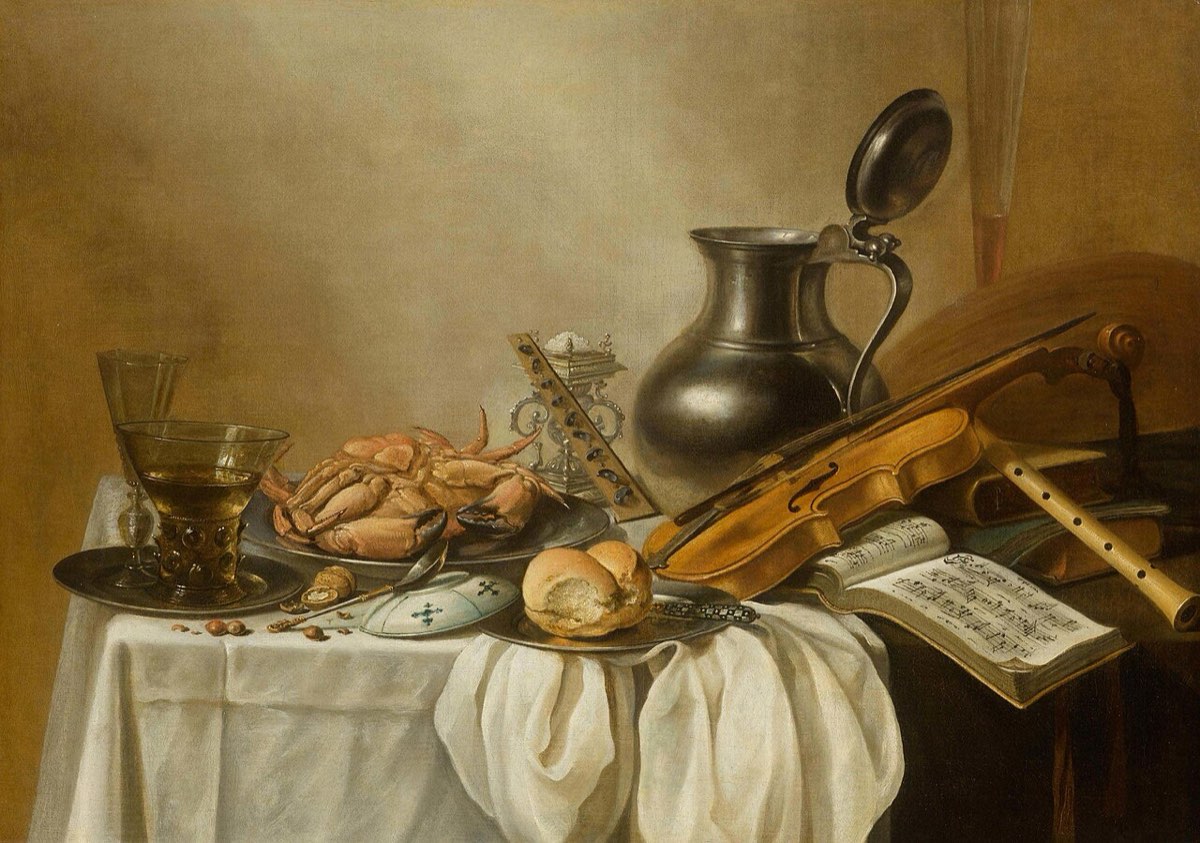
- Still life with rummer, wine glass, crab and bread on a platter, with a violin and a flute on a tableWikimedia Commons · Painting by Pieter Claesz, 1644, public domain; used as a general illustration and resized.
General information, not medical advice. This small, single-clinic snapshot does not show that alcohol is safe with obesity or that it causes obesity-related organ problems. If you have obesity, liver concerns or take regular medication, talk to your clinician about alcohol, and seek help if drinking feels hard to control.
Analysis by NutroPractic from the sources listed. Written for general readers; it does not replace advice from your own doctor.
From our articles
Our guides on this subject
Plain-language guides on nutrition and wellness, backed by research.
Liver health
Fatty liver (MASLD): how much weight loss reverses it, and what coffee and alcohol do
About one adult in three has a fatty liver, and most find out by accident on a scan. Biopsy studies show how much weight loss clears the fat, calms the inflammation and even shrinks scarring. Here are the numbers, what diet and drinks do, the new medicines and the one blood test worth asking for.
30 Oct 2026
Lifestyle
Alcohol-free beer, wine and mocktails: calories, sugar, and whether they help people drink less
A 0.0 lager has about half the calories of the regular one but more sugar, a juice-and-syrup mocktail can carry 37 g of sugar, and "alcohol-free" means 0.05% in the UK but under 0.5% in the US. What the labels say, and what pub, shop and Japanese trials found on whether these drinks cut how much alcohol people drink.
27 Oct 2026
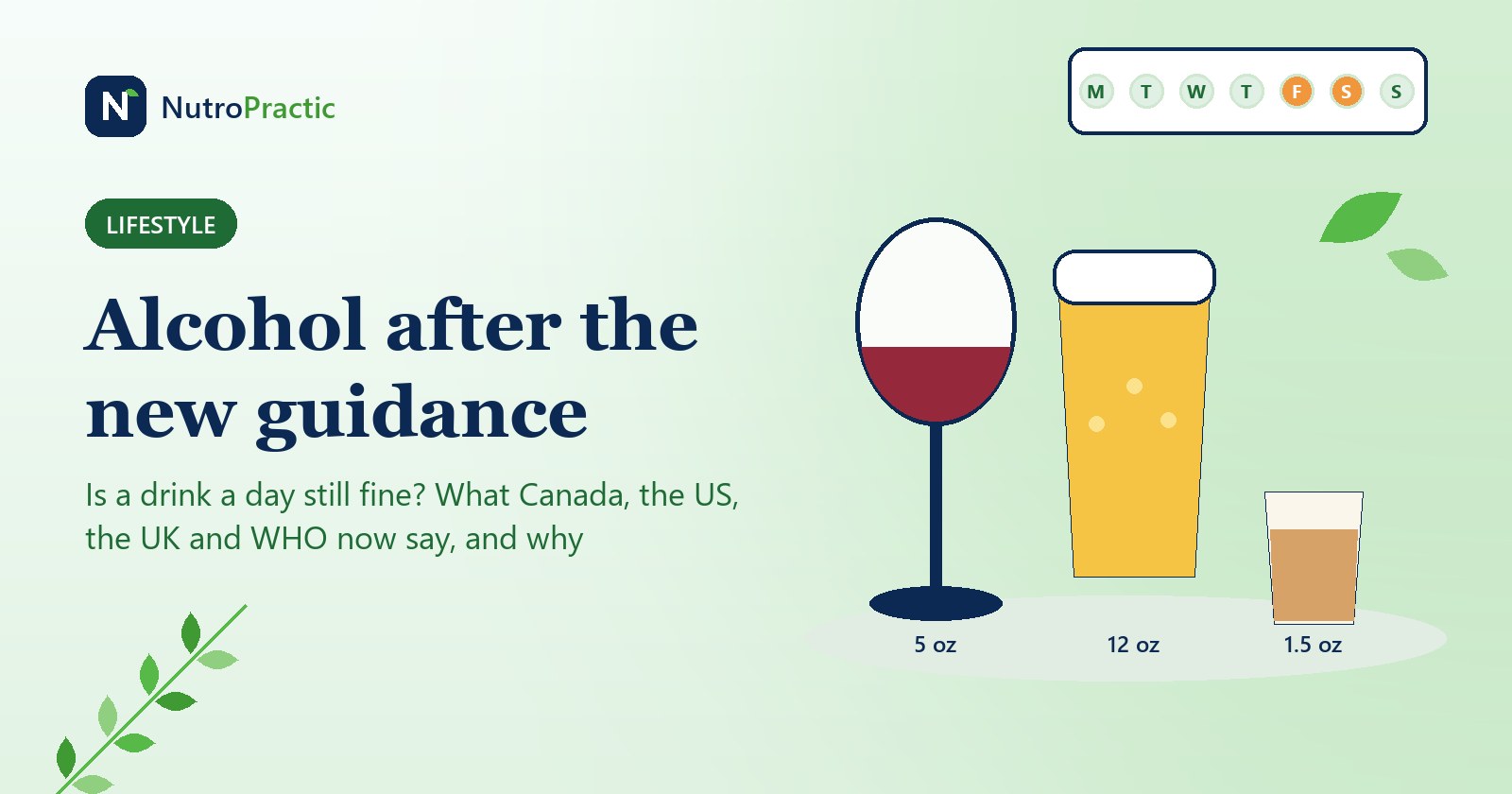
Lifestyle
Alcohol after the new guidance: is a drink a day still fine? What Canada, the US, the UK and WHO now say
Canada now calls two drinks a week low risk, the US Surgeon General linked alcohol to about 100,000 cancer cases a year, and the 2025-2030 US guidelines swapped their daily limits for "drink less". What the studies show about the J-curve, cancer, sleep and calories, with standard drinks by country.
23 Oct 2026
Newsfeed for your website
Want this feed on your website?
Add it to any site with one copy-and-paste snippet. No sign-up, and it updates itself every hour.
Start with a virtual consultation
Tell Dr. Triveni what you want to change. You will leave with a clear next step, whether you are in Toronto, London, New York or Chennai.