Healthy ageing · November 3, 2026
Two routine blood numbers taken on arrival tracked who was still alive three years after a broken hip
Multiply albumin by haemoglobin and you get a single score. In 947 older adults having hip-fracture surgery in Beijing, those in the top quarter of that score had about a quarter of the three-year death risk of those in the bottom quarter. It flags vulnerability, not a cure — but both halves point to things a care team can look at.
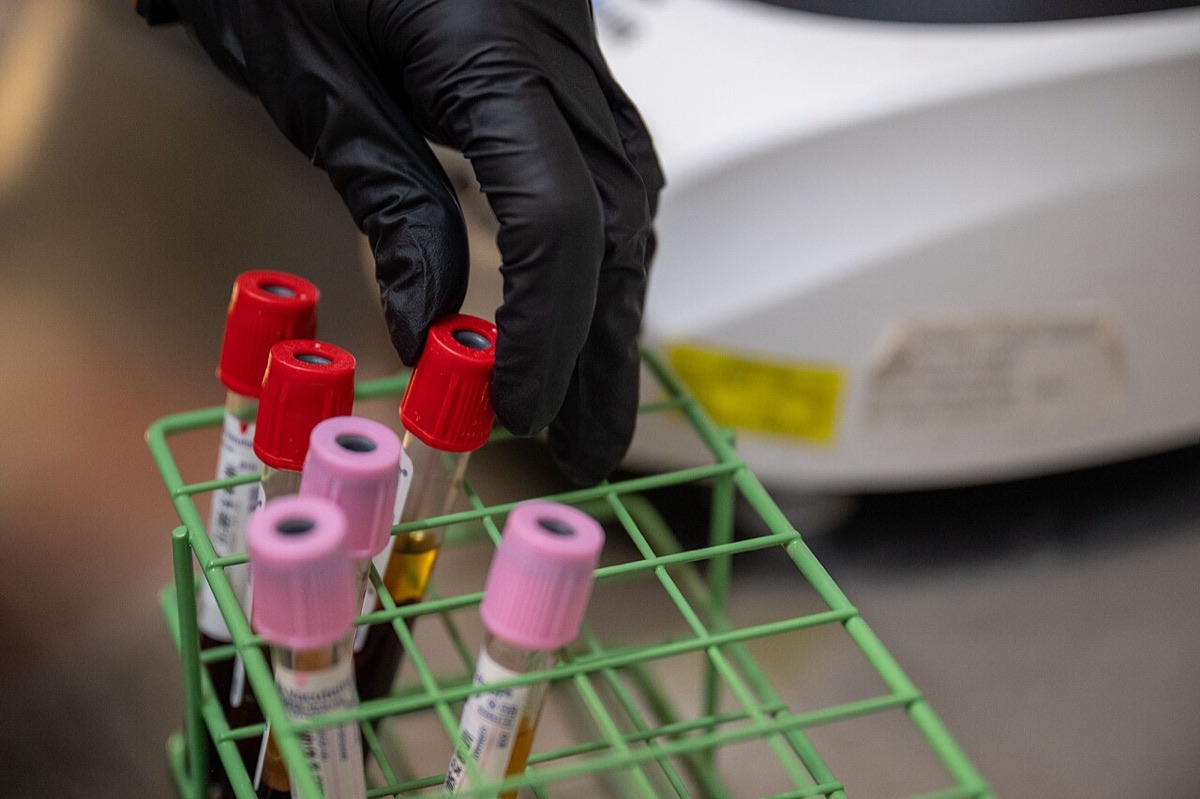
When an older person arrives at hospital with a broken hip, the emergency team draws blood almost straight away. Two of the numbers that come back are routine: albumin, a protein made by the liver that tends to fall with poor nutrition and inflammation, and haemoglobin, which falls with anaemia. A team at Beijing Jishuitan Hospital asked whether those two numbers, multiplied together, could say something about the years after surgery rather than just the days.
They went back to a prospective cohort of people aged 65 and over who had hip-fracture surgery between November 2018 and November 2019. Of 1,092 patients screened, 947 had both admission results and were included. The albumin–haemoglobin index (AHI) is simply albumin in grams per litre times haemoglobin in grams per litre, and the patients were split into four equal groups, from 3,925 or below at the bottom to above 5,357 at the top. Patients were followed at 30 days, 120 days, one year and three years.
The gradient was steady. After adjusting for age, sex, body mass index, diabetes, heart disease, cognitive impairment, mobility before the fall, fracture type, anaesthetic risk grade, time to surgery and more, each 1,000-point rise in the index went with a 43% lower risk of dying within three years (hazard ratio 0.57). Compared with the lowest quarter, the hazard ratios were 0.69, 0.45 and 0.28 for the next three. The curve showed no particular threshold, so the authors call the median value of 4,673 an exploratory cut-off, not a clinical one. Quality-of-life scores were similar across groups at admission, but the lowest group recovered least well at 30 days, 120 days, one year and three years.
The index also travelled with frailty. People in the lowest quarter were older on average (83 against 76 years in the top quarter), lighter, more often needed help walking before the fracture, more often had heart disease and cognitive impairment, waited longer for surgery and stayed in hospital longer. That is the main caution: a low score may mostly be a marker of someone who was already more fragile. This was a post hoc analysis from one hospital, the authors did not test whether the index beats albumin or haemoglobin alone, and later quality-of-life scores could only come from survivors.
Nothing here shows that raising either number improves survival. What it does suggest is practical: a cheap result that is already on the chart can point a team toward the patients who most need a nutrition assessment, a look at anaemia and closer follow-up. For families, it is a reasonable question to ask after a hip fracture — has anyone checked nutrition and blood count, and is there a plan for eating well during recovery?
Admission albumin–haemoglobin index and outcomes after hip-fracture surgery in 947 older adults, Beijing (Frontiers in Nutrition, 28 October 2026)
947
Patients aged 65+ analysed, of 1,092 screened (surgery November 2018 to November 2019)
Albumin × haemoglobin
How the index is calculated, both in g/L, from the first blood test on arrival
4,673
Median index; the lowest quarter was 3,925 or below, the highest above 5,357
0.57
Adjusted hazard ratio for three-year death per 1,000-point rise (95% CI 0.47 to 0.70)
0.28
Adjusted hazard ratio, highest vs lowest quarter (95% CI 0.16 to 0.49)
83 vs 76
Average age in years, lowest vs highest quarter
60% vs 42%
Patients with a prolonged hospital stay, lowest vs highest quarter
3.3 vs 2.7 days
Median time from injury to surgery, lowest vs highest quarter
Figures are from the article's abstract, Table 1 and Table 2. The analysis is a post hoc look at a single-centre prospective cohort (ClinicalTrials.gov NCT03184896); the number of deaths is not given in the text. The main model adjusted for age, sex, BMI, diabetes, housebound status, cognitive impairment, fracture type, ASA grade, mobility, heart disease, current drinking, time to surgery and education. The 4,673 cut-off is the sample median, not a validated threshold. The study was funded by a Beijing talent support programme; the authors declare no commercial conflicts. Published under CC BY.
- With an albumin of 40 g/L and a haemoglobin of 120 g/L, the index works out at 4,800 — just above the median in this study. Labs report these in different units in different countries, so the numbers only line up when both are in grams per litre.
- Albumin is not a pure nutrition marker. It also falls during inflammation and illness, and with liver disease, which is one reason the authors describe the index as a sign of overall physiological reserve.
- Women made up 72% of the patients, and almost all (97%) had osteoporosis recorded — a reminder that most hip fractures in older age are fragility fractures from a simple fall.
- Quality of life was measured with the EQ-5D, a five-question survey covering mobility, self-care, usual activities, pain and anxiety or low mood.
- An earlier study from another team had linked the same index with one-year survival after hip fracture; this one extends the follow-up to three years.
- Association of the admission albumin-hemoglobin index with postoperative outcomes in older adults with hip fracture: a post-hoc analysis of a prospective studyFrontiers in Nutrition, 28 October 2026 · Original article (open access, CC BY); methods, baseline table, Cox models and limitations.
- Full textFrontiers · Tables 1 and 2 with the quartile figures quoted here.
- 378th EMDS hosts Walking Blood Bank Pre-screeningWikimedia Commons · Public-domain U.S. Air Force photograph, used as a general illustration.
General information, not medical advice. This study shows an association in one hospital's patients, not that changing albumin or haemoglobin changes survival. Care after a hip fracture, including nutrition and treatment of anaemia, should be planned with the treating team.
Analysis by NutroPractic from the sources listed. Written for general readers; it does not replace advice from your own doctor.
From our articles
Our guides on this subject
Plain-language guides on nutrition and wellness, backed by research.
Healthy ageing
Creatine beyond the gym: what it does for older adults and women, and what it doesn't
Across 22 trials, adults in their late fifties to seventies who took creatine while doing resistance training gained about 1.4 kg more lean mass than those who trained without it. Two two-year trials found it did nothing for bone density after menopause. Where the evidence is solid, where it's early (memory, short nights), how much to take, and who should leave it alone.
10 Oct 2026
Women's health
Eating through menopause: what changes for your bones, muscle and heart, and what to put on the plate
Around the final period, bone density at the spine drops by about 2% a year and LDL cholesterol jumps within a year or two. Hot flushes get the attention, but these quieter changes are where food and strength training do the most. Targets for protein, calcium and vitamin D, an honest look at soy, and a week you can start on Monday.
8 Oct 2026
Weight-loss medicines
Eating on Ozempic, Wegovy or Mounjaro: protein first, so the weight you lose isn't your muscle
GLP-1 medicines shrink your appetite, and with it often your protein. In the big trials a quarter to more than a third of the weight lost was lean mass. What the 2025 joint nutrition advisory recommends, the arithmetic for your own target, and four small plates that get there.
8 Oct 2026
Newsfeed for your website
Want this feed on your website?
Add it to any site with one copy-and-paste snippet. No sign-up, and it updates itself every hour.
Start with a virtual consultation
Tell Dr. Triveni what you want to change. You will leave with a clear next step, whether you are in Toronto, London, New York or Chennai.