Skin health · October 30, 2026
Young adults with acne at a Turkish skin clinic ate fewer vegetables and more butter than those without. The sugary-carb score that usually gets the blame was the same in both groups
Researchers in Aydın compared three-day food diaries from 115 people with acne and 164 without. Half as many in the acne group managed two servings of vegetables a day, and their Mediterranean diet scores were a point lower. The glycaemic index of their diets, the usual suspect, didn't differ at all, and one result went the opposite way to what anyone expected.
Ask anyone with acne what they've been told to cut out and the list is usually sugar, white bread and milk. The idea behind it is that fast-digesting carbohydrates push up insulin and a growth hormone called IGF-1, which in turn drive oil production in the skin. A case-control study published in the Journal of Cosmetic Dermatology on 28 October looked at that idea alongside a broader one: whether the overall shape of the diet, measured as closeness to a Mediterranean pattern, sets people with acne apart.
The researchers, a dietitian and a dermatologist at Aydın Adnan Menderes University in western Turkey, recruited 115 people with acne from the university hospital's dermatology clinic and 164 people without acne who attended the same clinic over the same period. Both groups averaged about 23 years of age, 87% were women, and their body mass index was similar (about 22 to 23). Every participant kept a food diary for two weekdays and one weekend day and answered the 14-question Mediterranean Diet Adherence Screener, which scores a point for each habit met, such as olive oil as the main fat, two servings of vegetables a day or less than one serving of butter, cream or margarine. One dermatologist graded the severity of every acne case without seeing the diet data.
The acne group scored lower on the Mediterranean screener: 5.97 out of 14 against 7.02. Two thirds of them (67.0%) fell below the cut-off of 7 that the Turkish version uses for adherence, against 42.7% of the people without acne. After adjusting for age, sex, BMI, education and supplement use, each extra point on the screener went with about 19% lower odds of being in the acne group. Of the 14 habits, only two still differed once the researchers corrected for testing so many at once. Just 33.0% of the acne group ate two or more servings of vegetables a day, against 64.6% of the others, and 40.9% kept butter, cream or margarine under one serving a day, against 64.0%. Missing the vegetable mark went with about 3.2 times the odds of acne, and missing the butter mark about 2.4 times.
The glycaemic index of the diet, worked out from the food diaries, was almost identical: 57.6 in the acne group and 57.7 in the others, and it showed no link with acne after adjustment. The surprise was the dietary antioxidant score, an estimate of the antioxidant capacity of the food eaten: it was higher in the acne group (3.74 against 3.02 mmol a day) and stayed weakly linked to acne after adjustment. The authors are clear that this doesn't mean antioxidants cause spots. People who already have acne often change what they eat after reading about it, so a food diary may record the reaction to acne rather than its cause.
That reverse-causation problem applies to the whole study. Diet was recorded after the acne had appeared, so the lower vegetable intake could be a cause, a consequence or a sign of something else entirely. Education differed between the groups (30.4% of the acne group had a high-school education or less, against 13.4%) and was itself linked to acne; the diet findings held after adjusting for it. Hormones, oral contraceptives, stress, sleep, exercise and past acne treatments were not measured. Three days of diaries is a short window, some glycaemic index values had to be estimated, and the butter item lumps three foods together. Within the acne group, none of the 14 habits differed between mild and moderate-to-severe cases, though with 37 and 78 people that comparison had little power. The authors reported no funding and no competing interests.
How does this fit with earlier work? The best-known diet trial for acne, from Melbourne in 2007, put 43 young men on a low-glycaemic-load diet or a carbohydrate-heavy one for 12 weeks; total lesion counts fell by 23.5 on the low-glycaemic diet against 12.0 on the control, though that group also lost about 3 kg, which muddies the picture. A 2025 meta-analysis found that closer adherence to a Mediterranean diet went with milder acne. The Aydın study doesn't settle anything on its own, but it points to a pattern worth testing in a trial: more vegetables and less butter and cream, rather than a fixation on single foods.
Associations of Mediterranean Diet Adherence, Dietary Glycemic Index, and Antioxidant Intake With Acne Vulgaris: A Case–Control Study in Young Adults (Journal of Cosmetic Dermatology, 2026)
115 vs 164
Young adults with acne and without acne, recruited at the same university hospital dermatology clinic in Aydın, Turkey
5.97 vs 7.02
Average Mediterranean diet score (out of 14) in the acne group and in the group without acne
33.0% vs 64.6%
Share eating at least two servings of vegetables a day, acne group against no-acne group
3.2 times
Adjusted odds of acne for those who missed the two-servings vegetable mark (95% CI 1.9 to 5.6)
57.6 vs 57.7
Average dietary glycaemic index in the two groups; no link with acne after adjustment
19%
Lower adjusted odds of acne for each extra point on the Mediterranean diet score (odds ratio 0.806)
Single-centre case-control study, observational, so it shows associations and not cause and effect. Diet from three-day food records (two weekdays, one weekend day) analysed with BeBiS software; Mediterranean Diet Adherence Screener (MEDAS, Turkish version, adherent at 7 or more). Odds ratios from logistic regression adjusted for age, BMI, sex, education and vitamin or mineral supplements. The 14 MEDAS items were compared with Holm correction; only the vegetable and butter/cream/margarine items stayed significant. Acne severity graded with the Global Acne Grading System by one dermatologist blinded to diet. Figures from the open-access article (CC BY 4.0), tables 1 to 4.
- The study's authors cite an estimated global acne prevalence of about 9.4%, and figures of 80% to 100% for people aged 11 to 30 who have acne at some point.
- In the 2007 Melbourne trial, the low-glycaemic-load diet got 25% of its energy from protein and 45% from low-glycaemic carbohydrates, and insulin sensitivity improved along with the skin.
- Vitamin and mineral supplements were half as common in the acne group (12.2%) as in the group without acne (25.0%) in the Aydın study, though supplement use wasn't linked to acne once other factors were taken into account.
- Olive oil as the main fat was just as common in both groups (about 76%), so the Mediterranean gap came from vegetables and dairy fats, not the oil.
- Associations of Mediterranean Diet Adherence, Dietary Glycemic Index, and Antioxidant Intake With Acne Vulgaris: A Case–Control Study in Young AdultsJournal of Cosmetic Dermatology (Wiley) · The study, published 28 October 2026 (open access, CC BY 4.0); figures from the abstract, tables 1 to 4, the discussion, limitations, funding and conflict-of-interest statements
- Full text on PubMed Central (PMC13715055)U.S. National Library of Medicine · Open-access copy of the article with the full tables
- A low-glycemic-load diet improves symptoms in acne vulgaris patients: a randomized controlled trialAmerican Journal of Clinical Nutrition · The 2007 Melbourne trial of 43 young men (lesion counts, weight and insulin sensitivity figures from the abstract)
- The Mediterranean Diet and Acne Vulgaris: A Systematic Review and Meta-AnalysisNutrition & Metabolism (BMC) · The 2025 meta-analysis cited by the study's authors on adherence and acne severity
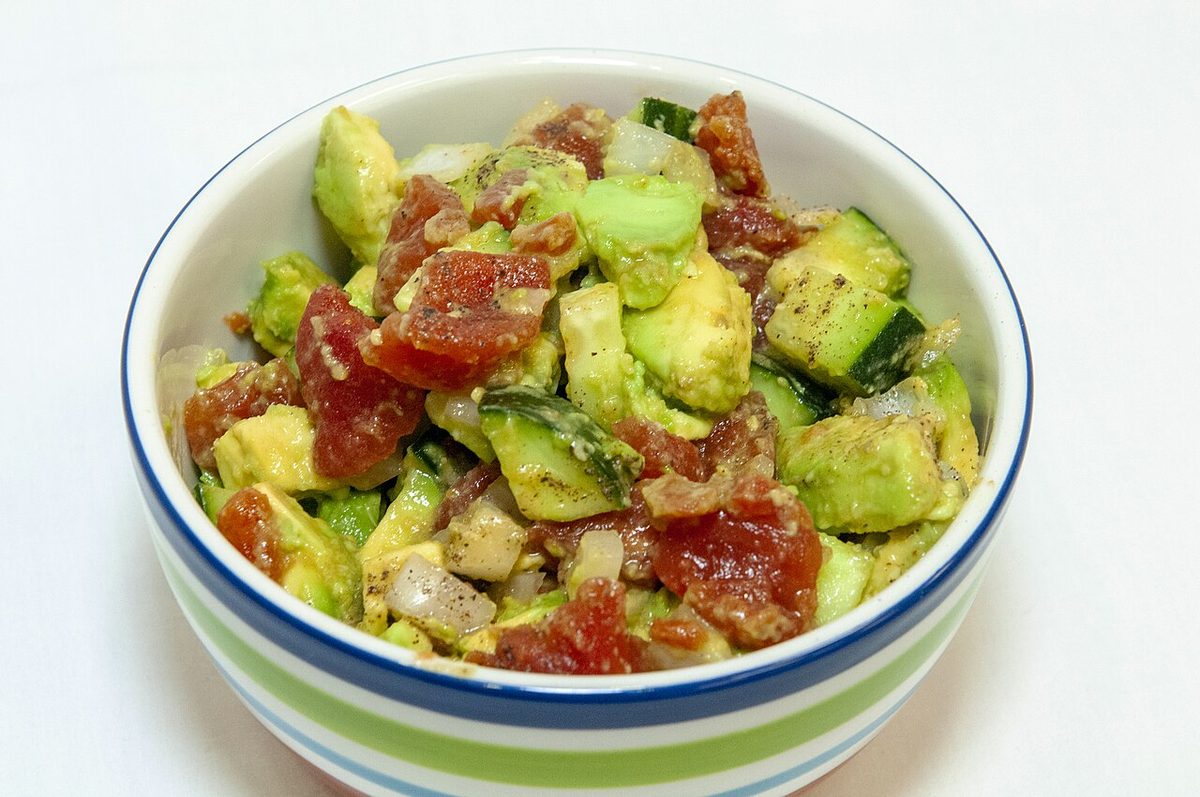
- Cucumber, Tomato and Avocado SaladWikimedia Commons · The image, CC0 (Alabama Extension); an illustration, not food from the study
General information, not medical advice. This was an observational study in one Turkish clinic and can't show that eating more vegetables or less butter will clear acne. If acne is affecting your skin or your mood, see a doctor or dermatologist: effective treatments exist, and a registered dietitian can help if you want to look at your diet too.
Analysis by NutroPractic from the sources listed. Written for general readers; it does not replace advice from your own doctor.
From our articles
Our guides on this subject
Plain-language guides on nutrition and wellness, backed by research.
Nutrition science
Sweeteners after the WHO advice: aspartame, stevia, erythritol and what the 2023 decisions meant
In 2023 the WHO advised against using sweeteners to control weight, and its cancer agency called aspartame 'possibly carcinogenic' a few weeks later. Neither means your diet drink is dangerous, and neither means it helps. What the reviews found, how much is allowed, why erythritol is the one to watch, and what to do if you have diabetes or simply want less sugar.
18 Oct 2026
Diabetes
Potatoes and blood sugar: boiled, cooled, mashed or fried, and what the cohorts and trials found
Fries were linked to 20% higher diabetes risk per three servings a week in 205,000 US adults; boiled, baked and mashed potatoes to almost none. GI by cooking method, resistant starch in grams after chilling, the glycaemic load of a potato against a cup of rice, and how to fit aloo into an Indian plate.
30 Oct 2026

Children's nutrition
Picky eaters aged 2 to 8: what feeding studies show works at the table
Fussy eating peaks between two and six and is usually a normal stage, not a parenting failure. Feeding trials show what moves it: small repeated tastes, eating together, no pressure and the right kind of reward. Here is how to use them, and the signs that mean it's more than picky eating.
30 Oct 2026
Newsfeed for your website
Want this feed on your website?
Add it to any site with one copy-and-paste snippet. No sign-up, and it updates itself every hour.
Start with a virtual consultation
Tell Dr. Triveni what you want to change. You will leave with a clear next step, whether you are in Toronto, London, New York or Chennai.