Healthy ageing · October 25, 2026
Low on zinc at 78: in a year-long Boston trial, 60 mg a day brought every nursing home resident who finished it back to a normal blood level within eight months, while 30 mg a day worked for fewer than half
Tufts researchers tested 276 nursing home residents around Boston and found 105 with low blood zinc. Given a daily capsule of 30 mg or 60 mg of zinc or a comparison capsule for a year, all 30 people who finished on 60 mg reached a normal level by month 8, against 13 of 28 on 30 mg and none in the comparison group. Copper levels held steady. Coughs and fevers were reported less often on zinc, but that was a side question in a small dose-finding study.
Older people living in nursing homes are especially prone to pneumonia, and earlier work by a team at the USDA Human Nutrition Research Center on Aging at Tufts University in Boston found that residents with low blood zinc got pneumonia more often and stayed ill longer. Before testing whether zinc can actually prevent pneumonia, the team needed to know how much zinc it takes to fix a deficiency in the first place: a three-month study at 30 mg a day had left 42% of the zinc group still short. Their answer, a one-year double-blind trial, came out in Frontiers in Nutrition on 16 October.
Between May 2022 and June 2024 they screened 276 long-stay residents aged 65 and over in nursing homes within about an hour's drive of Boston. Some 38% had serum zinc below 70 micrograms per decilitre, the usual cut-off for deficiency, and those 105 people were enrolled: average age about 78, most of them Black, with a normal average BMI of about 24. They were split at random into three groups of 35. Everyone got one capsule a day with half the recommended daily amount of the essential vitamins and minerals; in the comparison group that included 5 mg of zinc, and the other two capsules carried 30 mg or 60 mg of zinc, as zinc gluconate. Nurses gave the capsules with the morning medicines. Every capsule also held 0.8 mg of copper, because large doses of zinc can block copper absorption.
Twenty-one people dropped out by month 4, 19 of them because COVID-19 outbreaks shut the researchers out of nursing homes, so 26, 28 and 30 people finished in the three groups. Average serum zinc in the 60 mg group rose from 56 to 81 by month 8 and 83 by month 12; in the 30 mg group it went from 55 to 70 and then 72, and in the comparison group it stayed around 54 to 57. At four months only 8 of 30 on 60 mg and 4 of 28 on 30 mg had crossed the 70 line. By eight months all 30 on 60 mg had, against 13 of 28 on 30 mg, and the 30 mg group got no further in the last four months. Nobody in the comparison group reached a normal level at any point.
Copper, iron, calcium and potassium did not change differently between the groups, and no moderate or severe side effects were reported; two people on 30 mg stopped because the capsule was too big or tasted bad. BMI fell a little on zinc (from 24.1 to 23.4 on 60 mg and 24.0 to 23.7 on 30 mg) while it rose from 23.9 to 24.6 in the comparison group. The authors say the fall is well short of what counts as worrying weight loss in nursing homes, but they did not measure whether it was fat or muscle. Residents were also asked about symptoms every two weeks, 27 times in all: coughs were reported more often in the comparison group at 9 of those checks and fevers at 5.
Some cautions. This was a dose-finding pilot, sized to compare how many people reached a normal zinc level, not to show fewer infections, and the cough and fever counts were self-reported rather than diagnosed. Only people who stayed in were counted at 4, 8 and 12 months. All the homes were in one area. Serum zinc is the best available test but not a perfect measure of the body's zinc. And 60 mg a day is half as much again as the 40 mg upper limit US health agencies set for adults; the authors stress that limit is meant for people with normal zinc, and here the dose was given with added copper to people tested as deficient, by nurses. It is not a dose to take on your own. The study was paid for by the US National Heart, Lung, and Blood Institute, and the authors declare no conflicts of interest. A larger trial testing whether 60 mg a day cuts pneumonia is the next step they propose.
Zinc 30 mg vs 60 mg a day vs comparison capsule for 12 months, 105 zinc-deficient nursing home residents, Boston (published 16 October 2026)
38%
Share of 276 screened residents with low serum zinc (under 70 µg/dL)
30 of 30
People who finished on 60 mg a day with a normal zinc level by month 8, and still at month 12
13 of 28
People on 30 mg a day with a normal zinc level at months 8 and 12 (46%)
0 of 26
People on the comparison capsule (5 mg zinc) who reached a normal level at any visit
56 to 83
Average serum zinc in µg/dL on 60 mg, start to month 12 (30 mg: 55 to 72; comparison: 57 to 54)
No change
Serum copper did not shift differently between groups; no moderate or severe side effects
Source: Ortega EF, Yao JH, Guo W, Boehm SK, Ergil E, Wu D, Meydani SN, Panda A, 'Correcting zinc deficiency in nursing home residents: a randomized trial comparing 30 and 60 mg/day elemental zinc supplementation', Frontiers in Nutrition 2026;13:1935770, published 16 October 2026 (received 12 July, accepted 15 September), doi 10.3389/fnut.2026.1935770, open access (CC BY). Nutritional Immunology Laboratory, JM USDA Human Nutrition Research Center on Aging, Tufts University, Boston. Registered as NCT05527899. Randomised, placebo-controlled, double-blind, 12 months; recruitment May 2022 to June 2024 from nursing homes near Boston. 276 screened, 105 with serum zinc under 70 µg/dL randomised (35 per group); 21 lost by month 4 (19 because of COVID-19 restrictions, 2 pill size or taste, both in the 30 mg group); 26 / 28 / 30 analysed. Age 77.5 / 78.1 / 78.3 years; BMI about 24; about 85% Black. All capsules held half the RDA of essential micronutrients (5 mg zinc in the comparison arm) and 0.8 mg copper; zinc as gluconate. Serum zinc (µg/dL), comparison / 30 mg / 60 mg: baseline 57.2 / 55.4 / 56.3; month 4 55.6 / 63.5 / 68.3; month 8 54.7 / 70.3 / 81.4; month 12 54.2 / 72.4 / 83.1. Number at or above 70: month 4 0 / 4 / 8; month 8 0 / 13 / 30; month 12 0 / 13 / 30. Serum copper baseline 96.3 / 92.4 / 98.2, month 12 101.0 / 112.8 / 111.8 (no significant group-by-time effect); zinc change vs copper change Spearman rho 0.09. BMI baseline 23.9 / 24.0 / 24.1, month 12 24.6 / 23.7 / 23.4. Cough reported more often in the comparison group at 9 of 27 two-weekly checks, fever at 5, chills at 1 (adjusted p < 0.05), self-reported and exploratory. Funded by NIH NHLBI grant R34HL153277; no conflicts of interest declared. 60 mg vs the US adult upper limit of 40 mg: our comparison.
- US health agencies recommend 11 mg of zinc a day for adult men and 8 mg for adult women, and set the upper limit for adults at 40 mg a day from all sources. That limit is based on zinc's effect on copper, the same worry this trial checked for.
- Oysters carry more zinc per serving than any other common food. Red meat, poultry, crab and lobster are other good sources, while the zinc in wholegrains and beans is less well absorbed because they also contain phytates, which bind it.
- Too much zinc over a long time can cause copper deficiency, which in turn can lead to anaemia and nerve problems. That is why every capsule in this trial included 0.8 mg of copper.
- Correcting zinc deficiency in nursing home residents: a randomized trial comparing 30 and 60 mg/day elemental zinc supplementationFrontiers in Nutrition · The study, open access, published 16 October 2026; figures from its full text and tables
- Trial registration NCT05527899ClinicalTrials.gov · The trial's registry entry
- Zinc: Fact Sheet for Health ProfessionalsNIH Office of Dietary Supplements · Recommended amounts, upper limit, food sources and copper interaction
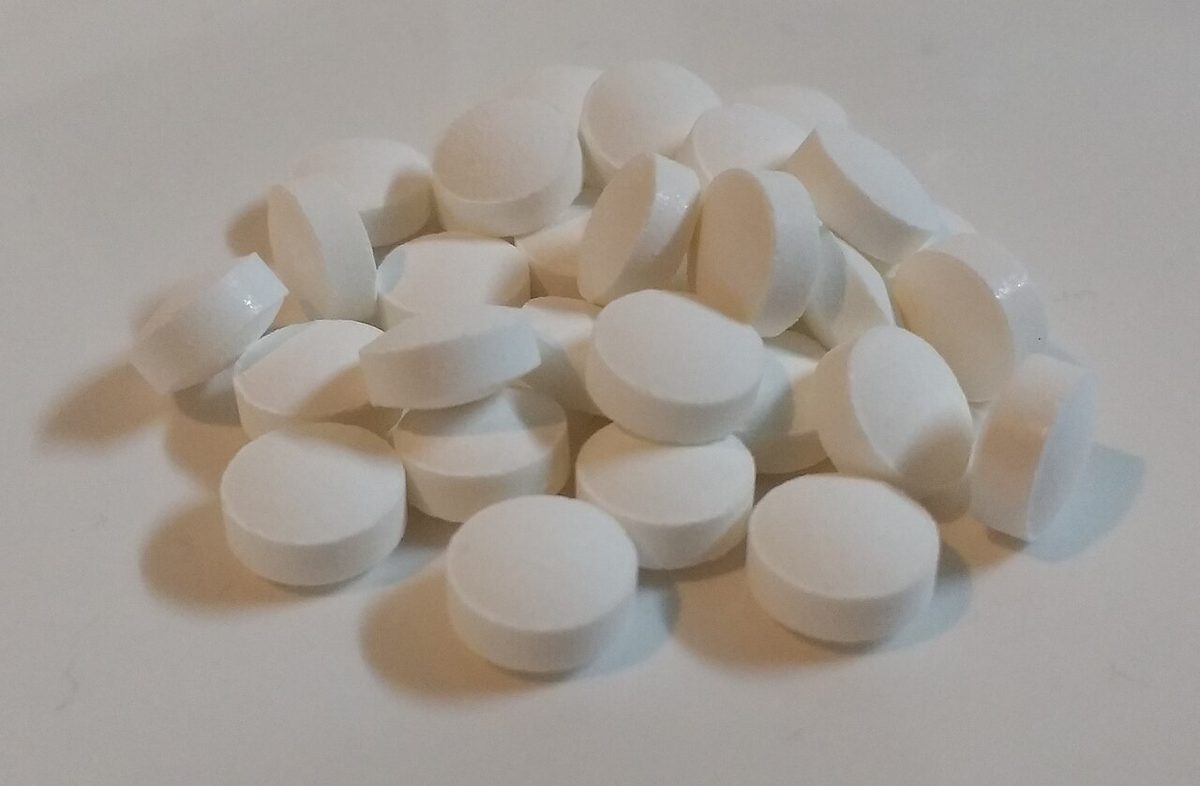
- Zinc pills (Mx. Granger, 2019)Wikimedia Commons · The photo, CC0
General information, not medical advice. The 60 mg dose in this trial is above the usual upper limit for adults and was given only to people tested as zinc-deficient, with added copper, by nursing staff. Don't take high-dose zinc on your own; if you or an older relative may be low in zinc, ask a doctor about a blood test first.
Analysis by NutroPractic from the sources listed. Written for general readers; it does not replace advice from your own doctor.
From our articles
Our guides on this subject
Plain-language guides on nutrition and wellness, backed by research.
Women's health
Eating through menopause: what changes for your bones, muscle and heart, and what to put on the plate
Around the final period, bone density at the spine drops by about 2% a year and LDL cholesterol jumps within a year or two. Hot flushes get the attention, but these quieter changes are where food and strength training do the most. Targets for protein, calcium and vitamin D, an honest look at soy, and a week you can start on Monday.
8 Oct 2026
Supplements and vitamins
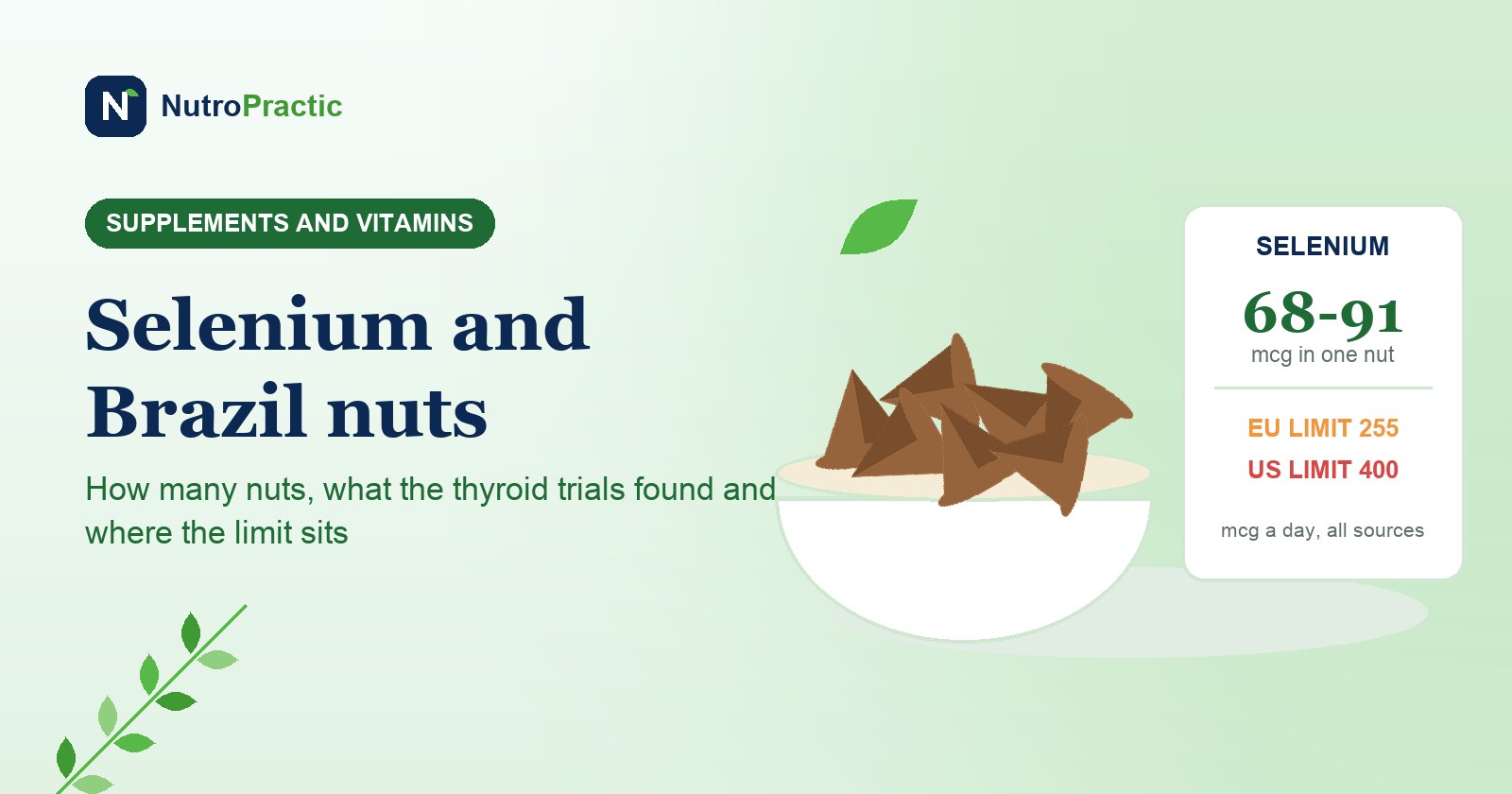
Selenium: how many Brazil nuts, what the thyroid trials found, and where the upper limit sits
One Brazil nut holds 68 to 91 mcg of selenium on average, against a 255 mcg European ceiling. A table of nuts per day, what the Hashimoto trials measured, and why more is not better.
14 Nov 2026
Supplements and vitamins
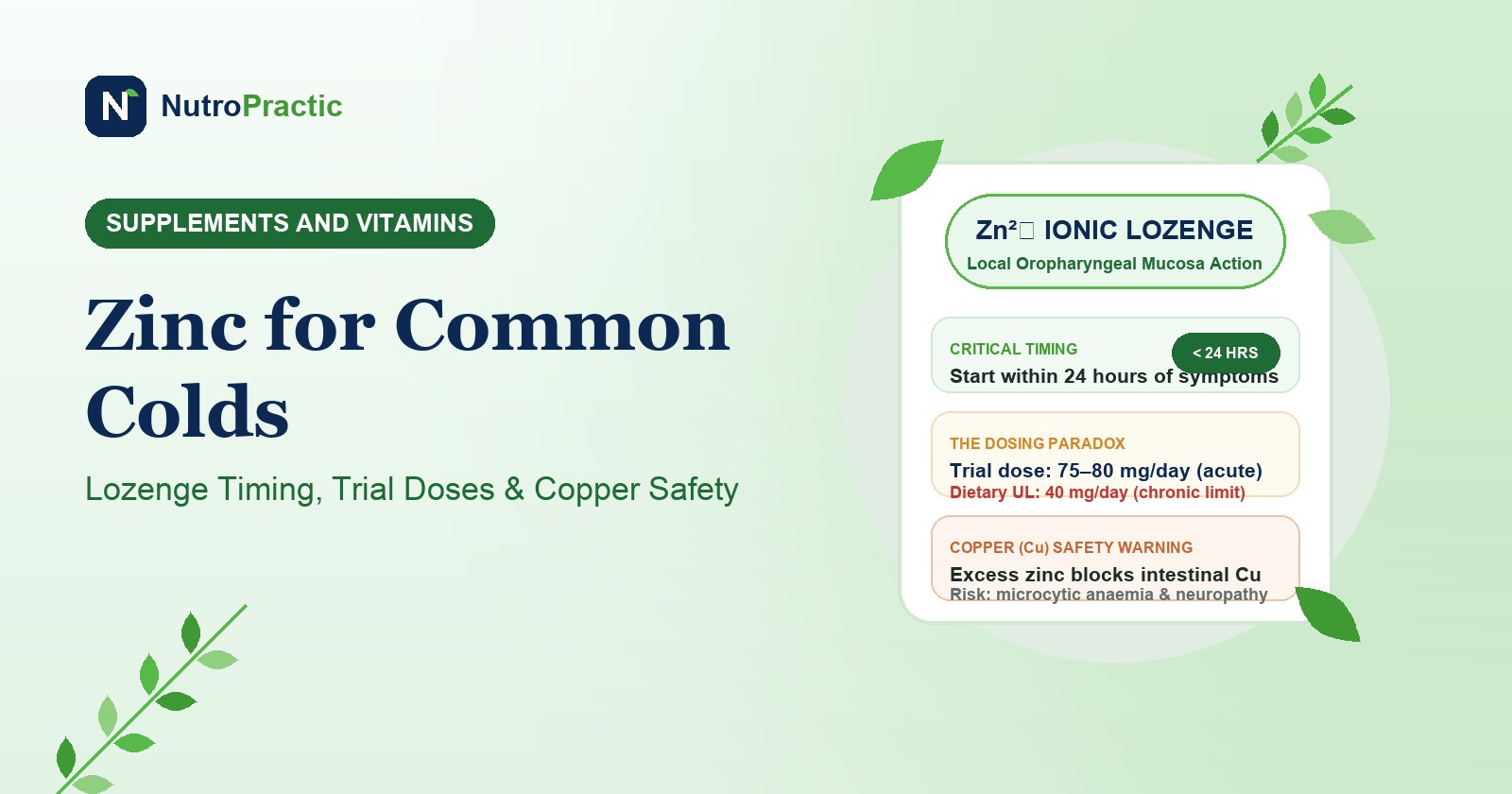
Zinc for common colds and immunity: trial doses, lozenge timing, and why 40 mg+ depletes copper
Randomized controlled trials confirm that zinc lozenges can reduce common cold duration by roughly 33%, but only when started within the first 24 hours of symptoms. Achieving this clinical effect requires doses of 75 to 80 mg daily of ionic zinc dissolved in the mouth—well above the 40 mg tolerable upper intake level. Here is the evidence on lozenge formulations, delivery timing, and why sustained high doses induce severe copper deficiency.
13 Nov 2026
Newsfeed for your website
Want this feed on your website?
Add it to any site with one copy-and-paste snippet. No sign-up, and it updates itself every hour.
Start with a virtual consultation
Tell Dr. Triveni what you want to change. You will leave with a clear next step, whether you are in Toronto, London, New York or Chennai.