Diabetes · November 1, 2026
A year of nutrition classes, measuring cups included. In 33 older adults with diabetes or prediabetes, blood sugar did not budge, but body fat slipped
The classes at a public clinic in Brasília were built around 'eating competence': enjoying food, trusting hunger and planning meals rather than following a list of banned foods. The overall score hardly moved. One part of it did line up with who lost fat.
Most diet advice for diabetes arrives as a list of things to cut. A team at the University of Brasília tried something softer with older patients at a public primary care unit in Ceilândia, a satellite city of Brasília: a year of group sessions built on the idea of 'eating competence', which asks whether people enjoy food, are willing to try new things, notice their own hunger and fullness, and can plan and put together meals. Their results were published in the journal Nutrients on 30 October.
The clinic's records listed 187 patients aged 60 or over with type 2 diabetes or prediabetes. After phone calls and the exclusions (insulin users, people with diabetes complications or memory problems), 38 enrolled and 33 finished: 19 with diabetes and 14 with prediabetes, 29 of them women, most retired and with little schooling. Each got a kit of measuring cups and spoons at the first meeting, and a dietitian, a nurse and nutrition students met them again every three months. The sessions covered using household measures to build a plate of rice, beans, couscous, meat or eggs; reading labels that say 'diet', 'light' or 'fit'; whole fruit versus juice; never eating starchy food or fruit on its own but with fibre, protein or fat; and eating slowly, away from screens and with company when possible.
A year later the headline measures were flat. Average HbA1c was 6.09% at the start and 6.09% at the end, and BMI barely changed. The total eating competence score rose from 37.9 to 38.8 out of 48, too small to rule out chance, and most people were already above the 'competent eater' cut-off of 32 when they started (28 of 33), which left little room to improve. Food habits reported in a short questionnaire did not shift either. The one clear change was body fat measured by bioimpedance, down from 39.9% to 38.5% on average with weight steady, which suggests a little fat was swapped for lean mass, though the study did not test why.
Within the group, people whose meal-planning and cooking skills ('contextual skills') improved most tended to lose the most body fat, and those who became more open to new foods tended to drop in a nutrition-risk checklist. The authors call these correlations exploratory, and they ran many of them, so some could be chance. There was no comparison group, so nobody can say whether the classes caused the drop in body fat. Medication changes were not recorded, nearly all participants were women, and the starting HbA1c was already close to the prediabetes range, so there was little to bring down. The authors argue that the separate parts of eating competence may say more than the total score, and that the idea deserves a proper controlled trial.
33 older adults with type 2 diabetes or prediabetes before and after 12 months of group food and nutrition education at a public primary care unit in Ceilândia, Brazil (Nutrients, 30 October 2026). Means at the start and after 12 months
6.09% → 6.09%
HbA1c, the three-month blood sugar marker (p = 0.97)
39.9% → 38.5%
Body fat by bioimpedance (p = 0.011), the only measure that changed clearly
28.4 → 28.3
BMI in kg/m² (p = 0.64)
37.9 → 38.8
Eating competence score out of 48 (p = 0.43); 32 or more counts as a competent eater
28 → 31 of 33
People scoring as competent eaters (p = 0.38)
29 → 25 of 33
People at high nutritional risk on the 'Determine Your Nutritional Health' checklist (not statistically significant)
r = -0.41
Link between gains in meal-planning and cooking skills and loss of body fat (p = 0.019), one of many exploratory correlations
Single-group before-and-after study with no control group, so the changes cannot be put down to the classes. 38 enrolled and 33 completed; 29 of the 33 were women. People on insulin or with diabetes complications were excluded, and glucose-lowering medicines were not recorded. Food habits were self-reported on a short survey (frequency of beans, vegetables, salad, fruit, natural juice and soft drinks). Body fat and HbA1c had 32 complete pairs in the correlation tables. Funded by a CAPES doctoral scholarship and the Federal District research foundation (FAPDF); the authors declare no conflicts of interest.
- Eating competence comes from the Satter model, developed by the American dietitian and family therapist Ellyn Satter. Its questionnaire has 16 items scored 0 to 3, and the study used a Brazilian Portuguese version.
- The checklist the study used for nutritional risk scores 'I don't always have enough money to buy the food I need' at 4 points, the heaviest of its ten items. 'I eat alone most of the time' scores just 1.
- At the start, people still working scored higher on eating competence (about 42) than retired or inactive people (about 36).
- People whose 'internal regulation' score rose, meaning they said they paid more attention to hunger and fullness, actually tended to move up on the nutrition-risk checklist. The authors flag such findings as hypothesis-generating only.
- Brazil's official dietary guidelines, used as the base of the classes, are known for advising people to build meals from fresh and minimally processed foods rather than counting nutrients.
- Changes in Eating Competence and Its Association with Dietary and Clinical Outcomes in Brazilian Older Adults with Type 2 Diabetes or Prediabetes Attending a Public Health ServiceNutrients, 30 October 2026 · Open-access paper (CC BY): methods, Table 2 before-and-after results, correlations, limitations and funding.
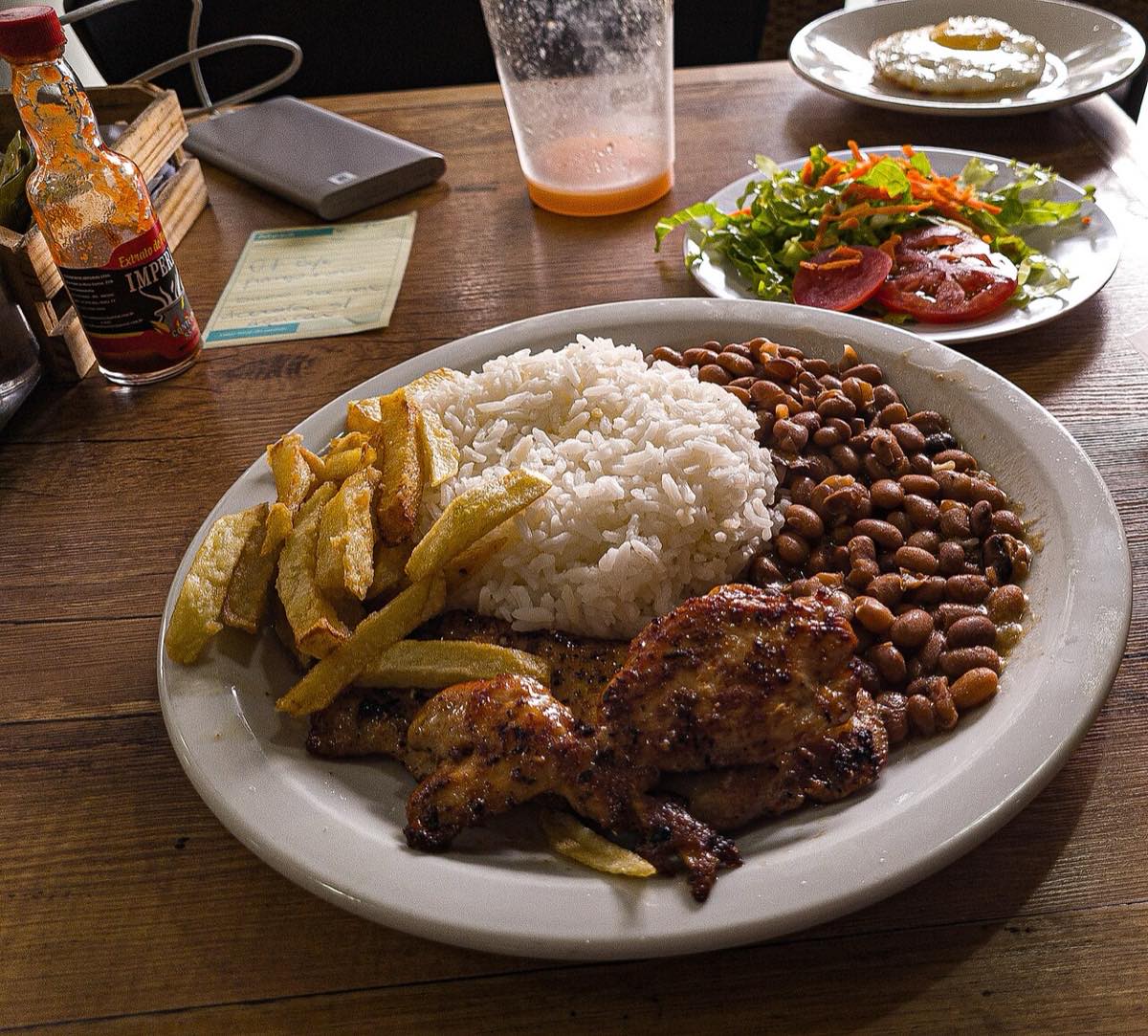
- Prato com arroz e feijão, frango grelhado, batata frita, salada e ovo frito como adicionaisWikimedia Commons · Photograph by Tet, CC0, used as a general illustration.
General information, not medical advice. This small study had no comparison group and does not show that nutrition classes change blood sugar or body fat. If you have diabetes or prediabetes, talk to your doctor or a registered dietitian before changing your diet or medicines.
Analysis by NutroPractic from the sources listed. Written for general readers; it does not replace advice from your own doctor.
From our articles
Our guides on this subject
Plain-language guides on nutrition and wellness, backed by research.
Global data
Diabetes, obesity, child malnutrition and hunger, 1980 to 2050: what the numbers show
How diabetes, obesity, child malnutrition and hunger have changed since 1980, with sourced figures and a basic projection to 2050. Click a condition to explore the chart and its facts.
5 Oct 2026

Diabetes
Potatoes and blood sugar: boiled, cooled, mashed or fried, and what the cohorts and trials found
Fries were linked to 20% higher diabetes risk per three servings a week in 205,000 US adults; boiled, baked and mashed potatoes to almost none. GI by cooking method, resistant starch in grams after chilling, the glycaemic load of a potato against a cup of rice, and how to fit aloo into an Indian plate.
30 Oct 2026

Women's health
PCOS and food: what the diet trials show for cycles, insulin and weight
PCOS affects about one woman in ten, and most are told to "lose weight" with little else. Here is what drives it, why insulin matters even in slim women, how much weight loss brings cycles back, what the low-GI and Mediterranean trials found, what inositol and metformin do, and which tests to ask for.
30 Oct 2026
Newsfeed for your website
Want this feed on your website?
Add it to any site with one copy-and-paste snippet. No sign-up, and it updates itself every hour.
Start with a virtual consultation
Tell Dr. Triveni what you want to change. You will leave with a clear next step, whether you are in Toronto, London, New York or Chennai.