Workplace health · October 25, 2026
Chair exercise at the office every weekday, plus a diet and water check-in every two weeks: Greek office workers with obesity lost about 5 kg and 16 points of systolic blood pressure in six months, while a control group stayed the same
A small randomised trial in four workplaces in central Greece gave 18 office workers with obesity 25 to 40 minutes of supervised chair-based exercise every working day for six months, plus 12 short sessions with nutritionists on Mediterranean eating and drinking more water. Weight, waist, blood pressure and blood fats all fell, Mediterranean diet scores and water intake rose, and 18 workers who got nothing changed little. It is a small, demanding programme, and some of the paper's percentage figures don't add up.
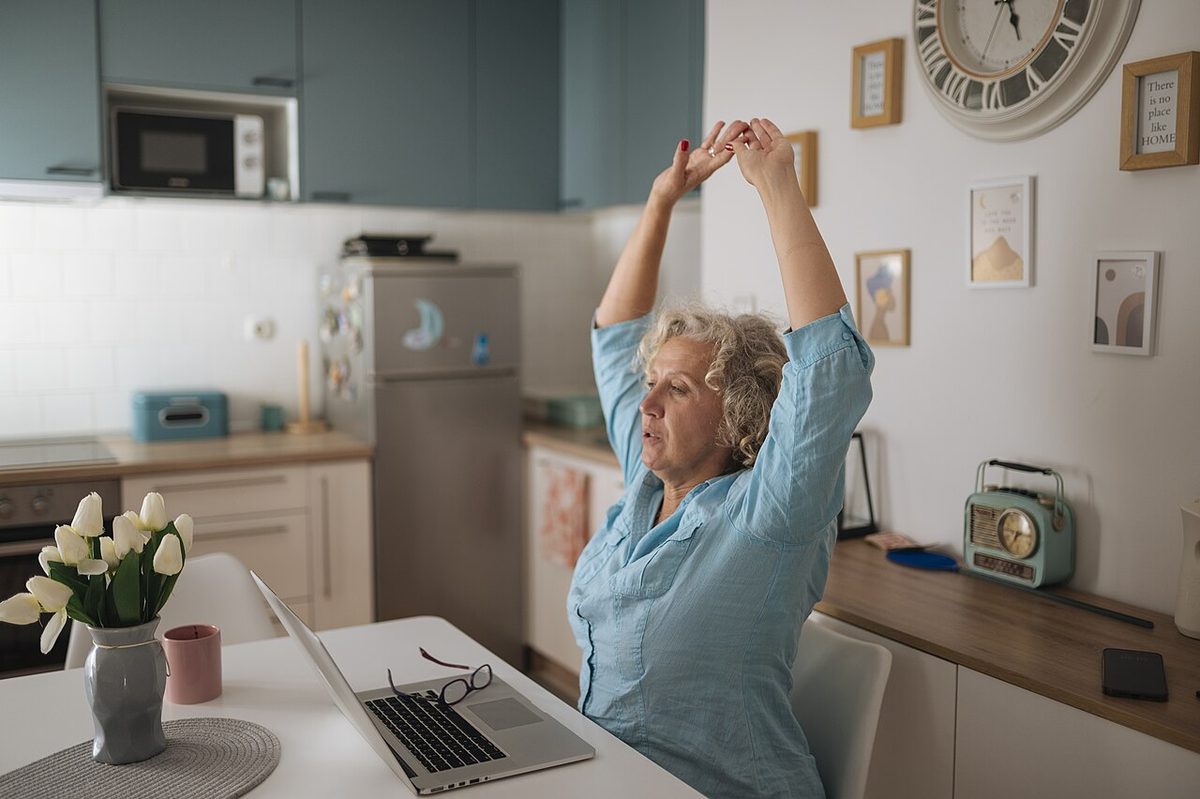
Desk jobs keep people sitting for most of the day, and office food and drink habits rarely help. Many workplace health schemes stop at standing desks or a leaflet. A team at the University of Thessaly's Department of Physical Education and Sports Science in Trikala, Greece, tried something more hands-on: exercise and diet coaching delivered inside the office, in working hours, every working day for six months. Their randomised trial came out in the Journal of Functional Morphology and Kinesiology on 13 October.
Fifty office workers aged 34 to 55 from four workplaces in Western Thessaly volunteered. Forty met the entry rules: at least 8 hours a day in the office, a body mass index of 30 or more, no chronic illness, no regular medicines and no organised exercise or diet programme in the previous six months. They were split at random into two groups of 20, and two people dropped out of each, leaving 18 per group (11 women and 7 men in each, average age about 48, average weight about 95.6 kg). One group got the programme; the other carried on as usual.
The programme had two parts. Exercise came every working day, 120 sessions in all, each 25 to 40 minutes, in groups of four or five, led by exercise instructors. It used a sturdy chair, a small Pilates ball, hand grippers, therapy balls and an exercise band: stretching, balance work, strength exercises and low-impact aerobic dance done seated or around the chair, at 60 to 80% of maximum heart rate. The diet part was 12 sessions, one every two weeks, with two nutritionists: a talk on healthy eating and hydration, leaflets based on the Mediterranean diet with recipes for office snacks, one 20-minute personal session to set goals, then short group check-ins with goal cards. Everyone in the group also installed a free water-tracking app and got a personal daily water target.
After six months the programme group's average weight fell from 95.65 to 90.34 kg, about 5.3 kg, and their waists from 106.8 to 98.1 cm. Body fat went from 46.7% to 38.1%. Systolic blood pressure dropped from 137.8 to 121.4 mmHg and diastolic from 88.0 to 77.9. LDL cholesterol fell from 149.5 to 96.9 mg/dL, triglycerides from 113 to 72 mg/dL, and HDL rose from 45.7 to 60.9 mg/dL. Their Mediterranean diet score rose from 24.5 to 34.4 out of 55, and the water they drank from about 1.42 to 2.16 litres a day. Grip strength, flexibility, balance and how fast the heart settled after a step test all improved too. The control group's numbers barely moved: their weight went from 95.54 to 95.94 kg and their diet score from 25.0 to 24.0. The authors report that every person in the programme group improved on every measure.
Some cautions. This is a small trial, 36 people, and the four who dropped out were left out of the analysis. The control group got no attention at all, so part of the gain may come simply from being looked after, and because exercise and diet came together the study cannot say how much each did. Diet and water were self-reported. Those measuring the results did not know who was in which group, but participants did. The results stop at the end of the programme, so nobody knows what lasted. Some figures in the paper don't fit together: the reported average percentage changes for blood fats (for instance 69% for LDL) are much bigger than the change between the group averages (about 35%, our arithmetic), and some individual changes are listed as falls of more than 100%, which is impossible for a concentration; we have used the group averages from the tables. The authors themselves note that a daily supervised programme takes time, staff and money that many offices won't have. The study had no outside funding, and the authors declare no conflicts of interest.
Six-month workplace exercise and nutrition programme vs no programme, 36 office workers with obesity, Greece (published 13 October 2026)
-5.3 kg
Average weight change in the programme group, 95.65 to 90.34 kg (control group +0.4 kg)
-16 mmHg
Fall in average systolic blood pressure, 137.8 to 121.4 (diastolic 88.0 to 77.9); control group barely changed
-8.7 cm
Fall in average waist size, 106.8 to 98.1 cm
149 to 97
Average LDL cholesterol in mg/dL before and after, about a 35% fall (our arithmetic from the group averages)
24.5 to 34.4
Mediterranean diet score out of 55 in the programme group (control 25.0 to 24.0)
+0.73 L
Extra water drunk a day, about 1.42 to 2.16 litres (control group about 1.44 to 1.41)
Source: Karatrantou K, Efthymiou E, Batatolis C, Pappas K, Vasilopoulou T, Melissopoulou A, Gerodimos V, 'A Combined Workplace Intervention Including Exercise and Nutrition for Health Promotion in Obese Office Workers: A Randomized Controlled Study', Journal of Functional Morphology and Kinesiology 2026;11(4):418, published 13 October 2026 (received 1 September, accepted 9 October), doi 10.3390/jfmk11040418, open access (CC BY). Department of Physical Education and Sports Science, University of Thessaly, Trikala, Greece. Registered as NCT07603141; approved by the University of Thessaly ethics committee. 50 volunteers from four workplaces in Western Thessaly, 40 eligible and randomised (computer-generated list), 2 dropouts per group, 36 analysed (18 per group, 11 women and 7 men each); age 48.1 vs 48.0 years, BMI 33.6 vs 33.5. Exercise: 120 supervised chair-based sessions, 5 days a week, 25-40 min, groups of 4-5, flexibility, balance, strength and aerobic dance at 60-80% HRmax. Nutrition: 12 sessions every 2 weeks with two nutritionists (Mediterranean diet education, office snack recipes, goal-setting cards, water app with personal targets). Control: no intervention. Programme group pre vs post (mean): body mass 95.65 vs 90.34 kg; body fat 46.66 vs 38.06%; waist 106.78 vs 98.11 cm; hip 116.67 vs 106.17 cm; systolic BP 137.83 vs 121.44 mmHg; diastolic 88.03 vs 77.89; FVC 3.70 vs 4.01 L; triglycerides 113.05 vs 72.13 mg/dL; total cholesterol 217.94 vs 169.65; HDL 45.72 vs 60.89; LDL 149.48 vs 96.91; handgrip right 43.72 vs 48.33 kg; single-leg stance right 26.3 vs 81.7 s; heart rate 1 min after YMCA step test 106.8 vs 91.1 bpm; MedDietScore (0-55) 24.50 vs 34.44; water 1,422 vs 2,156 mL a day. Control group: body mass 95.54 vs 95.94 kg; systolic BP 135.67 vs 136.75; LDL 149.11 vs 149.77; MedDietScore 25.00 vs 24.00; water 1,439 vs 1,406 mL. All group-by-time interactions p < 0.001 (two-way repeated measures ANOVA, completers only). Outcome assessors blinded to group. The paper's reported mean percentage changes for blood lipids (e.g. LDL -68.87%, total cholesterol -31.00%, triglycerides -55.29%) are larger than the change between group means (LDL -35%, total cholesterol -22%, triglycerides -36%, our arithmetic), and individual LDL falls of up to -212.67% are listed; we report the group means. Changes in weight, waist, blood pressure and lipids are our subtraction of the table means. No external funding; no conflicts of interest declared.
- The WHO advises adults to get 150 to 300 minutes of moderate aerobic activity a week plus muscle-strengthening on two or more days. This programme's 25 to 40 minutes on five working days comes to 125 to 200 minutes a week (our arithmetic), mixing both kinds.
- The MedDietScore used here was developed in Greece in 2006. It rates how often people eat 11 food groups, from whole grains, fruit, vegetables, legumes, fish and olive oil to red meat, poultry, full-fat dairy and alcohol, giving 0 to 5 points each for a total of 0 to 55.
- The European Food Safety Authority sets adequate total water intake at 2.0 litres a day for women and 2.5 litres for men, counting water from food as well as drinks; food usually supplies around a fifth of it.
- A Combined Workplace Intervention Including Exercise and Nutrition for Health Promotion in Obese Office Workers: A Randomized Controlled StudyJournal of Functional Morphology and Kinesiology (MDPI) · The study, open access, published 13 October 2026; figures from its full text and tables
- Trial registration NCT07603141ClinicalTrials.gov · The trial's registry entry
- Dietary patterns: a Mediterranean diet score and its relation to clinical and biological markers of cardiovascular disease riskNutrition, Metabolism and Cardiovascular Diseases · The 2006 paper that set out the MedDietScore (0-55)
- Physical activity fact sheetWorld Health Organization · Weekly activity recommendations for adults
- Scientific Opinion on Dietary reference values for waterEuropean Food Safety Authority · Adequate total water intakes for adults
- Woman stretches at home office desk while working on laptop (Shixart1985, 2025)Wikimedia Commons · The photo, CC BY 2.0
General information, not medical advice. This was a small trial of a supervised programme, and its results may not carry over to other workplaces or people. If you have a heart condition, high blood pressure, diabetes or another health problem, or take regular medicines, talk to your doctor before starting a new exercise or diet plan.
Analysis by NutroPractic from the sources listed. Written for general readers; it does not replace advice from your own doctor.
From our articles
Our guides on this subject
Plain-language guides on nutrition and wellness, backed by research.
Heart and blood pressure
Beetroot juice and dietary nitrate: what the blood-pressure trials measured, and who should be careful
Drinking 250 ml of beetroot juice dropped clinic systolic blood pressure by 7.7 mmHg in 4-week clinical trials. Here is how tongue bacteria convert dietary nitrate to nitric oxide, why antiseptic mouthwash blocks it completely, and the oxalate kidney stone warning.
18 Nov 2026
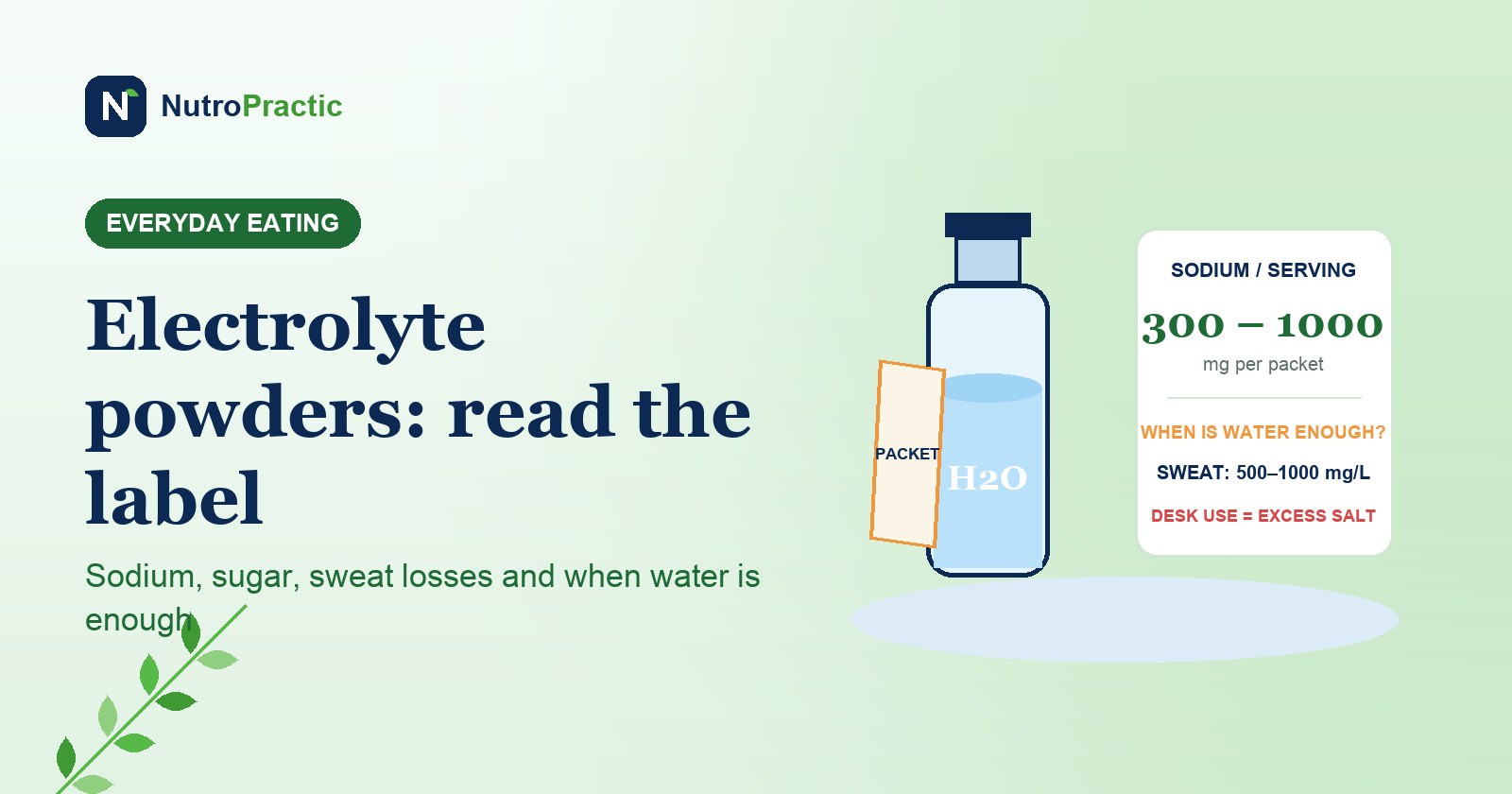
Everyday eating
Electrolyte powders: sodium and sugar per bottle, and when water is enough
Packets deliver 300 to 1,000 mg sodium and up to 11 g sugar. Here is how popular drink mixes compare with actual sweat losses—and who actually needs them.
10 Nov 2026

Everyday eating
Instant noodles: the sodium in the whole packet, and what actually reduces it
Three official labels range from 750 to 1,520 mg sodium per packet. Here is the whole-pack arithmetic, what the broth study measured, and how to turn noodles into a more complete meal.
6 Nov 2026
Newsfeed for your website
Want this feed on your website?
Add it to any site with one copy-and-paste snippet. No sign-up, and it updates itself every hour.
Start with a virtual consultation
Tell Dr. Triveni what you want to change. You will leave with a clear next step, whether you are in Toronto, London, New York or Chennai.