Body Composition Physiology & Functional Performance · November 23, 2026
Preserving Lean Mass During Weight Loss Does Not Guarantee Maintained Muscle Strength or Fitness
A comprehensive systematic review and meta-analysis reveals that structural muscle preservation during weight loss does not automatically translate into functional physical performance, urging clinicians to track muscle strength and aerobic capacity alongside DEXA scans.
Intentional weight loss via caloric restriction, pharmacological therapy, or bariatric surgery is celebrated for improving cardiometabolic risk markers. However, a major clinical concern is the concurrent loss of fat-free mass (FFM), which accounts for a substantial fraction of shed weight. Most clinical trials evaluate 'weight loss quality' purely through structural metrics, such as dual-energy X-ray absorptiometry (DEXA) body composition scans. But does retaining skeletal muscle mass on a scan guarantee that muscle function, physical performance, and stamina remain intact?
To answer this critical question, researchers Hong-Bum Eun and Sang-Keon Yoo conducted a systematic review and meta-analysis published in Nutrients, examining the structural versus functional dimensions of weight loss quality. The authors divided outcomes into two overarching domains: the Structural Domain (quantifying lean body mass and fat-free mass retention) and the Functional Domain (evaluating objective muscle strength, functional physical tests like gait speed and chair stands, and cardiorespiratory fitness measured as VO2max).
The meta-analysis revealed marked divergence between structural mass preservation and functional performance. While lifestyle interventions combining hypocaloric diets with exercise training successfully mitigated structural lean mass loss compared with diet-only approaches, functional gains exhibited wide heterogeneity. Retaining skeletal muscle mass did not consistently protect against reductions in absolute maximal muscle strength or preserve cardiorespiratory fitness unless the exercise component included progressive resistance loading and targeted cardiovascular conditioning.
The authors conclude that evaluating weight loss success solely by total kilograms lost or DEXA lean mass percentage is dangerously incomplete. When individuals lose weight without concurrent neuromuscular stimulation and protein adequacy, muscle 'quality'—including neural drive, mitochondrial density, and contractility—can deteriorate even if tissue volume appears preserved. Clinicians and nutritionists are urged to incorporate routine functional benchmarks, such as handgrip dynamometry, chair rise tests, and aerobic exercise testing, into long-term weight management protocols.
Structural vs Functional Outcomes in Weight Loss Interventions
2 Domains
structural (lean/fat-free mass) and functional (strength, physical capacity, VO2max)
DEXA Scans
frequently capture muscle quantity while missing functional neuromuscular quality changes
Resistance
progressive load training essential to preserve absolute strength and neuromuscular drive
Heterogeneity
significant variation observed across clinical trials between mass retention and fitness
Systematic review and meta-analysis synthesizing randomized controlled trials and cohort studies in overweight and obesity management.
- Dual-energy X-ray absorptiometry (DEXA) cannot distinguish between intracellular water changes, intramuscular adipose infiltration, and actual contractile muscle protein.
- Maximal cardiorespiratory fitness (VO2max) is one of the strongest independent predictors of all-cause mortality, independent of baseline body mass index.
- During rapid hypocaloric dieting without resistance exercise, up to 25% to 35% of lost weight can originate from skeletal muscle and visceral organs.
- Structural and Functional Quality of Weight Loss: A Systematic Review and Meta-Analysis of Lean Mass, Strength, Physical Function, and Cardiorespiratory FitnessNutrients · Systematic review and meta-analysis published November 2026.
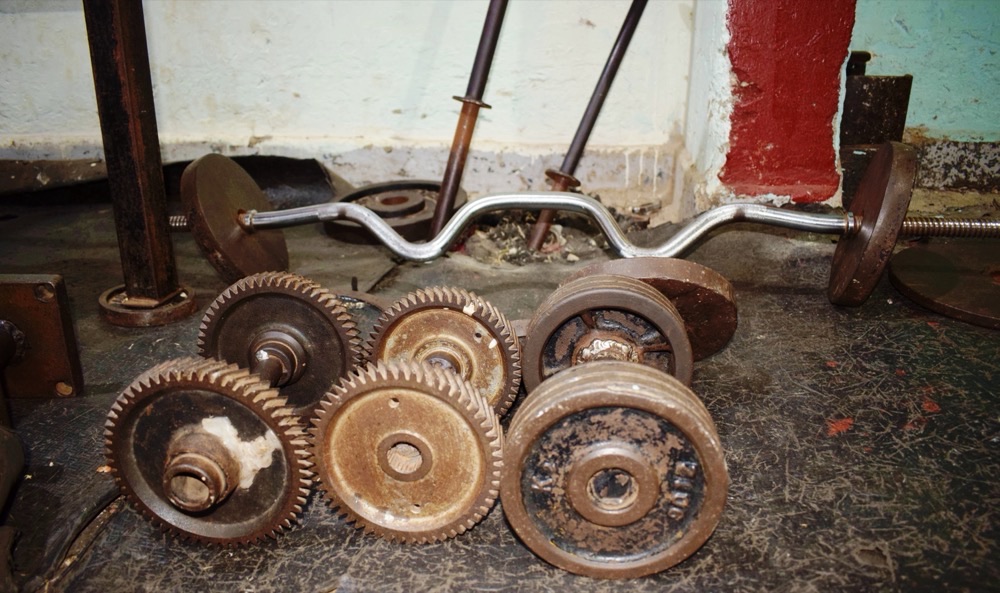
- File:Dumbbells in a local Gym.jpgWikimedia Commons · Photo via Wikimedia Commons, CC BY-SA 4.0.
Educational summary of nutrition research, not personal medical advice. Speak to your doctor or dietitian before changing your diet or supplements, especially if you are pregnant, take medicines or have a medical condition.
Analysis by NutroPractic from the sources listed. Written for general readers; it does not replace advice from your own doctor.
From our articles
Our guides on this subject
Plain-language guides on nutrition and wellness, backed by research.

Weight-loss medicines
Eating on Ozempic, Wegovy or Mounjaro: protein first, so the weight you lose isn't your muscle
GLP-1 medicines shrink your appetite, and with it often your protein. In the big trials a quarter to more than a third of the weight lost was lean mass. What the 2025 joint nutrition advisory recommends, the arithmetic for your own target, and four small plates that get there.
8 Oct 2026

Medicines and nutrition
CoQ10 and statins: what the muscle symptom trials found, and who might benefit
Statin-associated muscle symptoms lead up to 30% of patients to discontinue life-saving cholesterol therapy. While statins deplete circulating CoQ10 by 16% to 54%, randomized clinical trials show mixed results for myalgia relief. Explore the trials, ubiquinone vs ubiquinol bioavailability, recommended doses, and clinical guideline recommendations.
14 Nov 2026

Women's wellness and nutrition
Creatine for women: cognitive performance, menstrual cycle phases, and bone density beyond muscle building
Creatine is widely stereotyped as a bodybuilding supplement for men, but female physiology tells a very different story. Women exhibit 70% to 80% lower endogenous creatine stores, reduced dietary intake, and cyclical fluctuations in brain creatine kinase across the follicular and luteal phases. Robust clinical trials demonstrate that 3 to 5 grams of daily creatine monohydrate enhances cognitive performance during sleep deprivation, augments clinical response in unipolar depression, preserves femoral neck bone geometry in postmenopausal women, and causes cellular intracellular hydration rather than subcutaneous bloating.
13 Nov 2026
Newsfeed for your website
Want this feed on your website?
Add it to any site with one copy-and-paste snippet. No sign-up, and it updates itself every hour.
Start with a virtual consultation
Tell Dr. Triveni what you want to change. You will leave with a clear next step, whether you are in Toronto, London, New York or Chennai.