Nuts and mood · October 8, 2026
A handful of walnuts a day for eight weeks, and young adults said their mood lifted. Their urine told a more complicated story
In a small Barcelona trial, 31 young adults ate 40 g of walnuts a day for two months and spent another two months eating no nuts at all. Their mood scores improved on walnuts, and a serotonin by-product in their urine went up. But walnuts happen to contain serotonin themselves, everyone knew what they were eating, and part of the money came from the walnut industry.
Nuts have a long run of good press for the heart. Whether they do anything for how people feel is a much thinner file, and that's the question a team at the University of Barcelona's Nutrition and Food Safety Research Institute set out to test with walnuts. Their trial was published in the journal Food & Function on 29 September 2026.
They recruited 31 healthy young adults, average age 24, and 28 of them were women. Each person did two eight-week stretches in random order: one eating 40 g of walnuts a day, roughly a small handful, and one eating no nuts at all, with a two-week break in between. Because everyone served as their own comparison, the trial could get by with fewer people than one with two separate groups. Along the way they filled in standard questionnaires on mood, stress, wellbeing and food cravings, and gave urine samples. The lab measured cortisol, a stress hormone; 5-HIAA, the substance the body makes when it breaks down serotonin; and urolithins, compounds gut bacteria make from the tannins in walnuts, which show whether people actually ate them.
On walnuts, the combined score for mood disturbance fell by 4.85 points compared with the nut-free weeks, a difference that was statistically significant but only just (p = 0.030). Urinary 5-HIAA went up, cortisol didn't move, and urolithins rose as you'd expect. The people whose 5-HIAA rose most tended to report the biggest drops in fatigue and in overall mood disturbance, and 5-HIAA climbed in step with urolithins. The authors suggest walnuts may act on serotonin through the gut, and call it a case for whole foods in nutrition approaches to mental health.
There are good reasons to hold that loosely. Walnuts are one of a handful of foods, with bananas, pineapple and plums, that patients are told to avoid for three days before a urine 5-HIAA test, because they push the result up. So more 5-HIAA after two months of daily walnuts may say more about what was in the walnuts than about serotonin in anyone's brain; the authors themselves say the rise could be dietary, microbial or metabolic. The trial was open-label, so people knew when they were eating walnuts and rated their own mood, which leaves room for expectation. Thirty-one people, nearly all young women, is a small and narrow group, and the summary doesn't say how big a 4.85-point change is on the scale used. Among the funders listed with the paper is the California Walnut Commission, alongside Spanish government and university grants. We could read only the summary and the paper's funding record, so the details come from those. A pleasant, promising pilot, then, and a reason for a larger, longer trial in a wider group, not proof that walnuts treat low mood.
31 young adults, 8 weeks of 40 g walnuts a day v 8 weeks without nuts
31
Healthy young adults, average age 24; 90.3% women
40 g
Walnuts a day for 8 weeks, compared with 8 nut-free weeks, 2-week washout between
−4.85
Points on total mood disturbance with walnuts v the nut-free period (p = 0.030)
Up
Urinary 5-HIAA, a serotonin breakdown product; urinary cortisol unchanged
r = −0.39
Correlation between rising 5-HIAA and falling fatigue (p = 0.031); r = −0.36 with total mood disturbance (p = 0.049)
≈262 kcal
In 40 g of walnuts, with about 3.6 g of the plant omega-3 ALA (USDA figures, our arithmetic)
Trial figures from the abstract of the paper in Food & Function, published online 29 September 2026. The trial was open-label and the outcomes were self-reported questionnaires. Funders listed in the paper's Crossref record: Spain's Ministry of Science, Innovation and Universities, the State Research Agency, the University of Barcelona and the California Walnut Commission. Energy and ALA for 40 g are our arithmetic from USDA FoodData Central values for English walnuts (654 kcal and 9.08 g ALA per 100 g).
- Hospitals ask people to skip walnuts, bananas, pineapples, plums, avocados, tomatoes and aubergine for three days before a urine 5-HIAA test, which is used to look for certain tumours of the digestive tract.
- Urolithins aren't in walnuts at all: gut bacteria make them from ellagitannins found in walnuts, pomegranates and berries, and people differ a lot in how much they produce.
- In this trial everyone acted as their own control, which is why 31 people could be enough to spot a difference in mood scores.
- At 654 kcal per 100 g, walnuts are among the most energy-dense foods in a kitchen cupboard, so a daily handful is worth counting if weight is a concern.
- Walnut consumption improves mood and is associated with increased urinary excretion of 5-hydroxyindoleacetic acid and urolithins in a randomized crossover trialFood & Function (Royal Society of Chemistry), 29 September 2026 · The study; its figures in this item come from the abstract and its funding from the paper's Crossref record
- Abstract on PubMed (PMID 42808314)PubMed, US National Library of Medicine · Free abstract with the design, mood score change and correlations
- 5-HIAA urine testMedlinePlus, US National Library of Medicine · Lists walnuts among the foods that interfere with 5-HIAA measurements
- Urolithins, the rescue of "old" metabolites to understand a "new" concept: metabotypes as a nexus among phenolic metabolism, microbiota dysbiosis, and host health statusMolecular Nutrition & Food Research, 2016 · How gut bacteria make urolithins from ellagitannins, and why people differ
- Nuts, walnuts, english (FDC ID 170187)USDA FoodData Central · Energy and ALA per 100 g used for the 40 g figures
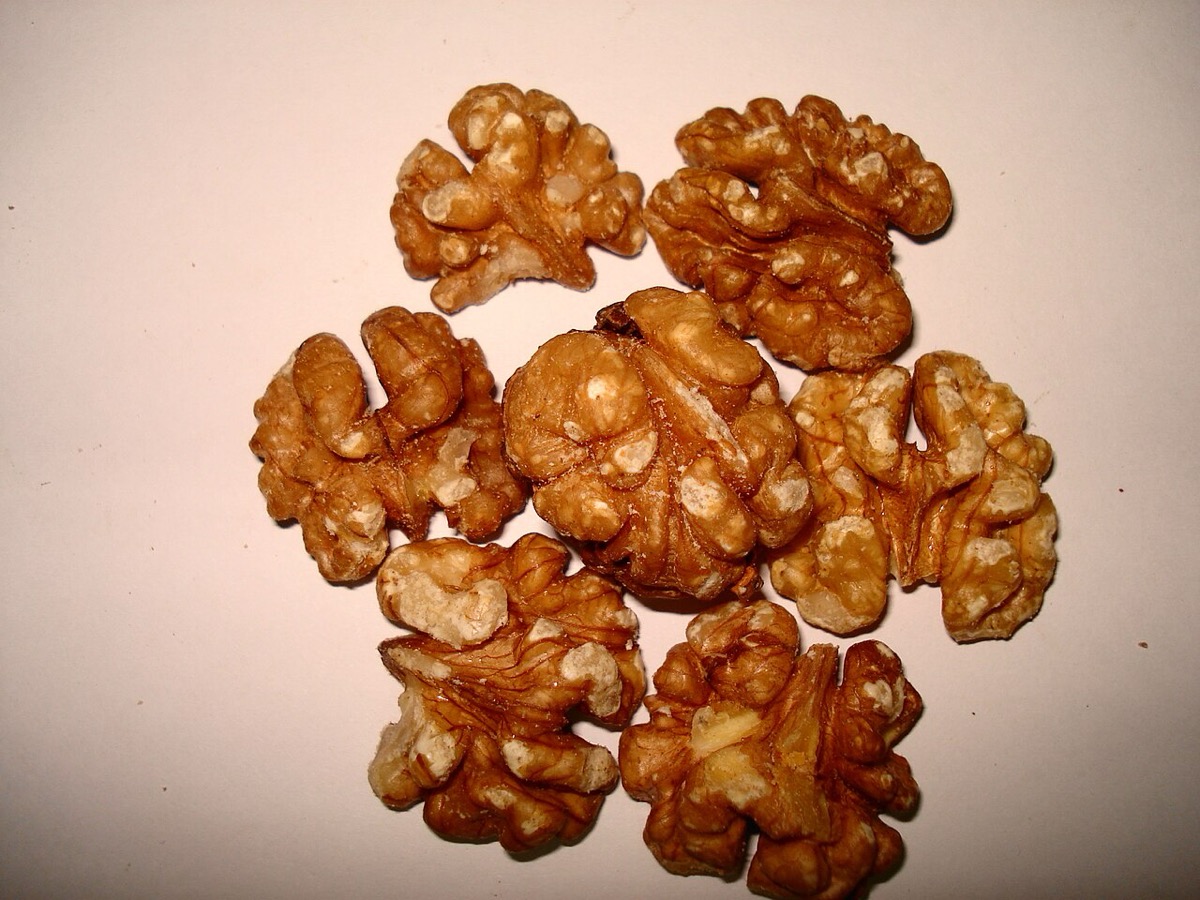
- Walnuts no shell (photo)Miansari66, via Wikimedia Commons · Public domain image
General information, not medical advice. Walnuts are a tree nut and can cause severe allergic reactions. If you're feeling low for more than a couple of weeks, talk to a doctor; don't swap food for treatment you've been prescribed. If you're due a urine 5-HIAA test, follow the diet instructions you were given.
Analysis by NutroPractic from the sources listed. Written for general readers; it does not replace advice from your own doctor.
Newsfeed for your website
Want this feed on your website?
Add it to any site with one copy-and-paste snippet. No sign-up, and it updates itself every hour.
Start with a virtual consultation
Tell Dr. Triveni what you want to change. You will leave with a clear next step, whether you are in Toronto, London, New York or Chennai.