Healthy ageing & dietary fats · November 19, 2026
Two years of daily walnuts caused no adverse weight gain or fat accumulation in healthy older adults
In the landmark two-year WAHA trial, adding walnuts (15% of daily calories) to habitual diets in older adults in Barcelona and California produced no meaningful adverse shifts in overall body composition or DXA adiposity markers.
Because nuts are naturally energy-dense and rich in unsaturated fats, older adults and clinicians frequently worry that incorporating regular portions could lead to unwanted weight gain or abdominal fat accumulation. To resolve this question definitively, researchers from Hospital Clínic de Barcelona and Loma Linda University evaluated participants from the Walnuts and Healthy Aging (WAHA) trial, a major two-center, two-year randomized controlled trial.
Healthy older adults (average age 69 years) free of life-threatening conditions were randomized either to incorporate raw walnuts daily into their usual diet—accounting for approximately 15% of total daily energy intake (around 30 to 60 grams per day)—or to continue their habitual diet while strictly abstaining from walnuts. Body composition was comprehensively measured at baseline and after two years using dual-energy X-ray absorptiometry (DXA) scans alongside circulating adiposity biomarkers.
The two-year DXA scans revealed no statistically significant differences in total body weight, lean body mass, or overall body fat percentage between the walnut and control cohorts. Circulating markers of adiposity and lipid metabolism remained stable. A minor secondary increase in android-to-gynoid fat ratio was noted exclusively in women, though overall clinical adiposity parameters remained unaffected.
Exploratory genetic analyses suggested that men carrying the CC genotype of the FTO-rs1861868 polymorphism exhibited minor adverse body composition shifts when eating walnuts compared to T-allele carriers, though subgroup numbers were small. The authors conclude that incorporating nutrient-dense walnuts as 15% of daily energy can be recommended to older adults for cardiovascular and cognitive wellness without concern for promoting obesity.
Body composition outcomes from the two-year WAHA randomized trial
2 years
Duration of daily walnut intervention in free-living older adults
15%
Share of daily caloric intake provided by walnuts (~30–60 g/day)
DXA
Dual-energy X-ray absorptiometry whole-body scanning method
Neutral
No significant difference in body weight or total adiposity vs control
Two-center randomized controlled trial conducted in Barcelona, Spain and Loma Linda, California evaluating free-living healthy older adults.
- Walnuts are uniquely rich in alpha-linolenic acid (ALA), the plant-derived essential omega-3 fatty acid.
- Dual-energy X-ray absorptiometry (DXA) distinguishes fat mass, lean soft tissue, and bone mineral content with high precision.
- The android-to-gynoid fat ratio reflects the proportion of abdominal visceral fat relative to lower-body hip and thigh fat.
- The FTO gene encodes an alpha-ketoglutarate-dependent dioxygenase involved in central appetite regulation and energy homeostasis.
- Effects of Long-Term Walnut Consumption on Body Composition in the Walnuts and Healthy Aging (WAHA) Randomized Clinical TrialNutrients / MDPI · Two-year, two-center randomized clinical trial evaluating daily walnut consumption and DXA body composition. Published 13 November 2026.
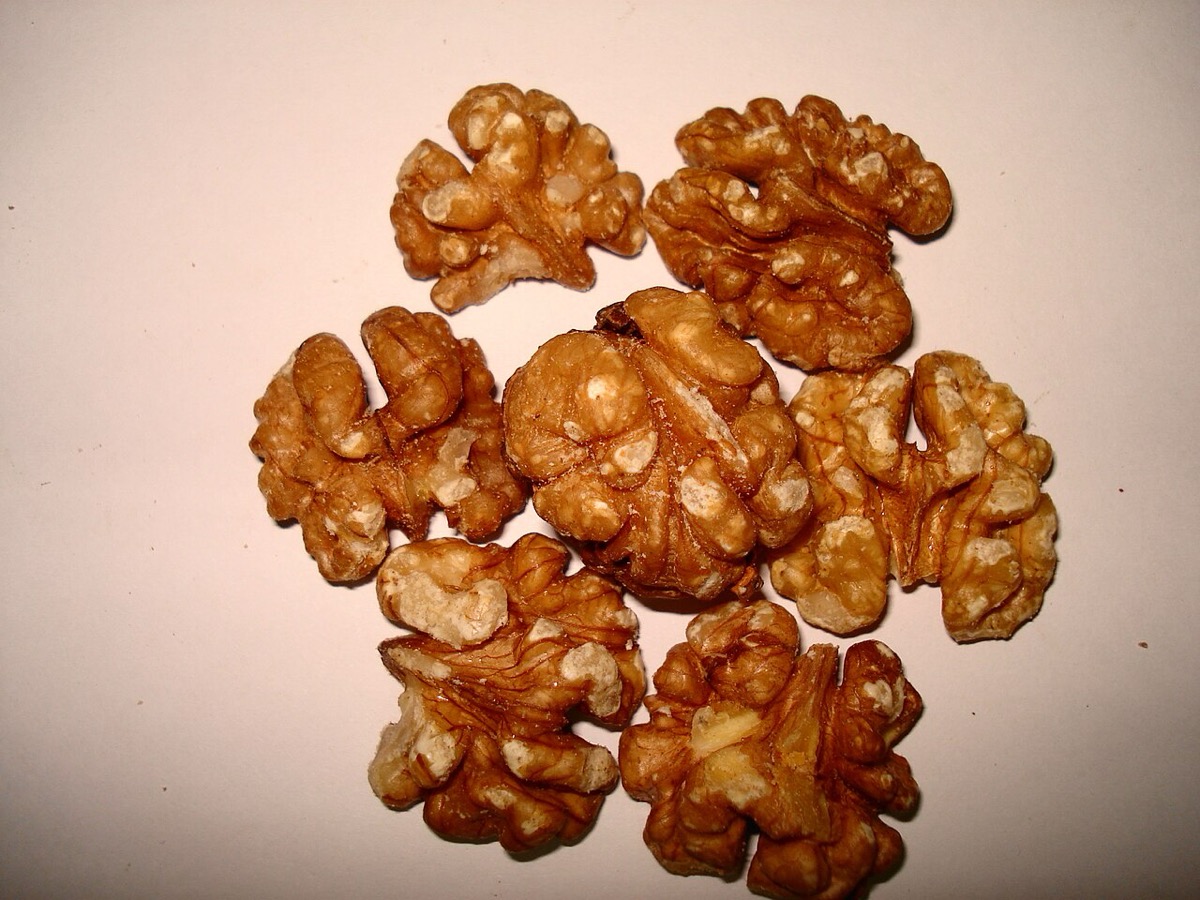
- Walnut kernelsWikimedia Commons · Photo by Miansari66, public domain dedication.
Educational review of clinical nutrition research, not individual dietary prescription. Individuals with tree nut allergies must strictly avoid walnuts.
Analysis by NutroPractic from the sources listed. Written for general readers; it does not replace advice from your own doctor.
From our articles
Our guides on this subject
Plain-language guides on nutrition and wellness, backed by research.

Medicines and nutrition
CoQ10 and statins: what the muscle symptom trials found, and who might benefit
Statin-associated muscle symptoms lead up to 30% of patients to discontinue life-saving cholesterol therapy. While statins deplete circulating CoQ10 by 16% to 54%, randomized clinical trials show mixed results for myalgia relief. Explore the trials, ubiquinone vs ubiquinol bioavailability, recommended doses, and clinical guideline recommendations.
14 Nov 2026

Women's wellness and nutrition
Creatine for women: cognitive performance, menstrual cycle phases, and bone density beyond muscle building
Creatine is widely stereotyped as a bodybuilding supplement for men, but female physiology tells a very different story. Women exhibit 70% to 80% lower endogenous creatine stores, reduced dietary intake, and cyclical fluctuations in brain creatine kinase across the follicular and luteal phases. Robust clinical trials demonstrate that 3 to 5 grams of daily creatine monohydrate enhances cognitive performance during sleep deprivation, augments clinical response in unipolar depression, preserves femoral neck bone geometry in postmenopausal women, and causes cellular intracellular hydration rather than subcutaneous bloating.
13 Nov 2026

Healthy ageing
Creatine beyond the gym: what it does for older adults and women, and what it doesn't
Across 22 trials, adults in their late fifties to seventies who took creatine while doing resistance training gained about 1.4 kg more lean mass than those who trained without it. Two two-year trials found it did nothing for bone density after menopause. Where the evidence is solid, where it's early (memory, short nights), how much to take, and who should leave it alone.
10 Oct 2026
Newsfeed for your website
Want this feed on your website?
Add it to any site with one copy-and-paste snippet. No sign-up, and it updates itself every hour.
Start with a virtual consultation
Tell Dr. Triveni what you want to change. You will leave with a clear next step, whether you are in Toronto, London, New York or Chennai.