Musculoskeletal nutrition & injury recovery · November 27, 2026
Vitamin K2 did not preserve soleus muscle size during ankle-fracture immobilization in a 20-person pilot trial
A double-blind, randomized, placebo-controlled pilot trial investigated whether daily menaquinone-7 (MK-7, 333 μg/day) protects against disuse muscle atrophy following ankle fracture. Despite significantly increasing circulating vitamin K2 levels, MK-7 did not significantly attenuate soleus muscle cross-sectional area loss during six weeks of cast immobilization or six weeks of rehabilitation compared with placebo.
Prolonged skeletal immobilization following bone fractures induces rapid skeletal muscle atrophy, characterized by loss of muscle cross-sectional area, reduced protein synthesis, and impaired functional mobility. Preclinical experiments have suggested that vitamin K2 promotes myogenesis and cellular energy production in muscle cells, sparking interest in its potential to protect against disuse atrophy in orthopedic patients.
In a pilot double-blind, randomized, placebo-controlled trial published in Nutrients, Tomas Kadusauskas, Neringa Svediene, Trygve Bergeland, and Saulius Rutkauskas evaluated 20 adults recovering from surgical or conservative ankle fracture management. Participants were randomized to receive either 333 μg/day of the vitamin K2 variant menaquinone-7 (MK-7, n = 10) or an identical placebo (n = 10) for 12 weeks, consisting of six weeks of ankle cast immobilization followed by six weeks of structured rehabilitation.
Serial ultrasound measurements revealed that soleus muscle cross-sectional area in the injured leg decreased markedly during the six-week immobilization window in both cohorts: by 12.8% ± 10.9% in the placebo group and by 11.7% ± 14.0% in the MK-7 group. There was no statistically significant between-group difference (p = 0.678) and no group-by-time interaction (p = 0.456). Baseline-adjusted between-group differences were 0.44 cm2 at week six and 1.50 cm2 at week 12, neither reaching statistical significance.
Serum testing confirmed compliance, with circulating MK-7 concentrations rising significantly higher in the supplemented group at week six (p = 0.005) and week 12 (p = 0.015). Circulating inflammatory markers (IL-6, IL-1β) and myokines (myostatin, IGF-1) showed no significant baseline-adjusted divergence between groups. The authors concluded that MK-7 did not significantly affect soleus muscle cross-sectional area in this pilot trial. Recruitment stopped at 20 participants rather than the planned 60, so adequately powered studies are still needed.
Pilot double-blind RCT of MK-7 supplementation during ankle fracture immobilization
20 Patients
adults randomized to 333 μg/day MK-7 or placebo for 12 weeks post-ankle fracture
−11.7% vs −12.8%
soleus muscle atrophy during 6 weeks immobilization in MK-7 vs placebo groups (p = 0.678)
p = 0.005
significant increase in circulating serum MK-7 confirming supplement absorption
No Significant Effect
on muscle cross-sectional area preservation or circulating myostatin and IGF-1 levels
Pilot randomized controlled trial published in Nutrients, November 2026 (doi: 10.3390/nu18233943).
- The soleus is an anti-gravity postural calf muscle composed predominantly of slow-twitch type I fibers, making it exceptionally vulnerable to rapid disuse atrophy during cast immobilization.
- Menaquinone-7 (MK-7) is a long-chain form of vitamin K2 derived from bacterial fermentation with a substantially longer circulating half-life than phylloquinone (vitamin K1).
- Pilot trials that terminate early due to recruitment barriers provide valuable feasibility data and prevent unwarranted claims of efficacy in preliminary interventions.
- Effects of Vitamin K2 Supplementation on Soleus Muscle Cross-Sectional Area and Blood Markers During Immobilization and Rehabilitation After Ankle Fracture: A Pilot Double-Blind Randomized Controlled TrialNutrients · Pilot double-blind RCT by Tomas Kadusauskas, Neringa Svediene, Trygve Bergeland, and Saulius Rutkauskas. Published 25 November 2026.
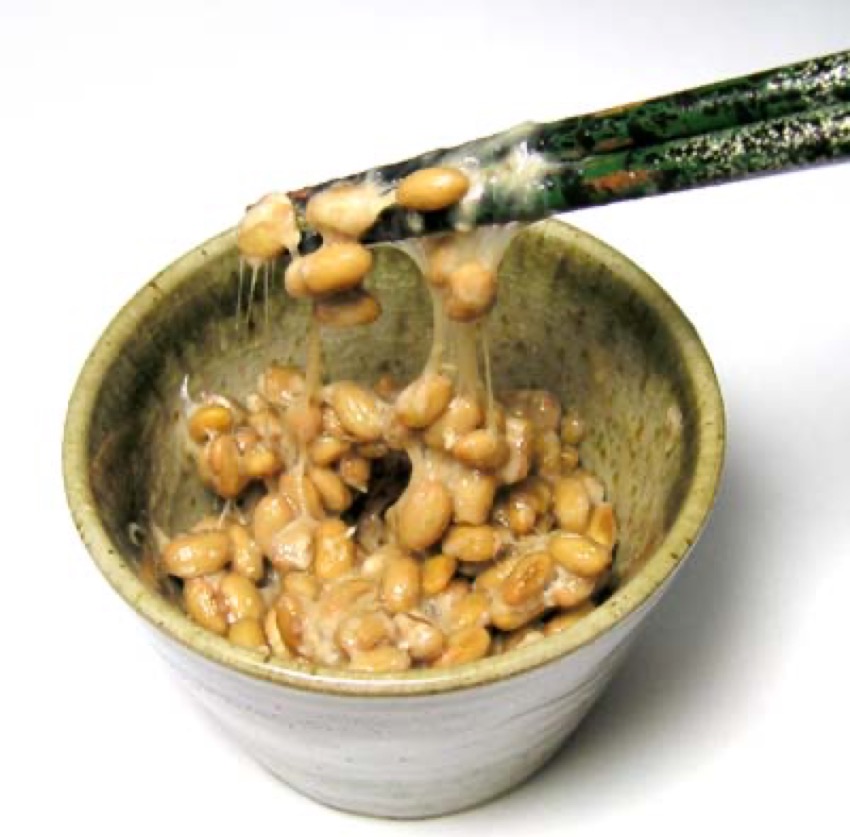
- File:Natto mixed.jpgWikimedia Commons · Photo by User:Gleam on Japanese Wikipedia / Wikimedia Commons, CC BY-SA 3.0.
Educational summary of nutrition research, not personal medical advice. Speak to your doctor or dietitian before changing your diet or supplements, especially if you are pregnant, take medicines or have a medical condition.
Analysis by NutroPractic from the sources listed. Written for general readers; it does not replace advice from your own doctor.
From our articles
Our guides on this subject
Plain-language guides on nutrition and wellness, backed by research.
Medicines and nutrition
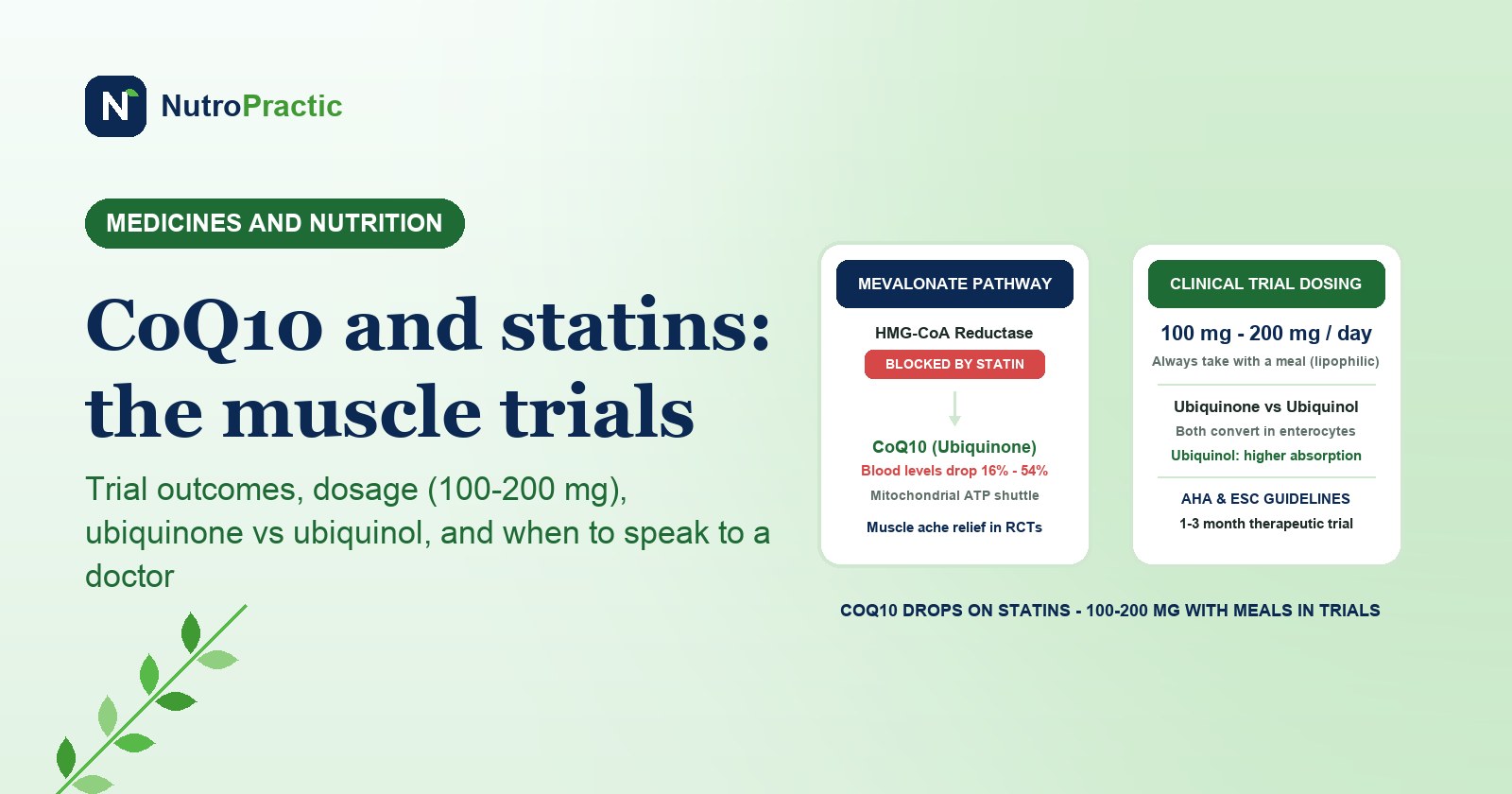
CoQ10 and statins: what the muscle symptom trials found, and who might benefit
Statin-associated muscle symptoms lead up to 30% of patients to discontinue life-saving cholesterol therapy. While statins deplete circulating CoQ10 by 16% to 54%, randomized clinical trials show mixed results for myalgia relief. Explore the trials, ubiquinone vs ubiquinol bioavailability, recommended doses, and clinical guideline recommendations.
14 Nov 2026

Women's wellness and nutrition
Creatine for women: cognitive performance, menstrual cycle phases, and bone density beyond muscle building
Creatine is widely stereotyped as a bodybuilding supplement for men, but female physiology tells a very different story. Women exhibit 70% to 80% lower endogenous creatine stores, reduced dietary intake, and cyclical fluctuations in brain creatine kinase across the follicular and luteal phases. Robust clinical trials demonstrate that 3 to 5 grams of daily creatine monohydrate enhances cognitive performance during sleep deprivation, augments clinical response in unipolar depression, preserves femoral neck bone geometry in postmenopausal women, and causes cellular intracellular hydration rather than subcutaneous bloating.
13 Nov 2026
Healthy ageing
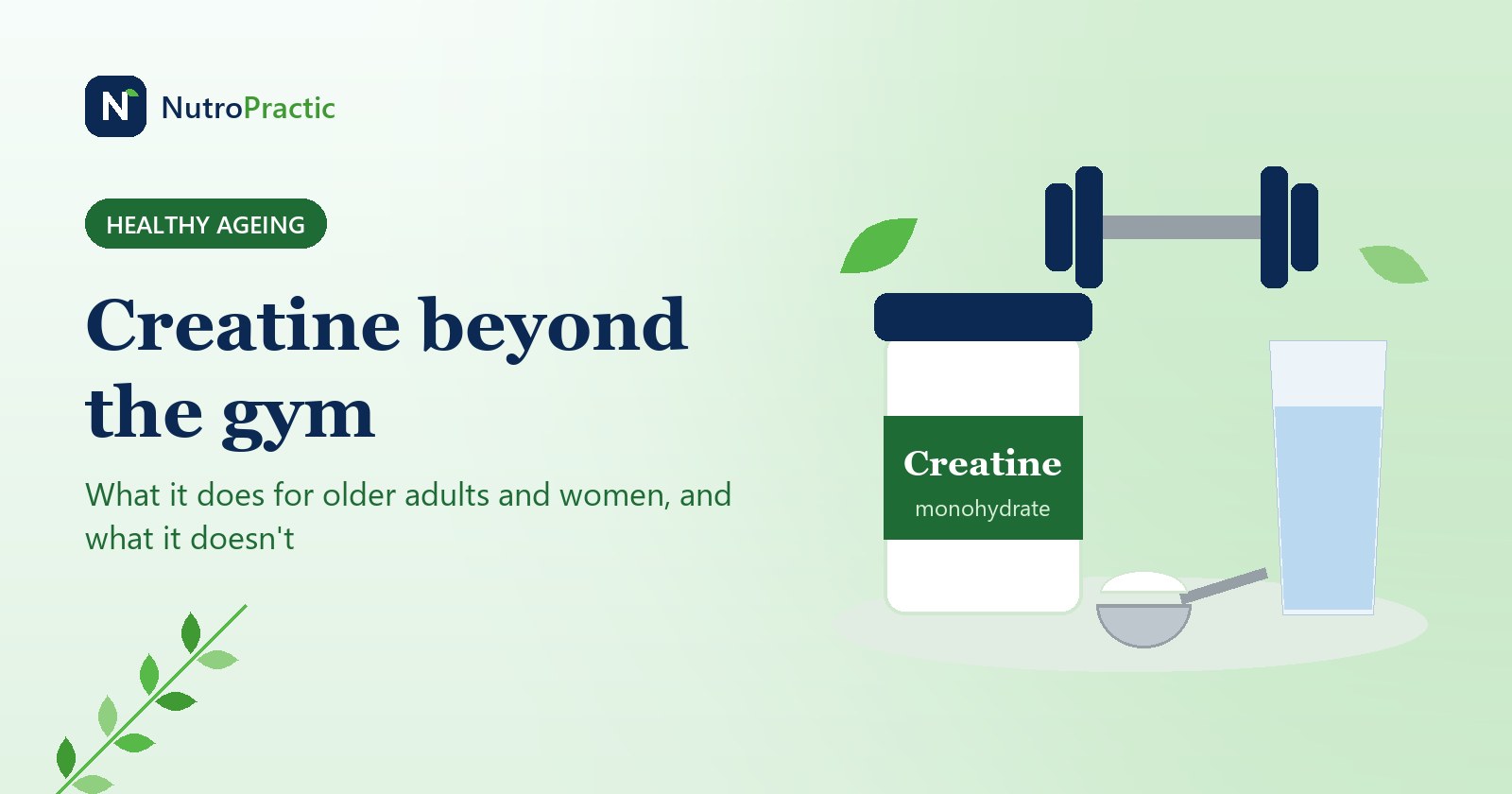
Creatine beyond the gym: what it does for older adults and women, and what it doesn't
Across 22 trials, adults in their late fifties to seventies who took creatine while doing resistance training gained about 1.4 kg more lean mass than those who trained without it. Two two-year trials found it did nothing for bone density after menopause. Where the evidence is solid, where it's early (memory, short nights), how much to take, and who should leave it alone.
10 Oct 2026
Newsfeed for your website
Want this feed on your website?
Add it to any site with one copy-and-paste snippet. No sign-up, and it updates itself every hour.
Start with a virtual consultation
Tell Dr. Triveni what you want to change. You will leave with a clear next step, whether you are in Toronto, London, New York or Chennai.