Child nutrition · November 10, 2026
A vitamin A–microbiome signal came from just 13 at-risk children and 26 matches — useful biology, not a supplement trial
The small case-control study found functional differences in gut microbes without a difference in overall microbial diversity.

Researchers compared 13 Mexican children aged six to nine who were at risk of vitamin A deficiency with 26 matched children whose plasma vitamin A was adequate. They measured plasma retinol, estimated usual diet with a food-frequency questionnaire and used shotgun sequencing to examine gut-microbial species and their predicted functions.
Overall within-sample and between-group microbial diversity did not differ. The at-risk group had more of several facultative anaerobes from Streptococcus and Enterococcus and higher C-reactive protein. Vitamin A status explained 7.09% of variation in microbial function, with more pathways related to O-antigen, heme and ethanolamine use and fewer pathways related to folate and coenzyme-A metabolism.
Thirteen cases make this an exploratory result, and a case-control snapshot cannot tell whether low vitamin A altered the microbiome, inflammation changed vitamin A markers, or another difference influenced both. The study did not give vitamin A or measure infections over time. Supplement doses can be toxic, so the finding is a reason for larger longitudinal research, not for parents to self-treat a child's microbiome.
A detailed assay in a very small sample
13
Children at risk of vitamin A deficiency
26
Matched children with adequate vitamin A
6–9 years
Age range
7.09%
Variation in microbial function linked with vitamin A status
No difference
Overall alpha or beta microbial diversity
Matched case-control study with 39 children. Multiple exploratory microbial comparisons and the cross-sectional design prevent causal conclusions.
- Plasma retinol is useful for groups but can fall during infection or inflammation, complicating interpretation in one child.
- Vitamin A supports vision, immunity and the lining of the gut.
- Shotgun sequencing can estimate microbial genes and functions as well as identify organisms.
- Preformed vitamin A from high-dose supplements can accumulate and become toxic.
- Children at risk of vitamin A deficiency exhibit taxonomic dysbiosis and functional remodeling of the gut microbiome: a matched case-control studyThe Journal of Nutrition, 6 November 2026 · Primary matched case-control study; groups, ages, assays, diversity result, functional variation and pathway findings checked against the PubMed abstract.
- Fruit stands, Granville Island Public Market — July 2024Wikimedia Commons · Lbtexploring; CC0; general food-variety illustration only.
General information, not medical advice. A child with suspected deficiency needs assessment through local paediatric or public-health services. Do not give high-dose vitamin A unless a qualified clinician or programme recommends it.
Analysis by NutroPractic from the sources listed. Written for general readers; it does not replace advice from your own doctor.
From our articles
Our guides on this subject
Plain-language guides on nutrition and wellness, backed by research.
Gut health
Probiotic capsules: which ones have trial evidence, what they can do, and when to skip them
Children on antibiotics: 8% got diarrhoea with a probiotic, 19% without. Older hospital patients: 10.8% with, 10.4% without. Which capsules have evidence, what three guidelines say about IBS, what a course costs per case prevented, and who shouldn't take them.
2 Nov 2026
Gut health
Gluten-free without coeliac disease: who actually benefits, and what the blinded gluten challenges found
In blinded trials only 16% of people who said gluten made them ill reacted to gluten rather than placebo, and in Oslo fructans caused more bloating than gluten. Who really needs to avoid it, how to get tested before you stop, how much gluten is in a slice of bread or a roti, and what gluten-free food costs (159% more in the UK) and lacks.
1 Nov 2026
Gut health
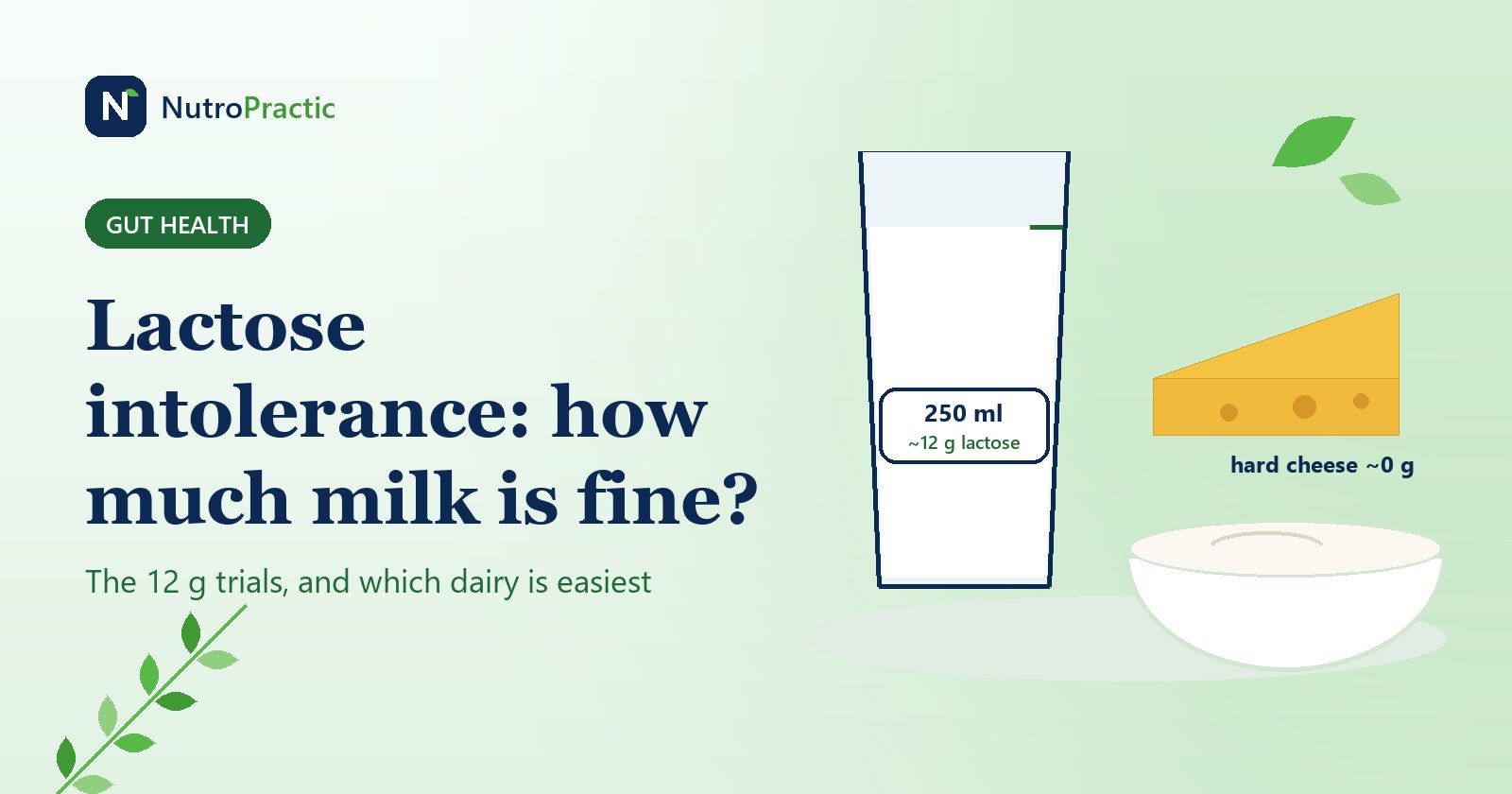
Lactose intolerance: how much milk most people can actually tolerate, and which dairy is easiest
Most adults who don't digest lactose well still handle about 12 g at once, roughly a 250 ml glass of milk, in blinded trials. What the 12 g studies found, a lactose table for milk, yoghurt, cheese, chai and dahi, how lactase tablets and A2 milk compare, why the famous 68% figure was retracted, and how to keep calcium up if you cut back.
25 Oct 2026
Newsfeed for your website
Want this feed on your website?
Add it to any site with one copy-and-paste snippet. No sign-up, and it updates itself every hour.
Start with a virtual consultation
Tell Dr. Triveni what you want to change. You will leave with a clear next step, whether you are in Toronto, London, New York or Chennai.