Postpartum health · October 22, 2026
Three years after a pregnancy with high blood pressure, 180 Sydney mothers reported eating more vegetables and exercising more. They also reported more chips, takeaways and less motivation
High blood pressure in pregnancy raises a woman's heart risk for life, and diet and exercise are the standard advice afterwards. A follow-up of women from an Australian trial tracked what they reported at six months, one year and about three years after the birth. The vegetable tally rose, but so did the salty snacks, and the way the questions were asked changed halfway.

Pre-eclampsia and the other forms of high blood pressure in pregnancy complicate 5 to 10% of pregnancies worldwide, and the risk they signal does not end at the birth. The paper's own introduction cites an estimated 10-year risk of major cardiovascular disease of 5.5 per 1,000 women after such a pregnancy, against 2.1 per 1,000 without one. Eating well and moving more is the usual advice. What is much less known is whether women manage it in the years after, with a toddler in the house. A team at the George Institute for Global Health and UNSW Sydney looked, and published the results in Nutrients on 20 October.
The women came from BP2 (Blood Pressure Postpartum), a trial at six Sydney hospitals that, six months after the birth, randomly assigned 525 women to one of three kinds of follow-up care: a GP visit with general advice, a specialist clinic visit with dietary counselling, or that visit plus six months of phone coaching from dietitians or exercise physiologists. This sub-study did not test which care worked better. It followed the 180 women who filled in diet and activity questionnaires at all three points: six months, twelve months and, at a median of 3.2 years, the long-term follow-up. Most had had pre-eclampsia (59%), 78% held a university degree and their average body mass index was 25.4.
Across the first year, almost nothing moved: about 2.6 serves of vegetables and 1.7 of fruit a day, and a median of roughly 320 minutes a week of moderate or vigorous activity. At three to four years the reports jumped. Vegetables rose to 4.2 serves a day and fruit to 2.2. The share of women reaching the Australian target of five serves of vegetables went from about one in ten to 36%, and those meeting both the vegetable and fruit targets from 7% to 26%. Weekly activity rose to a median of 515 minutes, though walking and leisure-time exercise did not change; the authors say most of the extra came from vigorous gardening.
The less flattering numbers rose too. Salty snacks went from a median of 0.07 to 0.41 serves a day, takeaway meals from about once every two weeks to 1.5 times a week, and fried potatoes, soft drinks and cordials were up on the first year, while water fell from seven cups a day to five. On an attitudes survey the women answered the same way each time, motivation to live healthily slipped (4.3 to 4.1 on a five-point scale), perceived barriers rose (2.3 to 2.5) and satisfaction with their food and appearance fell (3.0 to 2.7). The biggest barrier moved from food cravings to lack of time by the end of the first year.
The authors are frank that much of the jump may be an artefact. At six and twelve months diet and activity were asked with short telephone questions from the New South Wales population health survey; at three to four years the women filled in the Australian Eating Survey, a detailed food-frequency questionnaire covering the past three to six months, and the long International Physical Activity Questionnaire, which is known to overestimate activity. Both newer tools tend to record more of everything, which fits a rise in vegetables and crisps alike. The 180 women were also only about a third of those randomised, and were better educated, slimmer and more likely to have breastfed than those left out, and the attitudes survey has not been validated. The steadier signal is the one measured the same way throughout: motivation sagging and time running short. The authors suggest support after a hypertensive pregnancy may need to continue beyond the first year.
Self-reported diet, activity and attitudes of 180 women at 6 months, 12 months and 3–4 years after a hypertensive pregnancy, BP2 trial, Sydney
180
Women with complete diet and activity data at all three time points, of 525 randomised in the BP2 trial six months after the birth
2.6 → 4.2
Vegetable serves a day, six months vs three to four years; fruit 1.7 → 2.2 (both p < 0.001)
9% → 36%
Women eating at least five serves of vegetables a day; meeting both vegetable and fruit targets 7% → 26%
330 → 515
Median minutes a week of moderate-to-vigorous activity; walking and leisure exercise did not change, vigorous gardening rose
0.07 → 0.41
Median serves of salty snacks a day; takeaway meals 0.46 → 1.5 times a week
7 → 5
Median cups of water a day, six months vs three to four years
3.0 → 2.7
Satisfaction with food and appearance (1–5 scale); motivation 4.3 → 4.1, barriers 2.3 → 2.5 (all p < 0.001)
Study: Chen Y, Gow M, Harris K, Roberts L, Canty A, Pickup W, Hirschhorn-Edwards N, Henry A, 'Changes in Nutrition and Physical Activity up to 4 Years Following a Hypertensive Pregnancy: A Blood Pressure Postpartum Longitudinal Sub-Study', Nutrients 2026, 18(20), 3443, published 20 October 2026, doi 10.3390/nu18203443 (open access, CC BY; read in full). Observational sub-study of the three-arm BP2 randomised trial (ACTRN12618002004246) at six Sydney hospitals; 180 of 525 randomised women with complete data at 6 months, 12 months and 3–4 years (medians 0.5, 1.0 and 3.2 years postpartum). Pregnancy diagnoses: pre-eclampsia 58.9%, gestational hypertension 22.8%, chronic hypertension 13.3%, pre-eclampsia on chronic hypertension 5.0%. Mean age 34.6 at the birth; baseline BMI 25.4 ± 5.4. Diet and activity at 6 and 12 months from NSW Population Health Survey telephone questions; at 3–4 years from the Australian Eating Survey (food-frequency questionnaire) and the long-form IPAQ. Means ± SD: vegetables 2.6 ± 1.3, 2.7 ± 1.4, 4.2 ± 2.0 serves a day; fruit 1.7 ± 1.0, 1.7 ± 1.0, 2.2 ± 1.3. Medians [IQR]: activity 330 [280], 313 [331], 515 [690] min a week; salty snacks 0.07, 0.03, 0.41 serves a day; takeaway 0.46, 0.46, 1.50 times a week; water 7, 6, 5 cups a day. At least five vegetable serves: 17 (9.4%), 18 (10.0%), 64 (35.6%); both vegetable and fruit targets: 7.2%, 7.2%, 26.1%; at least two fruit serves unchanged (51.7%, 53.9%, 51.7%); at least 150 min activity 91.5%, 91.5%, 86.7% (p = 0.77). Linear and generalised linear mixed models without covariate adjustment; perception scores from a study-specific, unvalidated survey. Included women were better educated, had lower BMI and breastfed longer than the 345 excluded. Funding: China Scholarship Council and an NSW Health cardiovascular researcher grant; no conflicts of interest declared.
- Australia's dietary guidelines count a standard serve of vegetables as about 75 g and a serve of fruit as about 150 g. Adult women are advised to eat five serves of vegetables and two of fruit a day.
- In this study about half the women met the fruit target at every point, but only about one in ten met the vegetable target during the first year after the birth.
- More than nine in ten women in the analysis already reported at least 150 minutes a week of moderate or vigorous activity at six months postpartum, the amount most guidelines recommend. Self-reports tend to run higher than activity measured with wearable trackers.
- Short food questions and long food questionnaires can give different answers for the same person. Earlier research cited by the authors found only about a quarter of people reported the same fruit and vegetable serves on short survey questions as in a 24-hour recall or food diary.
- The BP2 trial's main question, whether more intensive follow-up care after a hypertensive pregnancy improves heart risk markers, is reported separately; this sub-study only describes how habits and attitudes changed.
- Changes in Nutrition and Physical Activity up to 4 Years Following a Hypertensive Pregnancy: A Blood Pressure Postpartum Longitudinal Sub-StudyNutrients, October 2026 · The paper: full text, open access
- BP2 (Blood Pressure Postpartum) trial registration, ACTRN12618002004246Australian New Zealand Clinical Trials Registry · The parent randomised trial
- Vista general de un puesto de verduras en el mercado de Punata, BoliviaWikimedia Commons · The photo, CC BY 4.0 (AlissCh)
General information, not medical advice. This study describes what women reported about their own habits, measured with different questionnaires over time; it did not test a diet or measure heart health. If you had high blood pressure or pre-eclampsia in pregnancy, ask your GP or midwife about regular blood pressure checks and long-term heart health, and a dietitian about eating well around family life.
Analysis by NutroPractic from the sources listed. Written for general readers; it does not replace advice from your own doctor.
From our articles
Our guides on this subject
Plain-language guides on nutrition and wellness, backed by research.
Heart and blood pressure
Beetroot juice and dietary nitrate: what the blood-pressure trials measured, and who should be careful
Drinking 250 ml of beetroot juice dropped clinic systolic blood pressure by 7.7 mmHg in 4-week clinical trials. Here is how tongue bacteria convert dietary nitrate to nitric oxide, why antiseptic mouthwash blocks it completely, and the oxalate kidney stone warning.
18 Nov 2026
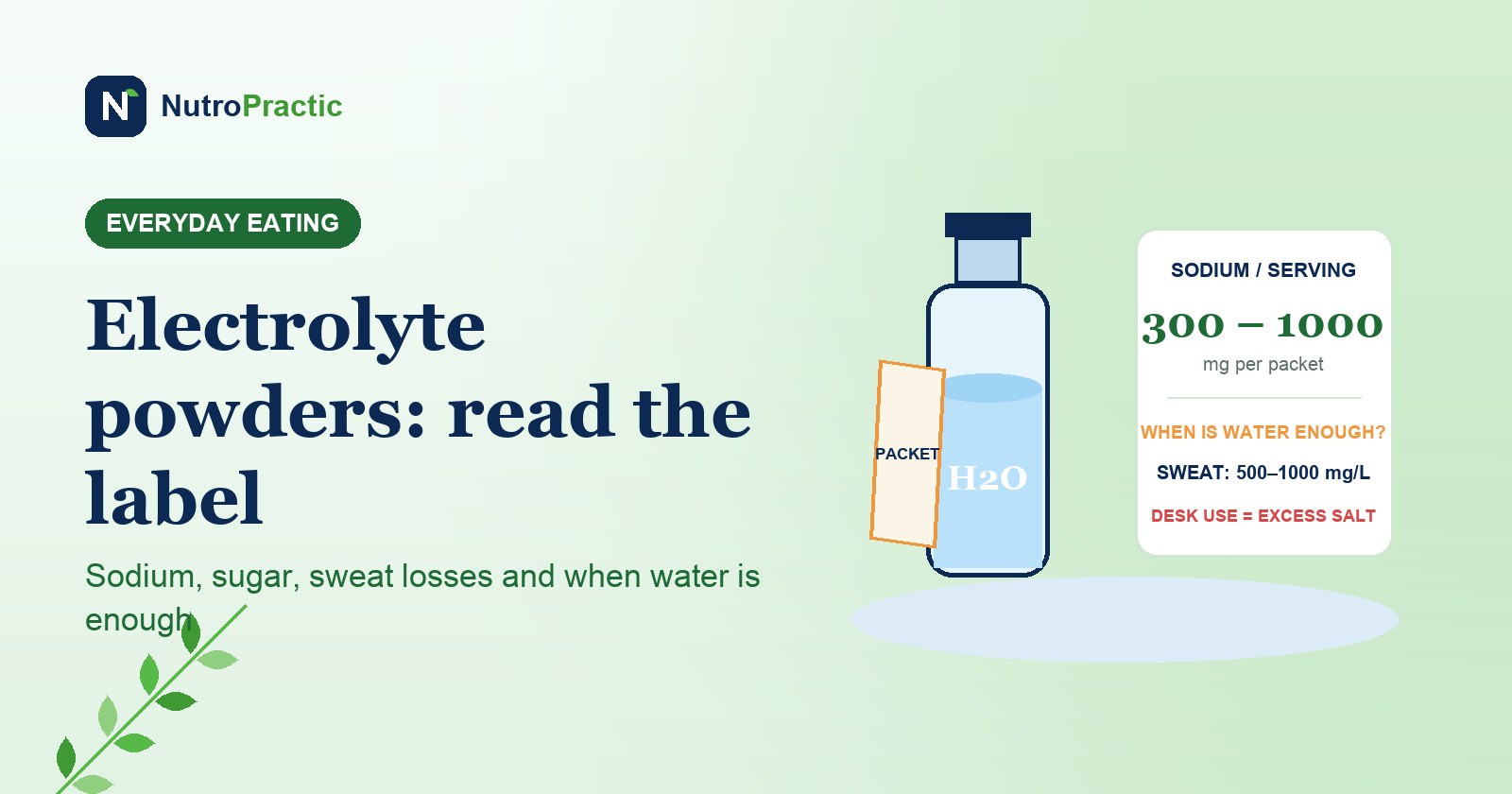
Everyday eating
Electrolyte powders: sodium and sugar per bottle, and when water is enough
Packets deliver 300 to 1,000 mg sodium and up to 11 g sugar. Here is how popular drink mixes compare with actual sweat losses—and who actually needs them.
10 Nov 2026
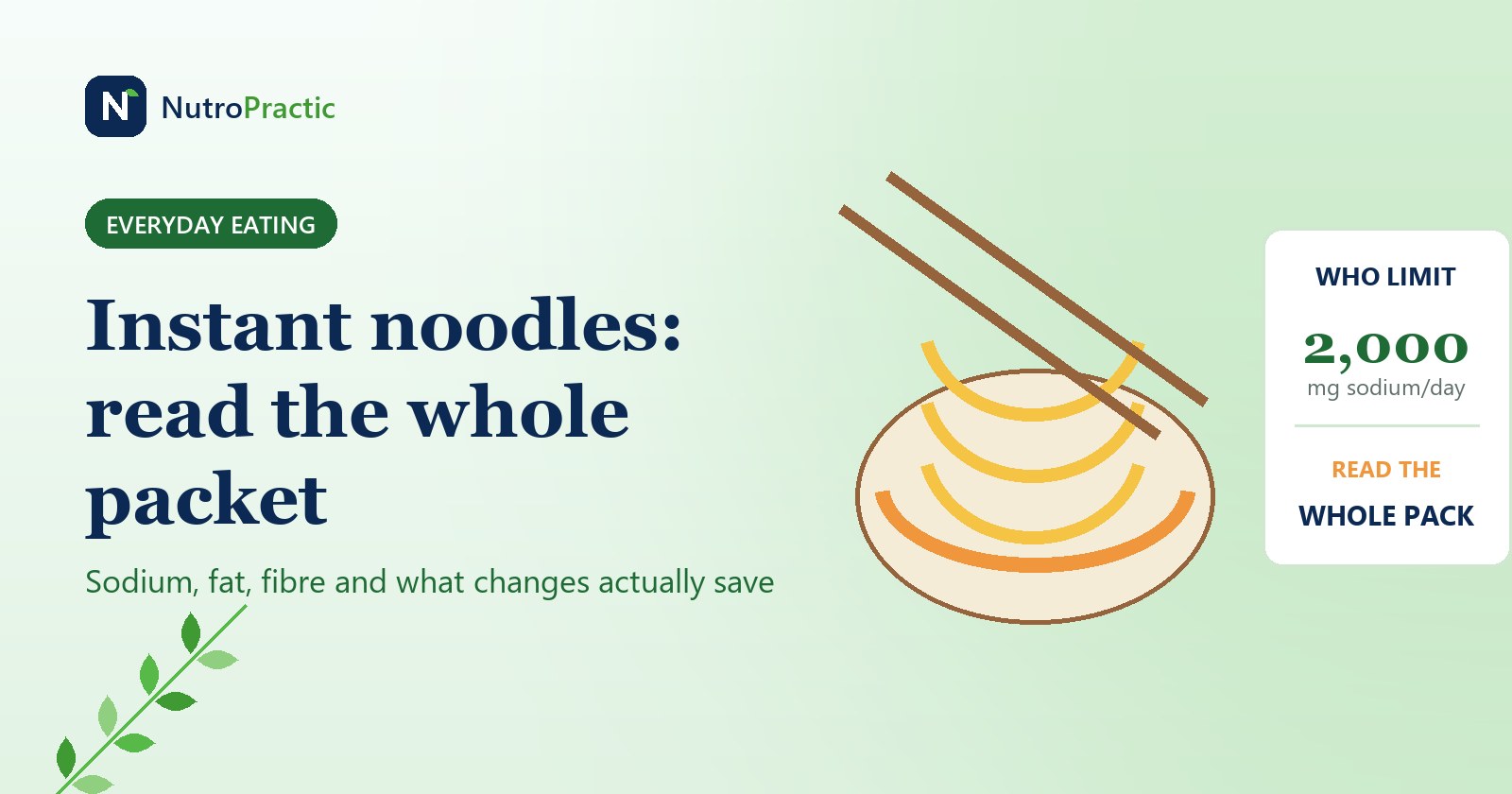
Everyday eating
Instant noodles: the sodium in the whole packet, and what actually reduces it
Three official labels range from 750 to 1,520 mg sodium per packet. Here is the whole-pack arithmetic, what the broth study measured, and how to turn noodles into a more complete meal.
6 Nov 2026
Newsfeed for your website
Want this feed on your website?
Add it to any site with one copy-and-paste snippet. No sign-up, and it updates itself every hour.
Start with a virtual consultation
Tell Dr. Triveni what you want to change. You will leave with a clear next step, whether you are in Toronto, London, New York or Chennai.