Gut health · October 19, 2026
75 vegans, 75 meat-eaters, one deep look inside the gut: the vegans had fewer bacterial species, but the ones they had lined up with better blood sugar, cholesterol and inflammation
A team in Copenhagen sequenced the gut microbes of 150 healthy Danish adults and measured hundreds of chemicals in their stool, blood and urine. The vegans' guts were less varied, which usually counts as a bad sign. Yet their microbes, their viruses and even a tiny gut protist pointed the other way. Here's what the study found, and why it can't tell you to go vegan.
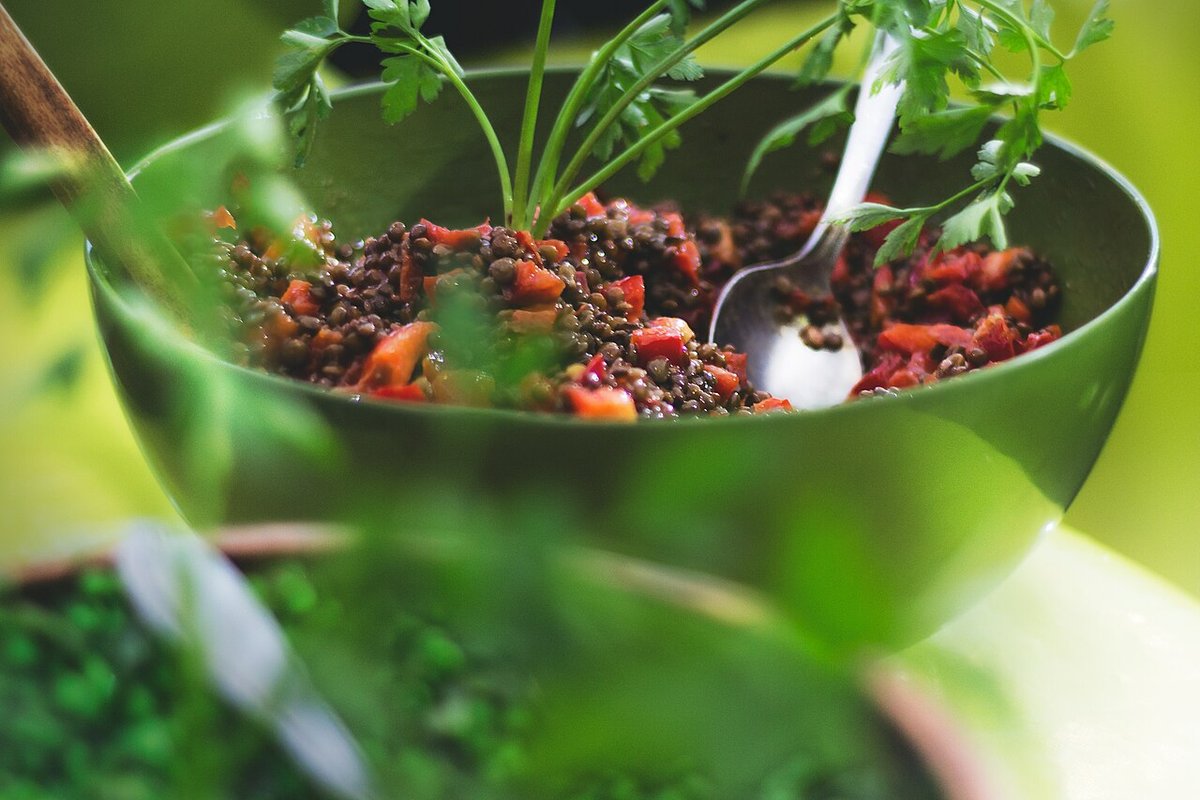
People who follow a vegan diet tend to have better numbers on the tests doctors use to judge heart and metabolic health. One of the big open questions is how much of that runs through the trillions of microbes in the gut, which turn what we eat into chemicals that end up in the blood. A study published on 7 October in the journal Microbiome took one of the most detailed looks yet.
Researchers at the University of Copenhagen's Novo Nordisk Foundation Center for Basic Metabolic Research, working with France's INRAE and Imperial College London, compared 75 vegans with 75 omnivores, all Danish adults without known diseases. They did not just count bacteria. They sequenced all the DNA in each person's stool, which picks up bacteria, viruses and other microbes, measured metabolites in stool, blood and urine, and checked immune signalling molecules (cytokines) in the blood, then set all of it against diet records and standard health measures.
The diets differed in the way you would expect: the vegans ate more fibre and digestible carbohydrate, and less protein and fat. They also looked healthier on paper, with lower blood sugar measures, lower levels of the blood fats that clog arteries and less sign of low-grade inflammation.
The surprise was diversity. A more varied gut community is usually seen as a mark of good health, but the vegans had lower bacterial diversity than the omnivores. Even so, the bacteria that were more common in vegans went hand in hand with fibre intake, and they tended to be species that a published ranking (the ZOE Microbiome Ranking 2024) links with better heart and metabolic health. Among the vegans, those who ate more protein had more diverse gut bacteria, and they carried more of the 'favourable' species otherwise more typical of omnivores.
Bacteria were not the only difference. The vegans carried fewer of the viruses that attack and kill gut bacteria (bacteriophages), and were more likely to carry Blastocystis, a common single-celled gut organism. Blastocystis was once treated as a pest, but a 2024 study of almost 57,000 people in 32 countries linked it with healthier diets and better heart and metabolic markers. In this study, carrying it went with lower systolic blood pressure. In the omnivores, higher levels of two microbe-made compounds, trimethylamine-N-oxide (TMAO, produced from nutrients plentiful in meat and eggs) and p-cresyl sulphate, went with markers of worse metabolic and kidney health.
The limits matter. With 150 people seen at one point in time, this is a snapshot, not an experiment: it shows that a vegan diet goes with a different gut and a healthier profile, not that the microbes cause the better health or that switching diets would produce the same change. Vegans may differ from meat-eaters in other ways, such as exercise, smoking or body weight. All the volunteers were Danish and healthy, and the paper is an early version that may still be edited. The practical takeaway is the familiar one: fibre from beans, lentils, whole grains, vegetables and fruit is what the vegans' favourable bacteria tracked most closely, and you don't have to give up meat to eat more of it.
Gut microbes, metabolites and health markers in 75 vegans and 75 omnivores, Denmark
150
Danish adults without known diseases: 75 vegans and 75 omnivores
3
Body samples measured for metabolites: stool, blood (serum) and urine
Lower
Bacterial diversity in vegans than in omnivores, despite their healthier profile
Lower
Blood sugar measures, artery-clogging blood fats and inflammation markers in vegans
More common
Blastocystis, a gut protist, in vegans; carrying it went with lower systolic blood pressure
TMAO
Microbe-made compound that, with p-cresyl sulphate, went with worse metabolic and kidney markers in omnivores
Study: Thirion F, Fan Y, Hansen TH, Garcia-Perez I, and others, Ehrlich SD, Pedersen O, 'Vegans have distinct profiles of their gut microbiome and multi-compartment metabolome that align with markers of metabolic health', Microbiome, published online 7 October 2026 (received 12 January 2026, accepted 28 August 2026), doi 10.1186/s40168-026-02538-y. Novo Nordisk Foundation Center for Basic Metabolic Research (University of Copenhagen), Université Paris-Saclay/INRAE (France), Imperial College London (UK), Technical University of Denmark and others. Cross-sectional comparison of 75 vegans and 75 omnivores without known diseases: shotgun sequencing of faecal DNA, faecal, serum and urine metabolomics, and blood cytokine profiling, related to clinical and biochemical markers of cardiometabolic health. Approved by the Ethical Committees of the Capital Region of Denmark (H-3-2012-145). Funding: Danish Council for Independent Research and Metagenopolis (France); the Copenhagen centre is partly funded by an unconditional donation from the Novo Nordisk Foundation. Funders had no role in the study; the authors declare no competing interests. The published abstract reports directions of difference, not effect sizes, so no percentages are given here. The article is an early version shared before the final Version of Record; figures here are from the abstract, article page and supplementary file descriptions. Blastocystis background: Piperni E and others, Cell, 2024, 56,989 people in 32 countries.
- Shotgun sequencing reads all the DNA in a stool sample, so it can find bacteria, viruses and single-celled organisms like Blastocystis at once, rather than only the bacteria that older methods target.
- Bacteriophages, viruses that infect bacteria, are thought to be among the most numerous biological entities in the human gut.
- In the 2024 study of almost 57,000 people, how often people carried Blastocystis varied hugely by country, from about 56% in Fiji to under 3% in Japan.
- TMAO is made in two steps: gut bacteria turn choline and carnitine, plentiful in eggs and red meat, into trimethylamine, and the liver turns that into TMAO.
- Vegans have distinct profiles of their gut microbiome and multi-compartment metabolome that align with markers of metabolic healthMicrobiome, October 2026 · The study: abstract, authors, funding, ethics approval and supplementary file descriptions (open access, early version)
- Intestinal Blastocystis is linked to healthier diets and more favorable cardiometabolic outcomes in 56,989 individuals from 32 countriesCell, 2024 · The large study that changed how researchers see Blastocystis
- Unveiling the hidden ally: Blastocystis links healthier diets and cardiometabolic benefitsSignal Transduction and Targeted Therapy, March 2025 · Commentary on the Cell study, including carriage rates by country
General information, not medical advice. This small observational study shows that a vegan diet goes with a different gut microbiome and healthier markers, not that the diet or the microbes caused them. A vegan diet needs planning, including a reliable source of vitamin B12. If you have a health condition, are pregnant or are thinking of a big change to your diet, talk to your doctor or a registered dietitian first.
Analysis by NutroPractic from the sources listed. Written for general readers; it does not replace advice from your own doctor.
From our articles
Our guides on this subject
Plain-language guides on nutrition and wellness, backed by research.

Cardiovascular wellness
Psyllium husk: how much soluble fibre lowers LDL cholesterol and stabilizes post-meal glucose in clinical trials
Viscous soluble fibre forms a thick gel matrix in the small intestine that binds bile acids and blunts post-meal glucose spikes. Across dozens of randomized controlled trials, 7 to 10.2 grams of psyllium daily lowers LDL cholesterol by 6% to 12% without stripping HDL, while reducing postprandial glucose surges by 15% to 25% in metabolic syndrome and type 2 diabetes. Discover the bile acid sequestration mechanism, trial meta-analyses, exact timing before meals, water ratios, and titration protocols to avoid gas and cramping.
13 Nov 2026
Heart health
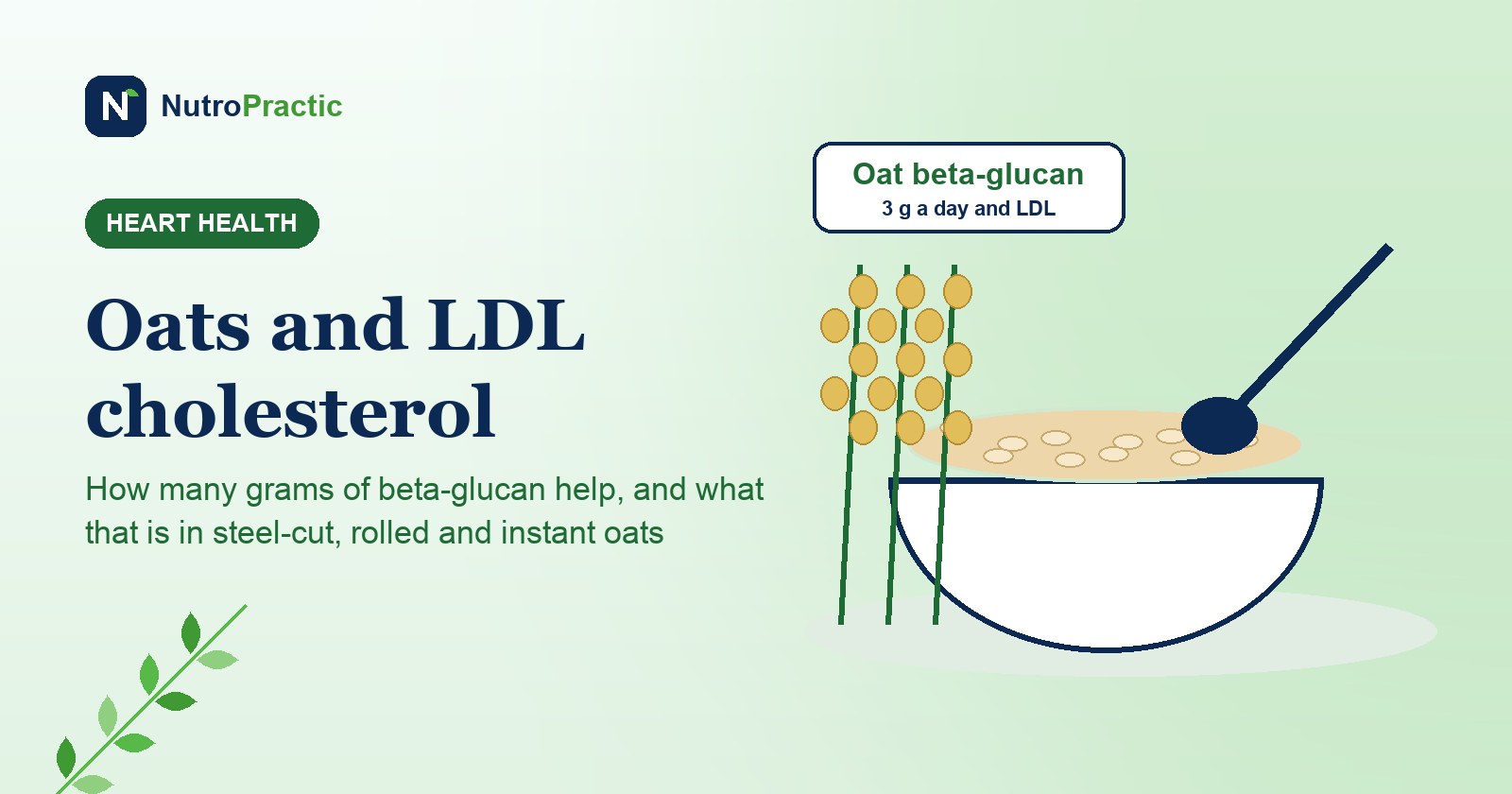
Oats and beta-glucan: how many grams lower LDL, and how much steel-cut, rolled and instant oats it takes
The 3 g a day of beta-glucan behind the FDA and EFSA claims lowers LDL by about 0.25 mmol/L (10 mg/dL). That is roughly 60 to 68 g of dry oats or 50 g of oat bran a day. Grams per portion, glycaemic index by oat type and the gluten caveat.
17 Nov 2026
Heart health
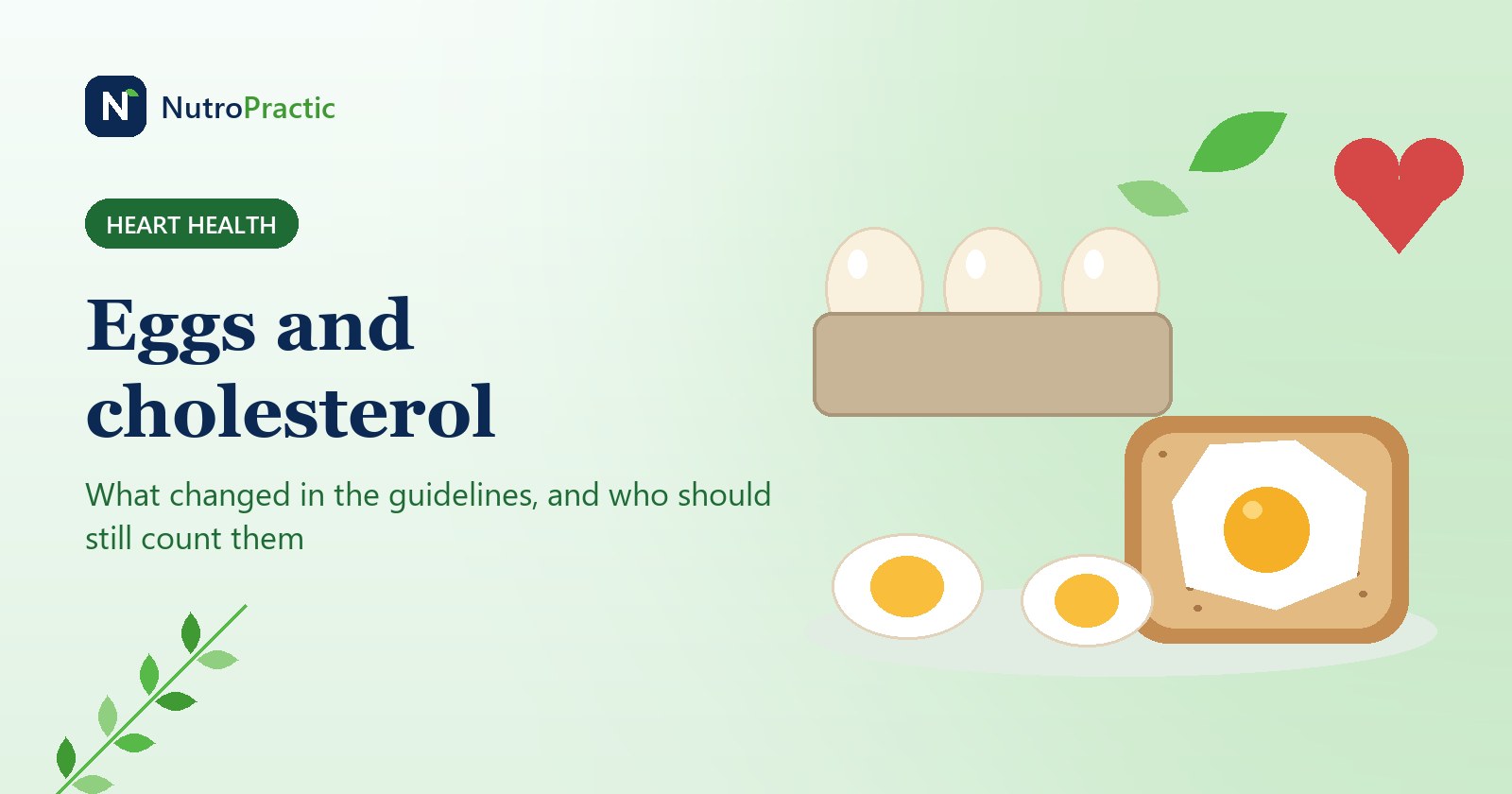
Eggs and cholesterol: what changed in the guidelines, and who should still count them
The US dropped its 300 mg cholesterol limit in 2015, then a 2019 study linked every extra half egg a day with more heart disease. Here is how much an egg really moves LDL, what the large studies found, why people with type 2 diabetes or high LDL may want a ceiling, and why what you eat with the egg matters more than the egg.
18 Oct 2026
Newsfeed for your website
Want this feed on your website?
Add it to any site with one copy-and-paste snippet. No sign-up, and it updates itself every hour.
Start with a virtual consultation
Tell Dr. Triveni what you want to change. You will leave with a clear next step, whether you are in Toronto, London, New York or Chennai.