Cancer · October 17, 2026
461,682 older Americans, 19 years of cancer records: eating the most ultra-processed food made no difference to bowel cancer. The breakfast cereal went one way, the hot dogs the other
Researchers at the US National Cancer Institute expected ultra-processed food to raise bowel cancer risk. Overall it didn't. Split the label apart and the reason shows: the same category held most of these people's whole grains and a good part of their calcium, and three-quarters of their processed meat.
Ultra-processed food has become shorthand for everything wrong with the modern diet: factory-made products built from refined ingredients and additives, from soft drinks and sausages to packaged bread and breakfast cereal. Its links with weight gain and heart disease are well studied. Bowel cancer, the third most common cancer worldwide, has been a puzzle: some large studies find more cases among heavy eaters of these foods, others find nothing. A study published on 15 October 2026 in PLOS Medicine, led by researchers at the US National Cancer Institute, tried to work out why.
They used the NIH-AARP Diet and Health Study, which signed up AARP members aged 50 to 71 in 1995 and 1996 in six states (California, Florida, Louisiana, New Jersey, North Carolina and Pennsylvania) and the Atlanta and Detroit areas. After leaving out anyone who already had cancer, poor health or implausible food records, 461,682 people remained. Each filled in a questionnaire on 124 foods and drinks, which the team broke down into thousands of individual food codes and sorted by the Nova system, where group 4 is ultra-processed. The middle person got 43% of their calories from ultra-processed food. Cancer registries then followed them for a median of 18.8 years, to the end of 2018, and recorded 10,075 bowel cancers.
The headline result is a null. The fifth of people who ate the most ultra-processed food, by weight per 1,000 calories, were no more likely to get bowel cancer than the fifth who ate the least (hazard ratio 0.97, with a range of 0.91 to 1.03 that takes in no difference). That held after allowing for age, sex, race, education, smoking, exercise, alcohol, family history and self-rated health, and again after adding diet quality or body weight. It held separately for the upper colon, the lower colon and the rectum.
Taking the category apart explains a lot. In this group, 82.8% of whole grains came from ultra-processed foods such as packaged bread and breakfast cereal, as did about a third of fibre (33.5%) and calcium (31.7%), and almost a quarter of dairy (23.5%). So did 74.3% of processed meat. The subgroups pulled in opposite directions. People eating the most bread had a 9% lower risk than those eating the least, breakfast cereals 16% lower, and frozen desserts and milk drinks 18% lower. Reconstituted meat and fish products, such as sausages, hot dogs and luncheon meats, went with a 10% higher risk.
The nutrients behaved the way cancer guidelines already say they should, wherever they came from. Calcium and dairy were linked with lower risk from both ultra-processed and less processed sources, and meat with higher risk from both. Whole grains and fibre from ultra-processed foods were linked with lower risk, and the authors think the less processed versions showed no clear link only because so few people ate whole grains that way. Diet quality still counted: compared with people who ate little ultra-processed food and had a good overall diet, those with a poor diet had a higher risk at both low and high intakes, about 22% higher in the top fifth. And in a model that swapped 10% of the weight of ultra-processed food for unprocessed or minimally processed food, bowel cancer risk was 2% lower, a smaller effect than the 6% found with the same swap in a large European study.
The limits are real, and the authors list them. The questionnaire was designed to measure nutrients, not processing, so it could not tell plain yogurt from the sweetened kind. Diet was asked about once, in the mid-1990s, when ultra-processed food made up less of the American diet than the more than half of calories it supplies today. Participants were older and 91% were non-Hispanic white. There was no data on additives such as emulsifiers, which lab studies tie to gut inflammation. It is an observational study, so it shows links rather than cause and effect, and with many sub-analyses some findings may be chance.
The useful message is not that ultra-processed food is safe for the bowel. It is that the label lumps together a wholegrain loaf and a pack of hot dogs, and for bowel cancer those seem to matter more than how much factory handling either went through. Whole grains, fibre, dairy and calcium on one side and processed meat on the other is exactly what bowel cancer advice already says.
NIH-AARP Diet and Health Study (six US states plus Atlanta and Detroit): 461,682 cancer-free adults aged 50 to 71 in 1995 to 1996, diet asked once, followed for bowel cancer to the end of 2018
461,682
Adults followed for a median of 18.8 years; 10,075 bowel cancers diagnosed
43%
Median share of daily calories from ultra-processed food at the start
0.97
Hazard ratio for bowel cancer, highest vs lowest fifth of ultra-processed food intake: no clear difference
82.8% and 74.3%
Share of whole grains, and of processed meat, that came from ultra-processed foods
0.84 and 0.91
Hazard ratios for the highest vs lowest intake of breakfast cereals and of bread
1.10
Hazard ratio for the highest vs lowest intake of reconstituted meat and fish products
Figures are from Abar, O'Connell and colleagues, 'Associations of food processing and dietary risk factors with colorectal cancer incidence in the NIH-AARP Diet and Health Study: A cohort study', PLOS Medicine 23(10), e1005251 (2026), doi 10.1371/journal.pmed.1005251, published 15 October 2026 (open access, public domain). Intake was ranked in sex-specific fifths of grams of ultra-processed food per 1,000 kcal a day. Main hazard ratio 0.97 (95% CI 0.91 to 1.03, P for trend 0.55), adjusted for age, energy, sex, race and ethnicity, smoking, education, physical activity, alcohol, family history of cancer and self-rated health. Subgroup ranges: breakfast cereals 0.79 to 0.90, bread 0.86 to 0.97, frozen desserts and milk drinks 0.82 (0.77 to 0.88), reconstituted meat and fish 1.04 to 1.18. Swapping 10% of grams from ultra-processed to minimally processed food: 0.98 (0.96 to 0.99). Percentage changes in the story are 1 minus the hazard ratio and are relative risks. Observational study: associations only.
- People in the top fifth for ultra-processed food were about twice as likely to have obesity at the start as those in the bottom fifth: 29.6% against 15.2%.
- Each extra serving of dairy per 1,000 calories from ultra-processed sources, such as flavoured yogurt or milk drinks, went with a 25% lower bowel cancer risk in this study; from less processed sources the figure was 10%.
- The same kind of study can point different ways in different countries. Europeans in the EPIC study ate almost twice as much ultra-processed meat as these Americans (36.2 g against 20.1 g a day on average) but only a third as much ultra-processed breakfast cereal (5.0 g against 15.2 g).
- An earlier French study that linked ultra-processed food with more bowel cancer was based on just 153 cases, and that link was not statistically significant. This study had 10,075.
- Most bowel cancers here started in the upper part of the colon: 4,787 cases, against 2,633 in the lower colon and 2,389 in the rectum.
- Associations of food processing and dietary risk factors with colorectal cancer incidence in the NIH-AARP Diet and Health Study: A cohort studyPLOS Medicine, published 15 October 2026 (open access, public domain) · The study: participants, methods, results, subgroups and limitations
- PubMed record 42879326PubMed · Abstract and indexing
- Full text on PubMed CentralPMC (PMC13671506) · Open-access full text with tables and figures
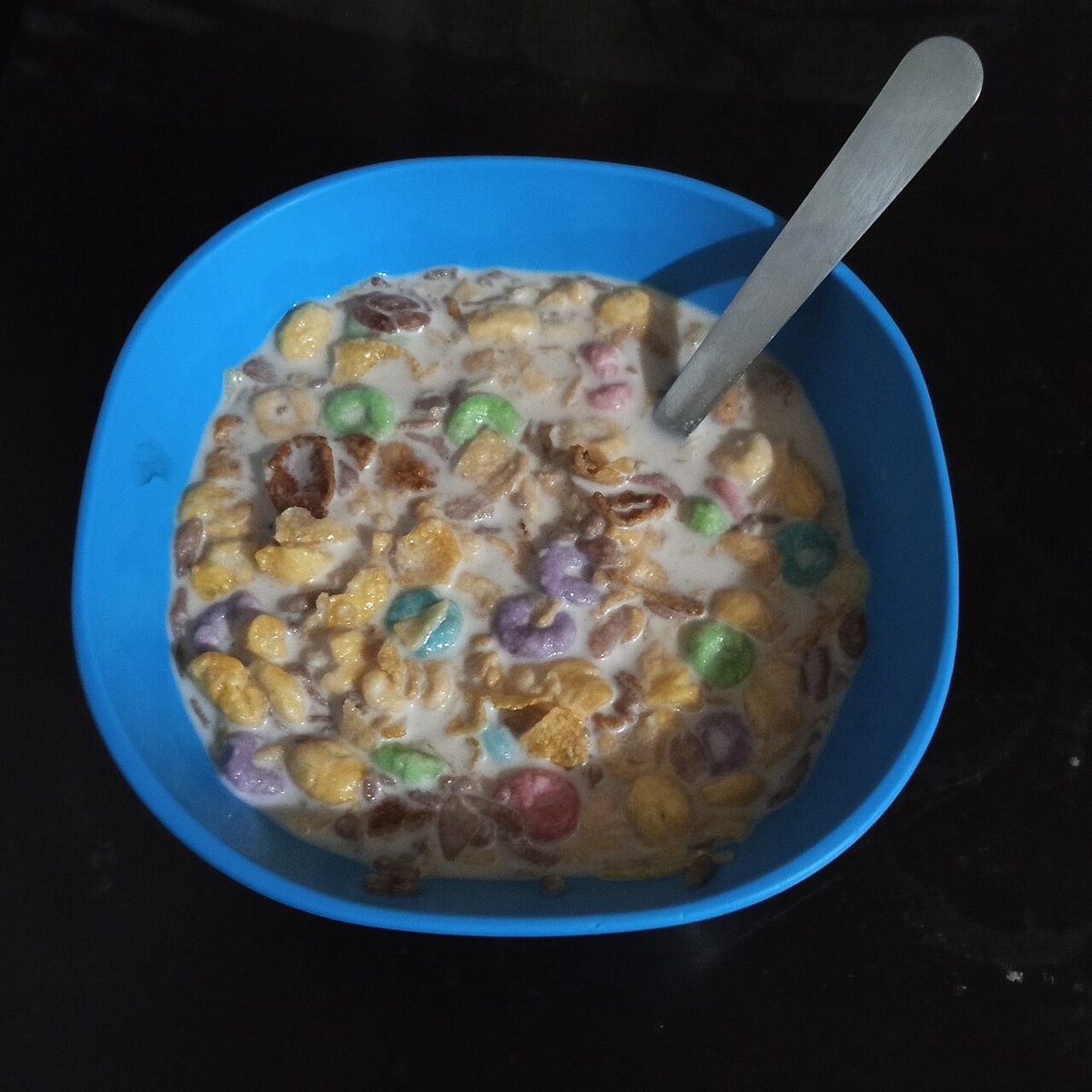
- Bowl of mixed cerealsWikimedia Commons · Image, CC0, by Toby Scratch Fanatic
General information, not medical advice. Blood in your stool, a lasting change in bowel habits, tummy pain or unexplained weight loss need a doctor's assessment. Ask your doctor about bowel cancer screening for your age.
Analysis by NutroPractic from the sources listed. Written for general readers; it does not replace advice from your own doctor.
From our articles
Our guides on this subject
Plain-language guides on nutrition and wellness, backed by research.

Supplements and vitamins
Zinc carnosine for the gut lining: what the two human trials gave, the zinc in each dose, and the copper catch
Zinc carnosine is only about 22.6% zinc, so 75 mg twice a day is roughly 34 mg of zinc a day. Here are the doses and results of the 10-person NSAID permeability trial and the 20-person aspirin pilot, and the copper cautions.
22 Nov 2026

Everyday eating
The fibre gap: why most adults fall short, and an easy 30-gram day
Most adults in the US, Canada and Europe eat far less fibre than recommended, even though higher intakes are linked to lower rates of heart disease, type 2 diabetes and bowel cancer. How much you need, where it hides, and a sample day that gets you to 30 grams.
3 Oct 2026
Gut health
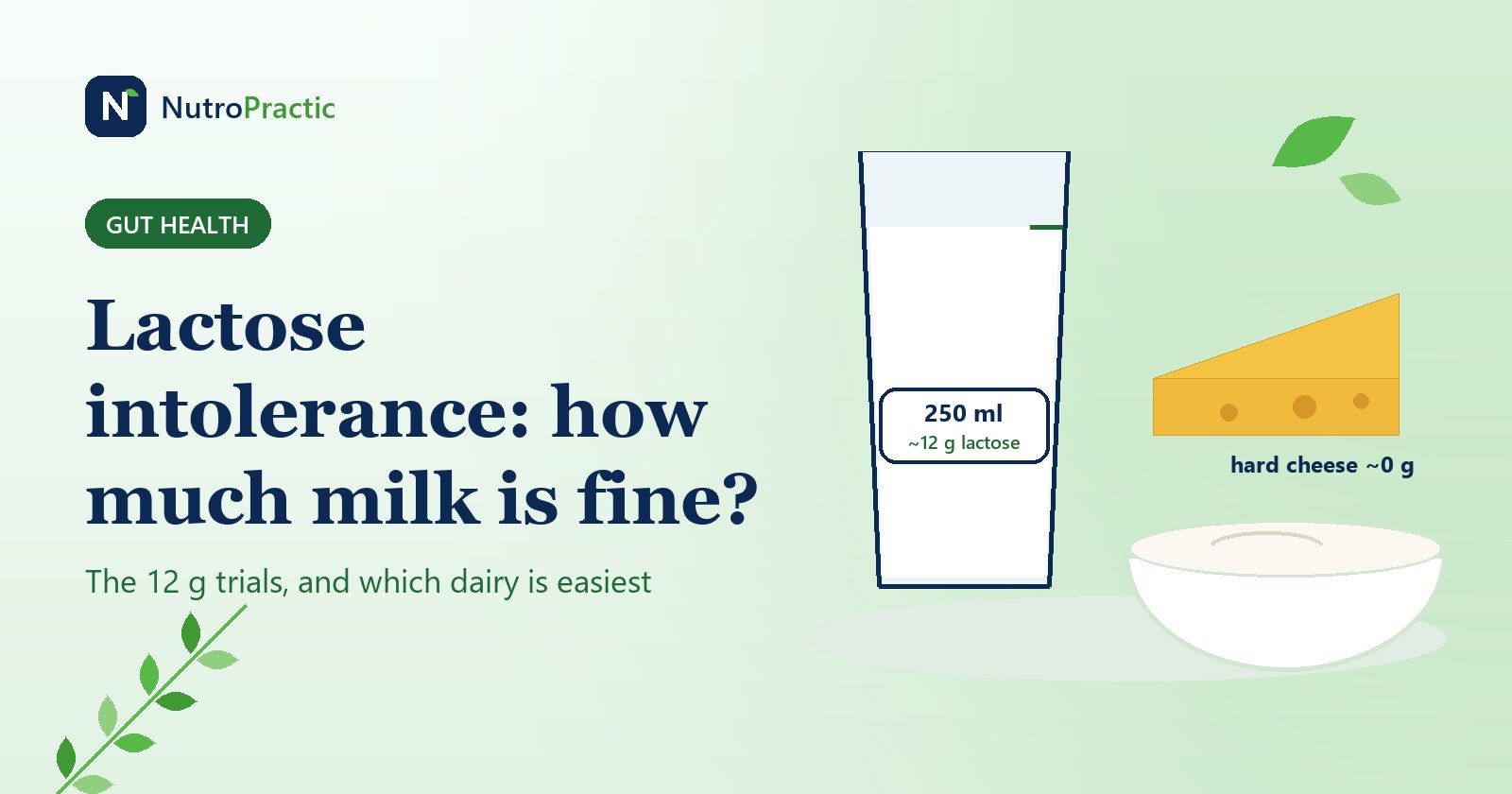
Lactose intolerance: how much milk most people can actually tolerate, and which dairy is easiest
Most adults who don't digest lactose well still handle about 12 g at once, roughly a 250 ml glass of milk, in blinded trials. What the 12 g studies found, a lactose table for milk, yoghurt, cheese, chai and dahi, how lactase tablets and A2 milk compare, why the famous 68% figure was retracted, and how to keep calcium up if you cut back.
25 Oct 2026
Newsfeed for your website
Want this feed on your website?
Add it to any site with one copy-and-paste snippet. No sign-up, and it updates itself every hour.
Start with a virtual consultation
Tell Dr. Triveni what you want to change. You will leave with a clear next step, whether you are in Toronto, London, New York or Chennai.