Food science · November 4, 2026
Tomato compounds reached the bloodstream in 11 adults — but more than 99% arrived in a changed form
After about half a litre of tomato juice, researchers tracked a little-studied family of plant compounds for 12 hours. The experiment maps what the body did with them; it does not show that they improve health.
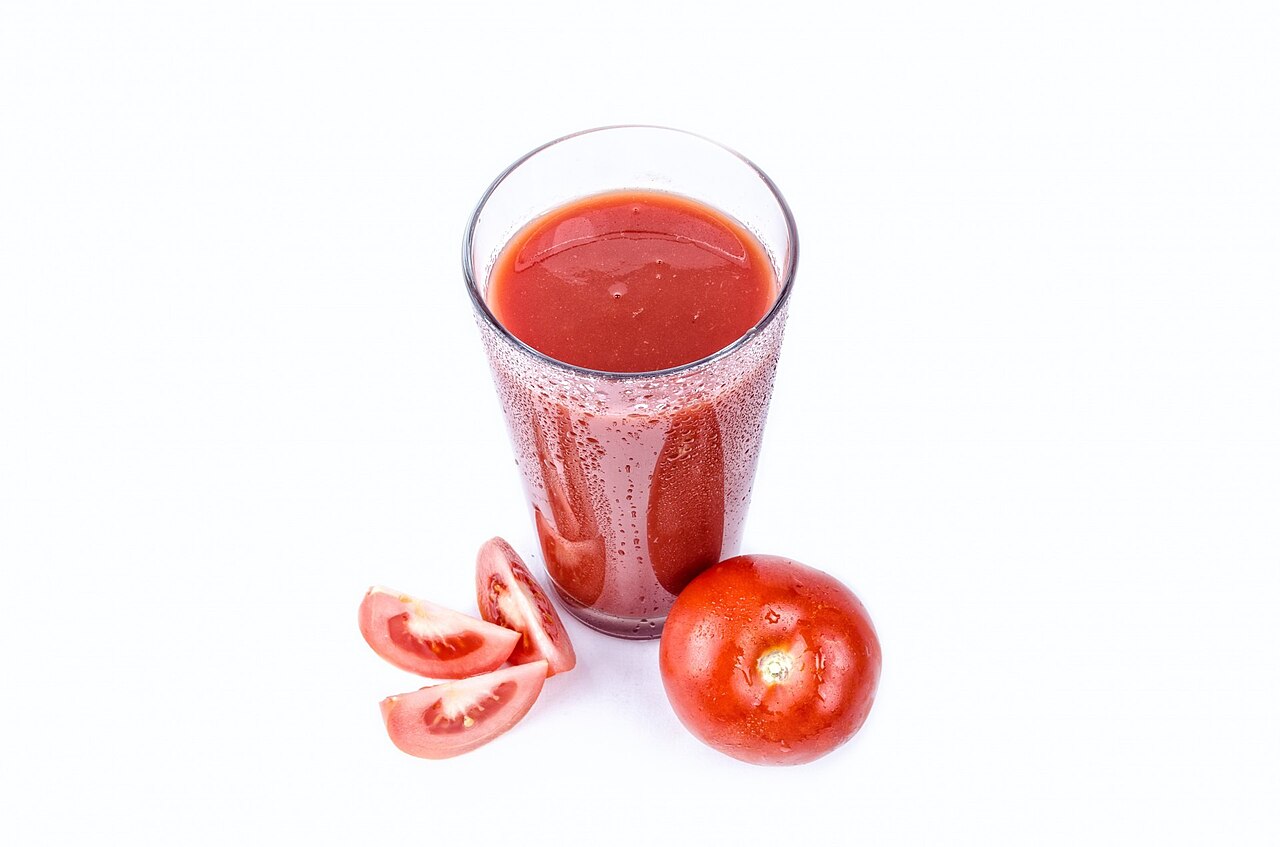
Tomatoes contain steroidal alkaloids, including alpha-tomatine and related compounds. They are much less familiar than lycopene, and researchers still do not know whether they explain any of the health effects associated with tomato-rich diets. A pharmacokinetic study published in The American Journal of Clinical Nutrition on 27 October 2026 asked a narrower first question: after people drink tomato juice, do these compounds enter the blood, when do they peak, and what form are they in?
Eleven healthy adults — six men and five women — avoided tomatoes for two weeks, then drank 505 g of tomato juice with a standard breakfast. Blood was collected 11 times over the next 12 hours. On average, 9.7% of the alkaloids in the juice appeared in plasma either intact or as measured metabolites, although the estimate varied widely between people, from 2.4% to 17.9%. More than 99% of what circulated was made up of metabolised products rather than the original compounds from the juice.
The total concentration peaked after an average of 8.9 hours and was still above baseline at 12 hours, so the authors say their absorption estimate may be low. This was a mapping study, not a test of benefit: it had 11 participants, one tomato-containing meal and no placebo group, and it measured compounds in blood rather than health outcomes. Its useful result is a trail for future trials — evidence that tomato alkaloids are absorbed and extensively transformed, not evidence that drinking more tomato juice prevents disease.
What happened after one tomato-juice meal
11
Healthy adults
505 g
Tomato juice consumed
9.7%
Average fraction measured in plasma
>99%
Circulating alkaloids found as metabolites
8.9 hours
Average time to peak concentration
Figures are from the journal abstract published online 27 October 2026. Plasma was sampled at 11 time points over 12 hours after a two-week tomato washout. The measured fraction varied from 2.4% to 17.9%, and concentrations had not returned to baseline by hour 12.
- Alpha-tomatine is concentrated more in green, unripe tomatoes than in fully ripe red tomatoes.
- A metabolite is a compound made when the body or gut microbes chemically change another compound.
- The study followed a physiologically achievable tomato dose, but it cannot tell us whether juice and whole tomatoes behave exactly the same way.
- Absorption and Metabolism of Steroidal Alkaloids from Tomato Juice in Healthy Adults: a Pharmacokinetic StudyThe American Journal of Clinical Nutrition, 27 October 2026 · Peer-reviewed journal article; primary source
- PubMed record 42946260US National Library of Medicine · Abstract with the participant, dose, timing and pharmacokinetic results used here
- Clinical trial NCT01696773ClinicalTrials.gov · Study registration
General information, not medical advice. Tomato juice can be high in sodium and may not suit every diet; ask your doctor or dietitian if you need to limit salt or potassium.
Analysis by NutroPractic from the sources listed. Written for general readers; it does not replace advice from your own doctor.
From our articles
Read, then eat a little better
Plain-language guides on nutrition and wellness, backed by research.
Everyday eating
Fruit juice and smoothies for children and adults: how much counts, and what the AAP and NHS limits are based on
None under 1, 120 ml at 1 to 3, 150 ml for British adults, 250 ml for older Indian children. The limits side by side, sugar per glass against whole fruit, what the cohort studies on weight and diabetes found, and why smoothies are a closer call.
3 Nov 2026
Everyday eating
Serving sizes on food labels: why the numbers on the pack rarely match what you eat, and how to recalculate them
Adults in one UK test poured about 95 g of granola against a 45 g serving. Tropicana lists 150 ml in Britain and 240 ml in the US. What the FDA, EU and Indian rules require, and worked sums for cereal, crisps and peanut butter.
3 Nov 2026
Everyday eating
Food label claims decoded: 'no added sugar', 'multigrain', 'natural' and 'high protein'
A no-added-sugar biscuit with only 13% fewer calories. A 7-grain loaf with refined flour listed first. A 'high protein' bar that clears the legal line at 21%. What each claim legally requires in the EU/UK, US and India, with worked reads of real packs.
2 Nov 2026
Newsfeed for your website
Want this feed on your website?
Add it to any site with one copy-and-paste snippet. No sign-up, and it updates itself every hour.
Start with a virtual consultation
Tell Dr. Triveni what you want to change. You will leave with a clear next step, whether you are in Toronto, London, New York or Chennai.