Environmental Nutrition & Thyroid Epidemiology · November 23, 2026
Drinking-Water Iodine Levels Flip the Relationship Between TSH and Thyroid Nodules
A large epidemiological cross-sectional study demonstrates that environmental iodine exposure in drinking water significantly alters how thyroid-stimulating hormone (TSH) correlates with thyroid nodules, solving a long-standing clinical paradox.
Thyroid nodules are among the most prevalent endocrine abnormalities encountered in clinical practice, yet epidemiological findings linking serum thyroid-stimulating hormone (TSH) concentrations to nodule risk have yielded persistent contradictions. While laboratory physiology suggests TSH promotes thyroid cell hypertrophy and hyperplasia, multiple population studies paradoxically report inverse or null associations. A landmark cross-sectional epidemiological investigation by Zhao and colleagues published in Nutrients demonstrates that baseline environmental iodine exposure in local drinking water fundamentally modifies this relationship.
The researchers conducted comprehensive clinical, biochemical, and ultrasonographic evaluations in adult populations across Anhui and Shandong provinces in China. Drinking-water iodine concentration (WIC) was strictly mapped and categorized into three distinct environmental exposure tiers: iodine-deficient areas (WIC <40 µg/L), iodine-adequate areas (WIC 40–100 µg/L), and iodine-excess areas (WIC >100 µg/L). Multivariable logistic regression evaluated the relationship between log-transformed TSH and the presence and multiplicity of ultrasonographically confirmed thyroid nodules.
Overall, higher serum TSH was inversely associated with the odds of having thyroid nodules (OR = 0.76; 95% CI: 0.63–0.91). However, a profound interaction with drinking-water iodine concentration was identified (interaction p = 0.002). Stratified analysis revealed that this inverse association was almost entirely driven by iodine-excess areas (OR = 0.52; 95% CI: 0.38–0.70), while no significant association was detected in iodine-deficient or iodine-adequate regions.
In contrast, when examining nodule multiplicity among affected individuals, higher TSH levels consistently increased the odds of harboring a solitary nodule rather than multiple nodules (OR = 1.92; 95% CI: 1.15–3.22), with no interaction across iodine tiers. The authors explain that chronic environmental iodine excess induces the Wolff-Chaikoff effect and subclinical autoimmune thyroiditis, elevating baseline TSH while suppressing follicular adenomatous nodulogenesis. These findings underscore that environmental micronutrient geography must be accounted for when assessing endocrine biomarkers and thyroid pathology.
TSH Associations with Thyroid Nodules Stratified by Water Iodine Concentration
0.76
overall odds ratio for thyroid nodule presence per unit increase in log-transformed TSH
0.52
odds ratio for thyroid nodule presence in iodine-excess areas (WIC >100 µg/L, p < 0.001)
p = 0.002
statistical interaction term demonstrating environmental iodine modifies the TSH-nodule link
1.92
odds ratio for having a solitary nodule vs multiple nodules per unit increase in log(TSH)
Ultrasonography used to confirm thyroid nodule presence, dimensions, and multiplicity; multivariable regression adjusted for age, sex, smoking, and metabolic covariates.
- Drinking water can contribute up to 20% to 30% of total daily iodine intake in non-coastal communities consuming groundwater.
- Chronic iodine excess triggers subclinical thyroiditis, which elevates serum TSH through negative feedback even when clinical hypothyroidism has not yet manifested.
- The Wolff-Chaikoff effect is an autoregulatory mechanism where acute or chronic excess intrathyroidal iodide temporarily inhibits organification and thyroid hormone synthesis.
- Association of Thyroid-Stimulating Hormone with Thyroid Nodules Across Different Drinking-Water Iodine Concentrations: Cross-Sectional Analyses in Chinese PopulationsNutrients · Cross-sectional epidemiological investigation published 20 November 2026.
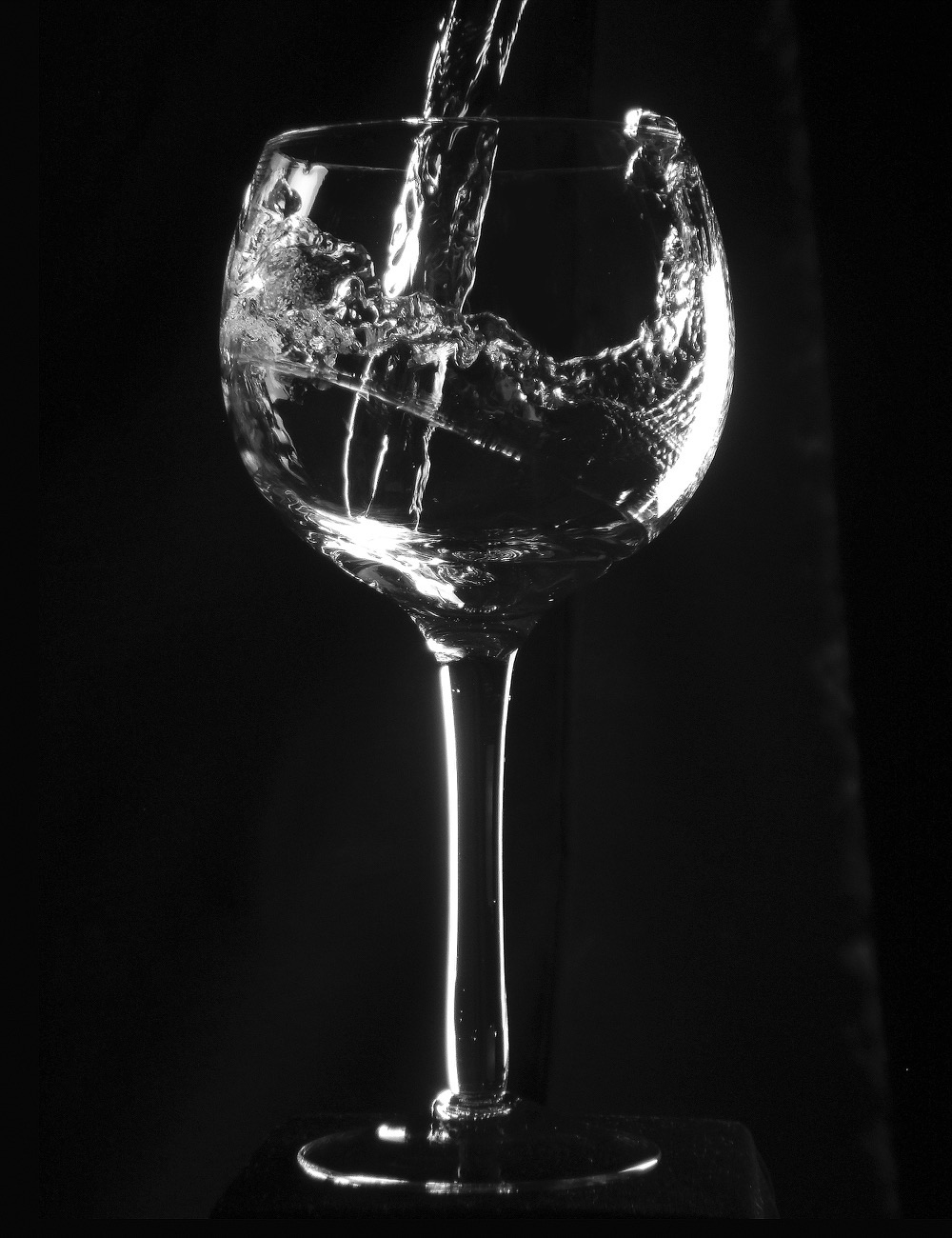
- File:Glass of Water.JPGWikimedia Commons · Photo by Jorge Barrios, public domain.
Educational summary of nutrition research, not personal medical advice. Speak to your doctor or dietitian before changing your diet or supplements, especially if you are pregnant, take medicines or have a medical condition.
Analysis by NutroPractic from the sources listed. Written for general readers; it does not replace advice from your own doctor.
From our articles
Our guides on this subject
Plain-language guides on nutrition and wellness, backed by research.
Supplements and vitamins
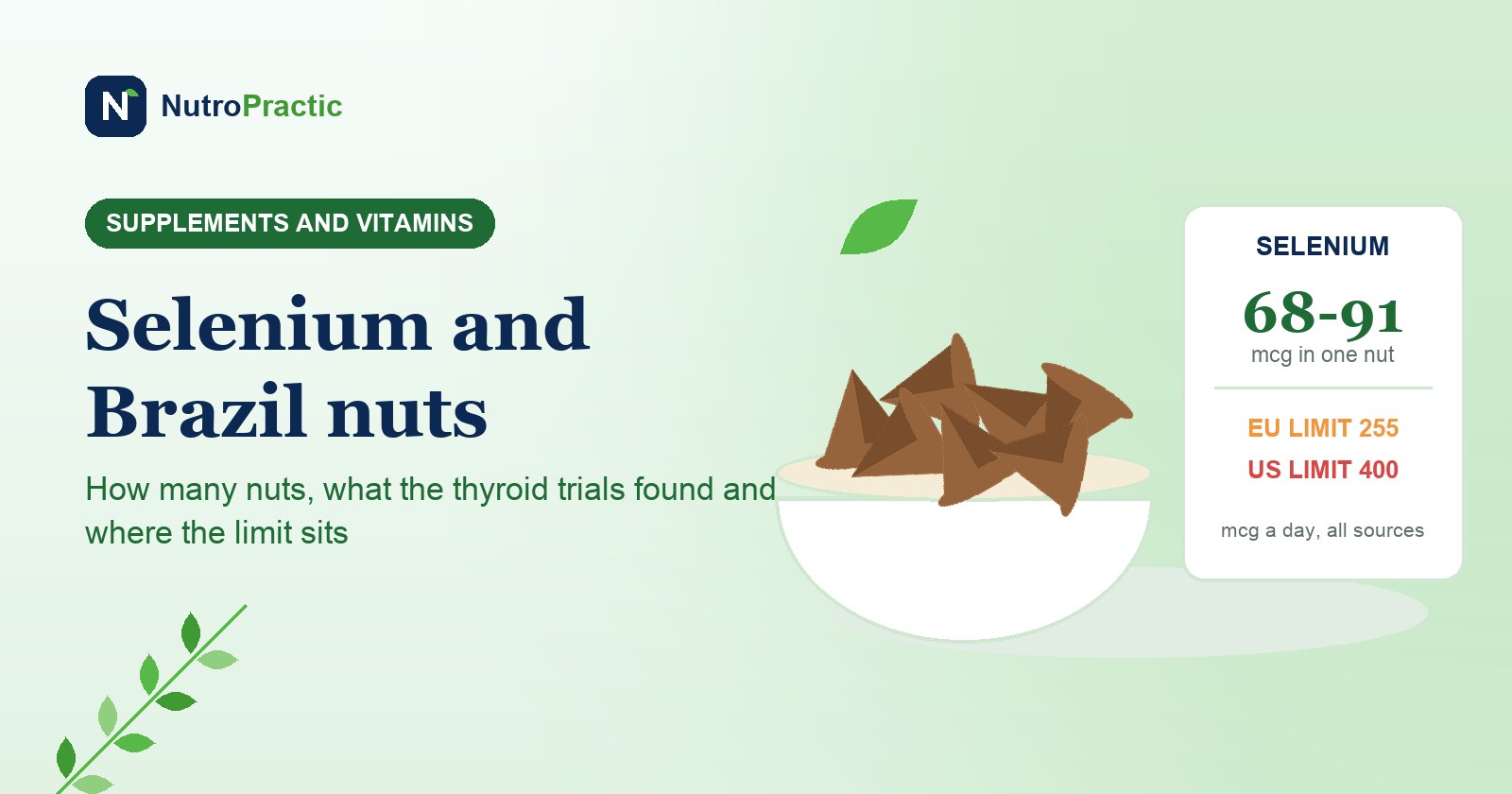
Selenium: how many Brazil nuts, what the thyroid trials found, and where the upper limit sits
One Brazil nut holds 68 to 91 mcg of selenium on average, against a 255 mcg European ceiling. A table of nuts per day, what the Hashimoto trials measured, and why more is not better.
14 Nov 2026
Micronutrients
Iodine: the nutrient that plant-based milks and sea salt left out
Iodine runs the thyroid and builds a baby's brain, and in the UK, much of Europe and parts of North America women of childbearing age are now mildly short of it. The reason is often a healthy-looking swap: oat milk for dairy, sea salt for table salt. Where iodine comes from, who needs more, and the seaweed trap.
30 Oct 2026
Women's health
Hypothyroidism and food: soy, goitrogens, gluten and when to take levothyroxine
Food can't fix an underactive thyroid, but it can stop your tablet from working. When to take levothyroxine around breakfast, coffee, calcium and iron, what the studies say about broccoli, soy, selenium and gluten-free diets for Hashimoto's, and what to expect from your weight once treatment starts.
19 Oct 2026
Newsfeed for your website
Want this feed on your website?
Add it to any site with one copy-and-paste snippet. No sign-up, and it updates itself every hour.
Start with a virtual consultation
Tell Dr. Triveni what you want to change. You will leave with a clear next step, whether you are in Toronto, London, New York or Chennai.